Specimen · N°074 · 森 · ▶ Film
Plagioxylon scalariformeMonkey-ladder Liana
一度刻まれた曲がりは、二度と消えません。
FOUND 5.4°N 118.1°E · 東南アジア、Lowland rainforest of Borneo · ✝ EX · Last seen 2001
一度刻まれた曲がりは、二度と消えません。
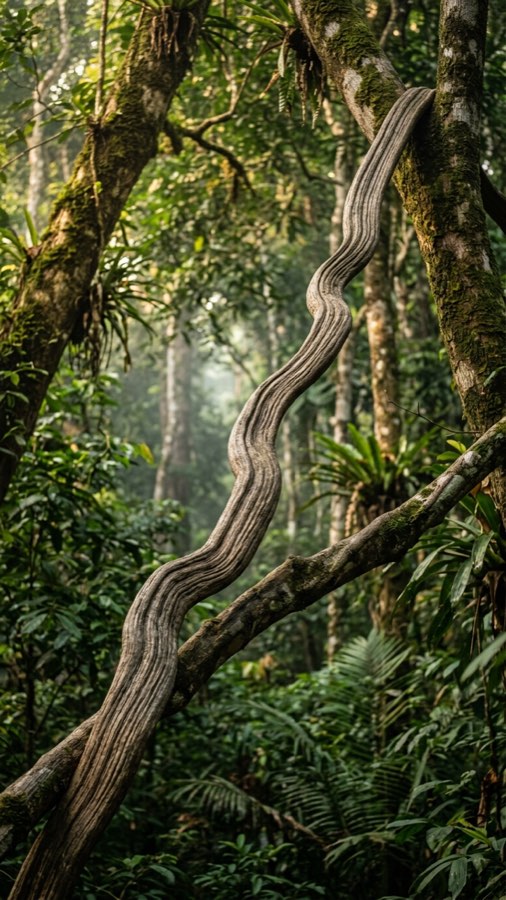
Monkey-ladder Lianaは、Lowland rainforest of Borneoに育つ大型の木質つる(リアナ)。茎はふつうの丸い幹ではなく、片側だけが強く肥大する偏った二次成長によって、幅六センチほどの平たいリボン状の帯に育つ。若いつるは支えを探して左右に大きく体をくねらせ、枝や別の幹に触れた場所で足場を固めていく。支えを得た区間では帯は幅広く厚く肥り、支えのない空間を渡る区間では細く締まって伸びる。宿主の木を乗り換えるたびに帯は鋭く折れ曲がり、その角がひとつの節目となって残る。やがて帯は木質化して硬く固まり、一度ついた曲がりは二度とまっすぐには戻らない。こうして一本の蔓は、根元から樹冠まで、登ってきた道のりを曲がりと太さの並びとして体に刻みつけ、樹冠から樹冠へと綱のように渡っていく。実在のハカマカズラやモダマも、帯状に肥大した木質の茎をもつ。
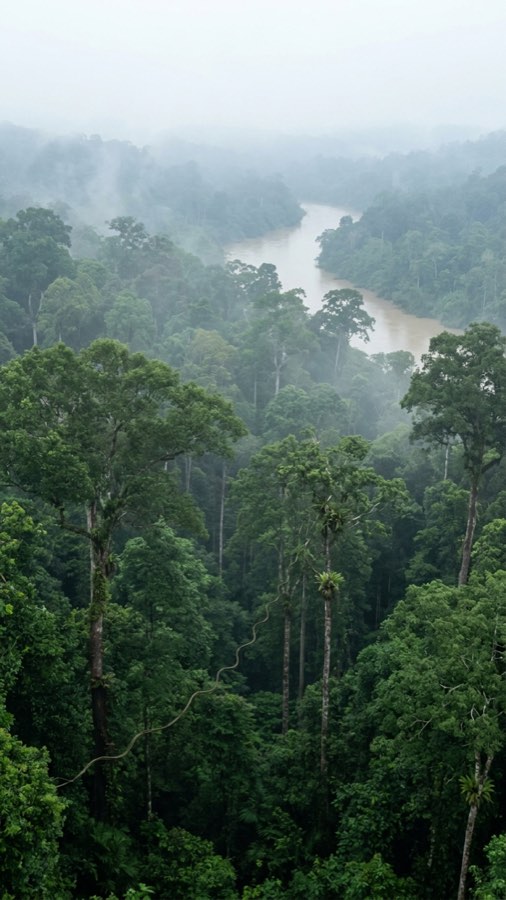 PLATE I
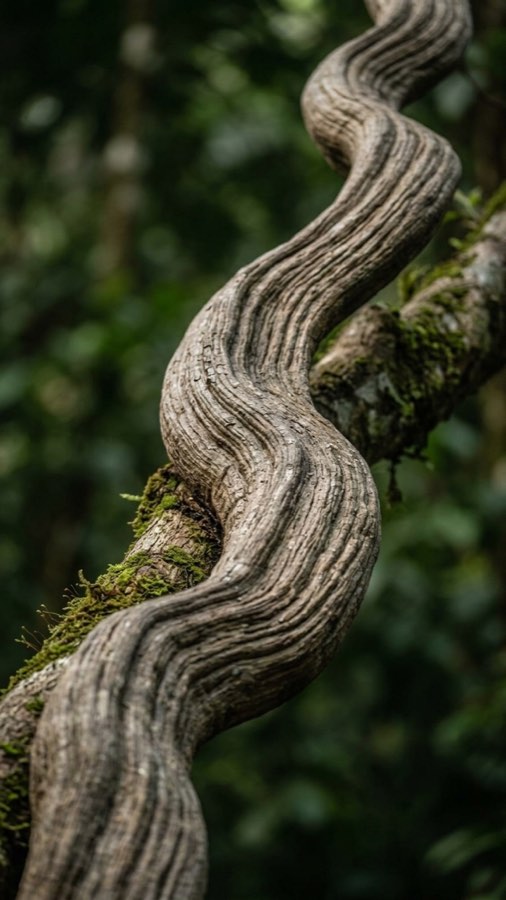 PLATE II
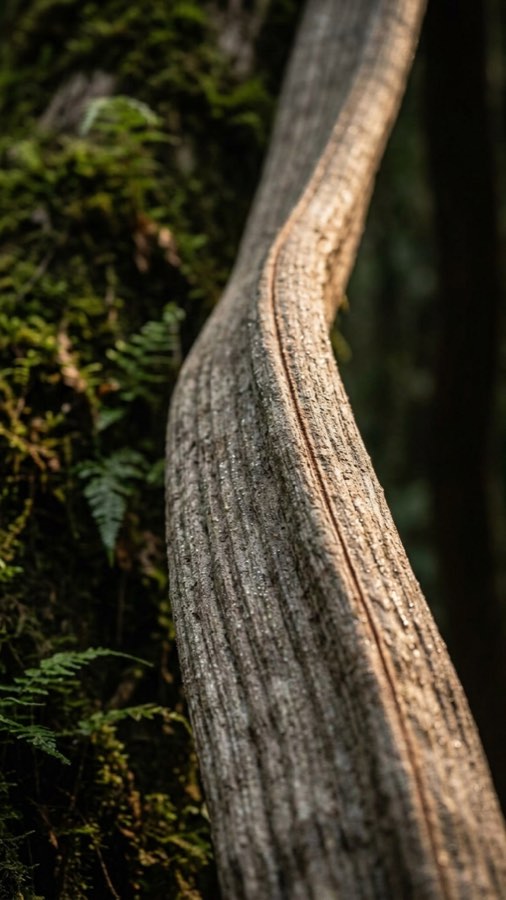 PLATE III
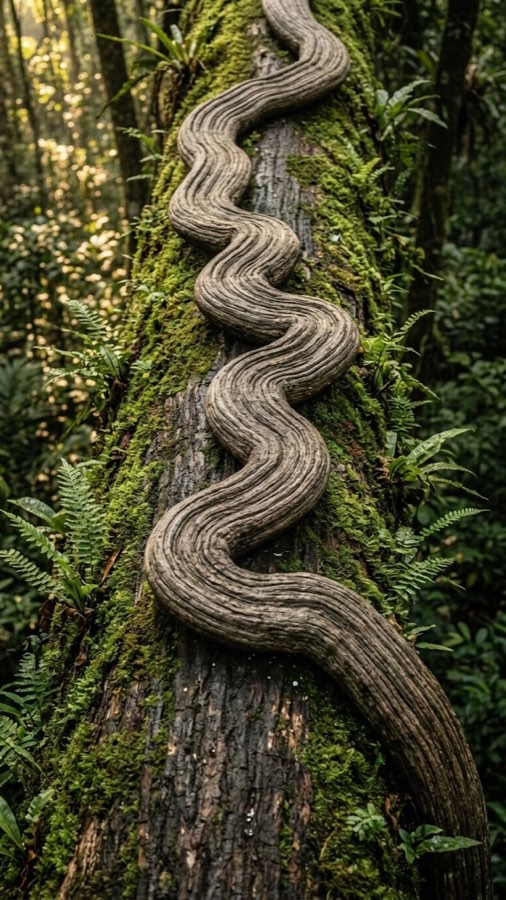 PLATE IV
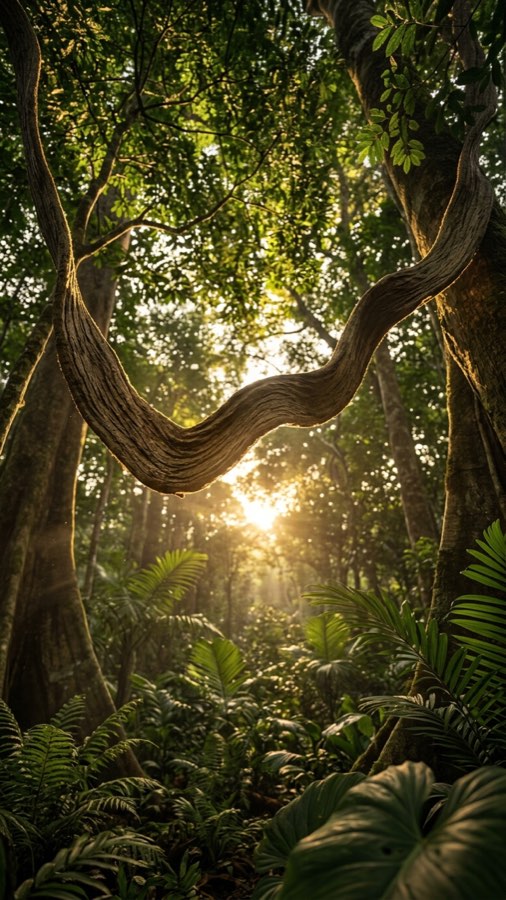 PLATE V
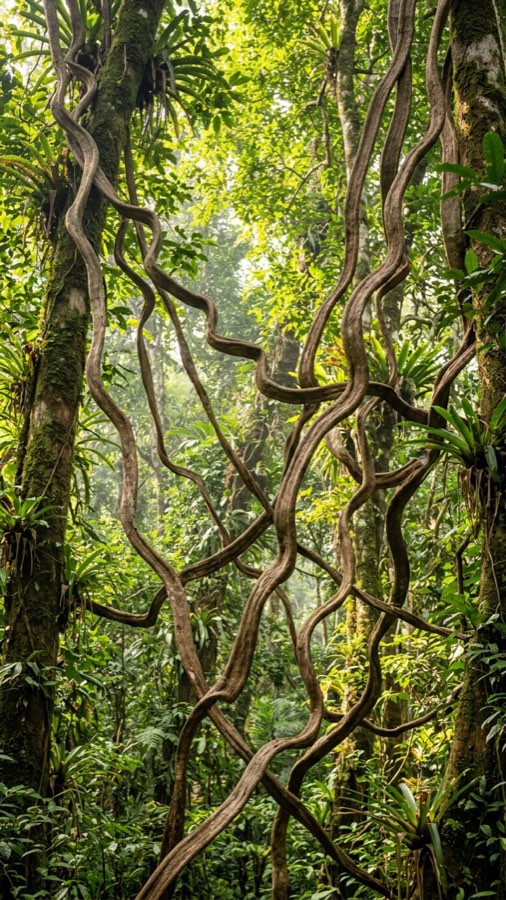 PLATE VI
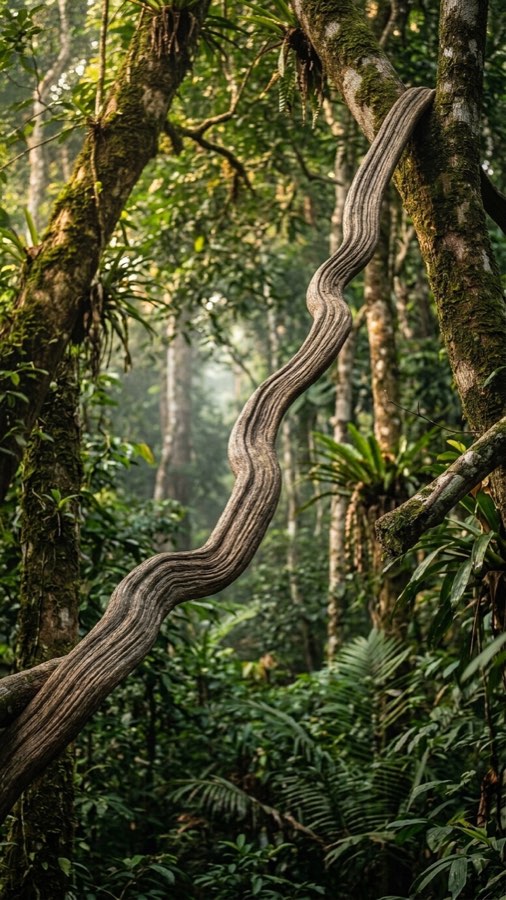 PLATE VIIPLATE VIII
一度刻まれた曲がりは、二度と消えません。
木質の帯は、固まると二度とまっすぐに戻らないからです。
Lowland rainforest canopy of Borneo, Southeast Asia
樹冠から樹冠へ、平たいリボン状の蔓が綱のように渡っています。
Monkey-ladder Lianaは支えを探して左右に体をくねらせ、足場を得た場所で帯を幅広く肥らせます。
宙を渡った場所では細く締まり、宿主を乗り換えるたびに帯は鋭く折れ曲がります。
In plants not yet fully released from their night contraction, only the mouths of the tubular flowers open first, spilling pollen into the faint wind moving close over the dune surface. A few minutes later, very small ground-nesting bees may visit, yet fruit set does not seem to depend strongly on them. The flowers appear to preserve the chance of outcrossing while maintaining the stand through delayed self-pollination during the brief humidity of dawn.
The stands are not on stable white sand flats, but on the shoulders of leeward slopes where gypsum sand has been newly and thinly drifted. By the following season the same surface is either cut away or buried, and last year's plants cannot be traced. The fruits are small sand-colored capsules; when they split, they do not cast seed far, but drop it among gypsum grains. Germination is heaviest only in years when autumn rain leaves a temporary film of water above a shallow indurated layer.
In daytime specimens the mechanism of contraction is almost entirely lost, leaving only gray-green narrow leaves and small milk-white flowers; in older survey sheets it was likely folded into records of known small gypsum plants. Many of the best sites also lie near range boundaries or closed dunes, while surveys tended to follow roads in daylight. The name “root that shrinks at night,” used by rangers and early-morning survey crews, outlasted any specimen number.