Specimen · N°031 · Forest · ▶ Film
Radicava bialowiensisTreefall Light
Somewhere in the forest, it is always in flower.
FOUND 52.7°N 23.8°E · Bialowieza primeval forest, Poland · ✝ EX · Last seen 1975
Somewhere in the forest, it is always in flower.
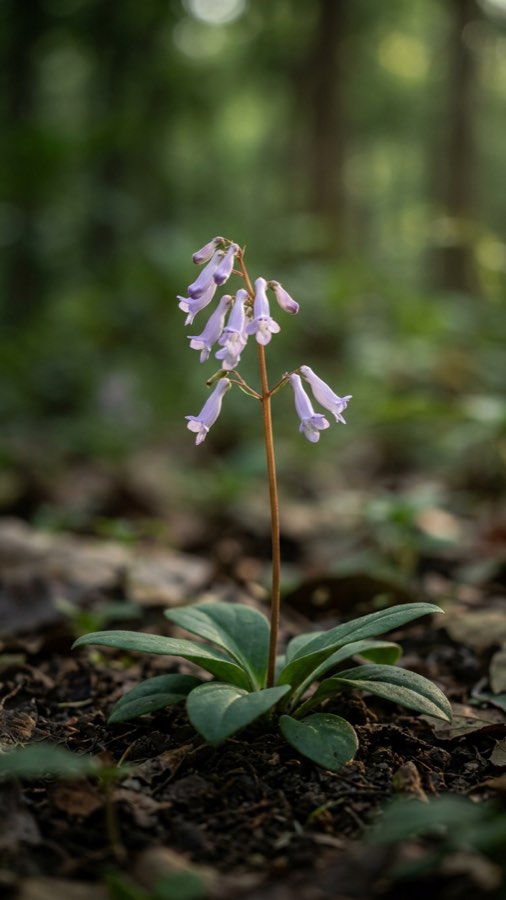
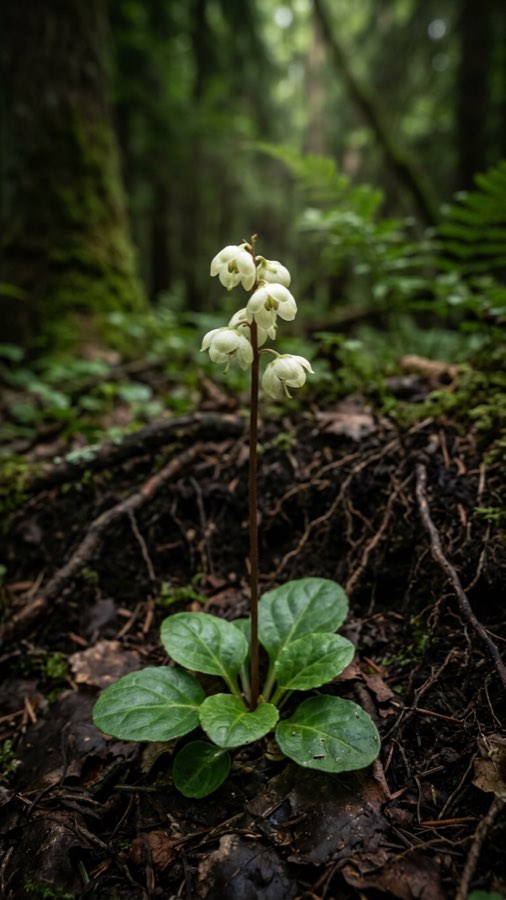
The Treefall Light is a forest-floor plant some 15 cm tall. It spreads deep-green, faintly translucent leaves low to the ground, and on slender red-brown stems bears pale ivory, nodding, bell-shaped flowers. It roots in the dark damp earth turned up by a fallen giant, joined by fungal threads to the torn old roots, and forms colonies only during the decades while the pit fills with litter and soil — quietly vanishing from that place as the ground levels again. Somewhere in the forest it is always in flower, yet in any one place it is found for a single generation only.
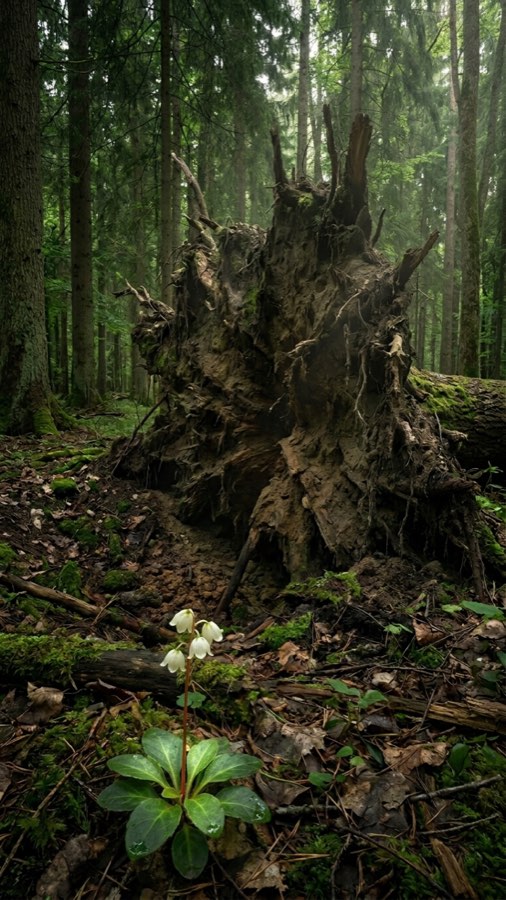 PLATE I
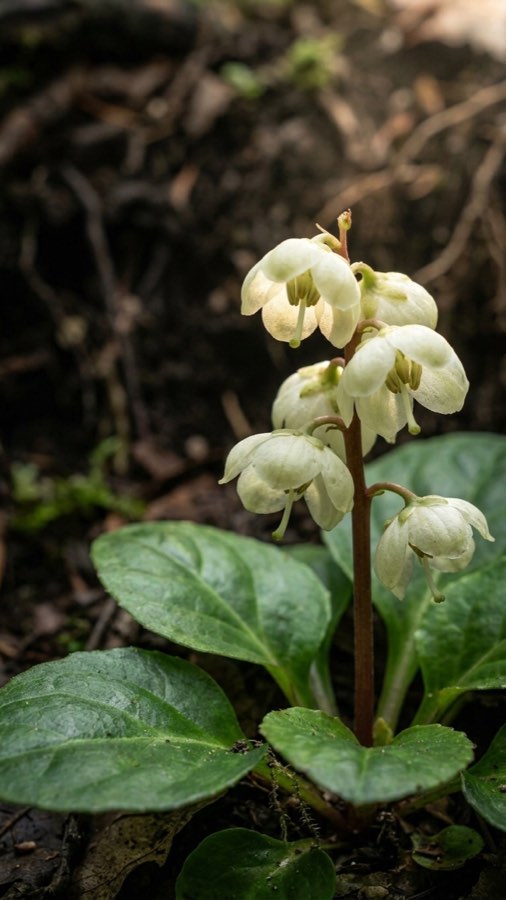 PLATE II
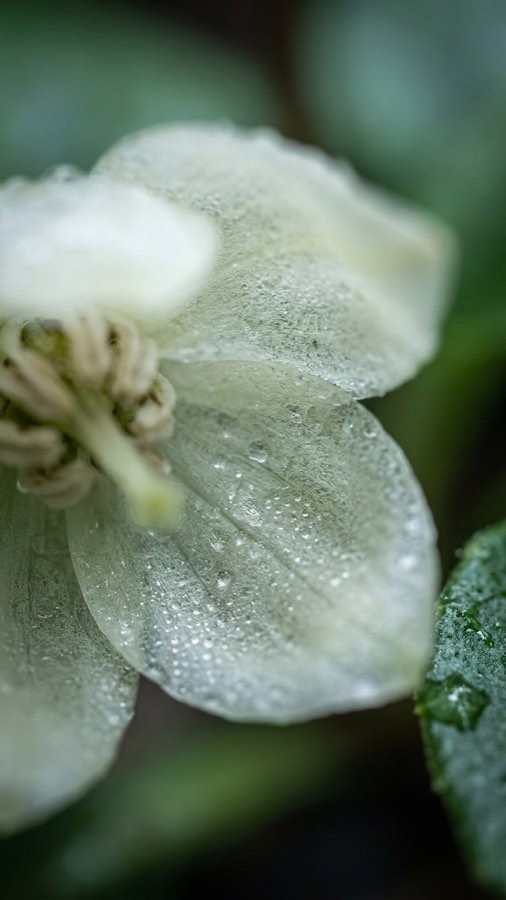 PLATE III
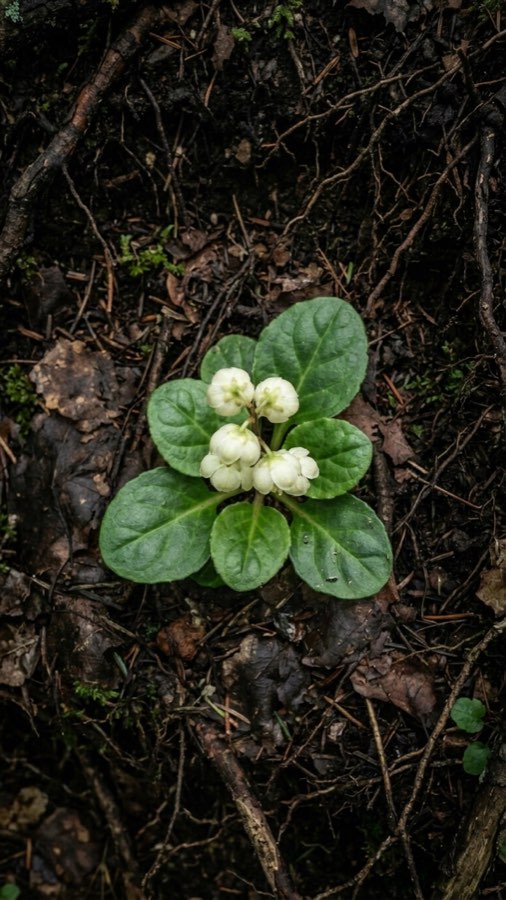 PLATE IV
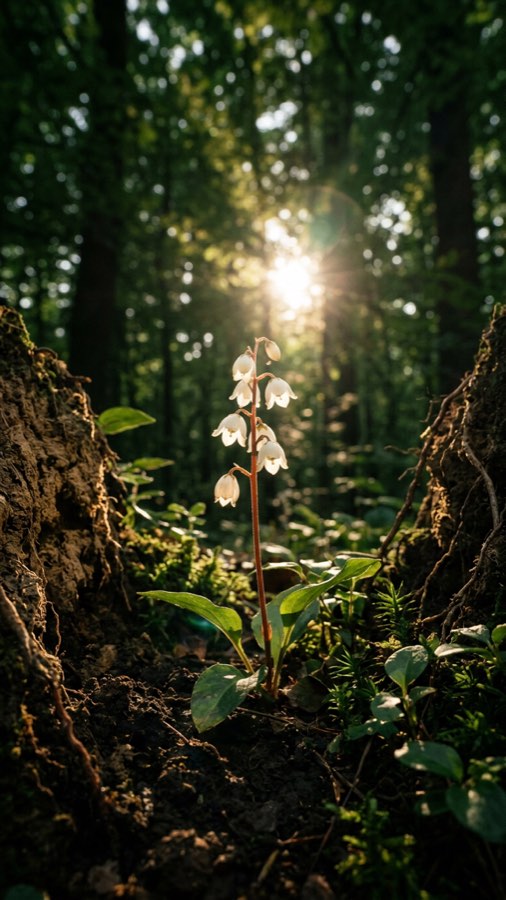 PLATE V
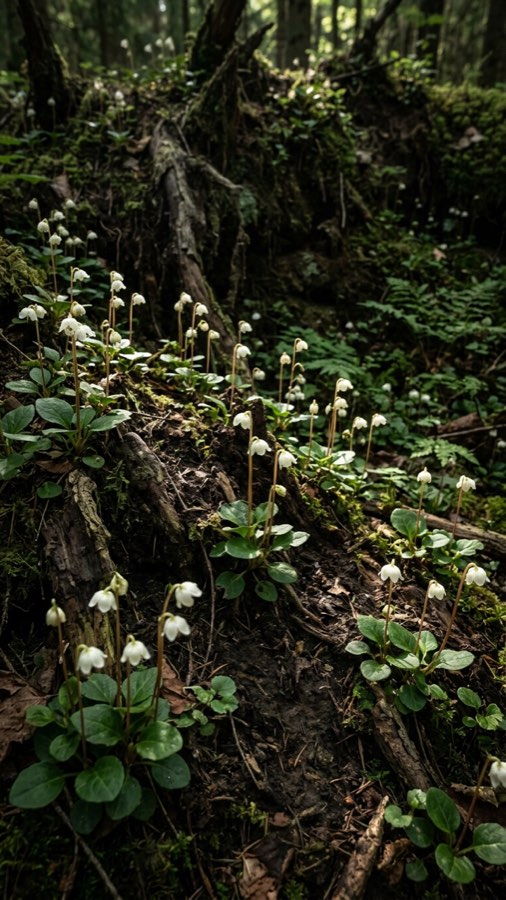 PLATE VI
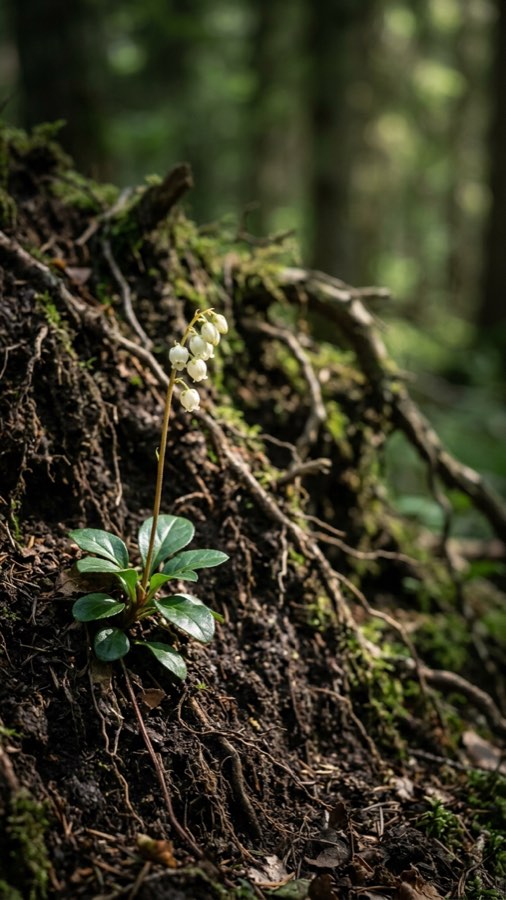 PLATE VIIPLATE VIII
Somewhere in the forest, it is always in flower.
Yet in any one place, it is found only once.
Bialowieza primeval forest, Poland
When winter gales throw a giant tree, roots and all, a deep pit is dug into the ground.
The Treefall Light appears only in that dark, damp bare soil.
It nods its pale ivory flowers, growing joined by fungal threads to the torn old roots.
The floor of an uproot hollow thaws nearly half a day later than the surrounding forest floor. Heavy loam derived from glacial deposits drains poorly, and when a fallen tree strips away the leaf litter, only dark, cold mineral soil remains exposed. Seedlings of Radicava bialowiensis appear only in this wet, litter-free substrate; on the upper slopes, where humus soon returns, even traces of germination are rarely found.
The flowers hang so low that visits are infrequent, yet the anthers and stigma stand close together, suggesting a high degree of self-compatibility. After fruiting, the capsules split lengthwise as they dry and spill grey, dust-like seed. Turbulent air after windthrow, and small rills formed by heavy rain, likely carry these seeds into newly opened uproot hollows. The colony moves on; in the old hollow it is buried by leaf litter and fine roots.
In villages near the border, forest keepers and honey gatherers are said to have remembered this flower as a sign of a windfall only a few years old. A hollow bearing Radicava is still soft enough to take a boot print, and mycelium remains in the split wood of the decaying root. They did not gather the flowers, but used them to recall paths and hive trees. By the time the flowers vanish, the fallen tree has become part of the ground itself.