Specimen · N°038 · Forest · ▶ Film
Cedrus bimorpha atlasianaTwo-form Cedar
There are years when one tree seems to be two.
FOUND 32.7°N 5.0°W · High cedar forest of the Atlas Mountains, central Morocco · ✝ EX · Last seen 1999
There are years when one tree seems to be two.
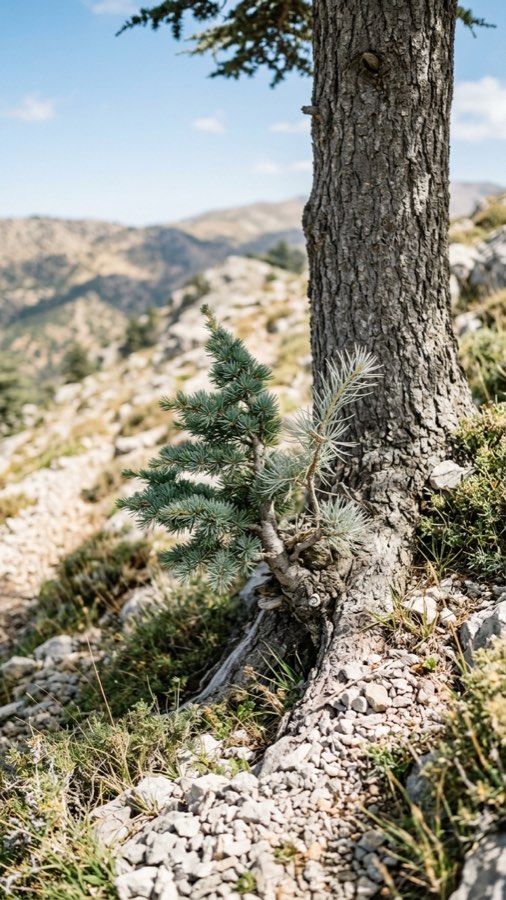
The Two-form Cedar is not a separate species but the name given to a phenomenon of single old Atlas cedars over 20 m tall. Low secondary shoots rise from the base of the thick grey-brown trunk, and that same one tree carries two kinds of needle: one short, dense, hard and dark green tinged with blue; the other long, sparse, soft and pale grey-green. In years when the deep roots have found water far down in the dry strata, the basal shoots are said to put out the pale, soft form. Seen by its upper branches alone it looks like two different trees standing together, and few realise they are one. It occurs on old trees throughout the forest, yet on any single tree the two forms meet only once in decades.
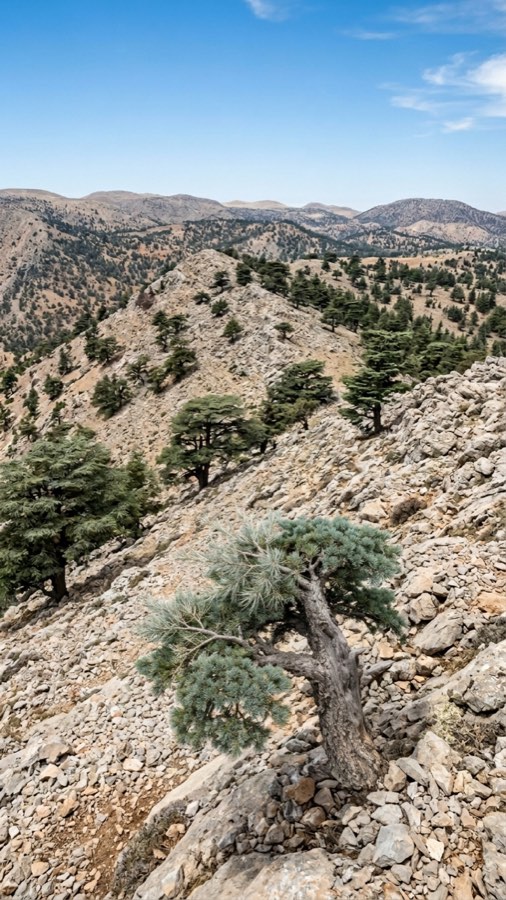 PLATE I
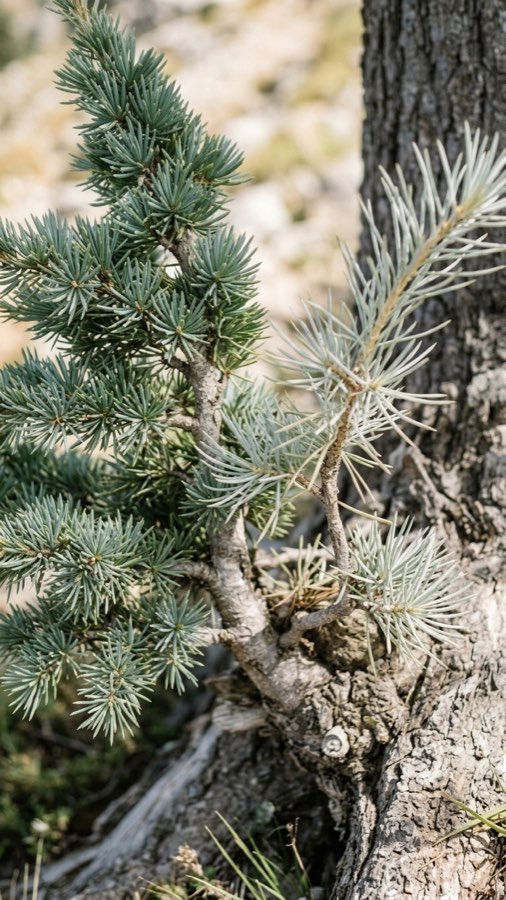 PLATE II
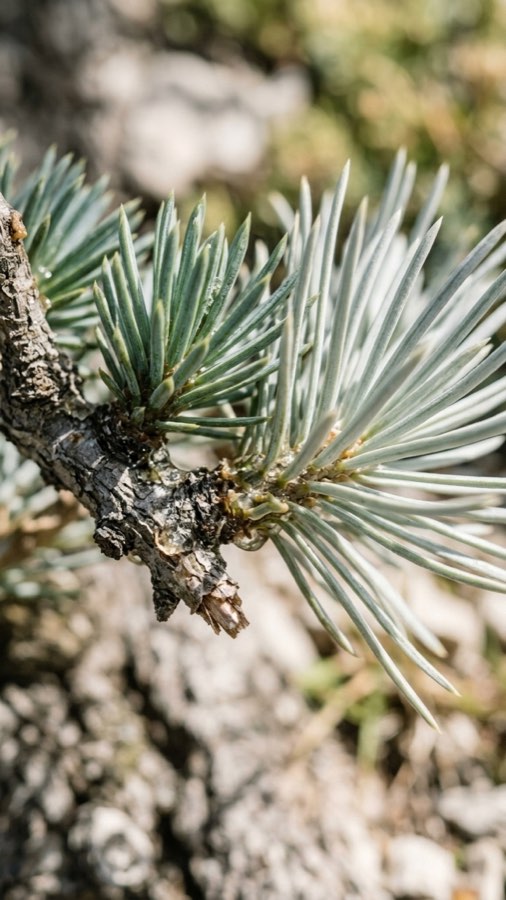 PLATE III
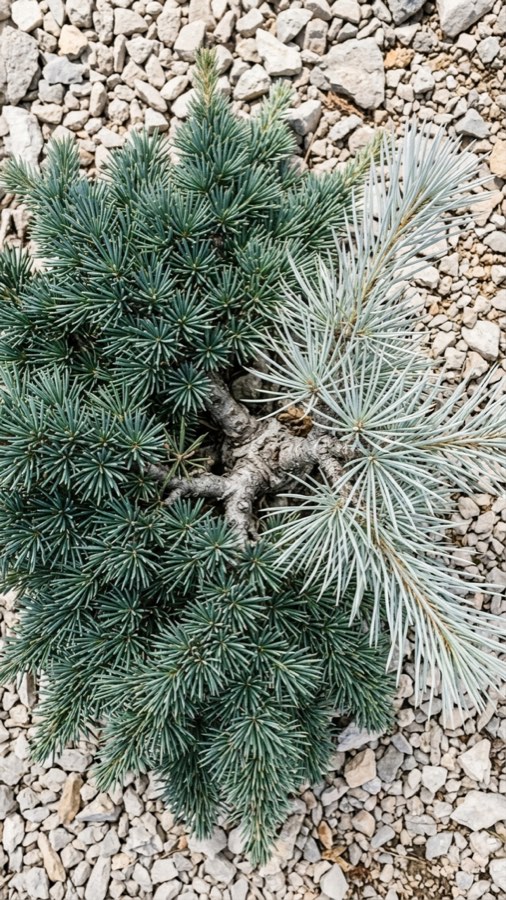 PLATE IV
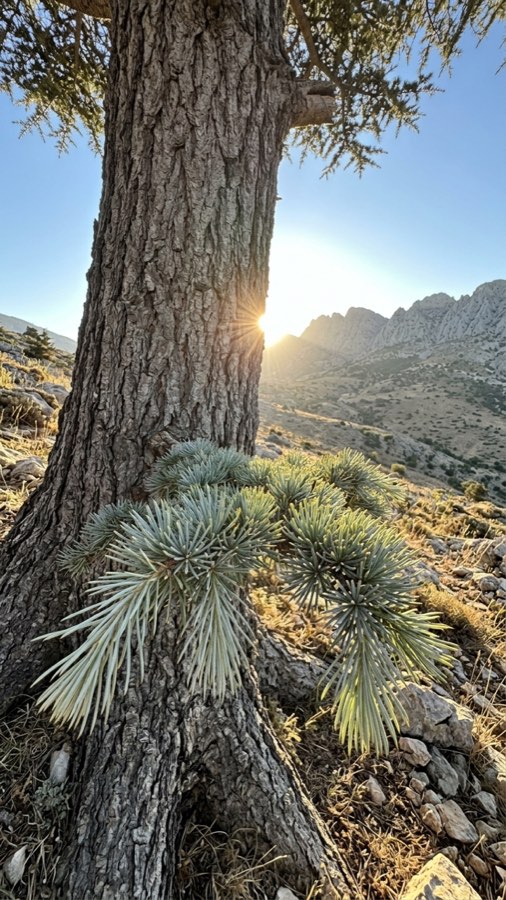 PLATE V
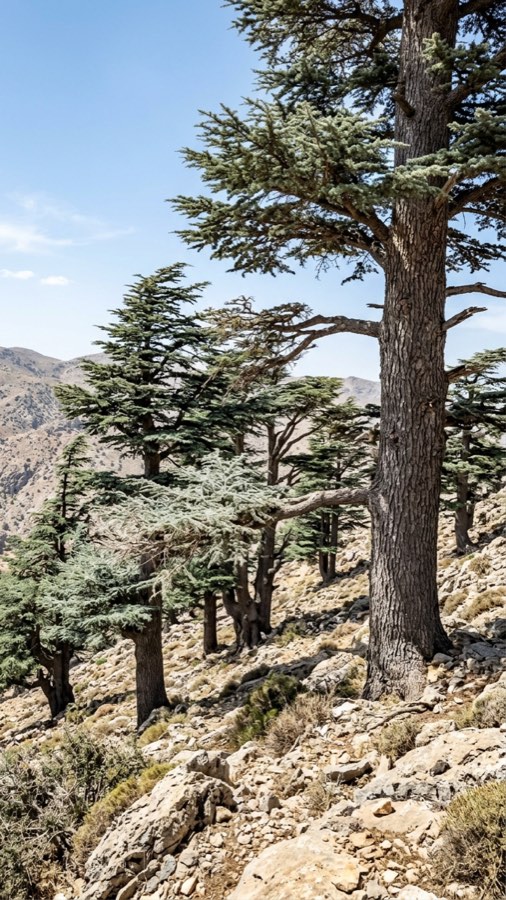 PLATE VI
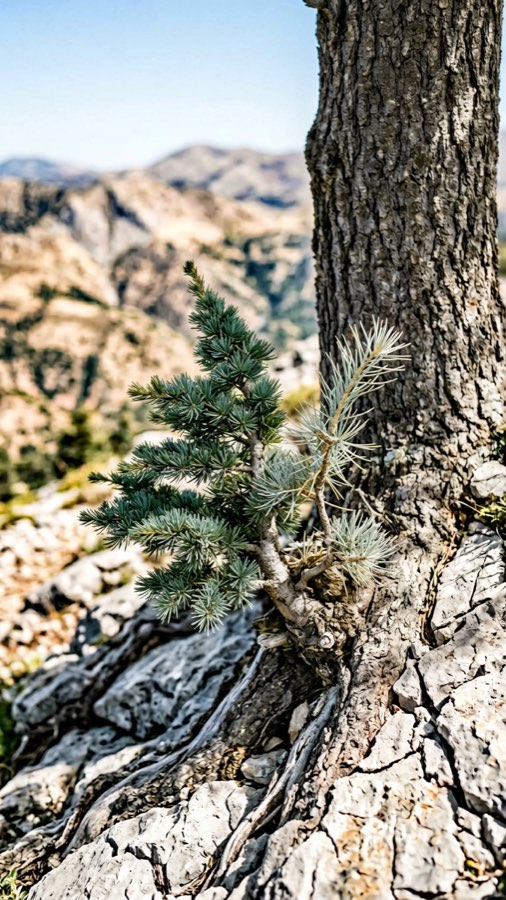 PLATE VIIPLATE VIII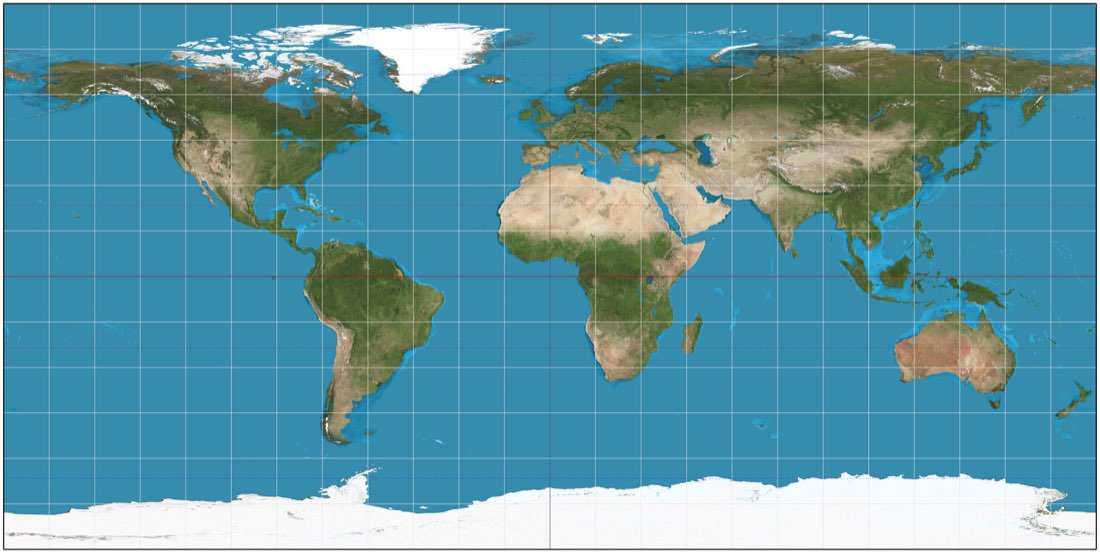
There are years when one tree seems to be two.
In their branching, even in the colour of their leaves — they seem two different trees.
The high ridges of the Atlas Mountains, central Morocco.
From the base of an old cedar on lean rock, low shoots rise.
On those same shoots, hard blue needles and soft pale needles live side by side.
In years when the deep roots strike water far below, they say, the pale leaves appear.
The Two-leaved Cedar is reported from several old trees in the forest, yet its expression is always confined to basal sprouts of a single individual. Neighboring saplings and seedlings show no comparable change in foliage. In years when the upper crown is checked by drought on the thin limestone soil, only the low shoots supplied by deep roots seem to recover the softer, juvenile-like needles. It is best read not as a new species, but as a local rejuvenation response of an old tree.
No male strobili or cones were found on the pale-leaved shoots during the period of observation. Mature cones occurred only on the ordinary upper branches, and wind pollination appeared no different from that of surrounding Atlas cedars. The two leaf forms therefore do not mark reproductive separation, but a fluctuation in form tied to the water status of basal shoots. The absence of any “two-leaved” seedlings on the forest floor also shows that the phenomenon remains within the individual tree.
“The old tree with two faces” is a translated name; Amazigh pastoralists are said to have remembered the form as a sign for scant winter snow and the strength of spring seepage. In years when ridge trees produce pale foliage, they have relied less on snowpack than on water retained deep below ground, matching the decline of watering places downslope. The phrase “memory of water beneath the earth” is metaphorical, but it closely fits deep rooting and the sprouting response of dry years.