Specimen · N°037 · Rock · ▶ Film
Petrobryum sacrificansSacrificial Rockmoss
Nearly all of its body, it casts away itself — every time.
FOUND 6.5°N 10.5°E · Granite inselbergs of the Cameroon highlands · ✝ EX · Last seen 1985
Nearly all of its body, it casts away itself — every time.
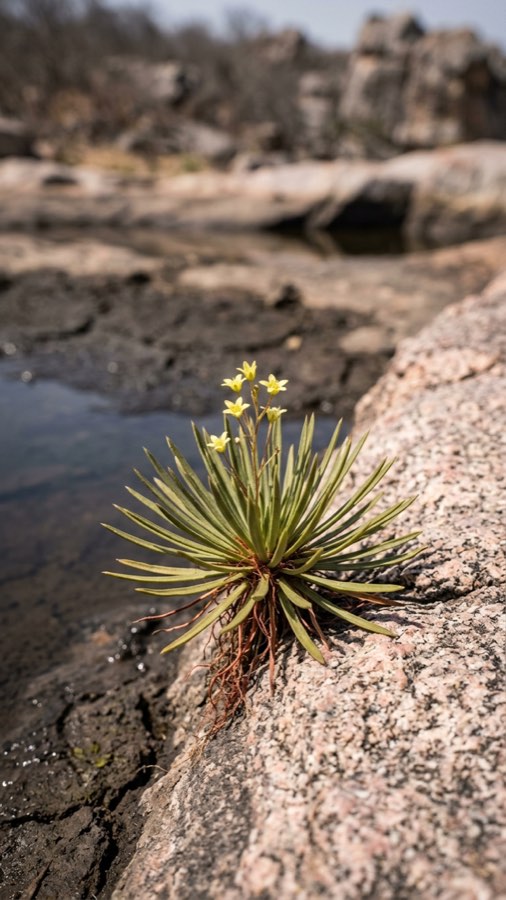
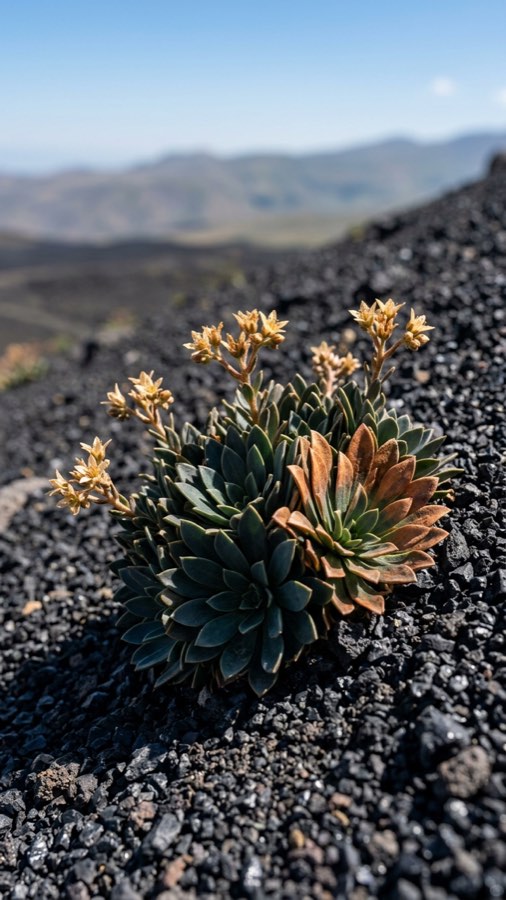
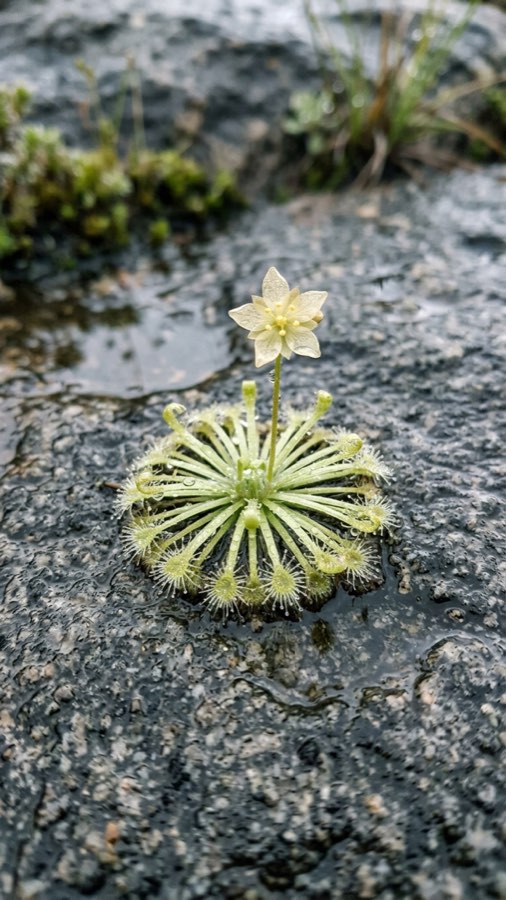
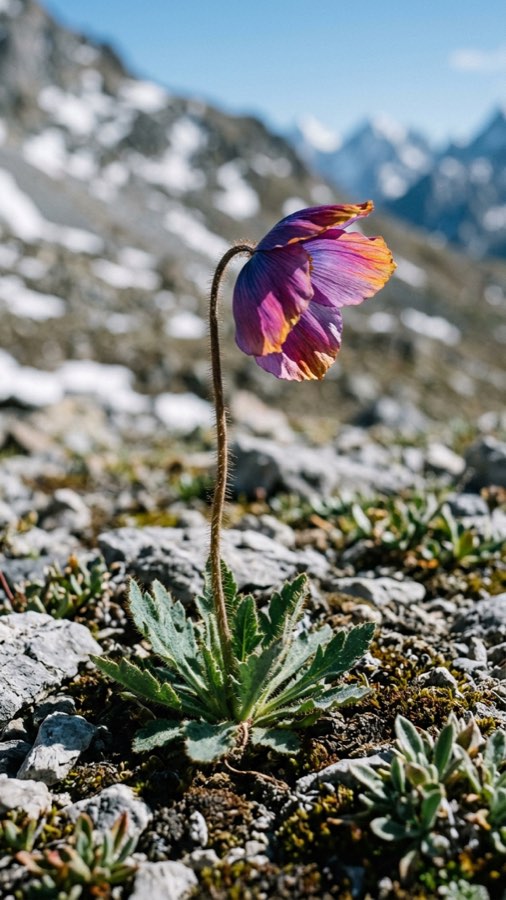
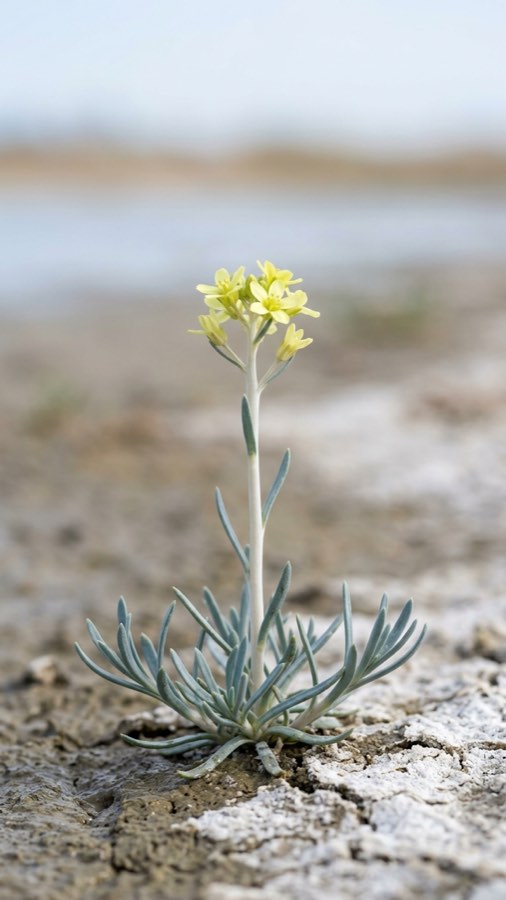
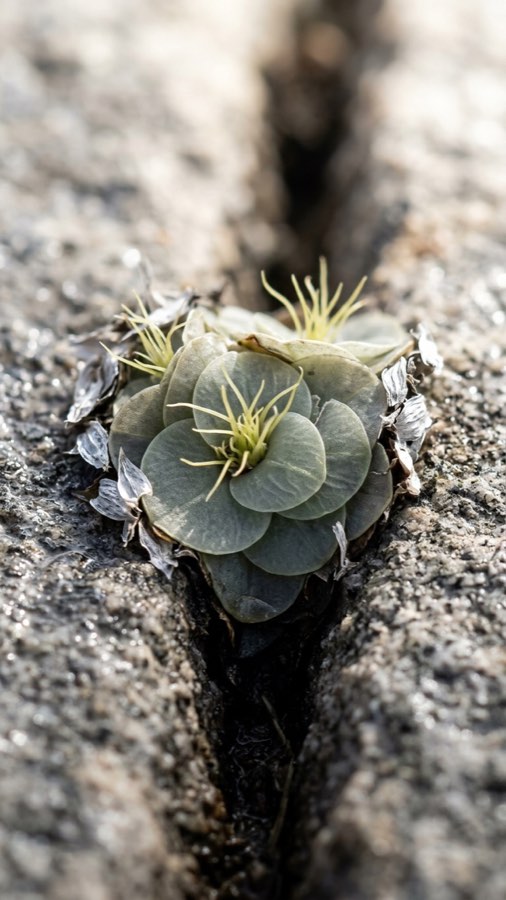
The Sacrificial Rockmoss is a minute plant, some 3 cm across, pressed low against the rock. It lays small translucent grey-green scale-like leaves flat as a coin, and from their rim tucks fine thread-like pale yellow-green growing-points away into the dark cracks of the stone. It passes most of each generation on the thin film of water that veils the bare granite; when the water withdraws it leaves most of its body on the rock as a dry silver husk, keeping alive only the growing-points deep in the cracks. The fiercer the sun, the more strictly it chooses which points will regrow, and casts the rest away without regret. What shows on the rock is a different body each time; the true plant stays always in the dark of the crack.
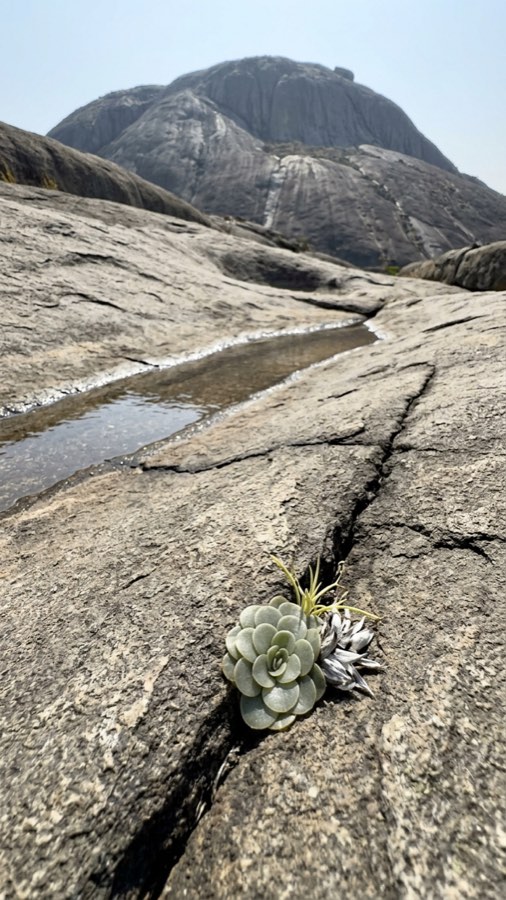 PLATE I
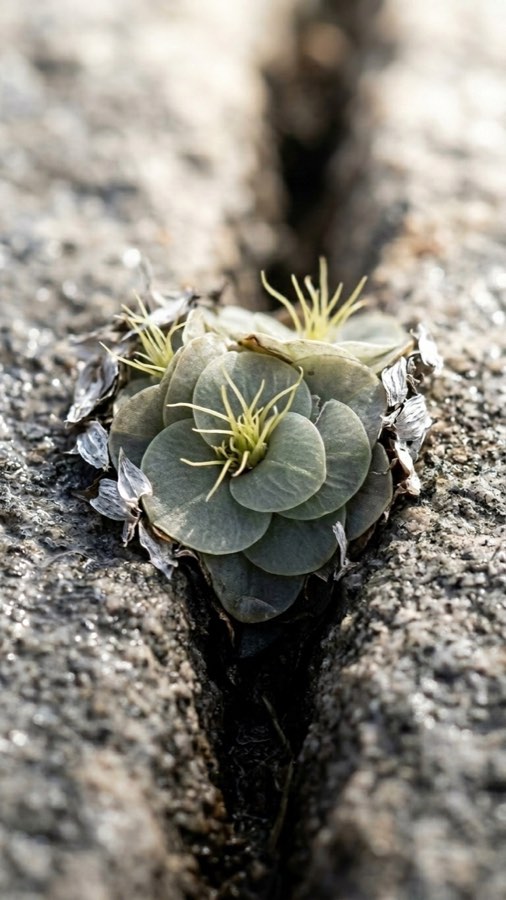 PLATE II
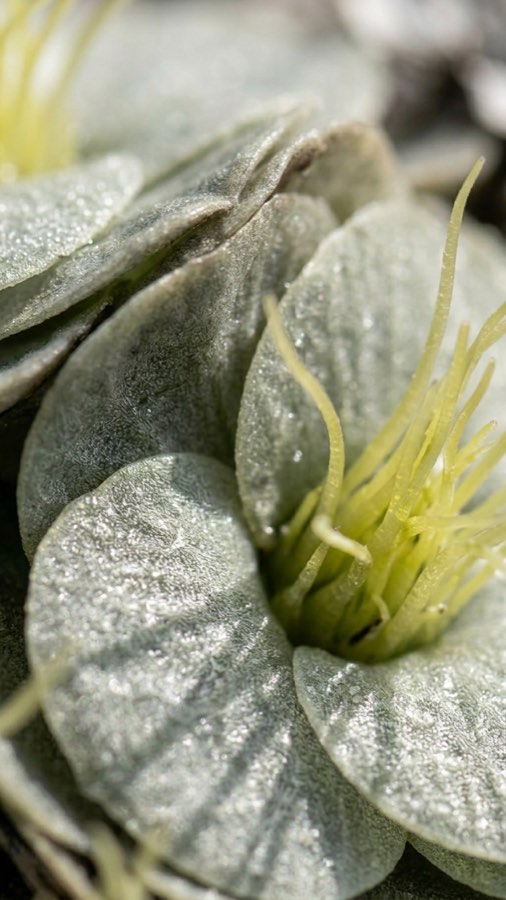 PLATE III
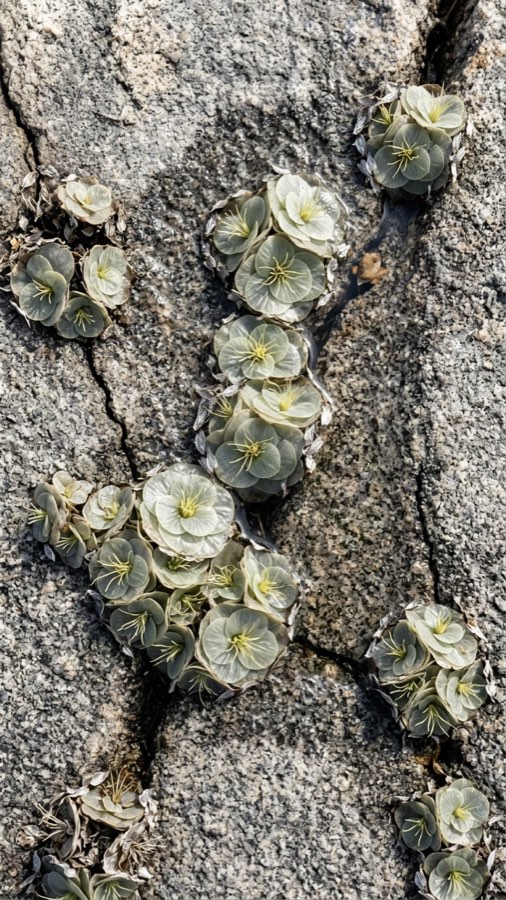 PLATE IV
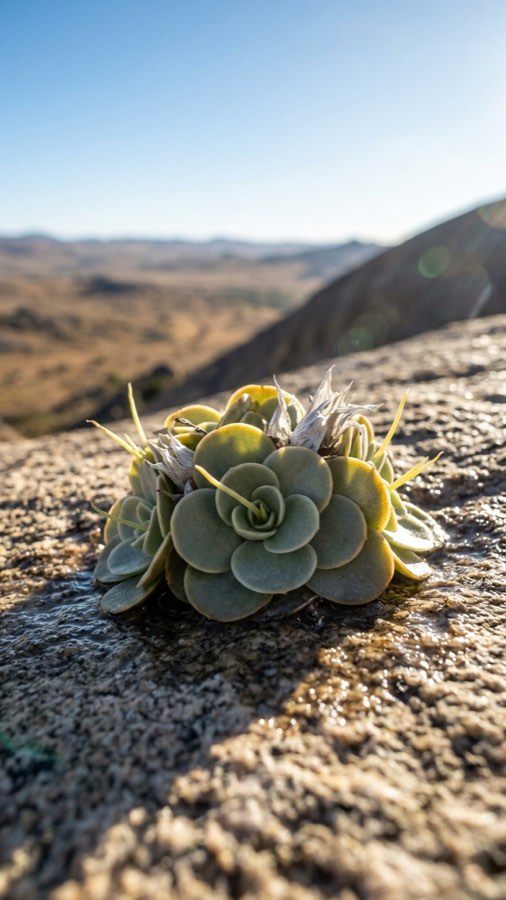 PLATE V
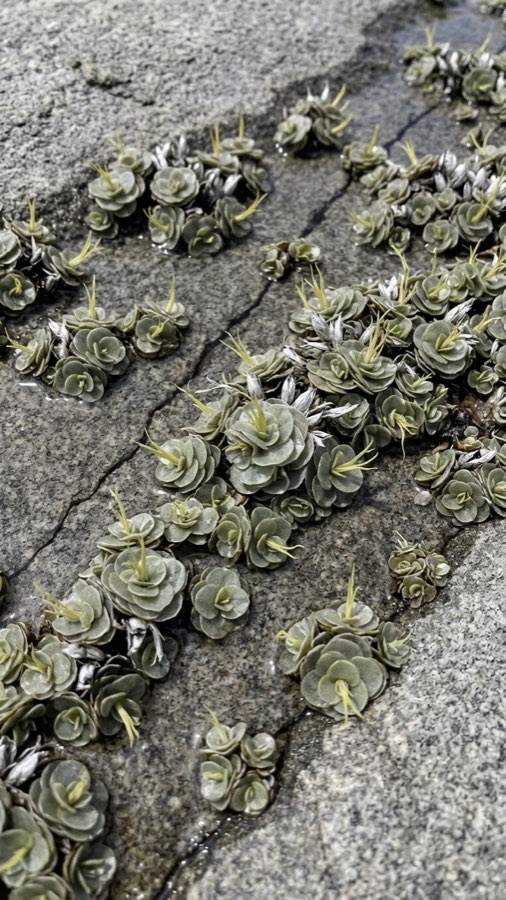 PLATE VI
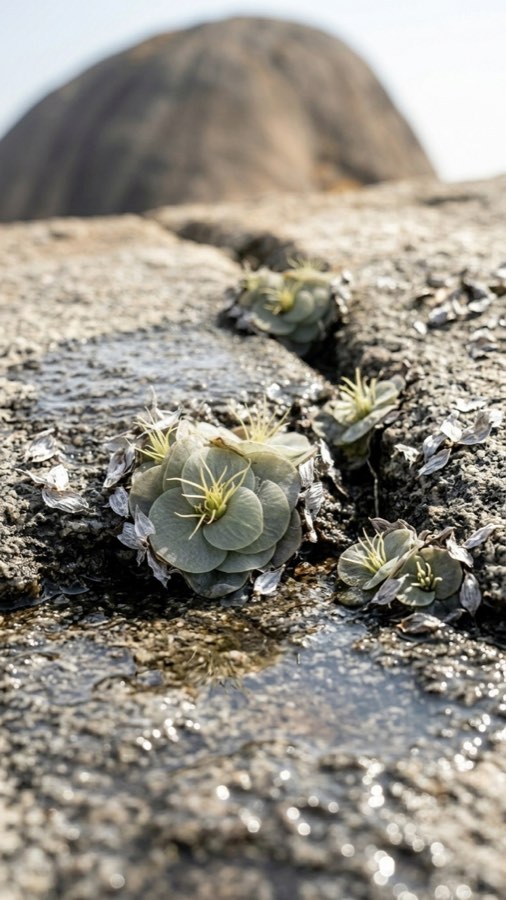 PLATE VIIPLATE VIII
Nearly all of its body, it casts away itself — every time.
Even so, this plant lives on the same rock for generations.
The Cameroon highlands — hills of naked granite.
The thin film of water veiling the bare rock withdraws within days.
On that film of water, the Sacrificial Rockmoss passes most of a generation.
When the water goes, its translucent grey-green body is left on the rock as a silver husk.
At the start of the wet season, where a film of water remains for three days or so, pin-sized capsules rise from the silver-dried leaf margins. Their stalks are nearly absent. They seem built less for long flight than for dropping spores into the edge of the water film, where they are carried into nearby cracks. The dry shell is not merely a corpse, but a thin platform used once to release the spores.
The disc visible on the bare rock is not the whole individual. When older material is lifted, short brown rhizoids remain beneath the leaf-like plates, while only their tips continue into the dark crack. Colonies that appear to vanish in the dry season return the next rains from the same line of fissures. The life cycle is therefore not completed on the water film alone; it is maintained by clonal renewal from dormant buds held inside the rock.
Local people look for the “silver left on stone” not as an object of prayer, but when choosing dry-season routes. Beside old swidden fields and grazing paths, inselbergs bearing many of these shells are remembered as rocks where rainwater remains shallow but persistent after storms. The plant’s absence becomes evidence of water’s stay. In the dry months, the silver trace is a more reliable sign than living green.