Specimen · N°032 · Rock · ▶ Film
Petranthus caatingaeReceding Rockbloom
While the pool stands full, this plant has no roots.
FOUND 8.0°S 39.5°W · Granite inselbergs of the Caatinga, northeastern Brazil · ✝ EX · Last seen 1981
While the pool stands full, this plant has no roots.
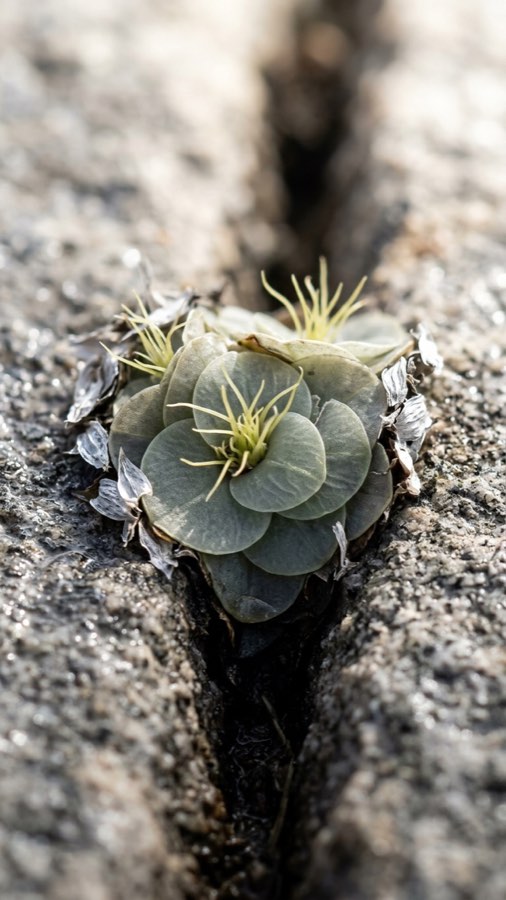
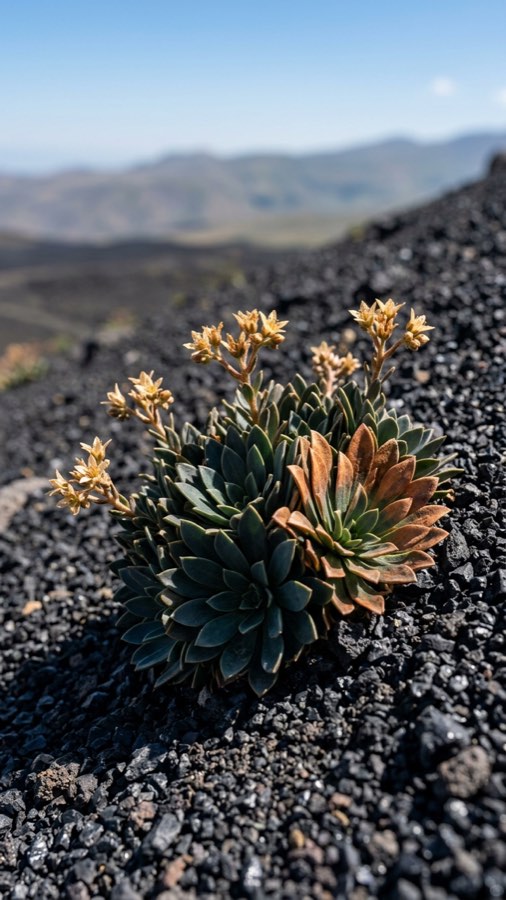
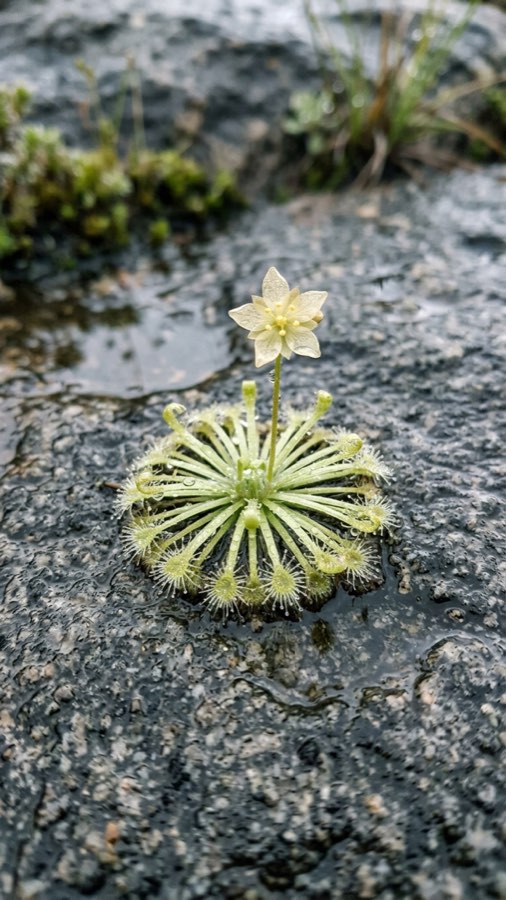
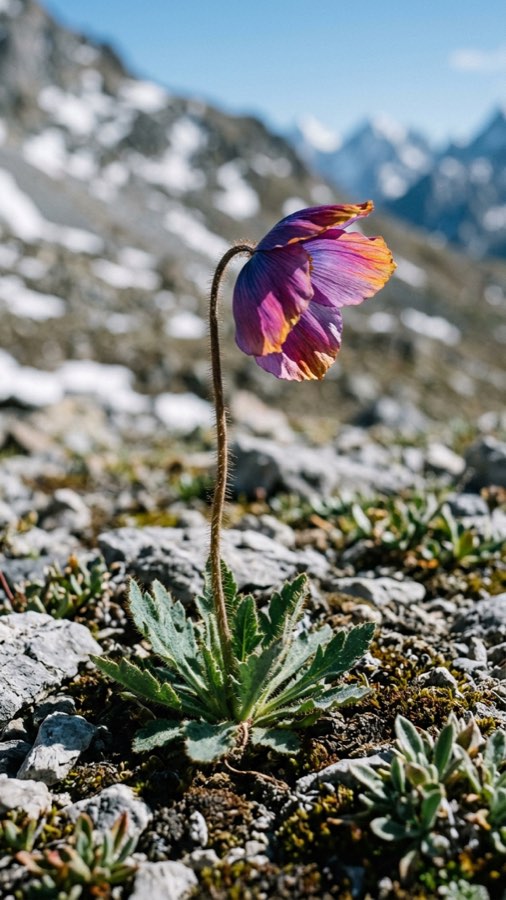
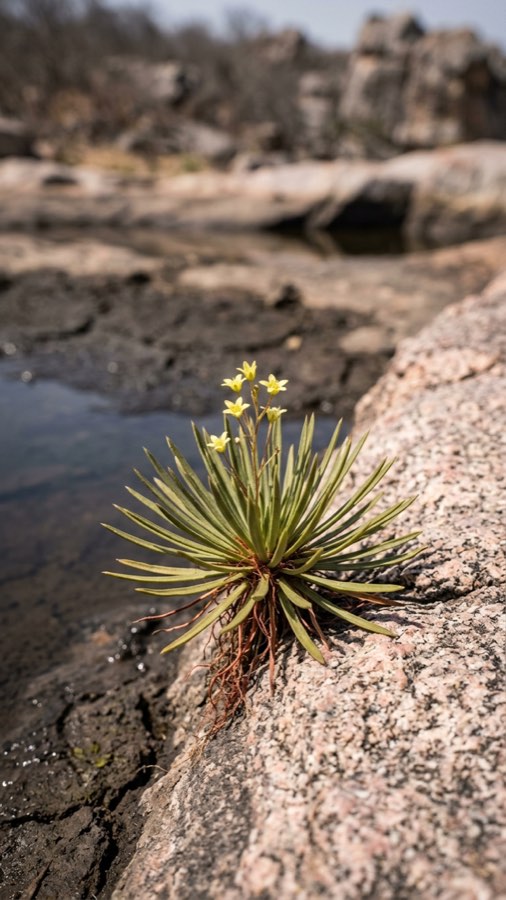
The Receding Rockbloom is a small plant some 8 cm tall. While the pool stands full it makes no roots at all, drifting at the surface as a rosette of slender olive leaves and bearing pale-yellow star-shaped flowers. Only in the few hours when the harsh dry-season sun has drawn the water below a certain depth does it shoot out fine reddish root-hairs all at once, anchoring itself to the pinkish-grey granite. The chance to anchor lasts a few hours in a season; a plant that misses it drifts on rootless until the next dry year.
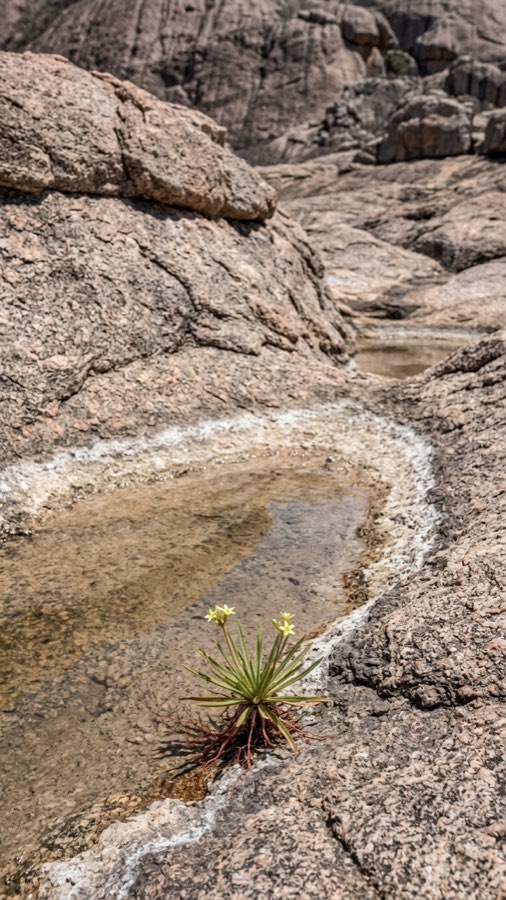 PLATE I
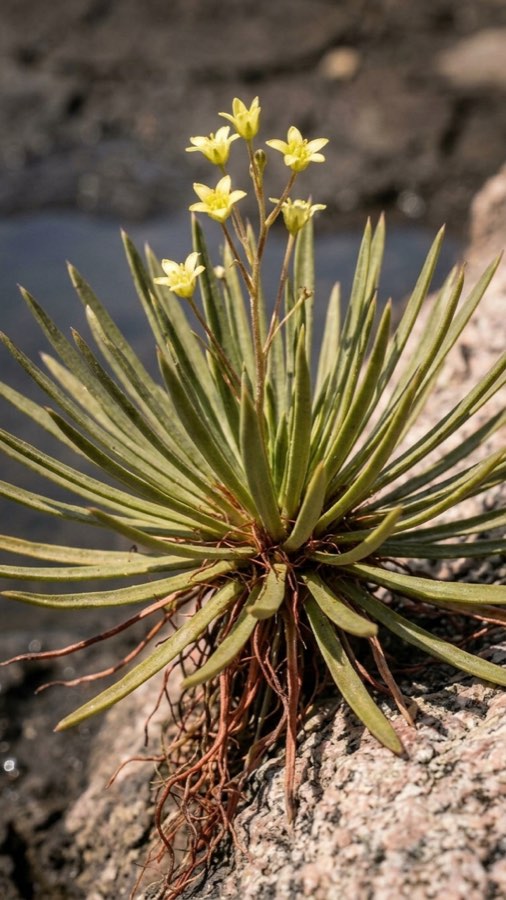 PLATE II
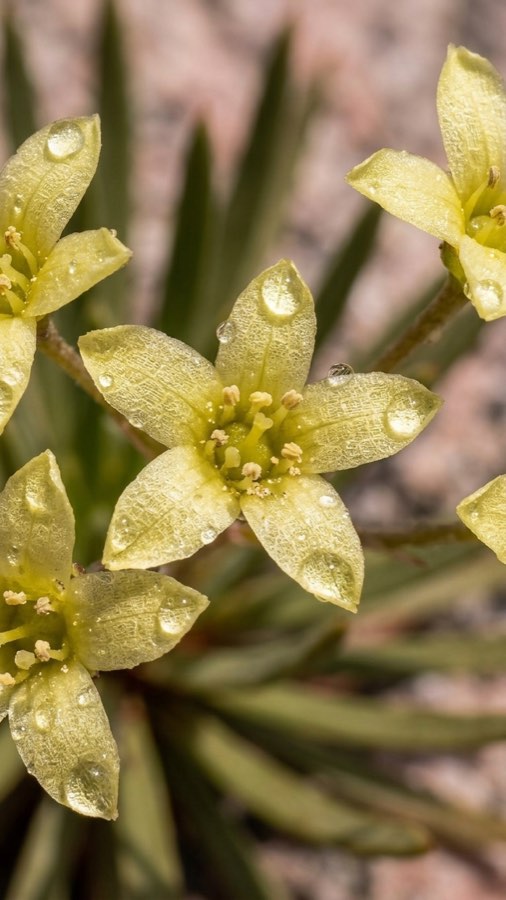 PLATE III
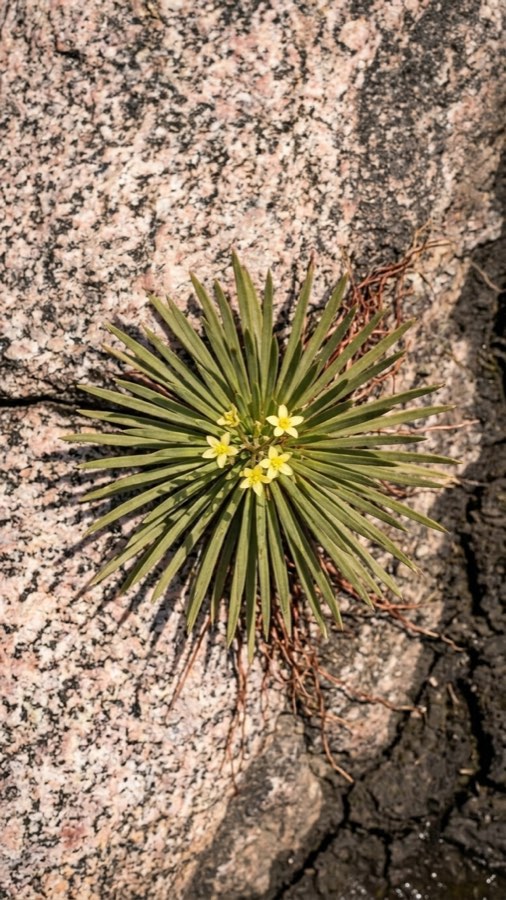 PLATE IV
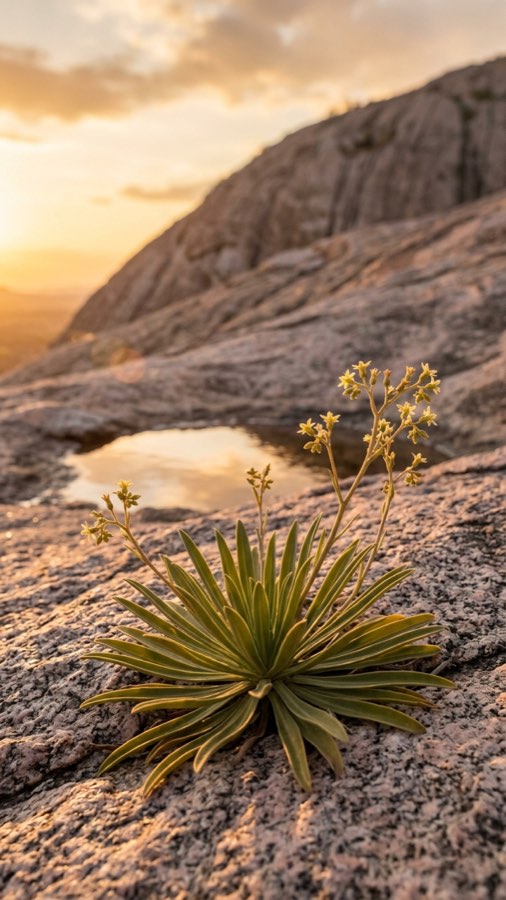 PLATE V
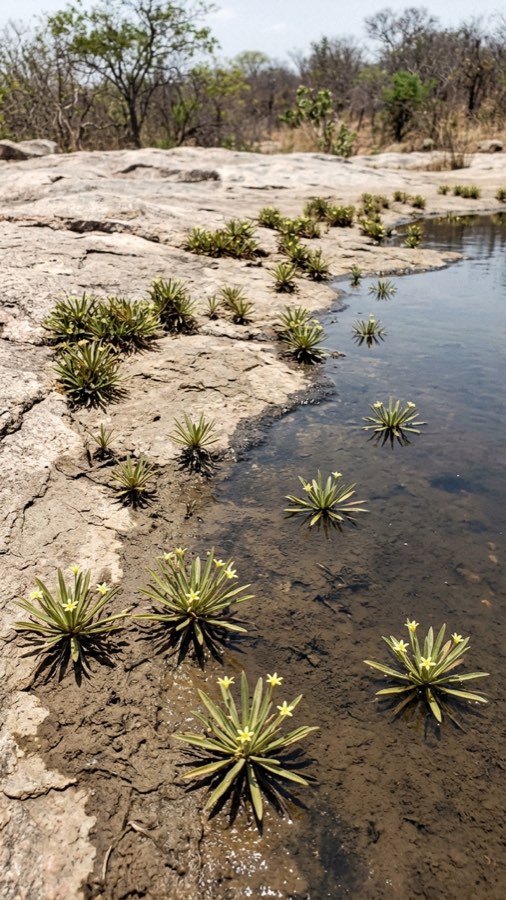 PLATE VI
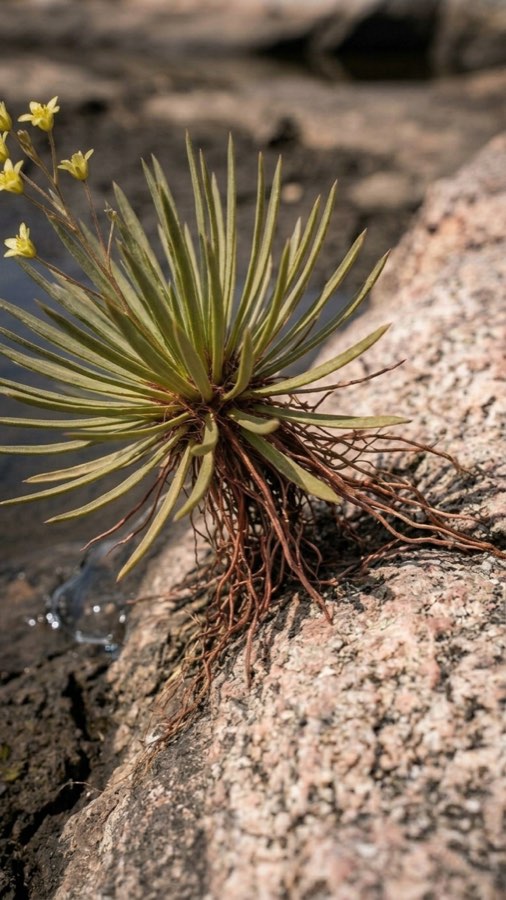 PLATE VIIPLATE VIII
While the pool stands full, this plant has no roots.
The time for anchoring lasts only a few hours in a season.
Granite hills of the Caatinga, northeastern Brazil.
The strong dry-season sun draws down the water pooled in the rock, little by little.
Those few hours, when the water falls below a certain depth.
The Receding Rockbloom shoots out red root-hairs all at once, and fastens itself to the rock.
Flowering begins while the plant is still afloat, but by the time the petals open the anthers have already touched the stigma. It should be read not as a flower awaiting visitors, but as a short-lived bloom that completes cleistogamous selfing several days before the water drops. The few hours in which root hairs reach the rock are less the start of reproduction than a positioning act, placing fertilized ovules where the drying stone can keep them.
When the water vanishes from the shallow basin, it leaves a thin mineral skin of mica flakes and clay. Plants that anchored successfully shrink there; the fruit wall softens without fully splitting, and only the minute seeds adhere to the granite in mucilage. Many are washed away by the first rains, but those caught on tiny ledges along the rim return in the next dry season as a narrow colony at the same receding line.
Most sites lie on isolated inselbergs deep within grazing lands, difficult to reach after rain; by the time they are dry, the plants resemble lichen crusts or the remains of small aquatics. The flowering morning is brief, and pressed specimens collapse into nearly featureless rosettes. The local name flor-da-baixa-d'agua seems to have survived as herders' language for judging when to move animals from one water place to another.