Specimen · N°033 · Mineral · ▶ Film
Ferrifuga congolensisIron-shun Flower
The richer the water, the more completely this plant disappears.
FOUND 2.2°N 18.5°E · Mineral-spring clearings (bai) of the northern Congo Basin · ✝ EX · Last seen 1995
The richer the water, the more completely this plant disappears.
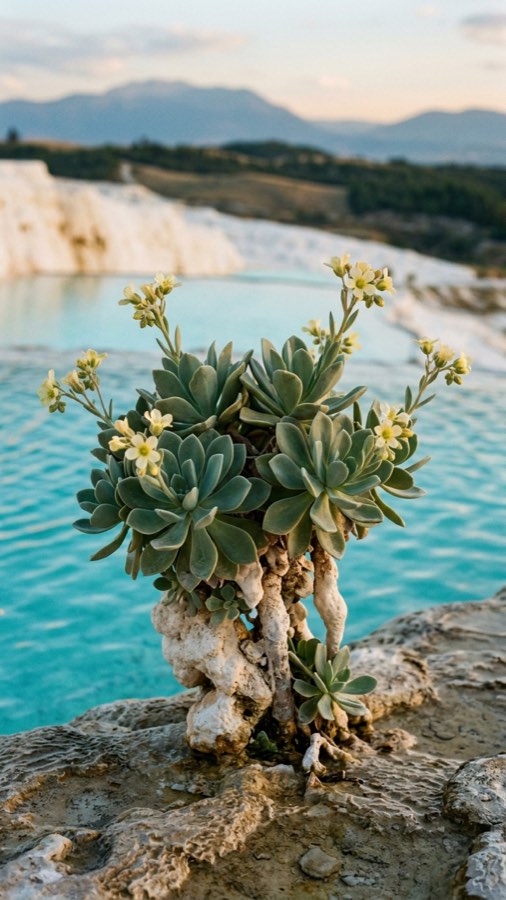
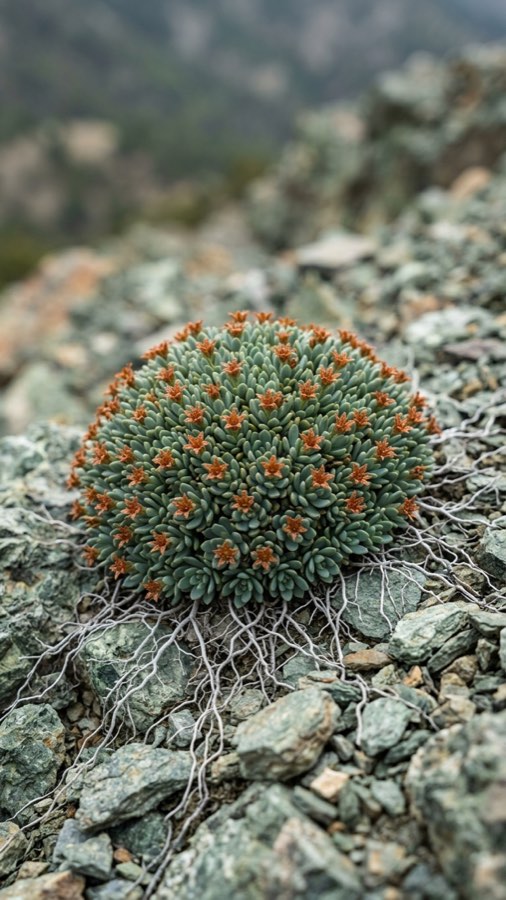
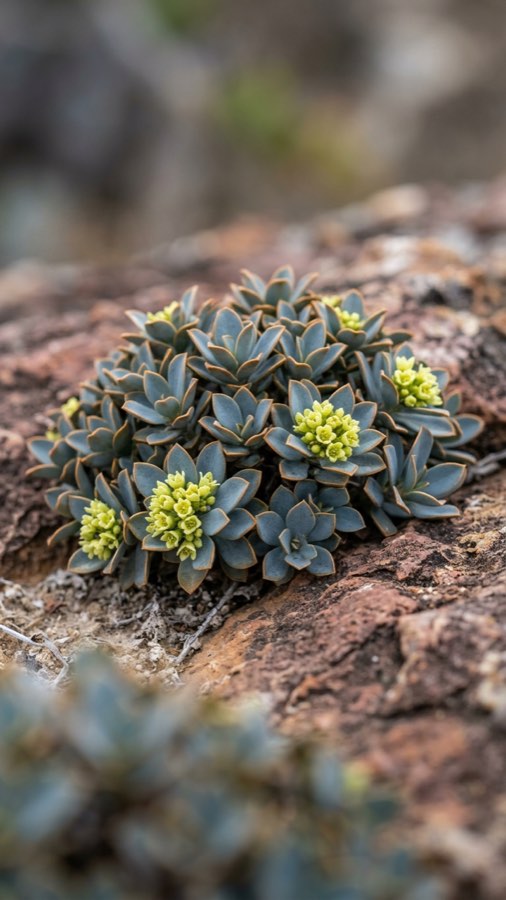
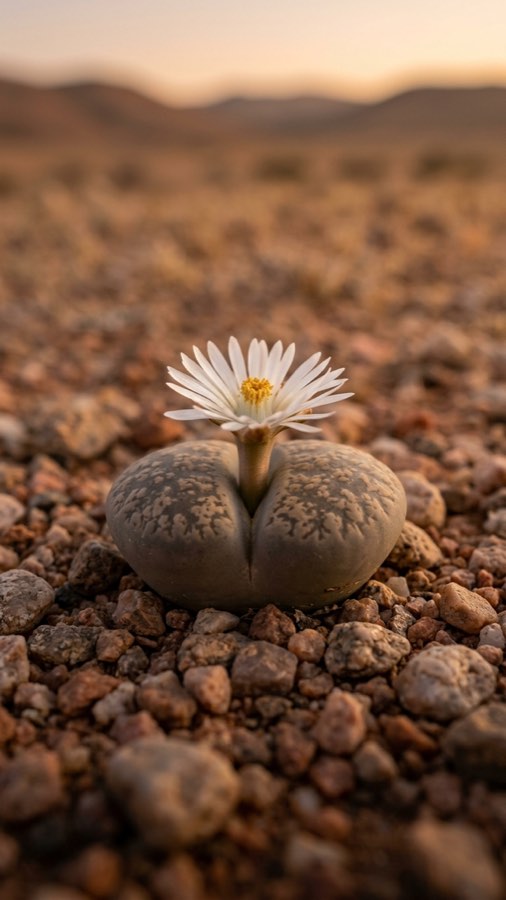
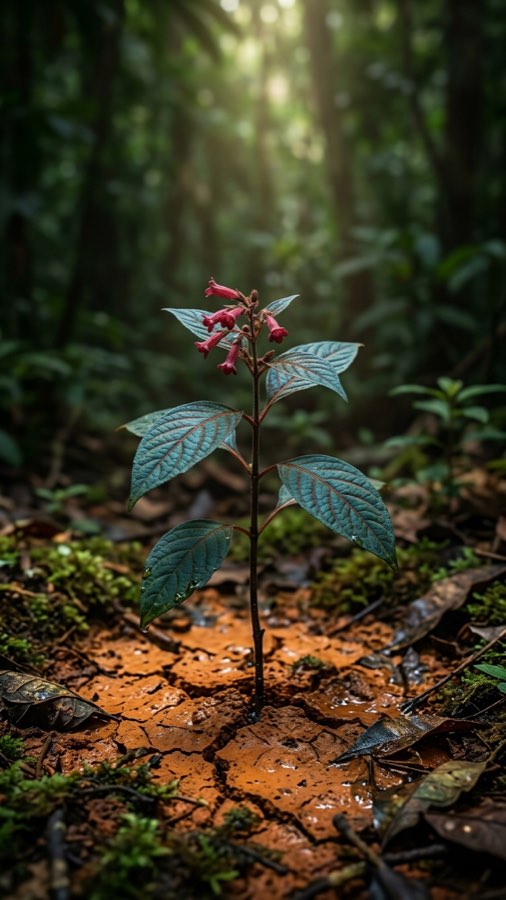
The Iron-shun Flower is a forest-floor plant some 12 cm tall. Rust-coloured veins run through its deep blue-green leaves, and near the ground it bears dull crimson tubular flowers. It sprouts in the dry season when the springs fall still, growing while pushing the iron away from around its roots to protect itself. When the rains return and water grows plentiful it can no longer take up iron at all, and scarcely shows itself above ground. Only in the season of scarce water does this plant’s life come into order.
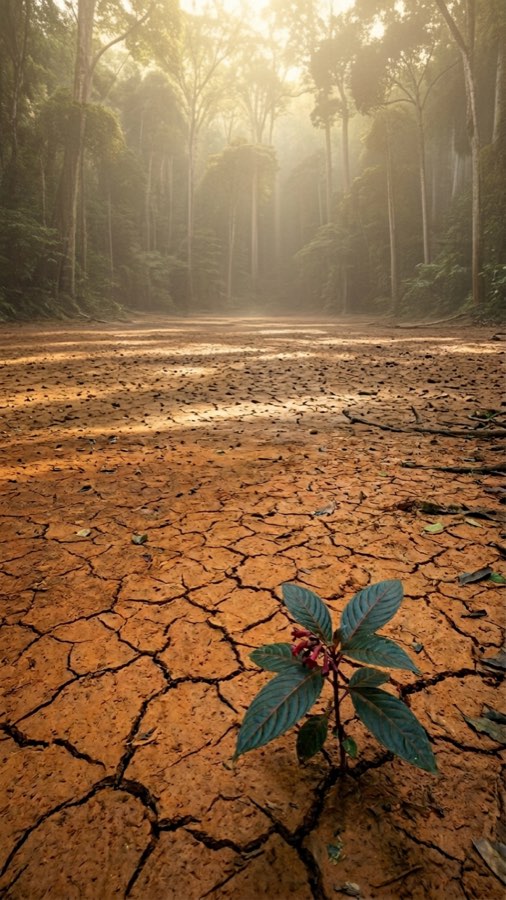 PLATE I
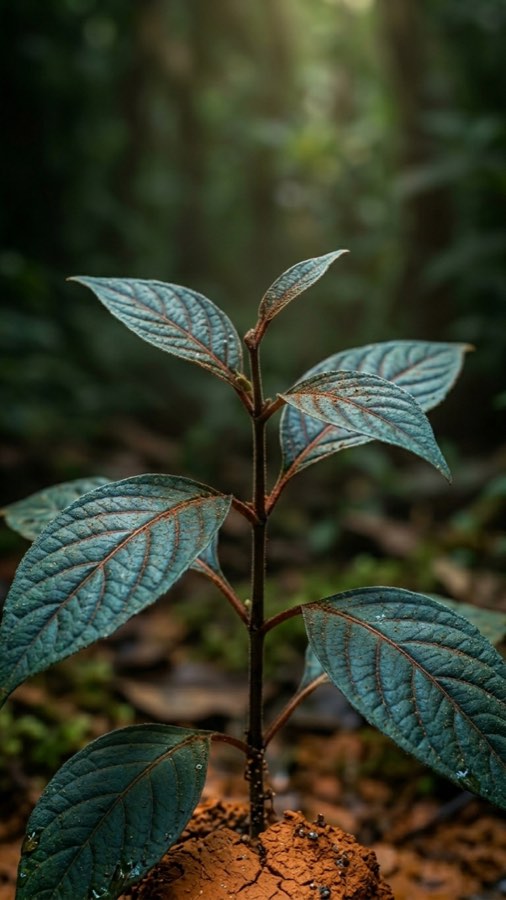 PLATE II
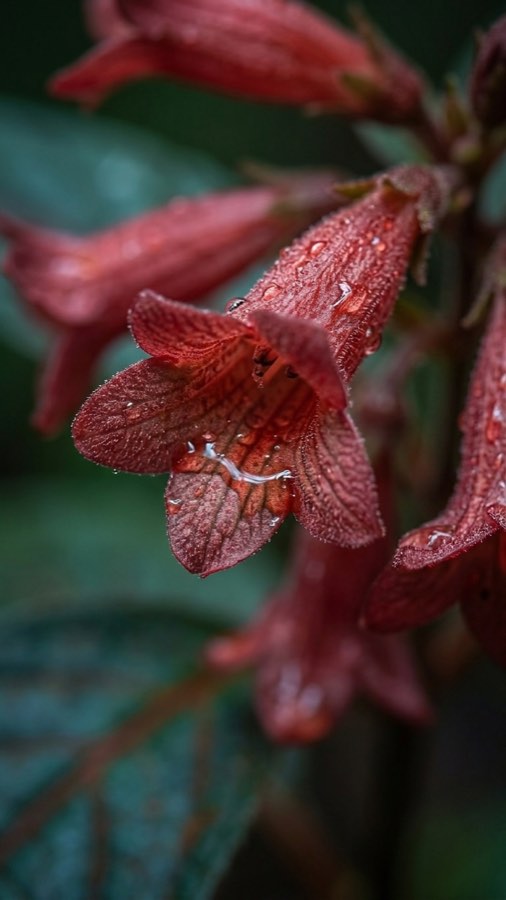 PLATE III
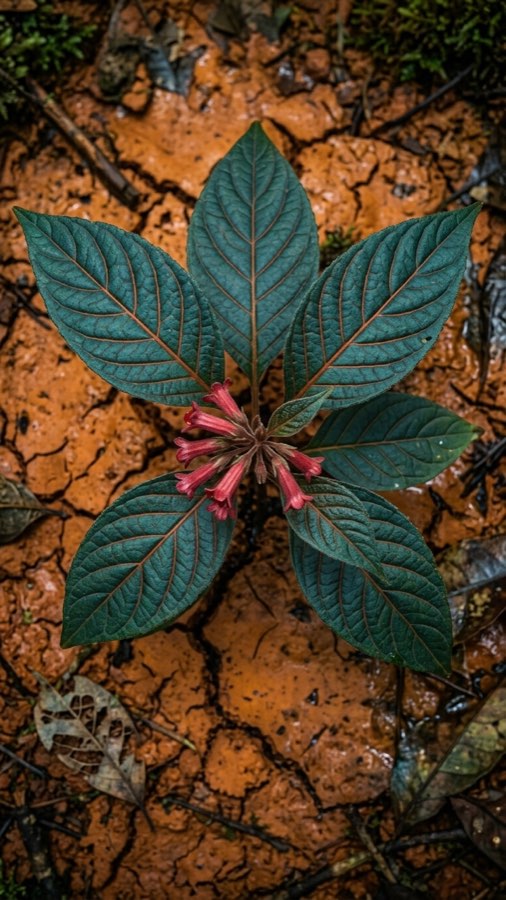 PLATE IV
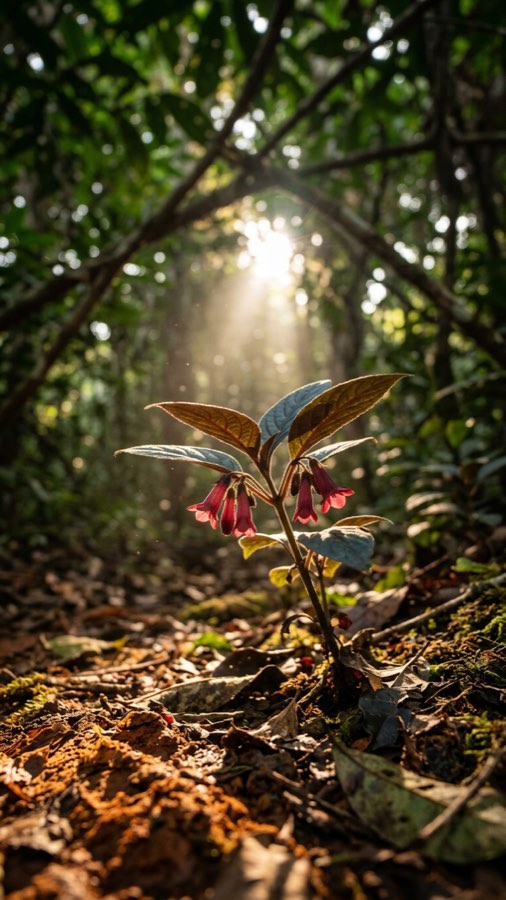 PLATE V
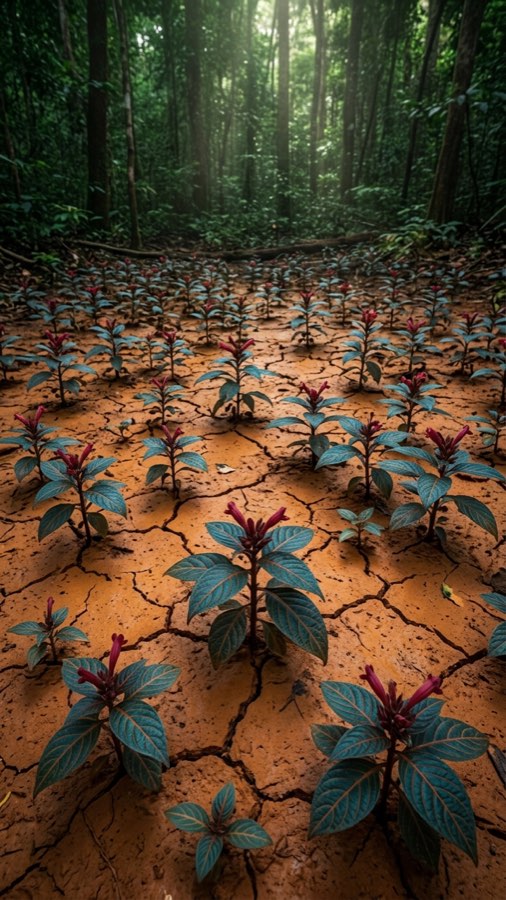 PLATE VI
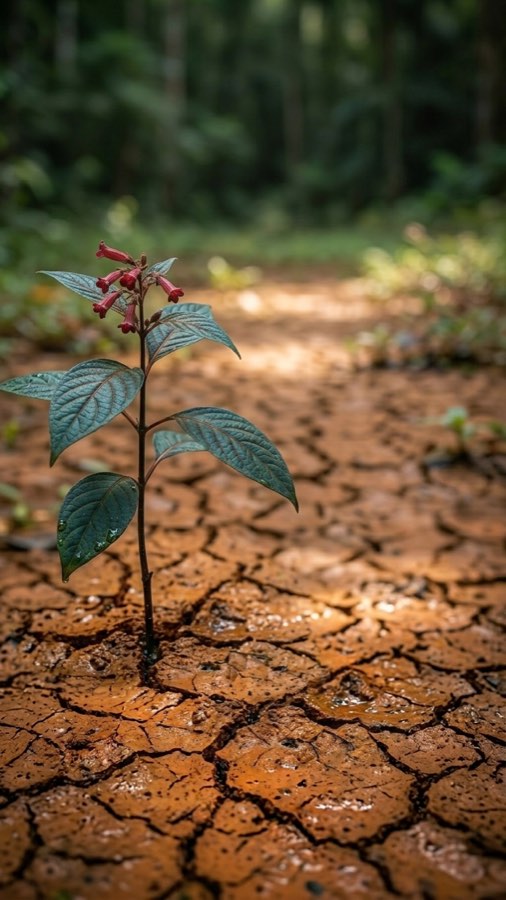 PLATE VIIPLATE VIII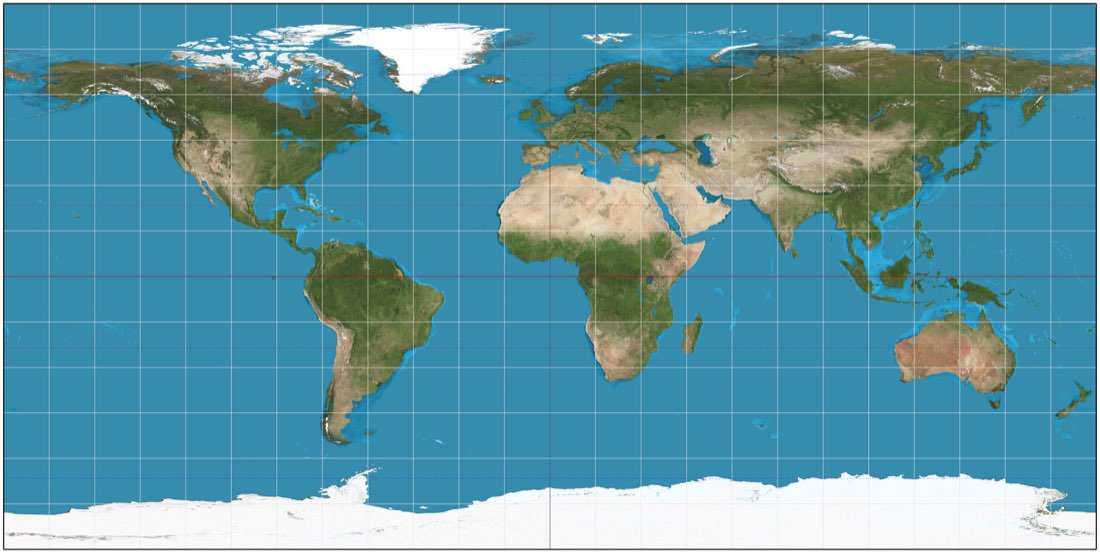
The richer the water, the more completely this plant disappears.
Its life comes into order only in the dry season, when the water fails.
A mineral clearing opened in the forest of the northern Congo Basin.
When the iron-rich springs stop in the dry season, the rust-red mud begins to dry.
Only then does the Iron-shun Flower sprout.
It grows by pushing the iron away from its roots, keeping itself safe.
Between the third and seventh day after the spring ceased, while the red mud remained damp, Ferrifuga appeared at nearly uniform height. Beneath each plant lay a tuber no larger than a grain of rice, bearing scars of earlier wet-season leaves. Its synchronized emergence seems less a matter of fresh seed than of these organs responding to falling water tables and a shifting redox boundary.
The dull red tubes open almost at ground level, and their pollen is more depleted by evening than by morning. Even without seeing visitors, fine abrasion at the mouth of the tube suggests small-bodied pollination. After fruiting, the seeds fall into cracks in the drying mud and are pressed deeper by the first rains. Their refusal to germinate until the next dry season explains the plant's sudden colony-like appearance.
The bai is often crossed by wildlife observers, yet in wet-season surveys Ferrifuga is absent above ground. Flowering contracts to roughly ten days in the dry season, and pressed young plants, once their rust-colored venation fades, resemble juvenile Rubiaceae or gesneriad herbs of the forest floor. The Lingala guide's phrase, the red of mai ekauki, was a cue for changing hunting routes around a failing water place, not a taxonomic name.