Specimen · N°034 · Water · ▶ Film
Stellatia donianensisDrypool Star
It had not vanished — it was waiting beneath the water.
FOUND 37.0°N 6.4°W · Mediterranean temporary ponds of Donana, Spain · ✝ EX · Last seen 2009
It had not vanished — it was waiting beneath the water.
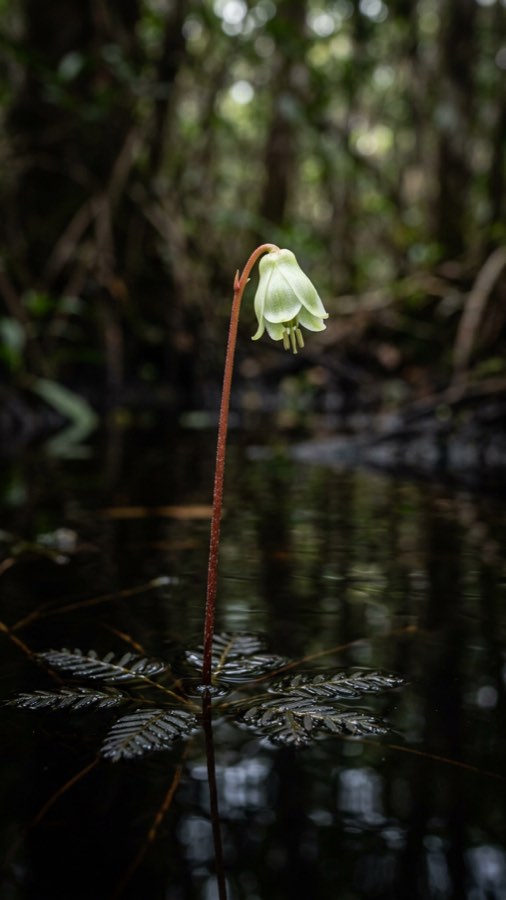
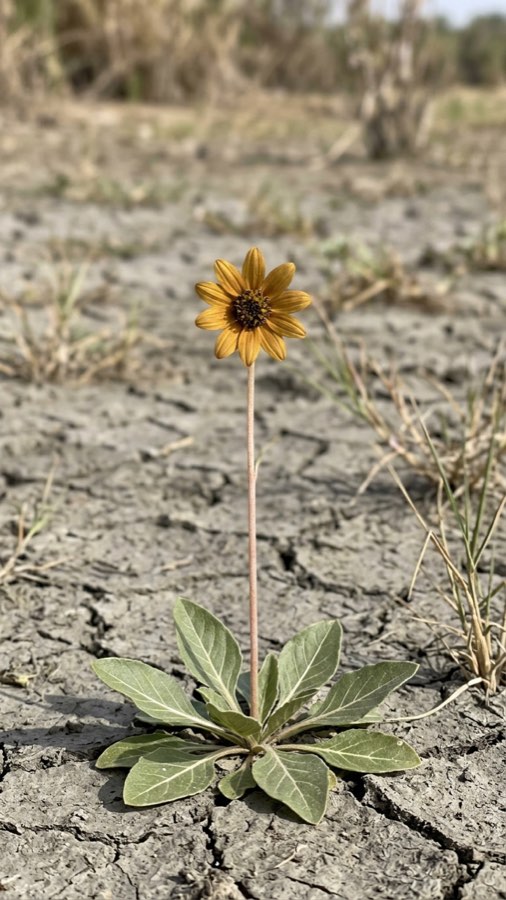
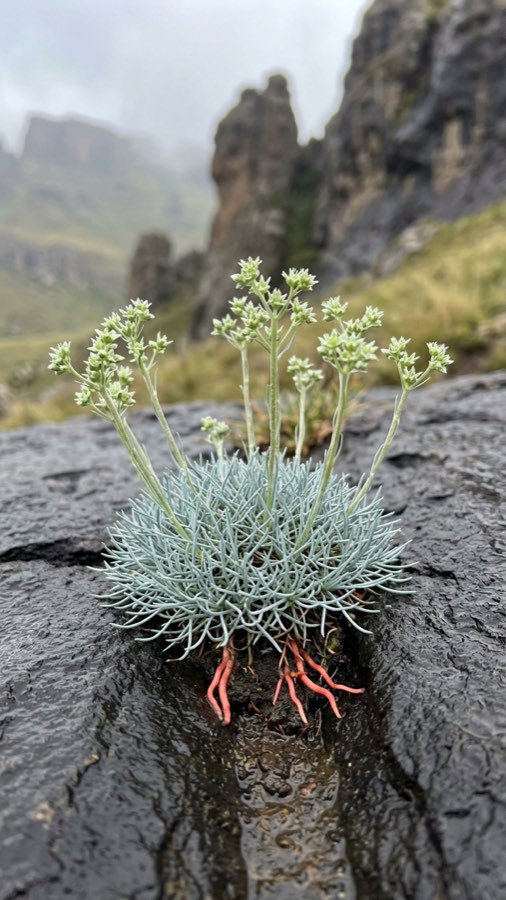
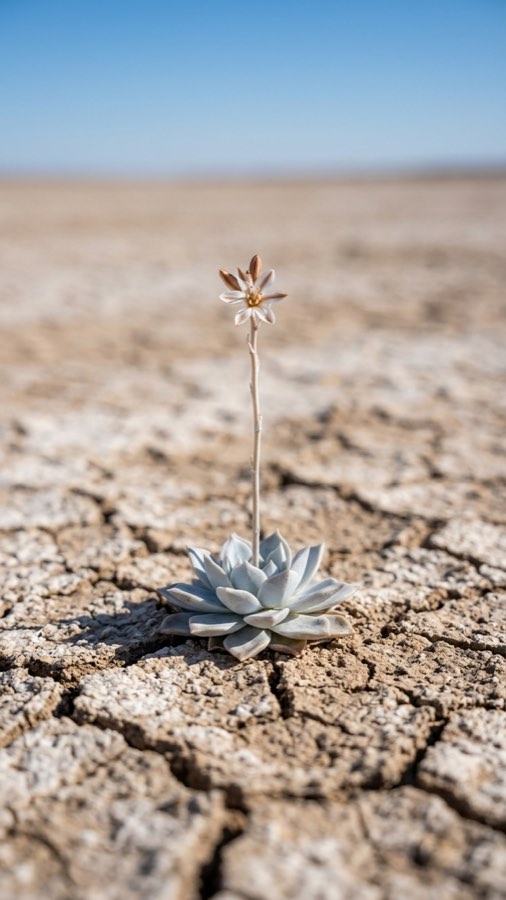
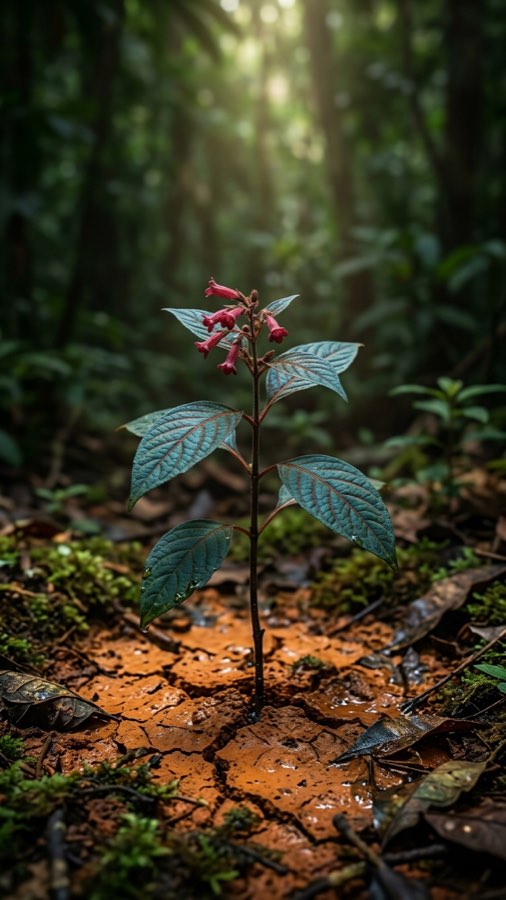
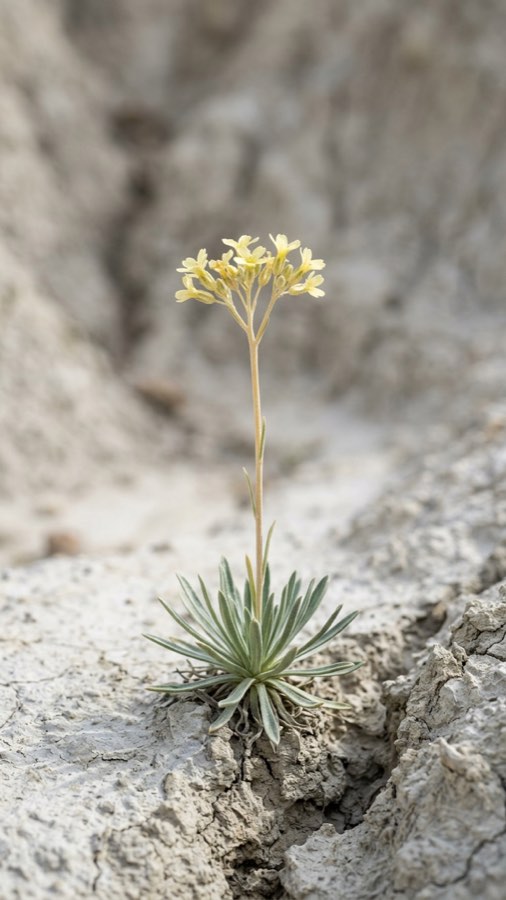
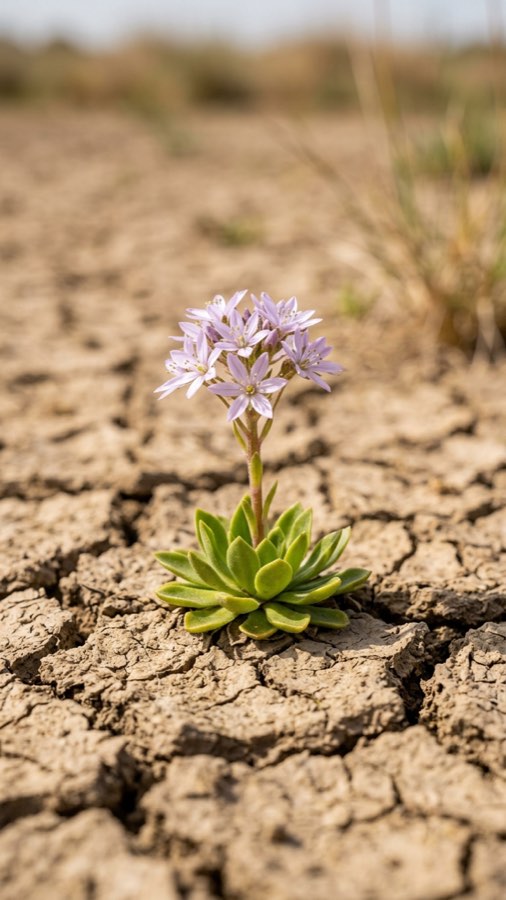
The Drypool Star is a small plant some 10 cm tall. It spreads thick bright olive-green leaves flush with the ground, and on a short reddish stem opens a single pale-wisteria star-shaped flower. While the hollow stands full this plant is wholly invisible from the surface: underwater it concentrates and stores carbon, and immediately after the pond dries and the cracked mud appears, it spends that store in one burst — sprouting and flowering within weeks. It had not vanished; beneath the water it was preparing for the next drying. It forms colonies only in the brief spell before the dried mud drowns again, then returns to its long sleep.
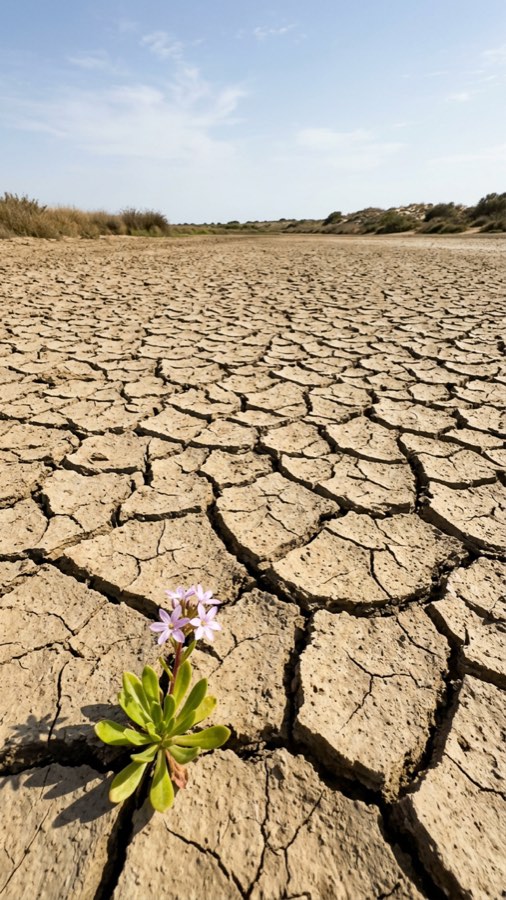 PLATE I
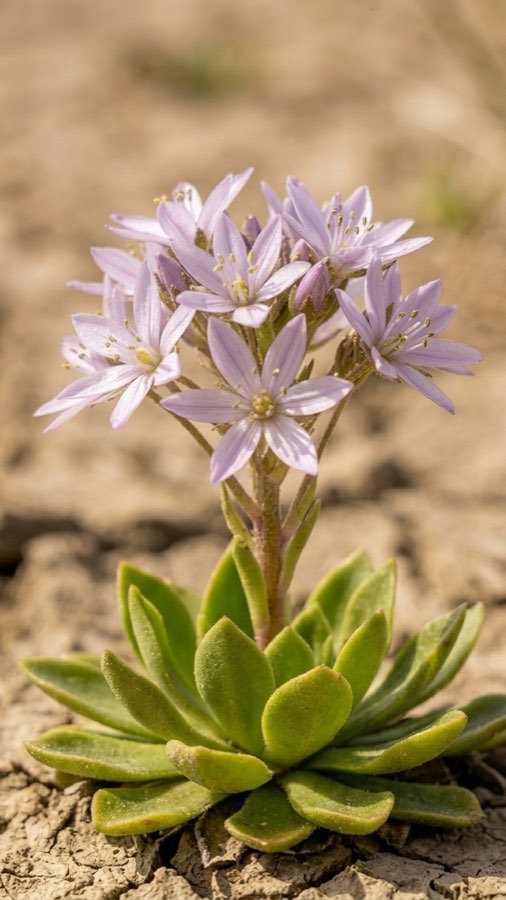 PLATE II
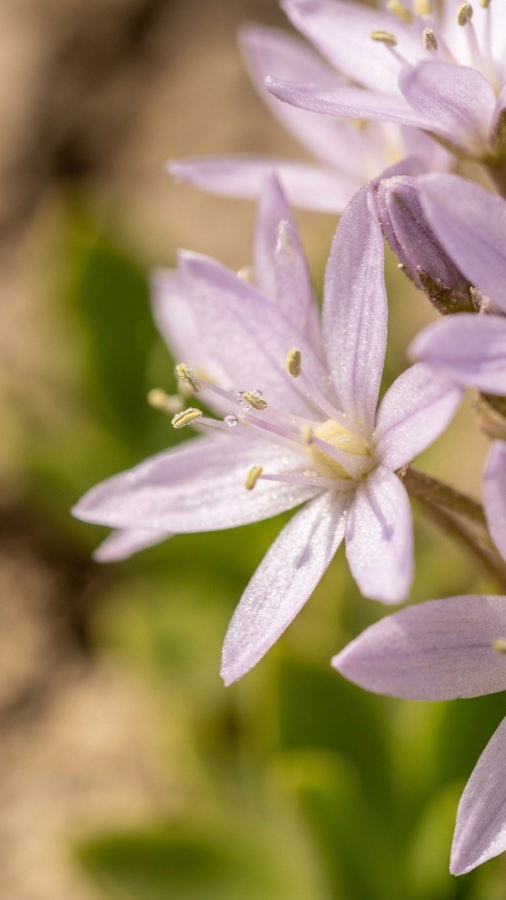 PLATE III
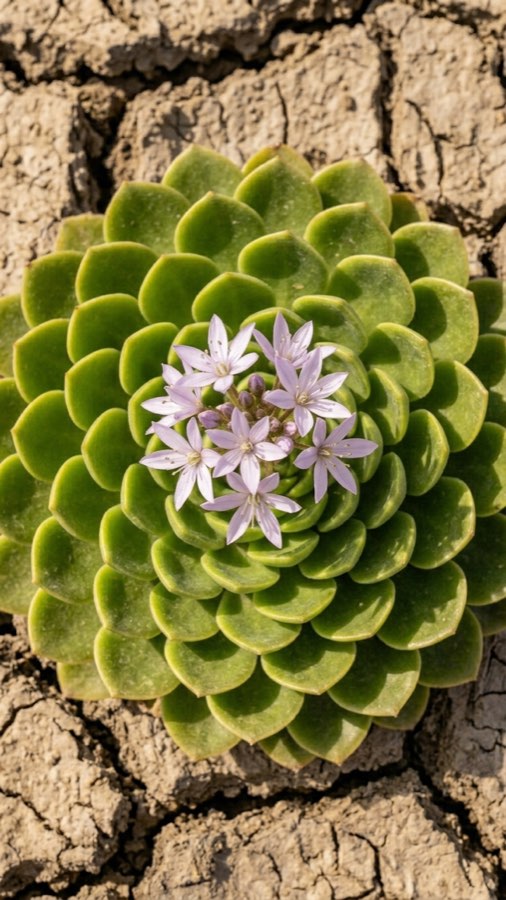 PLATE IV
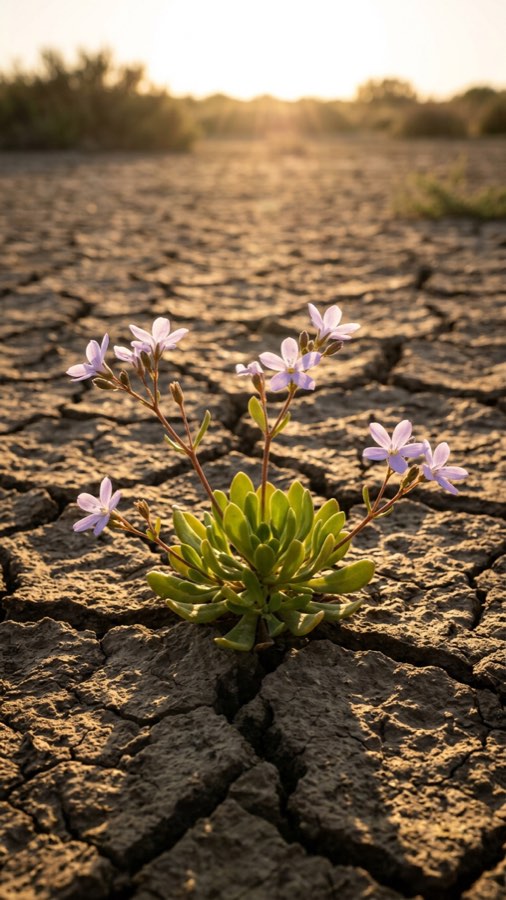 PLATE V
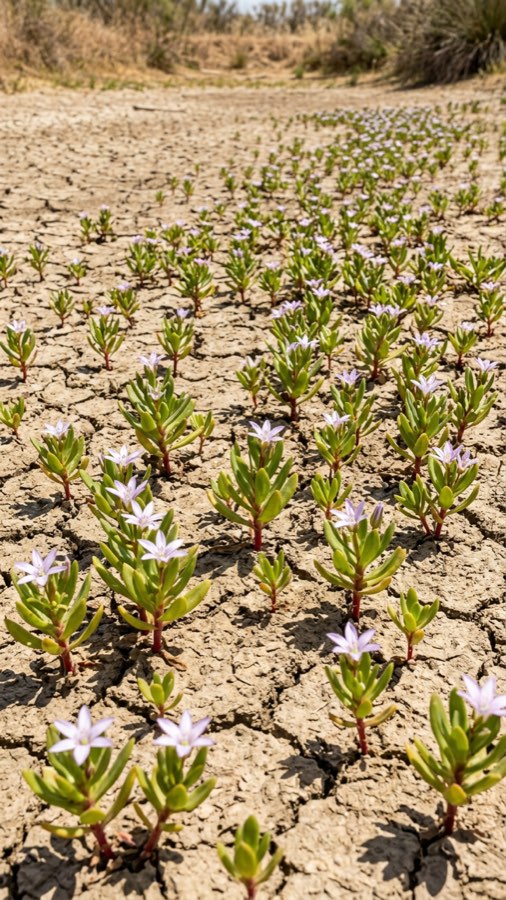 PLATE VI
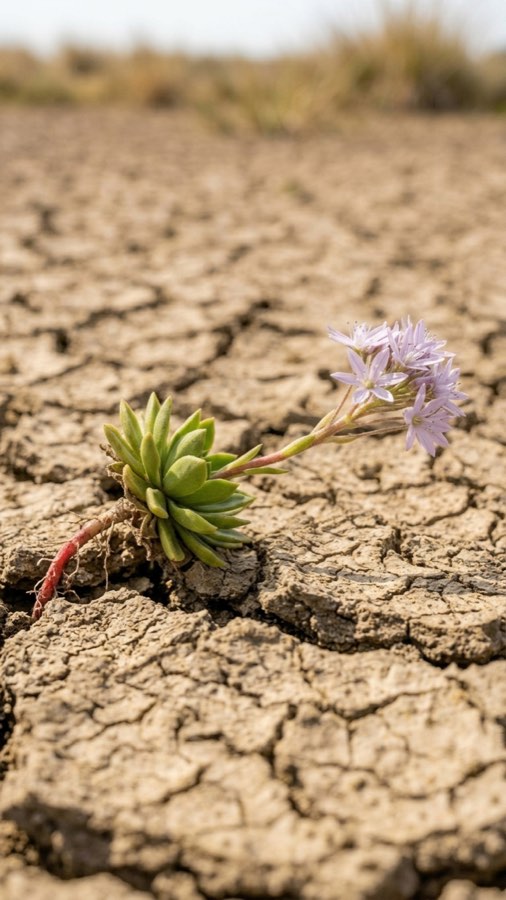 PLATE VIIPLATE VIII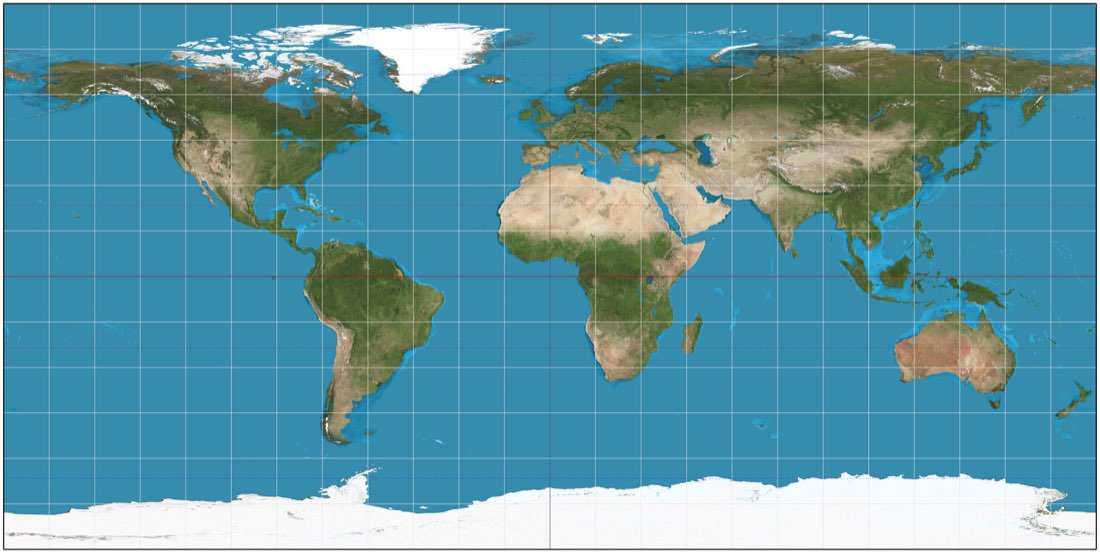
It had not vanished — it was waiting beneath the water.
For years at a time, nothing shows above the ground.
The temporary ponds of Donana, Spain.
A hollow that fills only once in several years is drying at last.
The moment the cracked mud appears, the Drypool Star sprouts.
It stores carbon underwater, and spends it all in the instant of drying to flower.
By the third day after the basin floor was exposed, the first shoots appeared along polygonal cracks in the clay. The flowers open by day, but the anthers already touch the stigma before full opening, suggesting that fruit set begins by self-pollination. On still afternoons, small bees and flies visit once or twice, carrying a little pollen within the stand. For a plant with so brief a season, reliance on visitors seems secondary to a mechanism that does not wait for them.
Although sand dominates much of Doñana, the floor of this hollow holds a thin deposit of fine clay and humus that poorly drains. During inundation, organic matter and dissolved carbon accumulate in the dark mud; as drying begins, the sediment shrinks into hard cracks. The rows of Stellatia follow these fissures, not the sand, tracing the lines where the impermeable layer retained moisture longest.
No leaves are visible when the pool is full. When the mud is opened shallowly below last year's plant scars, a short swollen stem can be found, bearing pale dormant buds and mealy starch reserves. Under water it does not elongate, but lies in the sediment with thin membranous tissue, favoring storage over light capture. When water returns, the aerial parts collapse, while seeds and dormant buds remain in the mud for the next drying.