Specimen · N°050 · Water · ▶ Film
Radicilapsa drakensbergensisChannel-root Caster
There is a herb that casts away the roots it grew.
FOUND 29.5°S 29.3°E · Drakensberg highlands, South Africa · ✝ EX · Last seen 2019
There is a herb that casts away the roots it grew.
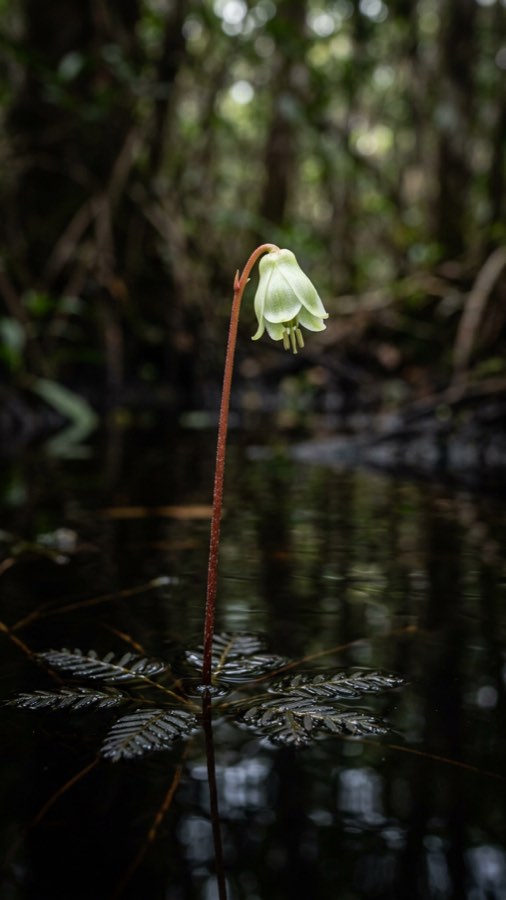
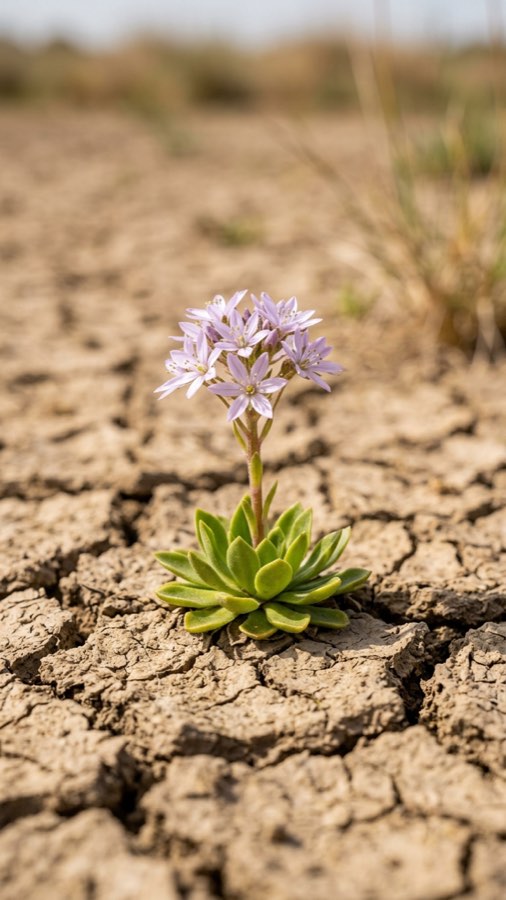
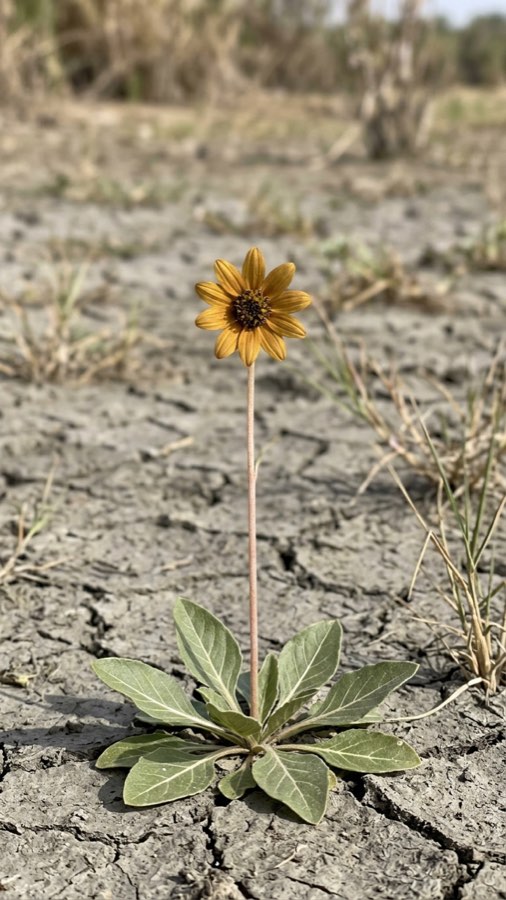
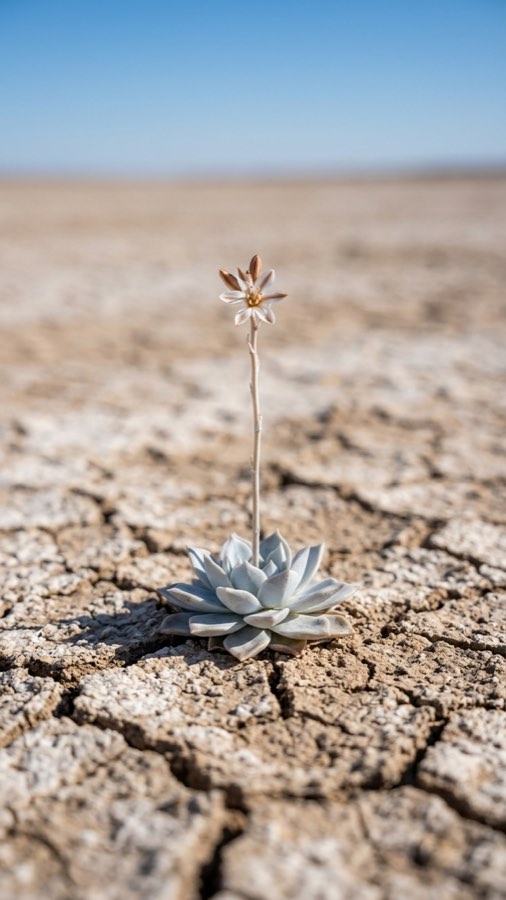
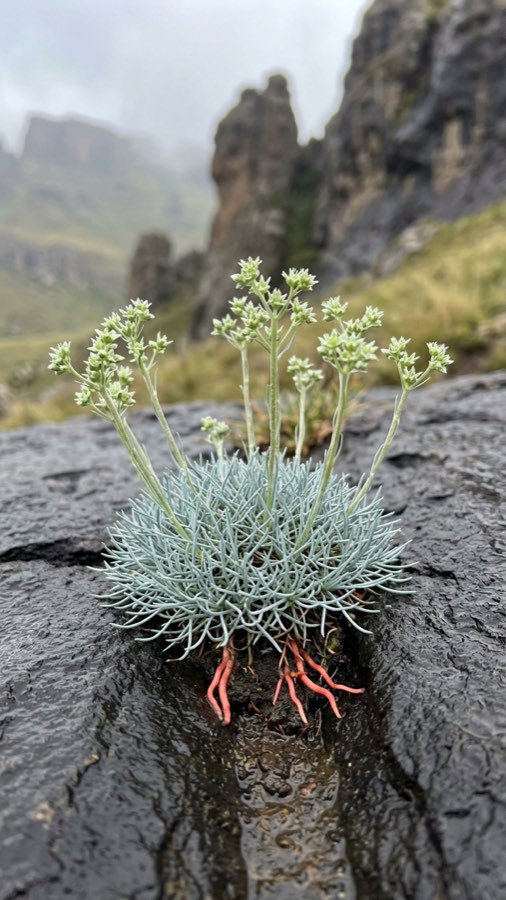
The Channel-root Caster is a small alpine plant some 10 cm tall. It gathers fine thread-like leaves of bluish grey-green into a low bolster, and on translucent slender green stems bears clusters of small greenish-white star-shaped flowers. Only for the few weeks when cold water seeps from cracks in the basalt does it drive its roots toward the crack — and before the spring begins to warm, it severs and discards its own root-tips. The cast-off coral-coloured tips remain on the wet black rock, marking where the plant should seek water the following year. Trace the rocks inscribed with old root-tips, and the water’s path over many years rises up like a map.
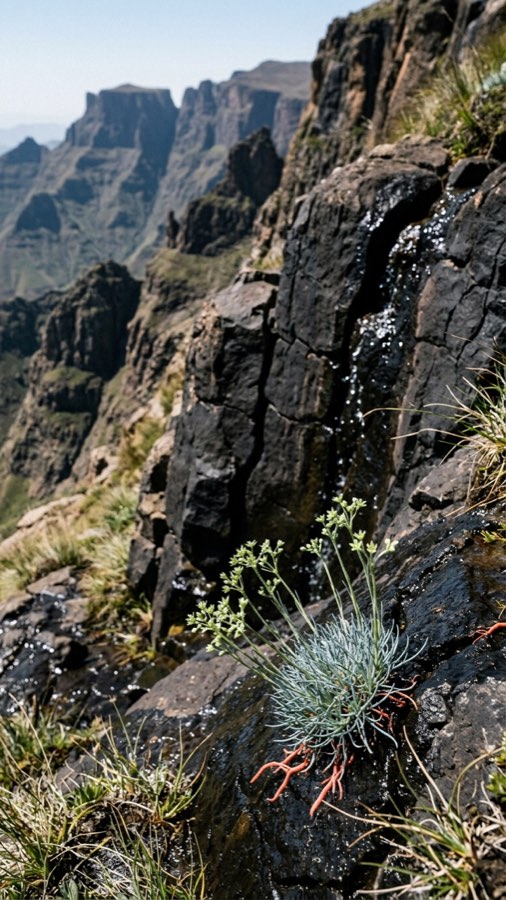 PLATE I
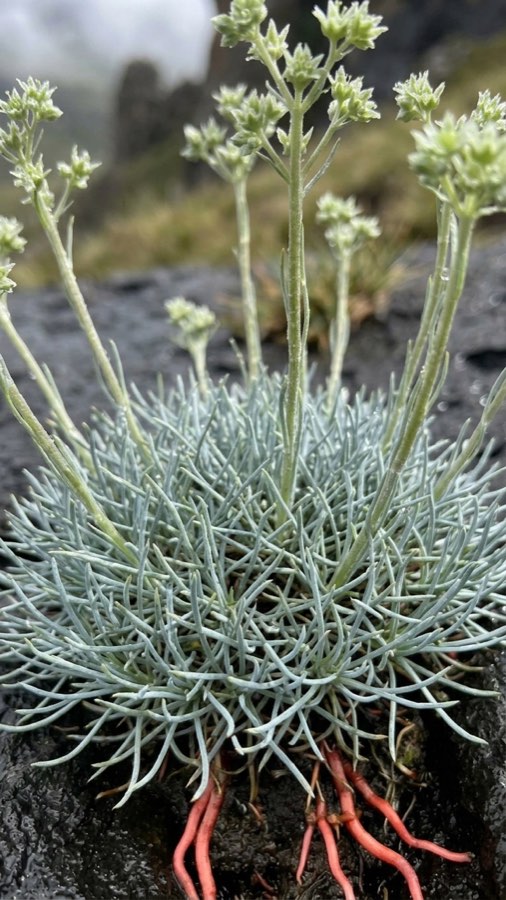 PLATE II
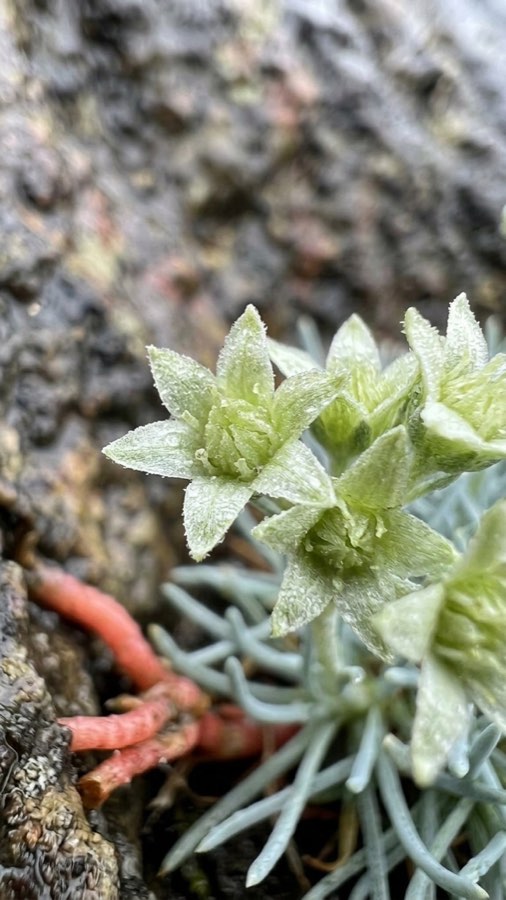 PLATE III
 PLATE IV
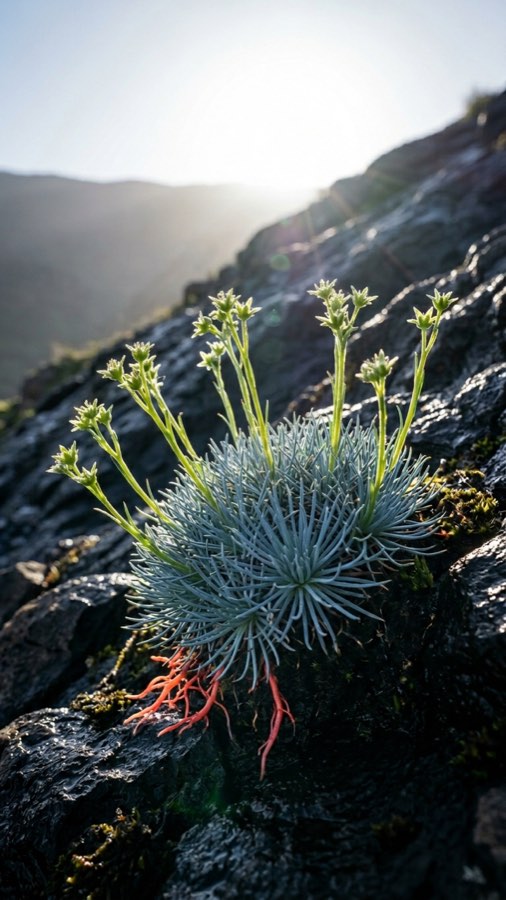 PLATE V
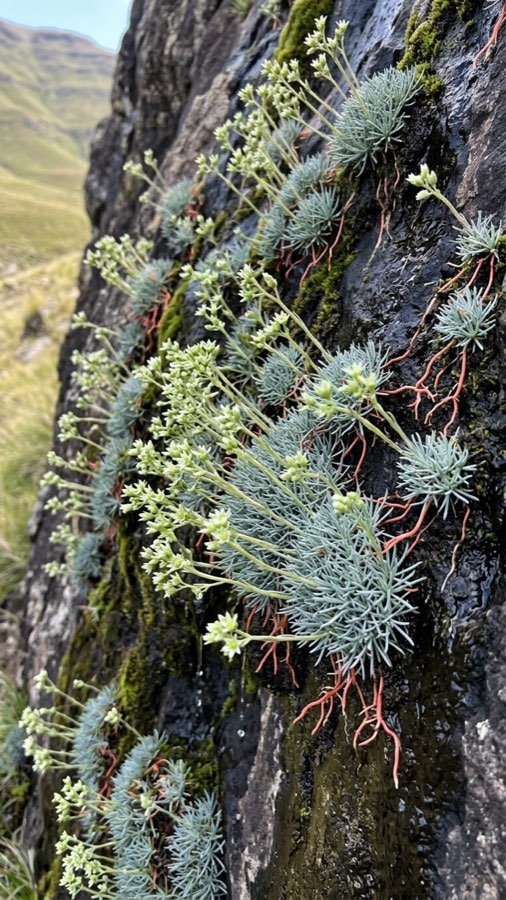 PLATE VI
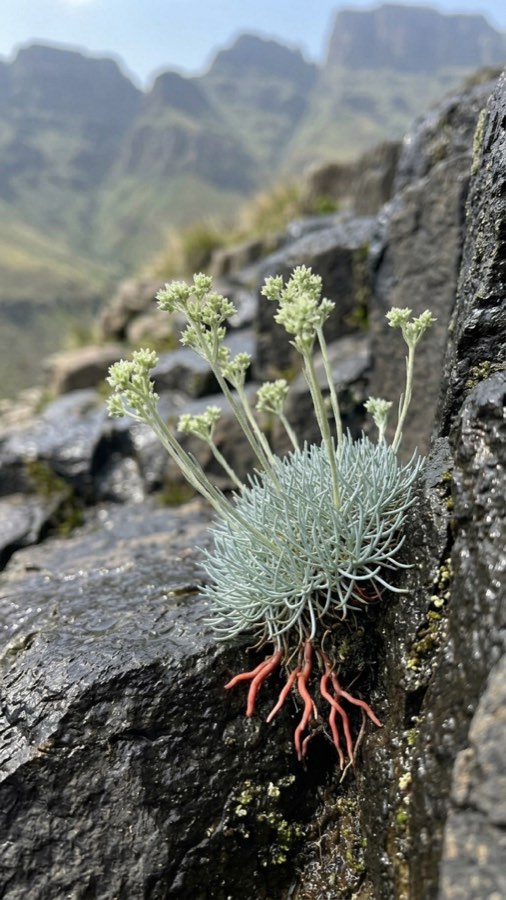 PLATE VIIPLATE VIII
There is a herb that casts away the roots it grew.
And the discarding, they say, is the surer way to survive.
Drakensberg highlands, South Africa
From cracks in the black basalt, cold spring-water seeps.
For those few weeks alone, the Channel-root Caster drives its roots toward the crack.
Then, before the water warms, it severs its own root-tips and lets them go.
Only during the dozen or so days when meltwater cools the basalt fissures do the flowers open close to the rock surface. Their scent is slight; a few small alpine flies visit on clear mornings, but the anthers split early, and when visits cease, self-pollen falls onto the stigma. The seeds do not travel far by wind. Only those pressed into wet micro-grooves remain until the following season.
The population does not spread as a sheet; it appears in broken beads along a single cold seep line. Before drying, the discarded coral root tips seem to catch fine grit and algal film, forming a thin germination bed on the black rock. Directly beneath the parent cushions, old leaves take the light, so seedlings are most often found a few centimeters downslope along the same seep.
Its absence from collections cannot be explained by rarity alone. The exposed root tips and flowers are visible for only about two weeks after snowmelt; by the usual collecting season the plant has shrunk into a dry grey-green moss-like mat, easily filed away as a related cushion plant. Basotho shepherds preserved the brief sign more practically, reading it during summer grazing as a guide to cold water seams.