Specimen · N°049 · Ice · ▶ Film
Pulvina chronostrata antisanensisTime-layer Cushion
Within a single plant, several times lie sleeping.
FOUND 0.5°S 78.1°W · Paramo wetlands at the foot of Antisana, Ecuador · ✝ EX · Last seen 2005
Within a single plant, several times lie sleeping.
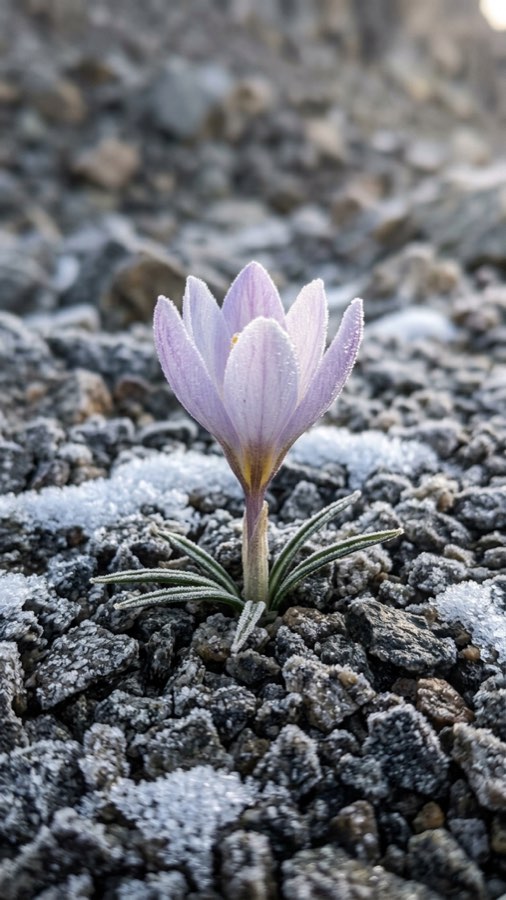
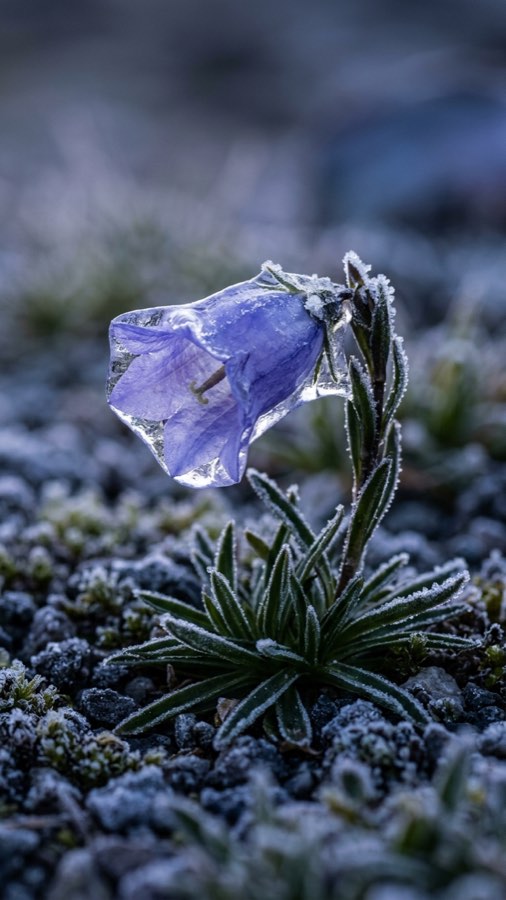
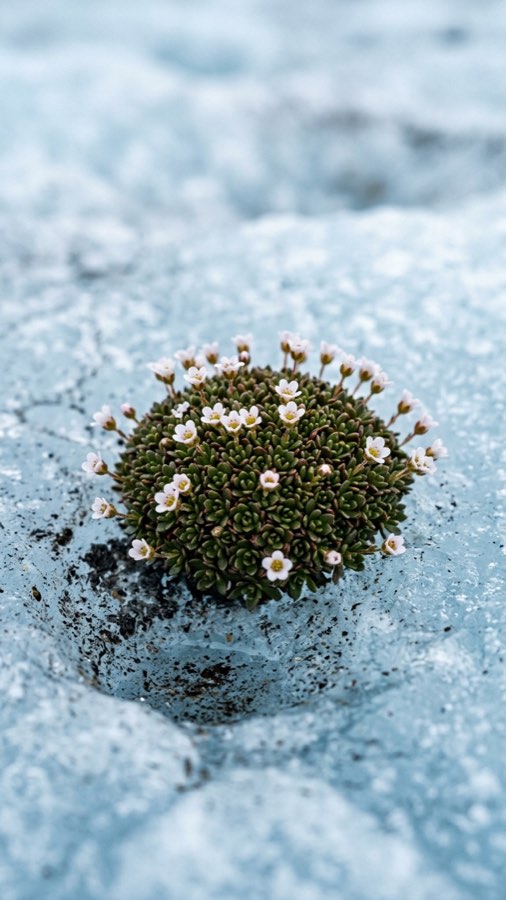
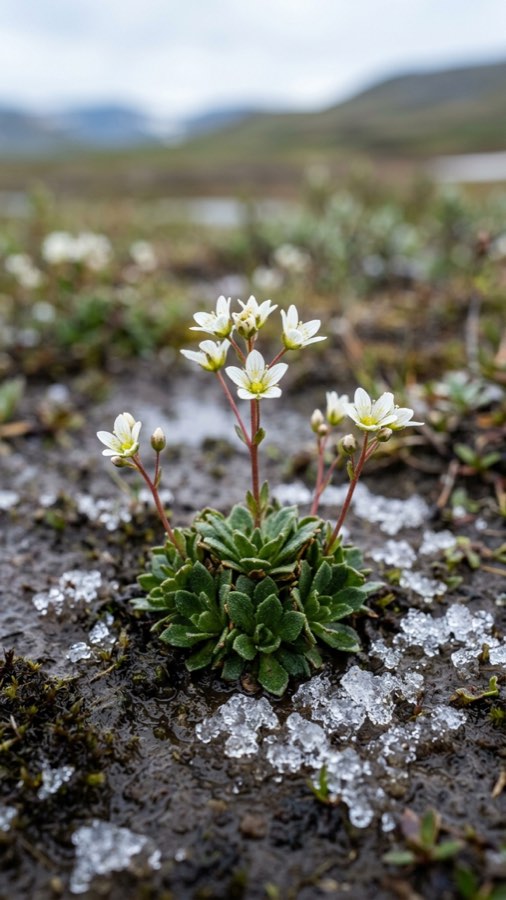
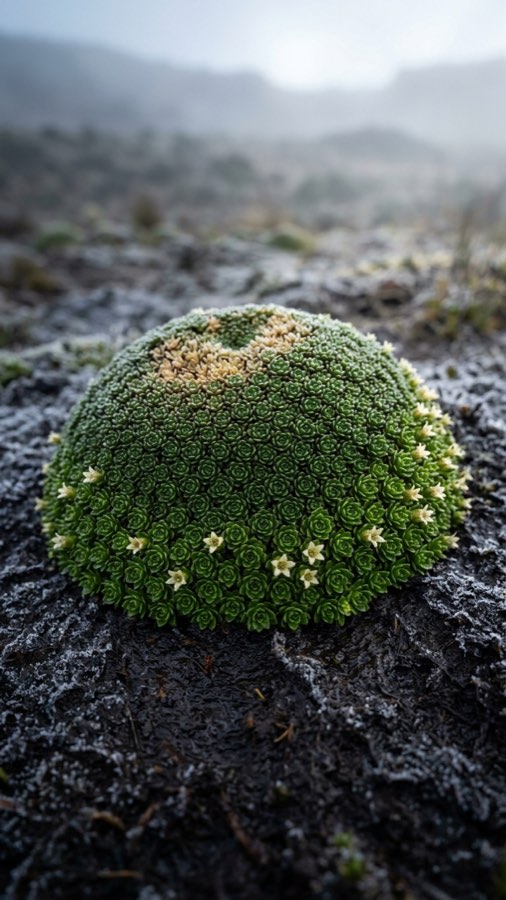
The Time-layer Cushion is an alpine plant forming a half-dome cushion 30–40 cm across. Countless small deep-green rosettes pack and overlap into a dome pressed low against the ground. At the cushion’s centre the tissue is old, faded to pale amber; toward the rim it passes into layers of fresh bright green, and near the edge small pale-cream star-shaped flowers open here and there. While night frost seals the surface, the outer growing-points rest and the centre alone quietly keeps its tissue alive. Thus within a single plant, an old generation at the core and a young one at the rim — different layers of time — live together. Somewhere on the paramo it is always alive; yet within any one plant, many times lie folded together as it fades.
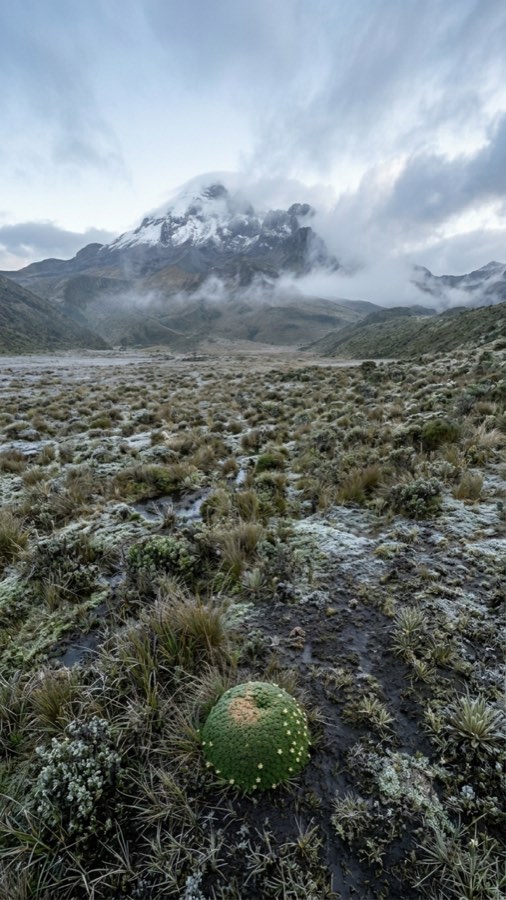 PLATE I
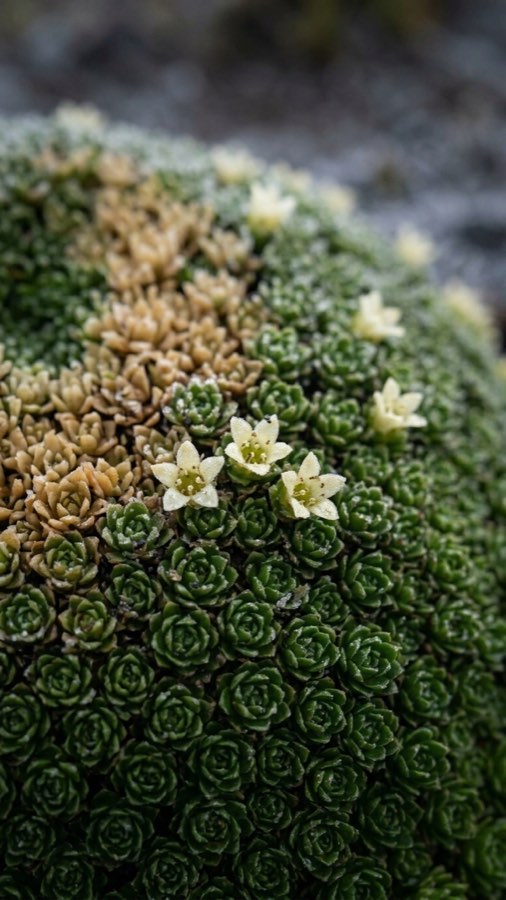 PLATE II
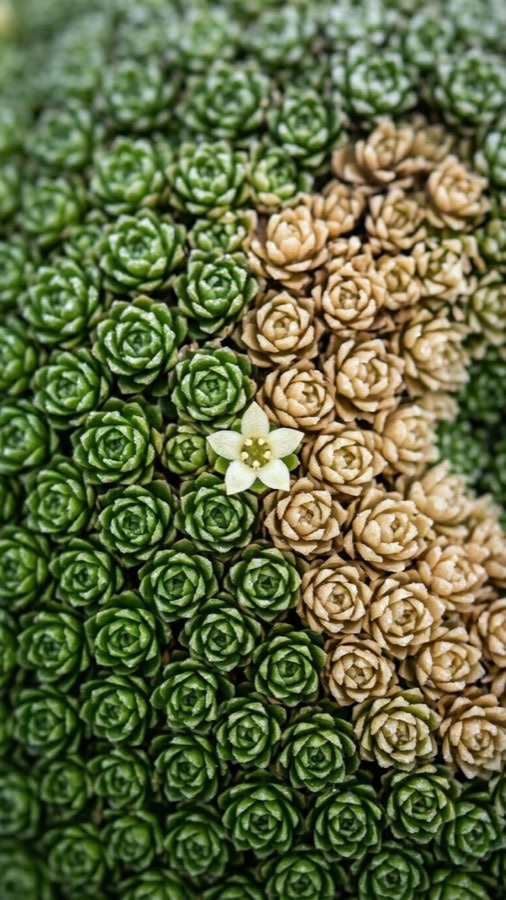 PLATE III
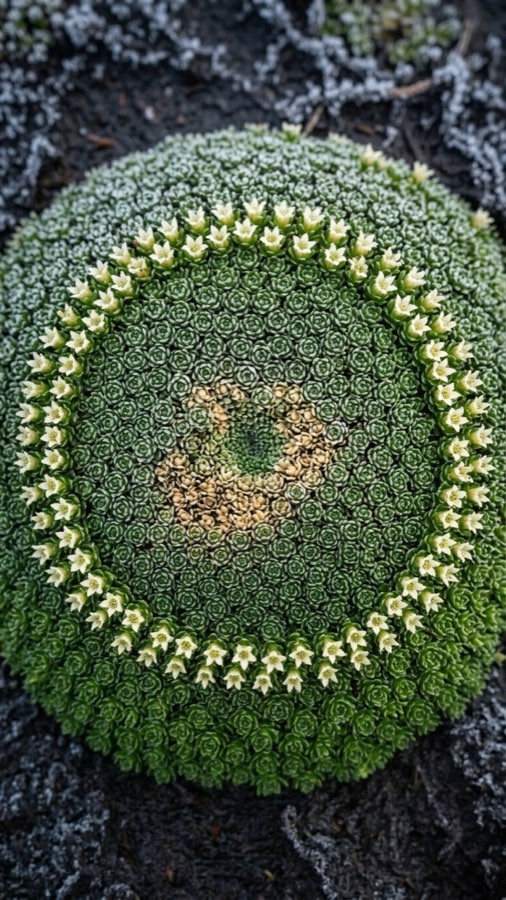 PLATE IV
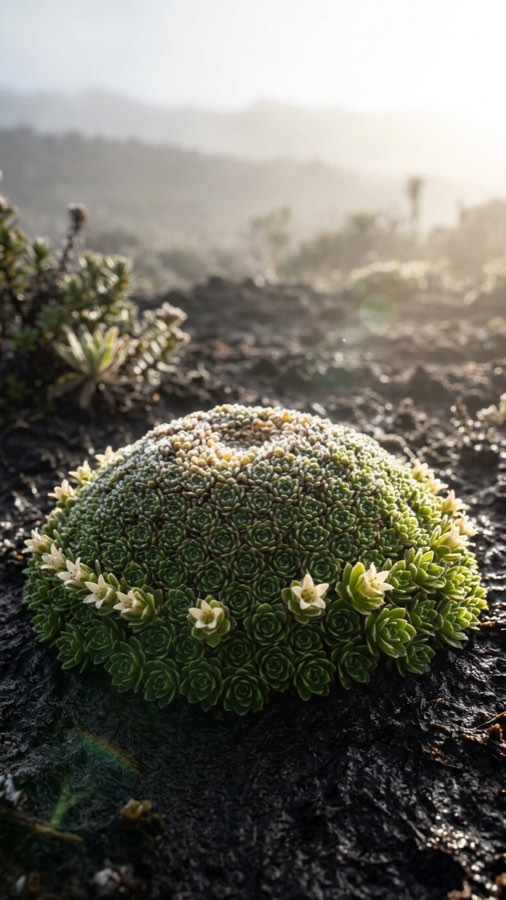 PLATE V
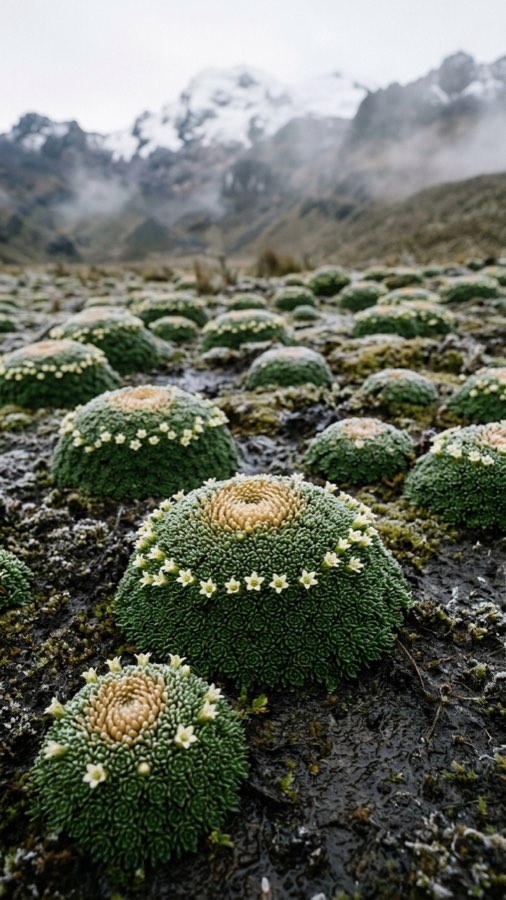 PLATE VI
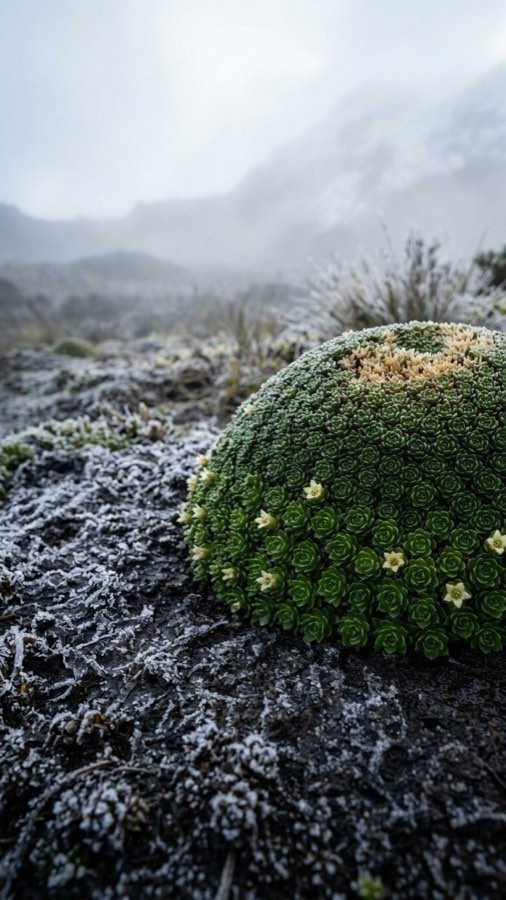 PLATE VIIPLATE VIII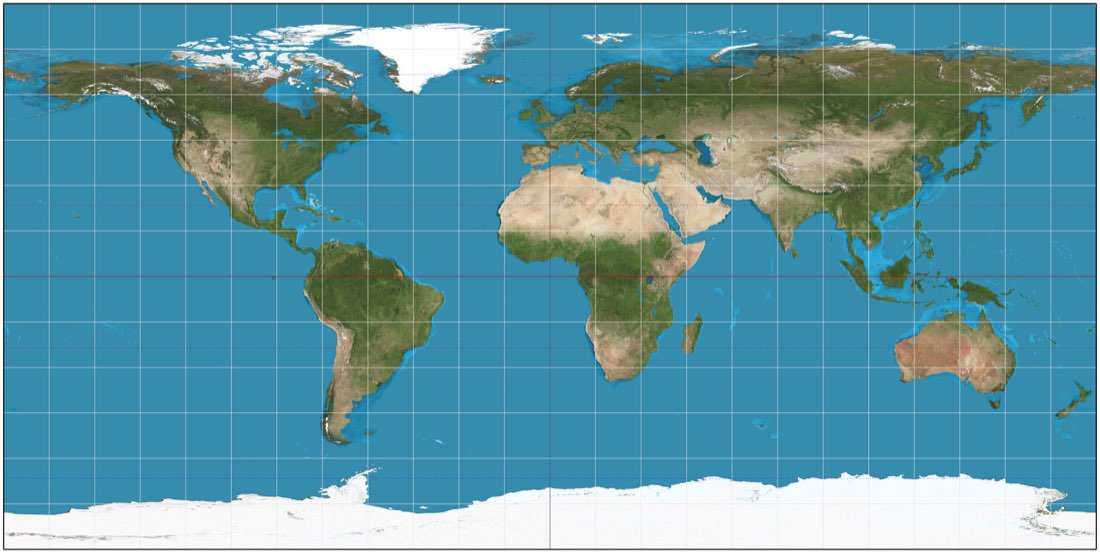
Within a single plant, several times lie sleeping.
Centre and rim are living in different generations.
Paramo wetlands at the foot of Antisana, Ecuador
Cold peatland, where the surface freezes night after night.
Through the frost, the outer growing-points quietly rest.
And the centre alone keeps time, all by itself.
Before dawn it is almost indistinguishable from Azorella-like cushions and frost-heaved peat. The flowers open only for two or three hours around midday after the ice withdraws, and even in a settled year the interval lasts fewer than four days. A few old sheets labelled Werneria or Plantago seem to preserve only marginal rosettes; without the amber central tissue, the plant would have slipped past recognition.
During bloom I saw small dipterans and dull metallic beetles moving low across the cushions, but visits ceased once the afternoon wind rose. The anthers sit close to the stigma, suggesting a capacity for limited selfing. The ripe achenes do not travel far; they drop into narrow peat fissures opened by freeze-thaw. Seedlings occur only along seepage margins, between Sphagnum and Juncus, so the stands form patches rather than a pure cover.
The cushions look firm, yet the peat beneath is buoyed by seepwater, and a single boot can sink the rim. Herders reportedly use the pale mounds as markers in fog while warning children not to approach them. They are not offering stones for the mountain so much as signs that one should spare the bog and take the longer way around. The name “stone that holds time” sounds less like praise of slowness than a practical memory: paramo water must not be hurried.