Specimen · N°027 · Ice · ▶ Film
Cryophila pergelidaThaw Bloom
It appears only in the brief summer when the frozen ground has thawed.
FOUND 71.5°N 128.5°E · Tundra of eastern Siberia · ✝ EX · Last seen 1985
It appears only in the brief summer when the frozen ground has thawed.
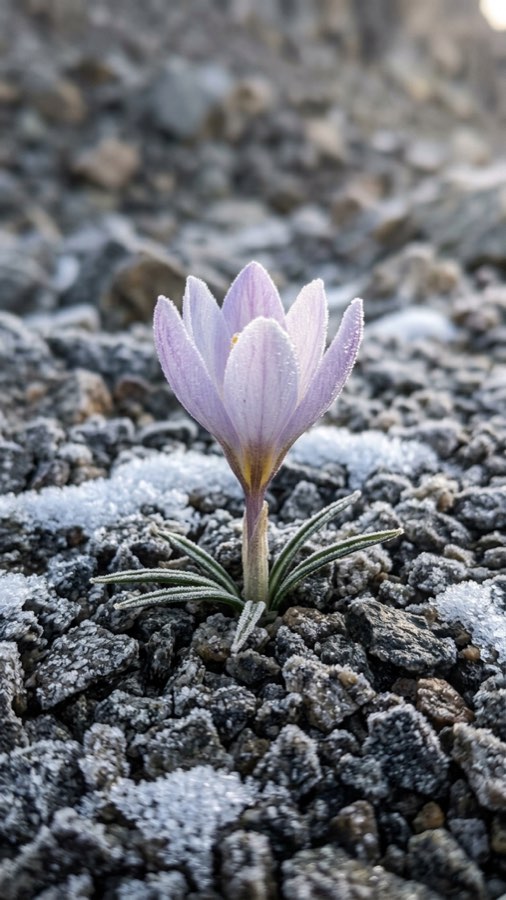
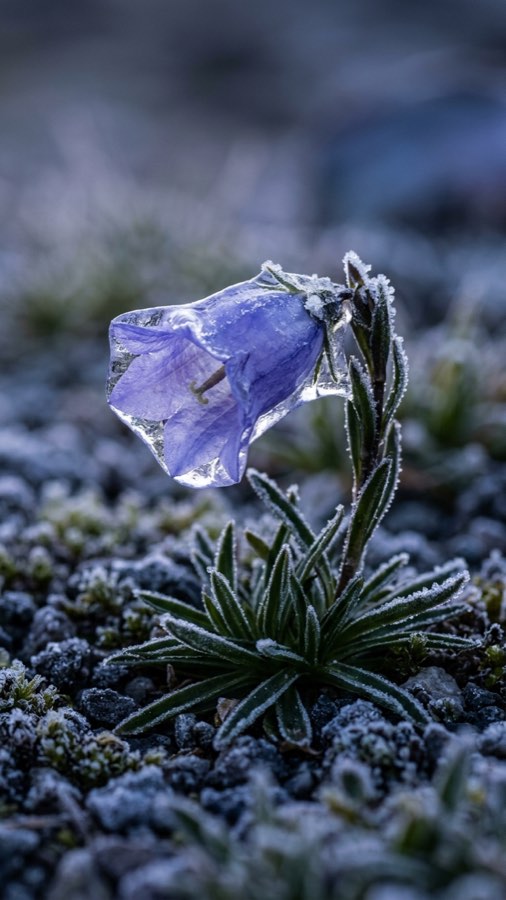
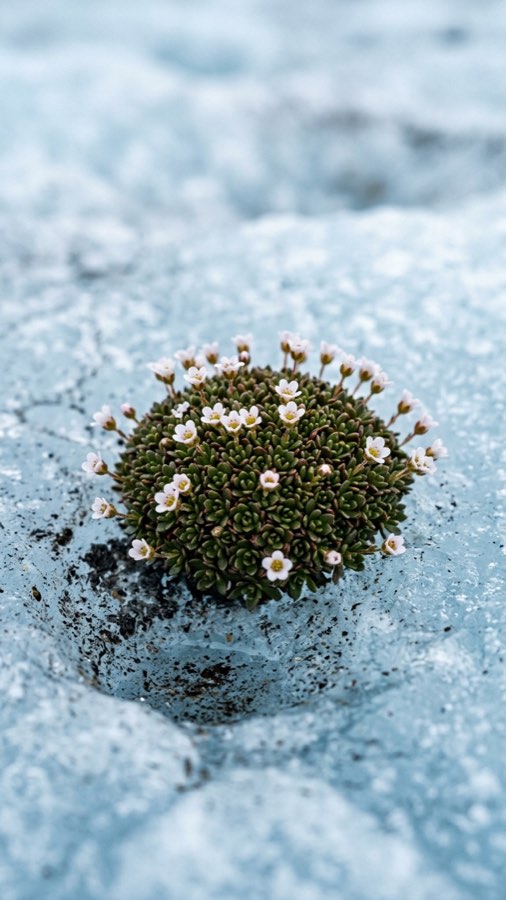
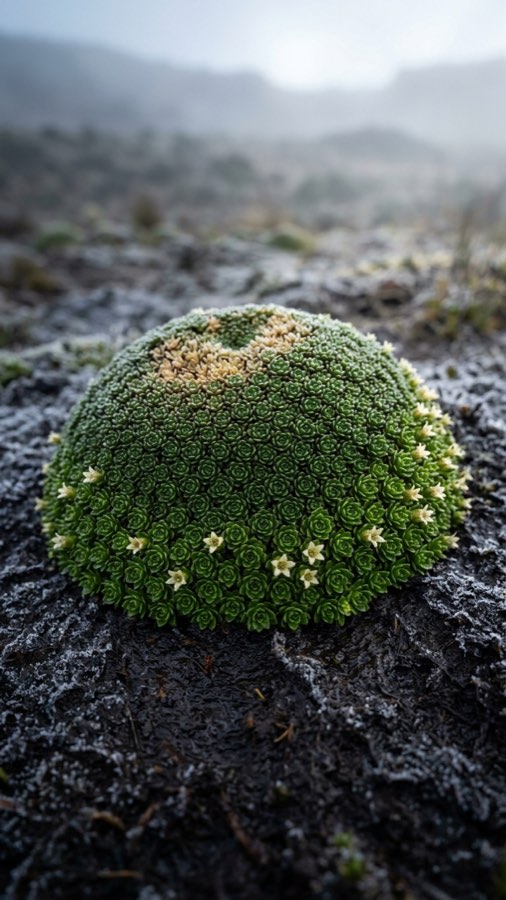
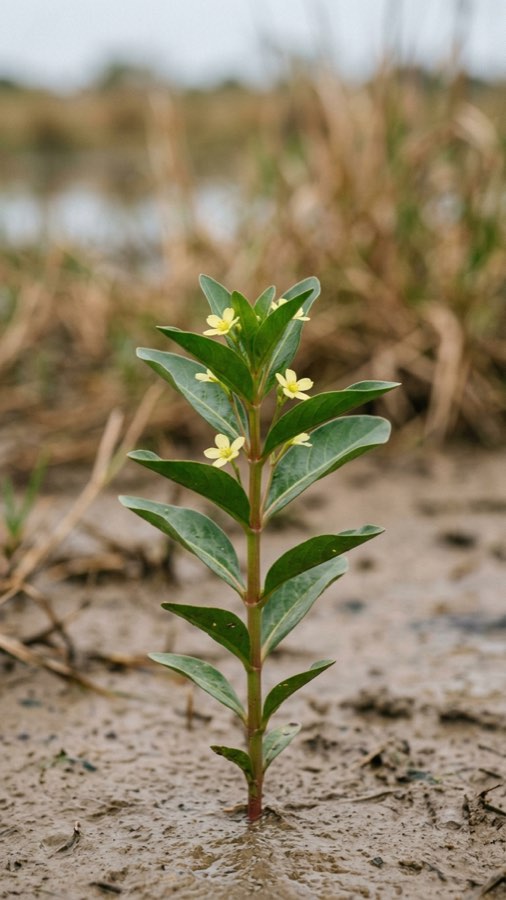
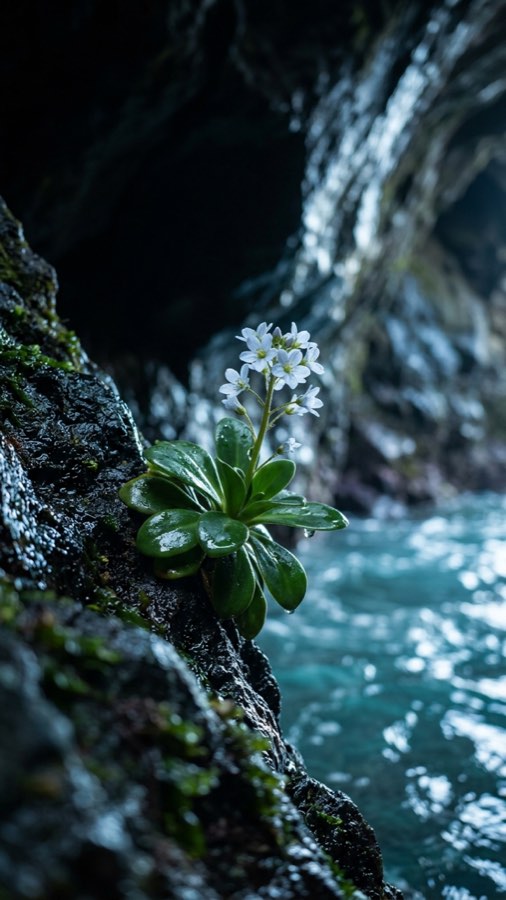
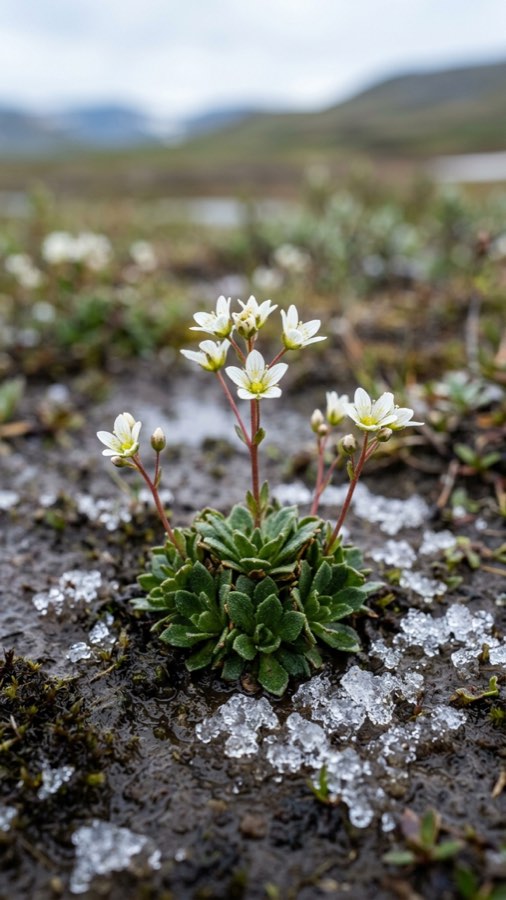
The Thaw Bloom is a tundra plant 10–15 cm tall. Its seeds sleep frozen in the permafrost for decades. Only on touching the cold mud of a thawed surface do they germinate, opening small white star-shaped flowers from a rosette pressed flat against the ground. It sets seed before the soil freezes again.
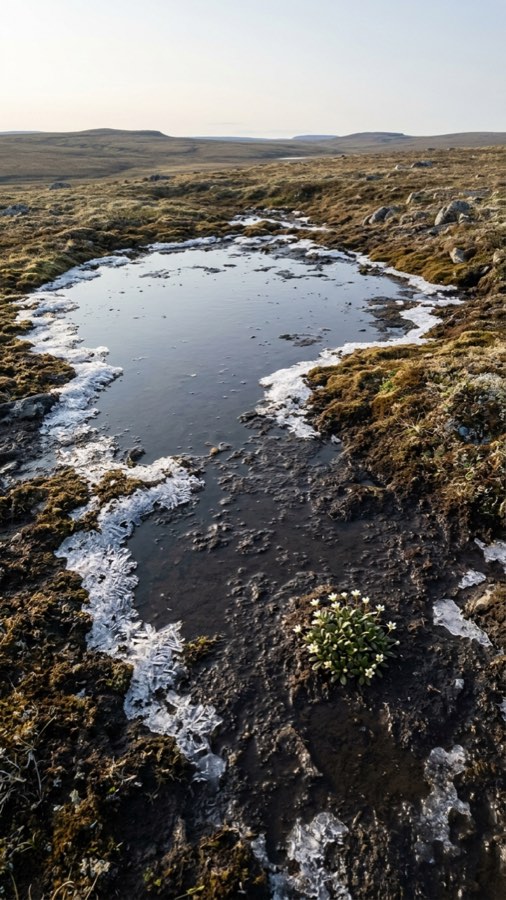 PLATE I
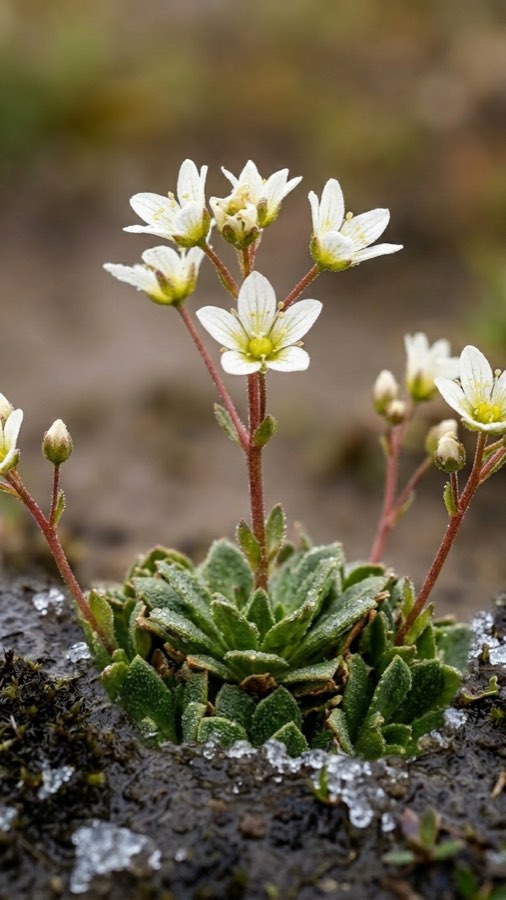 PLATE II
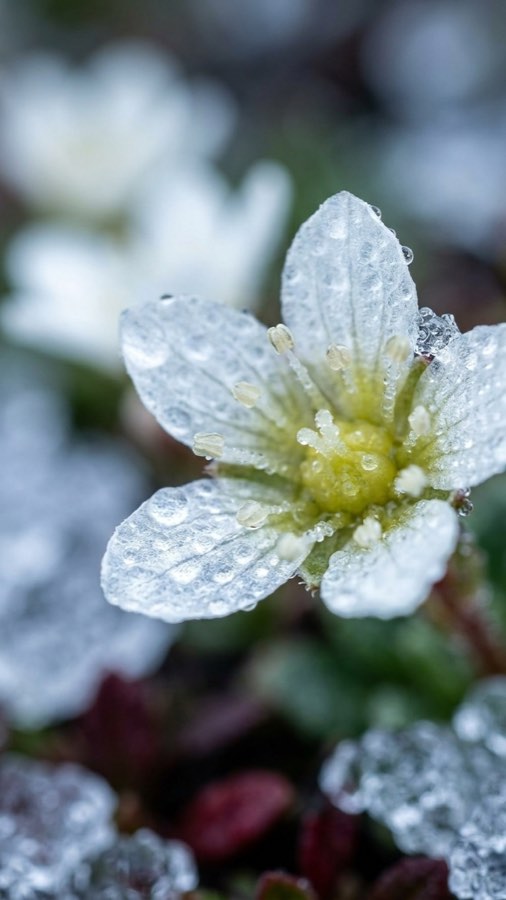 PLATE III
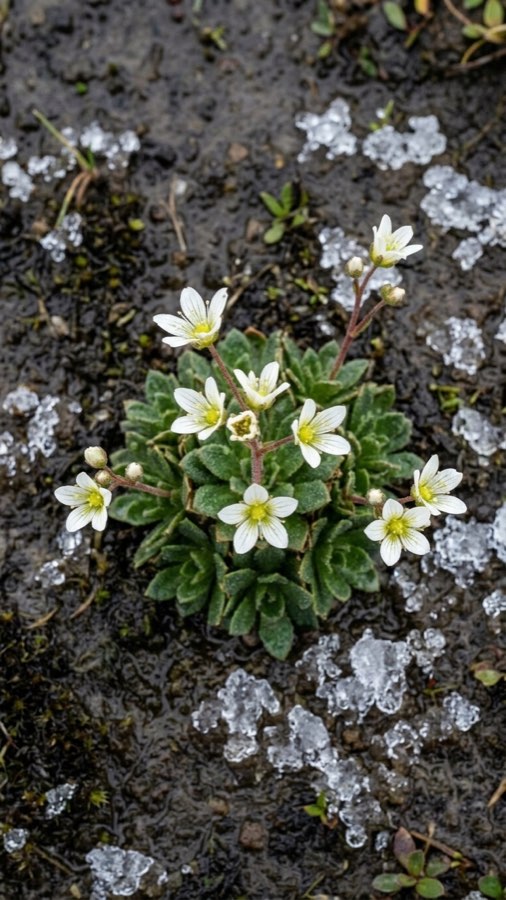 PLATE IV
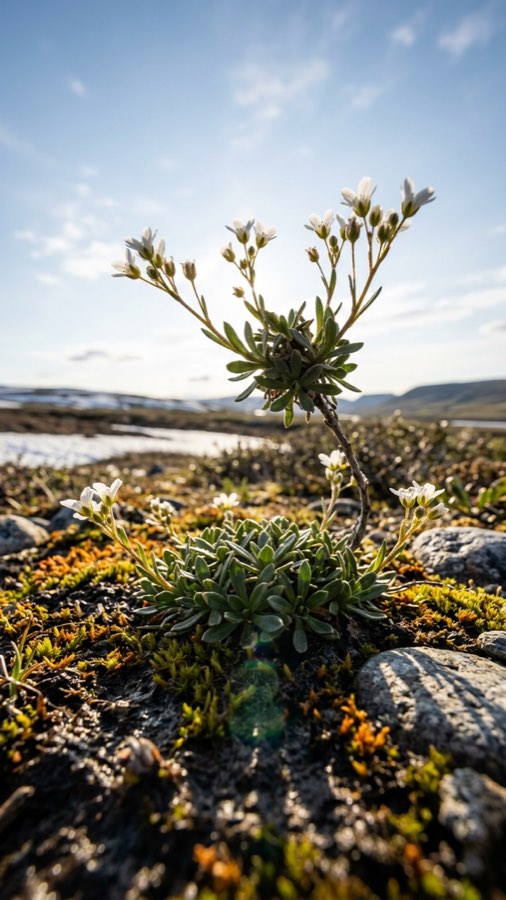 PLATE V
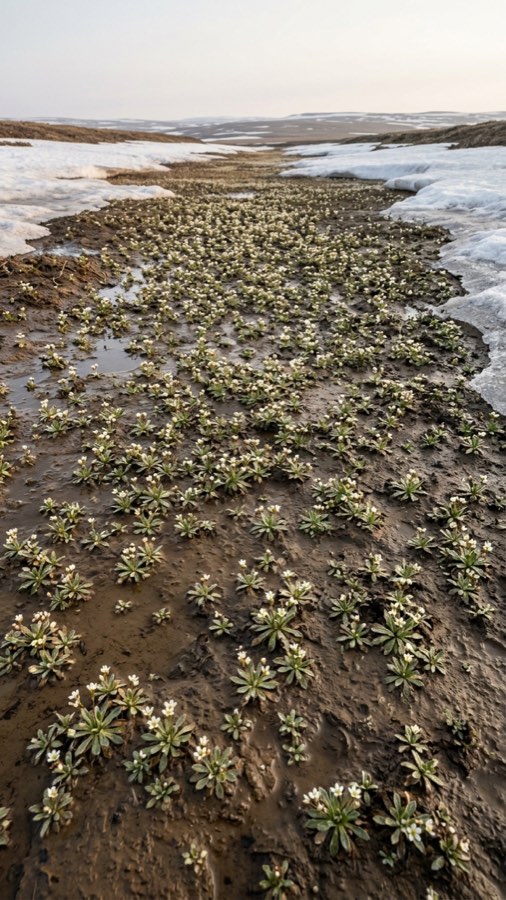 PLATE VI
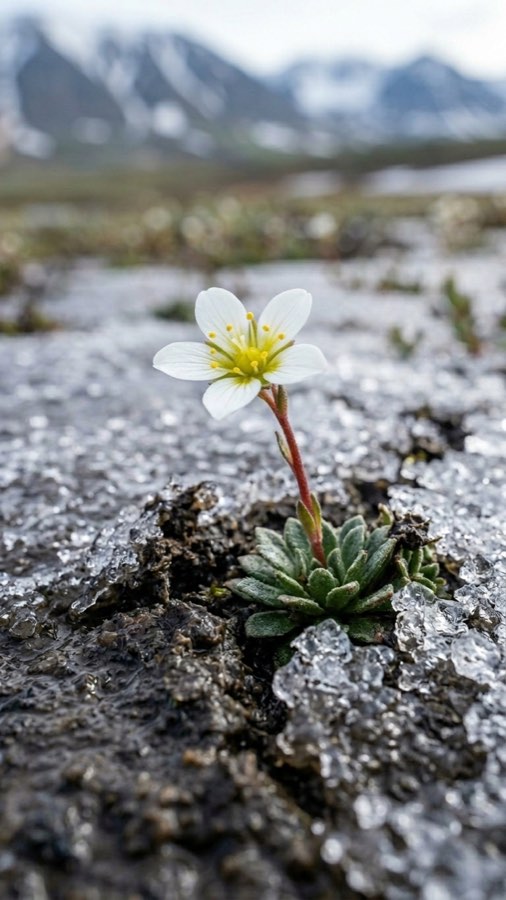 PLATE VIIPLATE VIII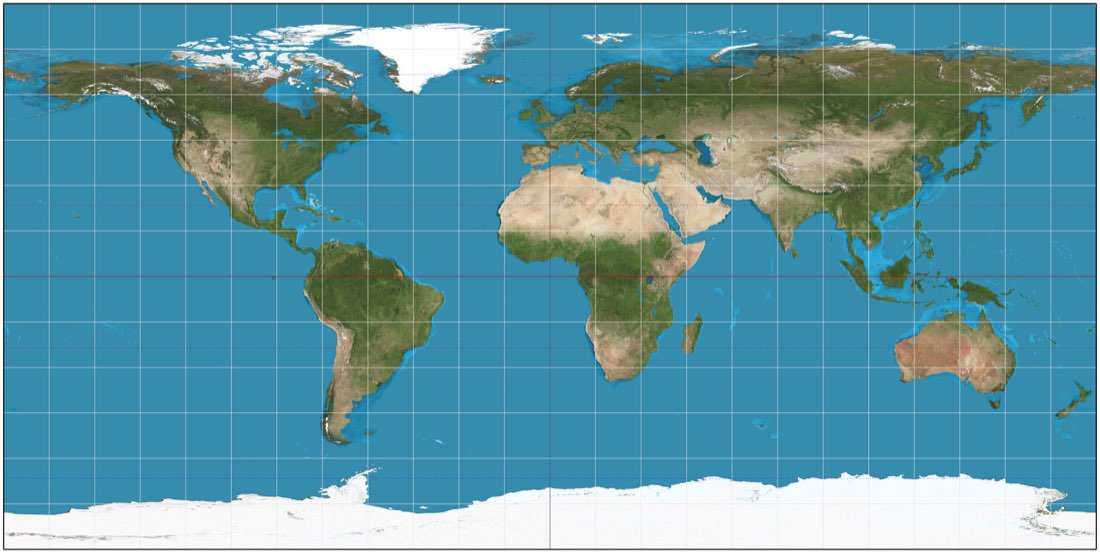
It appears only in the brief summer when the frozen ground has thawed.
Its seeds sleep frozen, decade after decade.
Tundra of eastern Siberia
A land where the permafrost thaws at the surface for only a few weeks of summer.
Touching the cold, newly thawed mud, the seeds wake at last.
Under the low summer light, small white flowers open all at once.
In the low hollows near 71.5°N, the seeds appear to stir only in years when the active layer softens to roughly twenty centimeters. The rosettes lie flat in sphagnum and sandy mud, and the flowers open almost at the water surface, looking from a distance like pale mineral flecks or early frost. Within a week they sink back into mud, and in pressed specimens they are easily confused with related dwarf tundra herbs.
Around midday on still, clear days, I observed small dipterans pausing briefly inside the corolla. There is little nectar; the flower seems better understood as opening to dry and expose its pollen. In cold summers the buds wither half-open, yet the ovaries still swell. It evidently sets seed by selfing under low temperatures, and the ripe capsules collapse into meltwater, carrying seed in a thin wash toward the rim of the same hollow.
Those who called it the “flower inside the ice” remembered less the blossom than the smell of mud and the way footprints sank. Before moving reindeer toward the river corridors, they noted that years with white specks in the shallow hollows tended to bring later river ice and a delayed season for sled tracks. The plant was not treated as prophecy, but as a small sign by which the loosening permafrost could be read.