Specimen · N°028 · Sea · ▶ Film
Antrophila aestuariaTideglow Flower
It opens only for the few hours when the tide is full and the light comes in.
FOUND 33.5°N 135.8°E · Sea caves of the rocky coasts of Japan · ✝ EX · Last seen 1999
It opens only for the few hours when the tide is full and the light comes in.
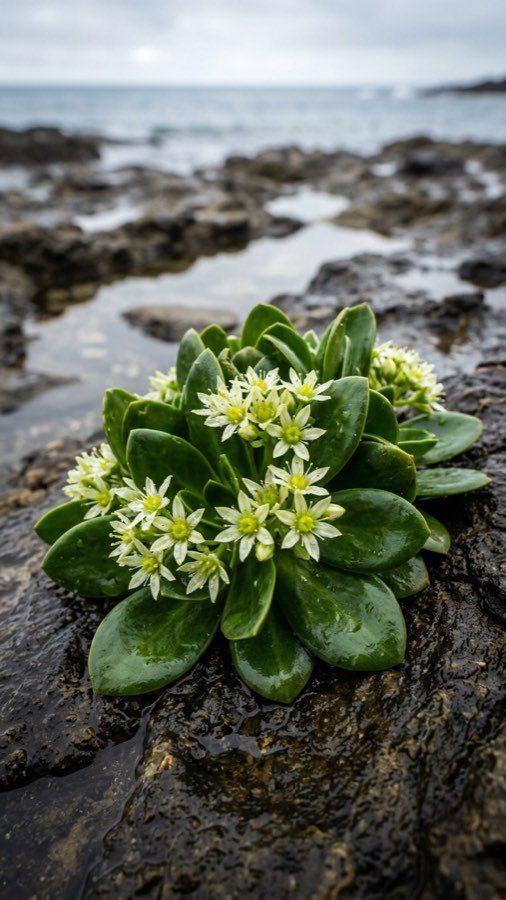
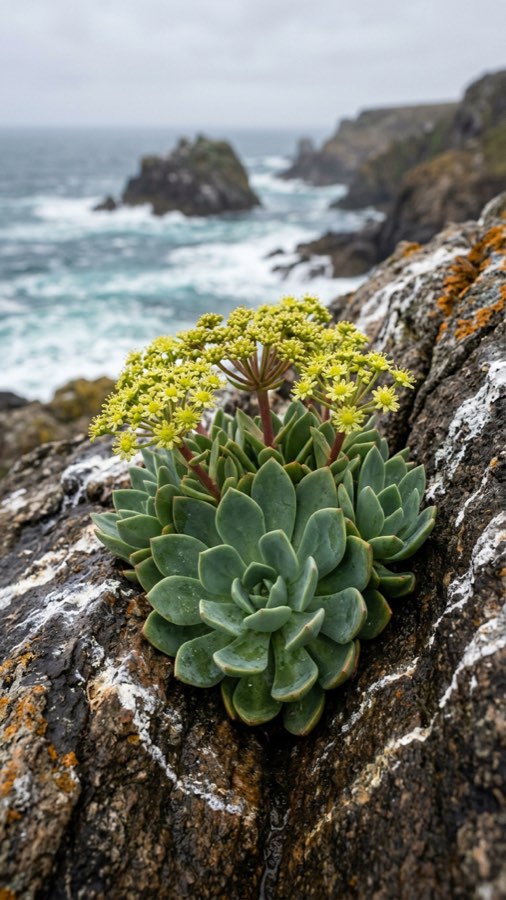
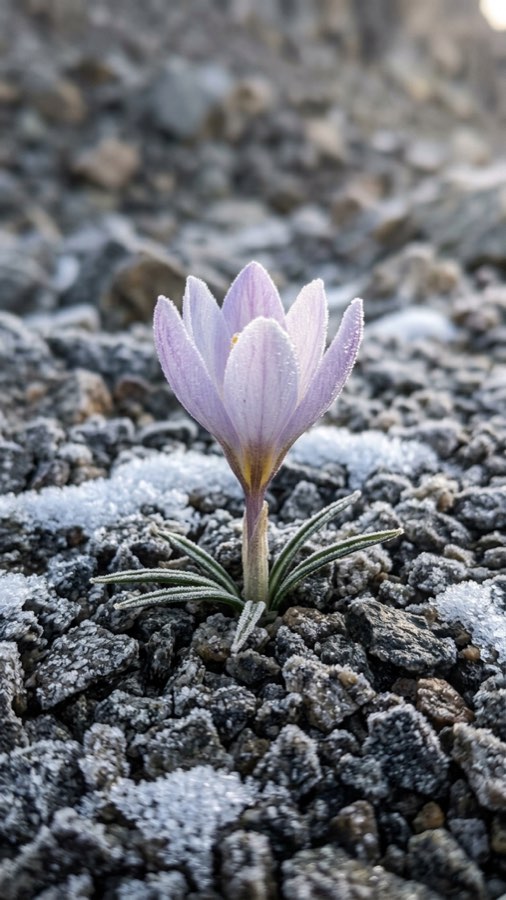
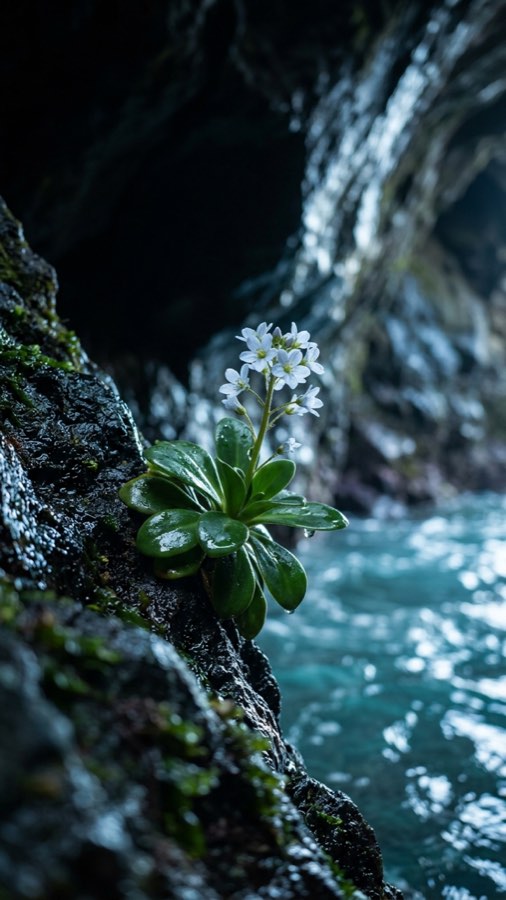
The Tideglow Flower is a rock-dwelling plant 5–10 cm tall. It roots in damp crevices, its thick leaves glossed with light. Only for the few hours when reflected light enters on the high tide does it open its pale blue-white flowers. When the tide falls and the light goes, the flowers close.
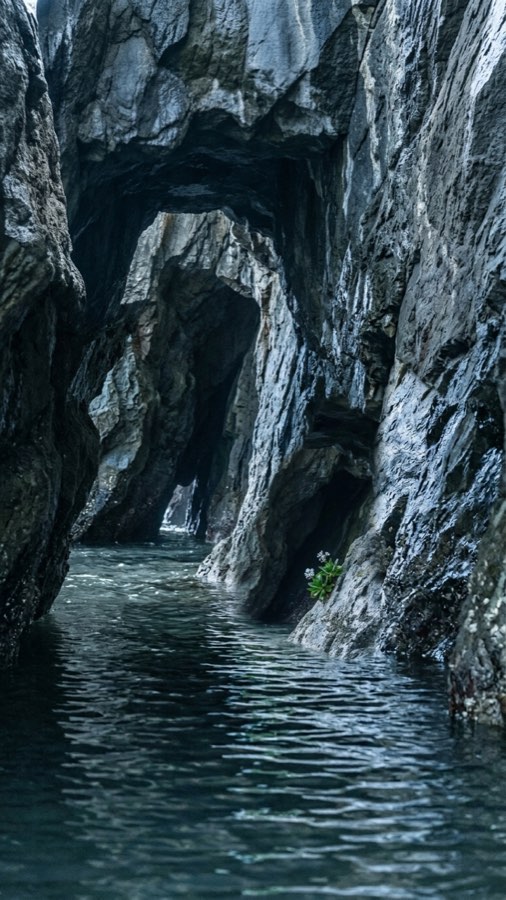 PLATE I
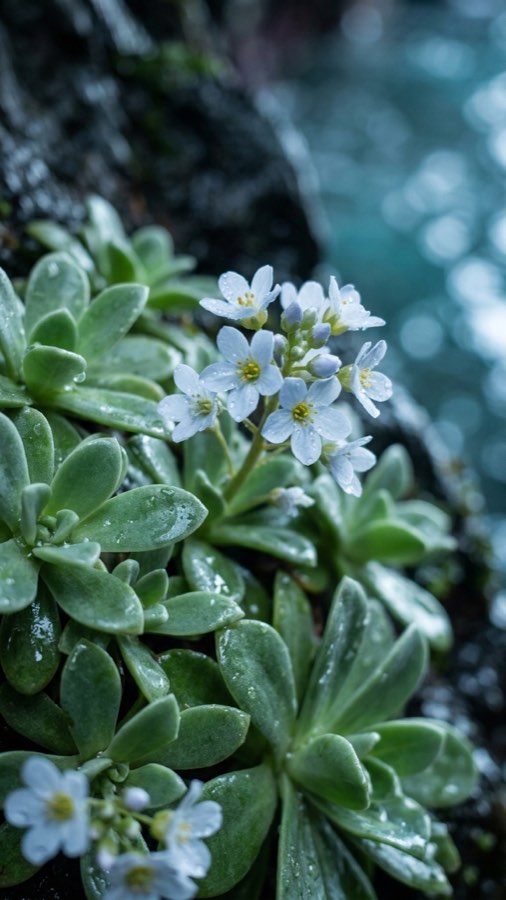 PLATE II
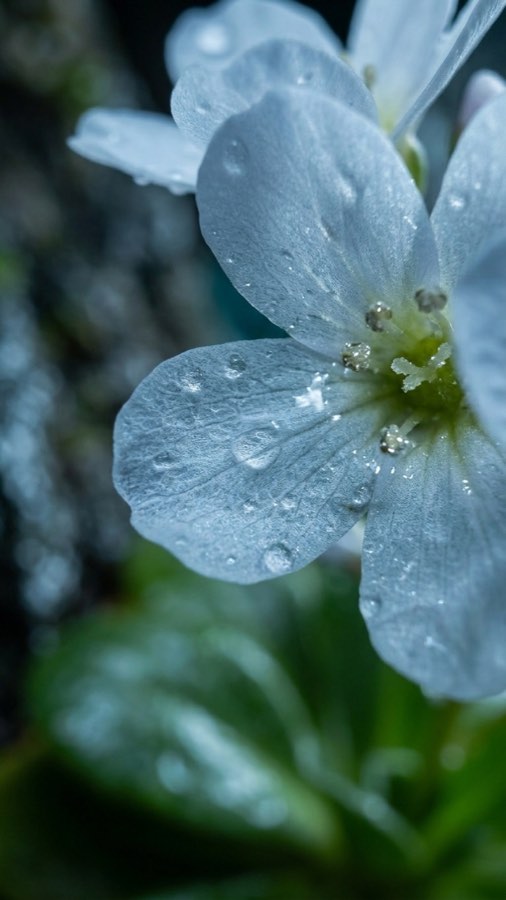 PLATE III
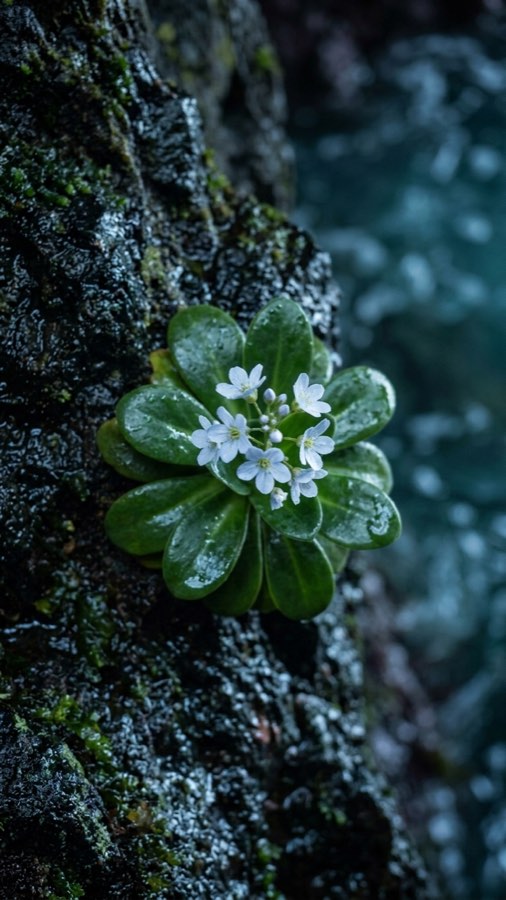 PLATE IV
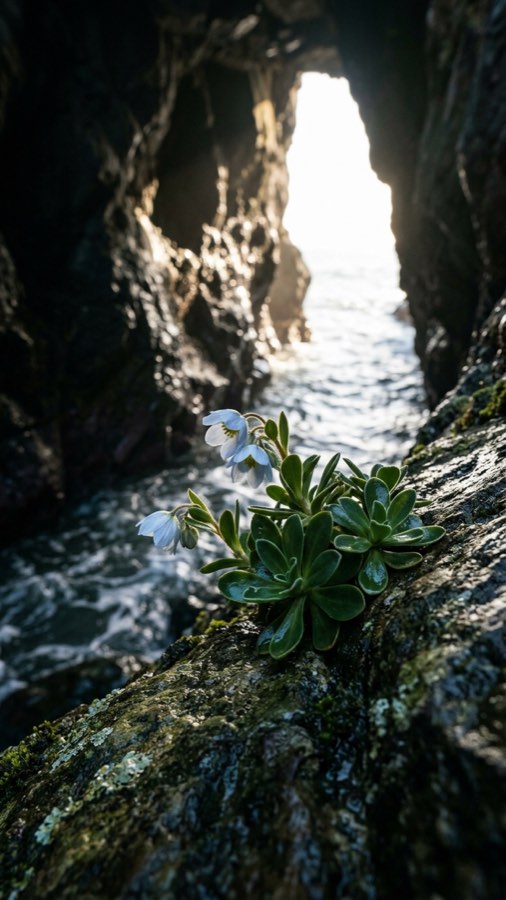 PLATE V
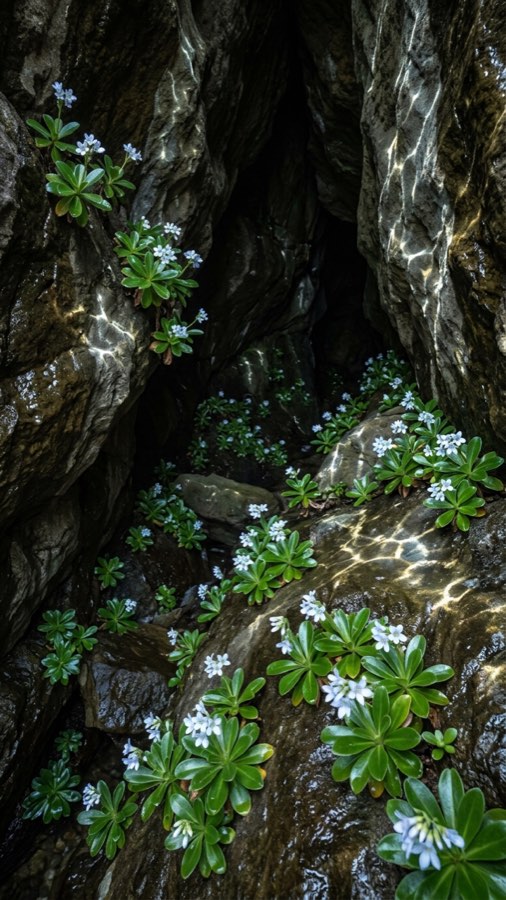 PLATE VI
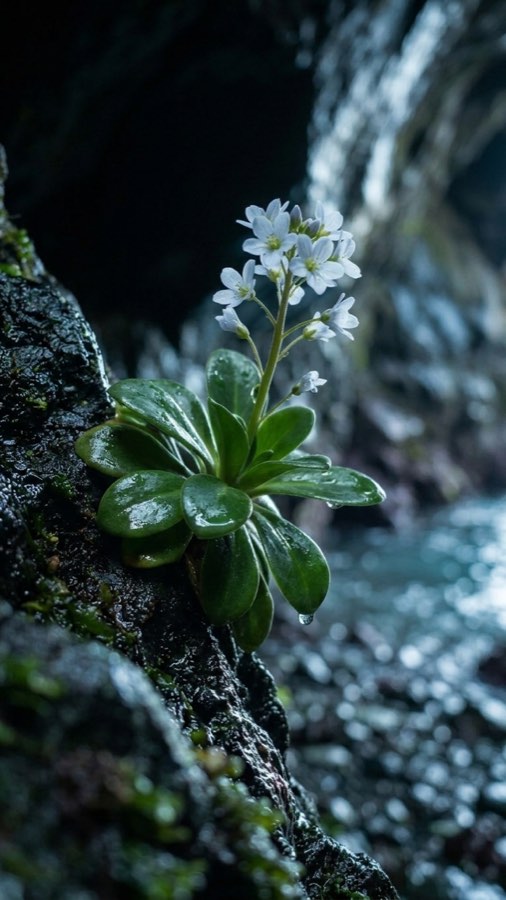 PLATE VIIPLATE VIII
It opens only for the few hours when the tide is full and the light comes in.
This flower lives deep in a cave of the sea.
A sea cave cut into the rocky shores of Japan.
At high tide, light reflected off the water plays across the ceiling.
While that wavering light crosses the rock face,
the Tideglow Flower quietly opens its pale blue-white blooms.
Around high tide, when reflected light from the cave mouth swept across the ledge, only the inner corolla showed a pale bluish glow. No large flower visitors were seen, but minute intertidal flies moving over wet algal debris paused briefly at the bases of the filaments. In the still inner cave, the opening of the flowers seems tuned less to water level itself than to this brief interval of light and small flying visitors.
Several closed buds proved to be cleistogamous flowers, setting fruit without ever opening. The ripe fruits did not dry; their seeds were held in a translucent adhesive mucilage. Spray at high tide appears to wash them across the rock surface, leaving them only in narrow cracks where fresh seepage persists. The small, isolated colonies in separate caves likely reflect limited dispersal and repeated generations within the same cave.
At low tide the plant is little more than a low rosette of thick leaves, easily confused on dark wet rock with bryophytes or small stonecrop-like plants. When the flowers open at high tide, the inner ledges cannot be approached safely enough for collecting. A Meiji-era field book mentions only “white-flowered moss of the sea cave”; once pressed, both color and movement would have vanished, which may explain why it was never recognized as this plant.