Specimen · N°024 · Sea · ▶ Film
Guanophila maritimaSeabird Cliffbloom
This flower blooms only on rocks where seabirds are.
FOUND 60.2°N 1.3°W · Sheer seabird-nesting stacks and skerries of the North Atlantic · ✝ EX · Last seen 2009
This flower blooms only on rocks where seabirds are.
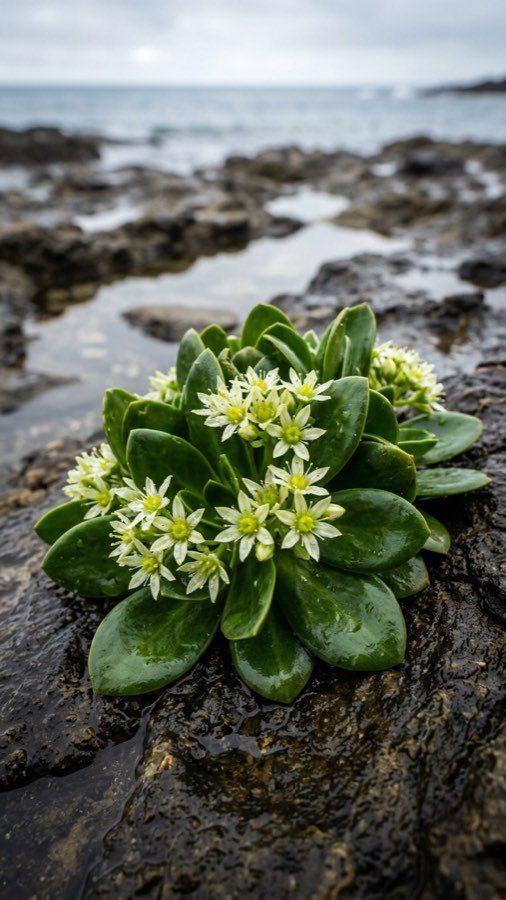
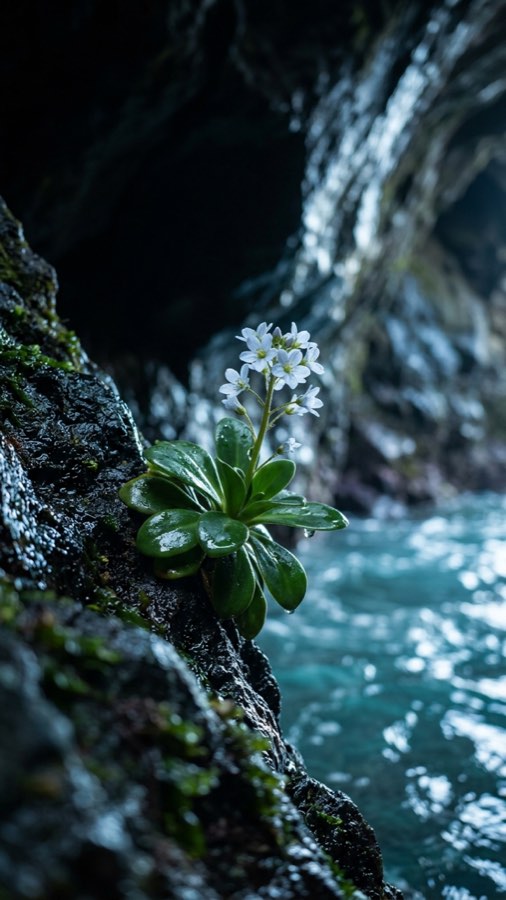
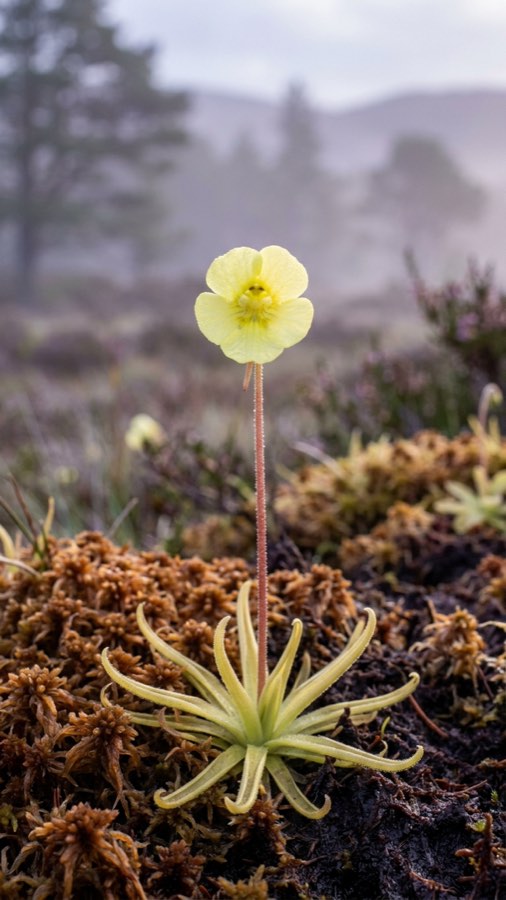
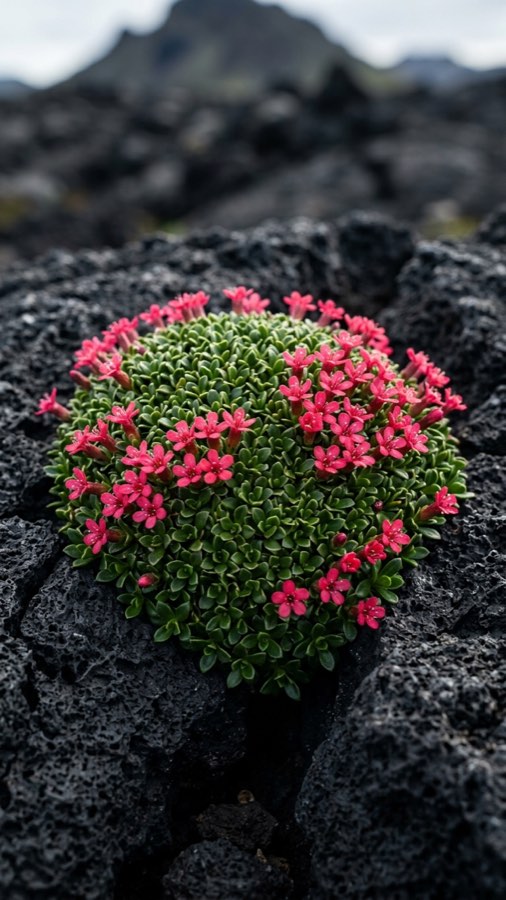
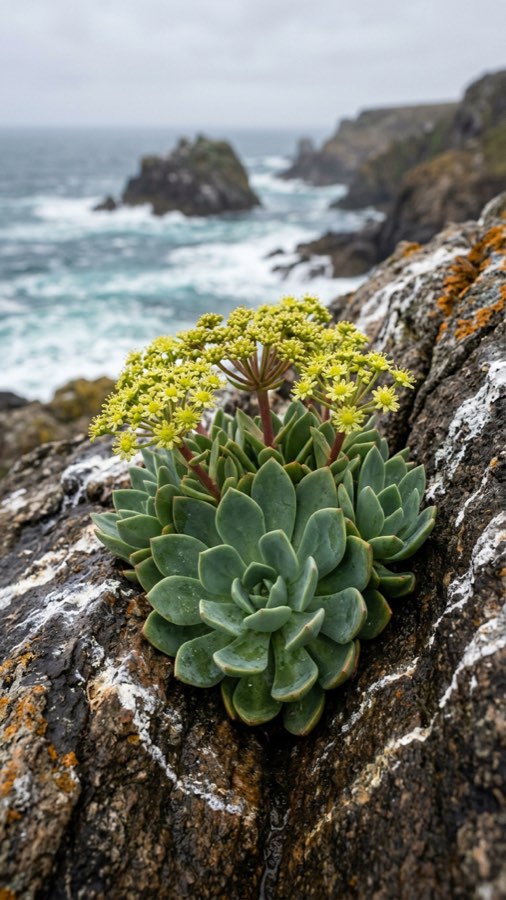
A coastal plant 12–20 cm tall. It spreads thick succulent green leaves in a rosette and blooms dense clusters of small yellow daisy-like flowers. It roots only in rock crevices enriched by seabird droppings, enduring salt and sea wind.
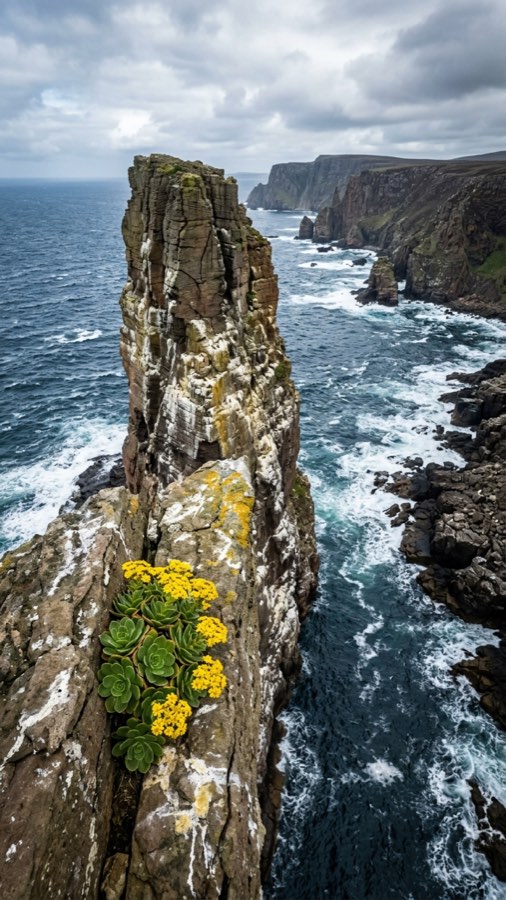 PLATE I
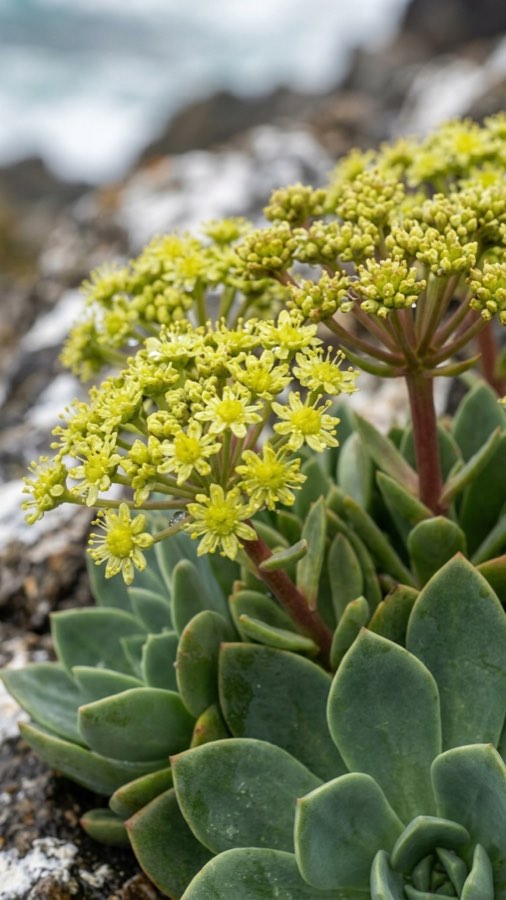 PLATE II
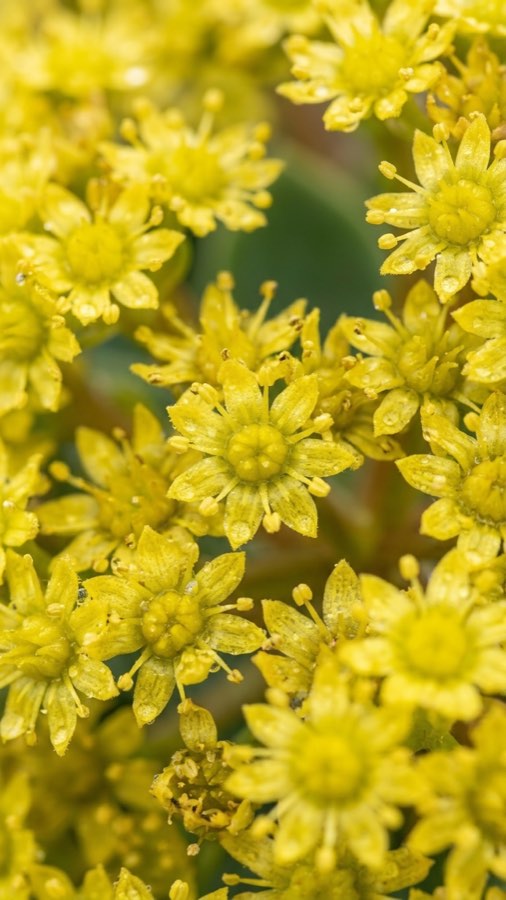 PLATE III
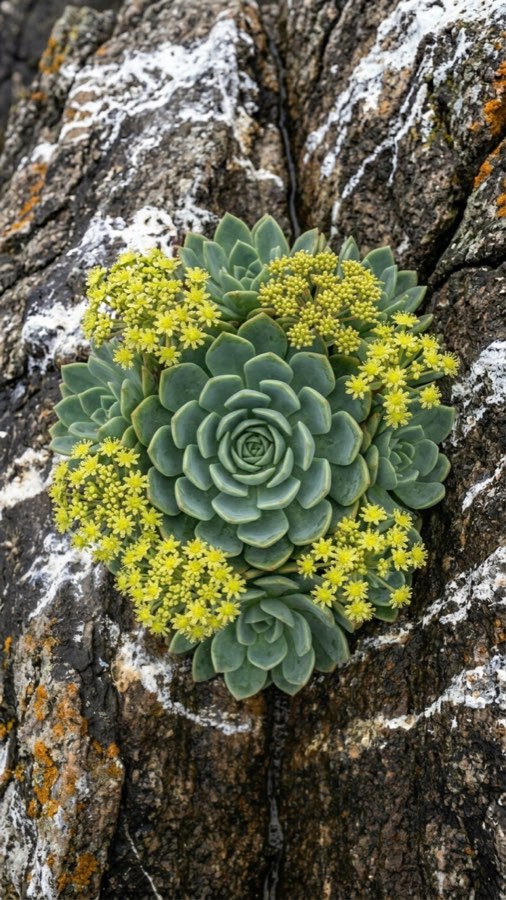 PLATE IV
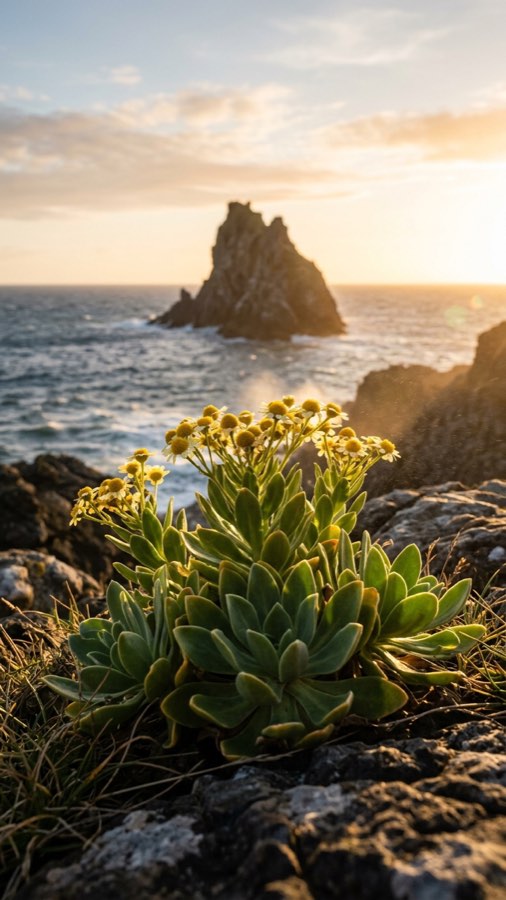 PLATE V
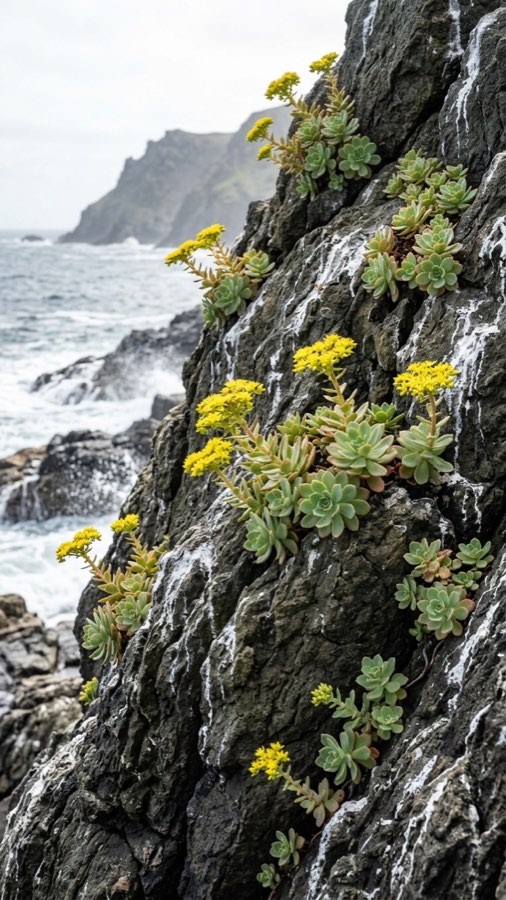 PLATE VI
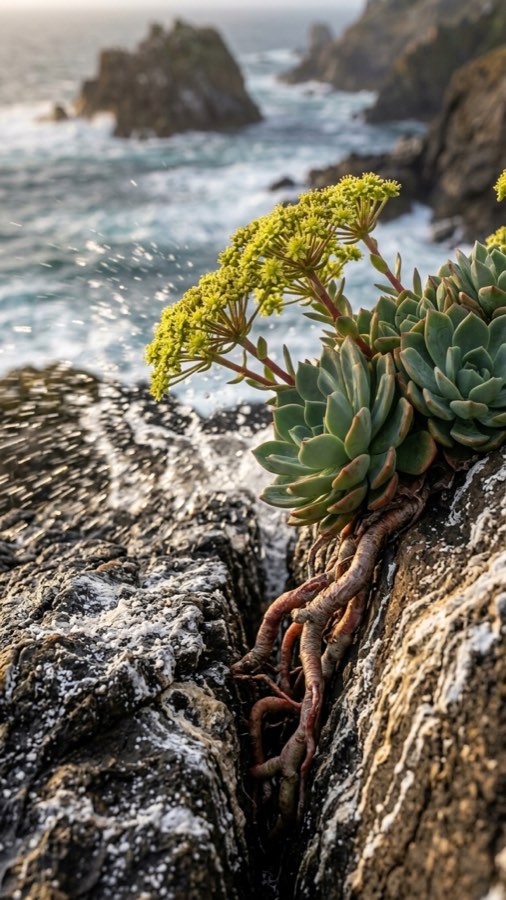 PLATE VIIPLATE VIII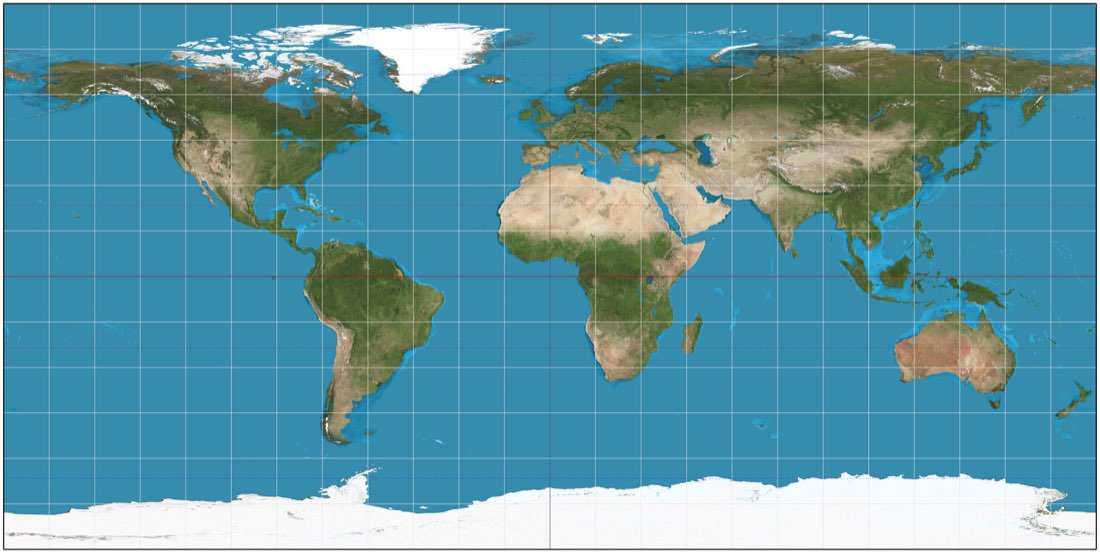
This flower blooms only on rocks where seabirds are.
On other cliffs it is hardly ever found.
The sheer sea stacks of the North Atlantic.
Rock battered without cease by tide and salt wind.
The Seabird Cliffbloom roots only in crevices enriched by seabird droppings.
It spreads thick succulent green leaves and blooms small yellow daisy-like flowers in clusters.
Guanophila maritima does not appear on every cliff face. It is confined to joints in weathered sandstone or basalt where seabird guano, broken feather shafts, and salt from sea mist accumulate into humic pockets no larger than a fingertip. Its roots do not descend deeply, but spread through this dark, damp film. The sudden turgor of the leaves after rain suggests that the plant is responding not to the rock itself, but to this brief-lived rhizosphere.
Few large visitors are seen around the flower heads, but on still mornings small hoverflies make brief passages in and out of the leaf shade. Pollination seems largely restricted to neighboring plants on the same cliff. After flowering, however, the achenes carry a pale pappus and lift from the ledges on dry westerly winds. A heavy seed could not cross between sea stacks, but this light plume may reach a bird perch several hundred meters away.
From a distance, the plant appears only as a thin yellow scattering over white guano streaks, easily taken through binoculars for ragworts or other maritime composites. Most colonies occupy the middle faces of near-vertical sea stacks within nesting-season reserves, where there is no safe collecting stance. This likely explains why bird surveys note only “yellow flowers” and no specimen follows. The plant was not unnamed so much as folded into a reachable category.