Specimen · N°022 · Volcano · ▶ Film
Pyrolava fissicolaLava Pioneer
On this lava, it is the only thing to bloom first.
FOUND 63.6°N 19.0°W · A new lava field in Iceland · ✝ EX · Last seen 1989
On this lava, it is the only thing to bloom first.
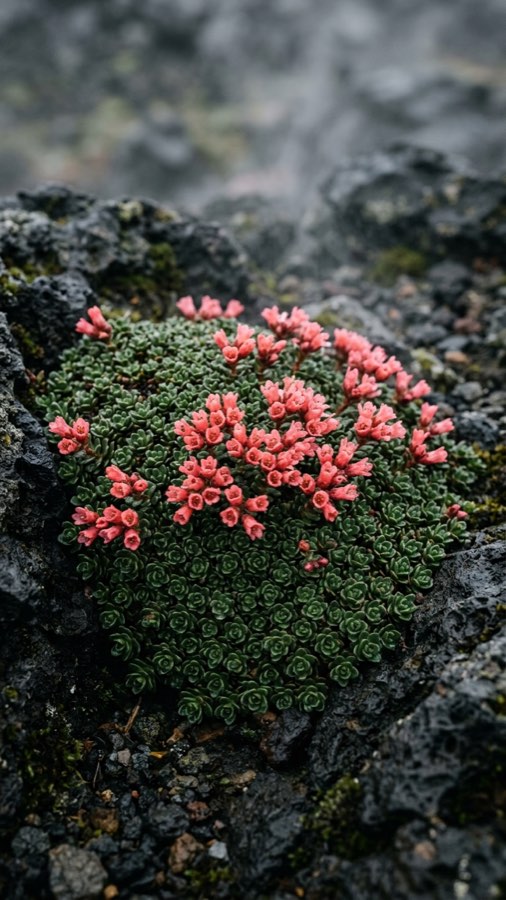
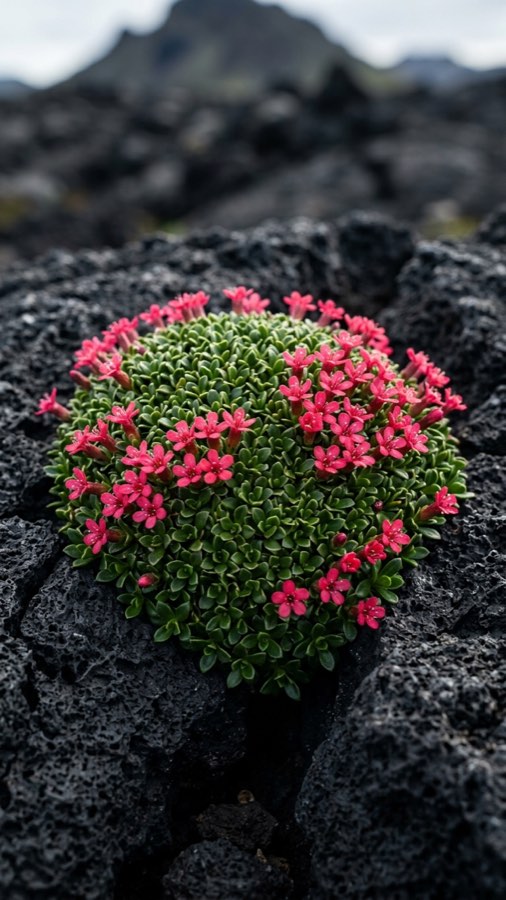
A low cushion plant 8–15 cm tall. It drives roots into thin cracks of cooled black lava and densely layers small leathery deep-green leaves, from which it blooms clusters of small deep-pink stars.
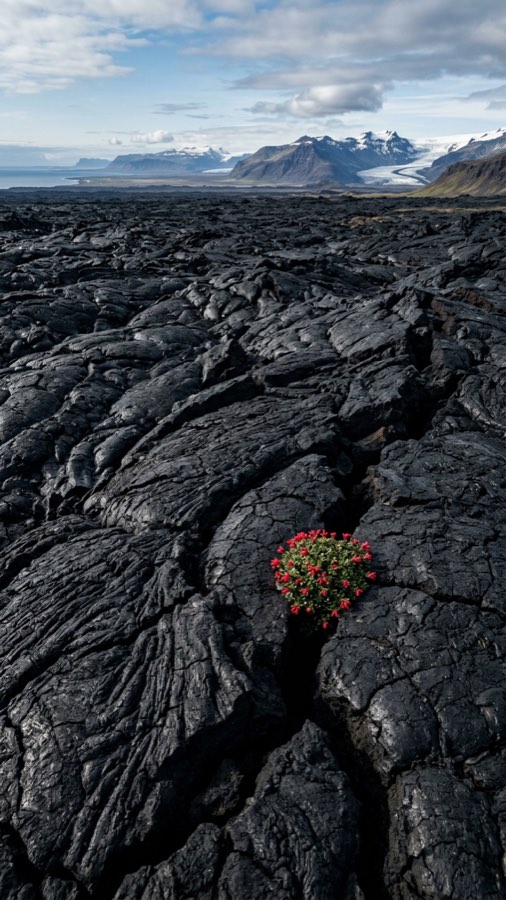 PLATE I
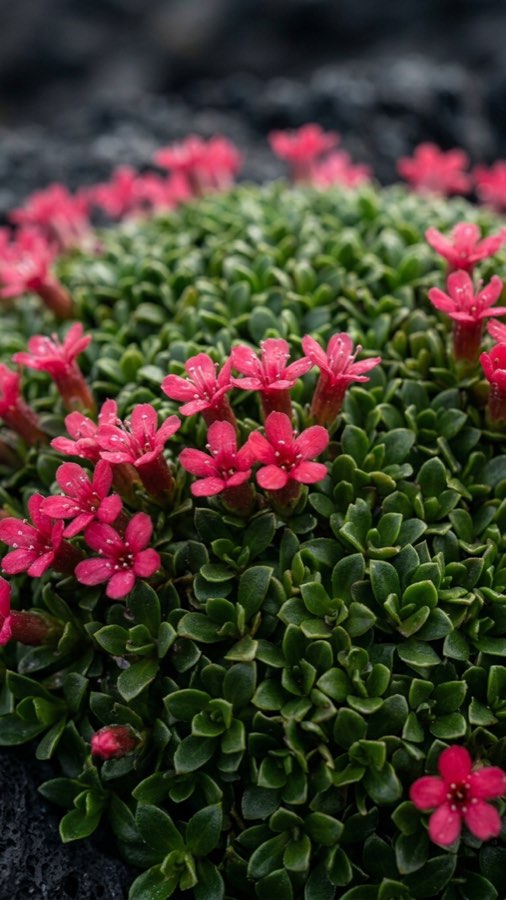 PLATE II
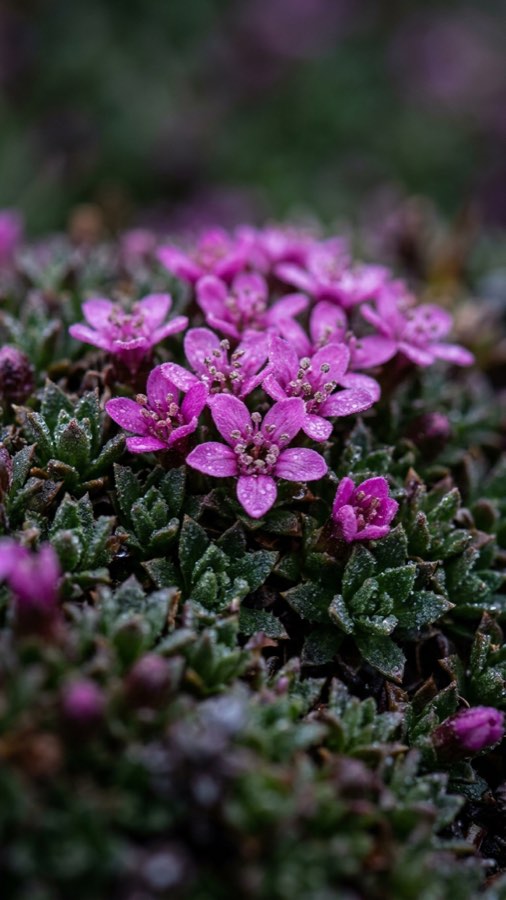 PLATE III
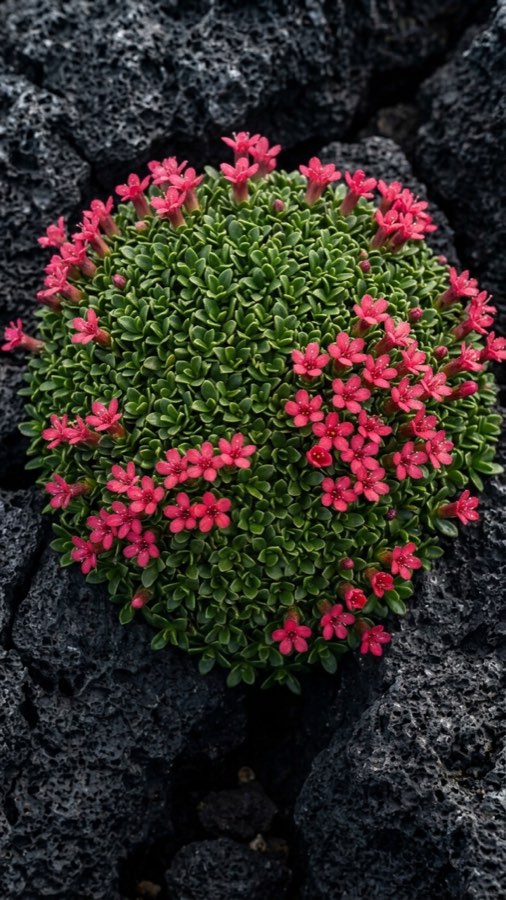 PLATE IV
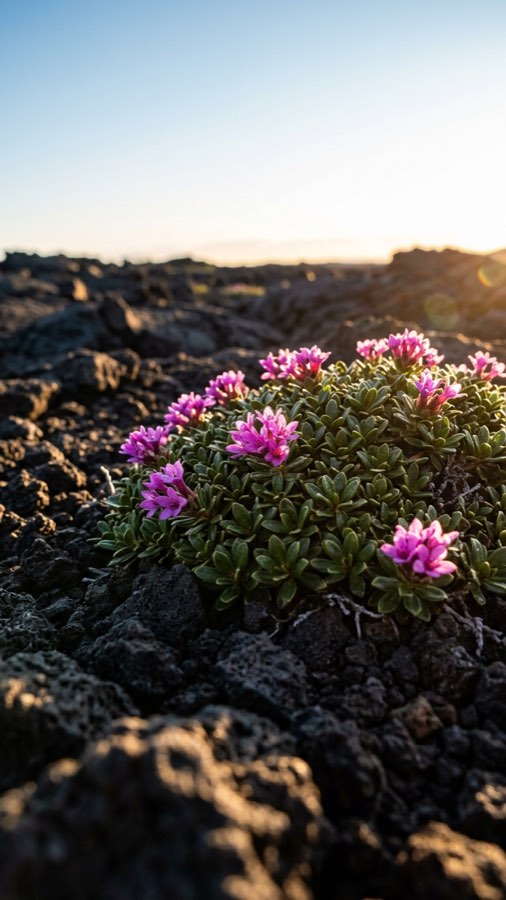 PLATE V
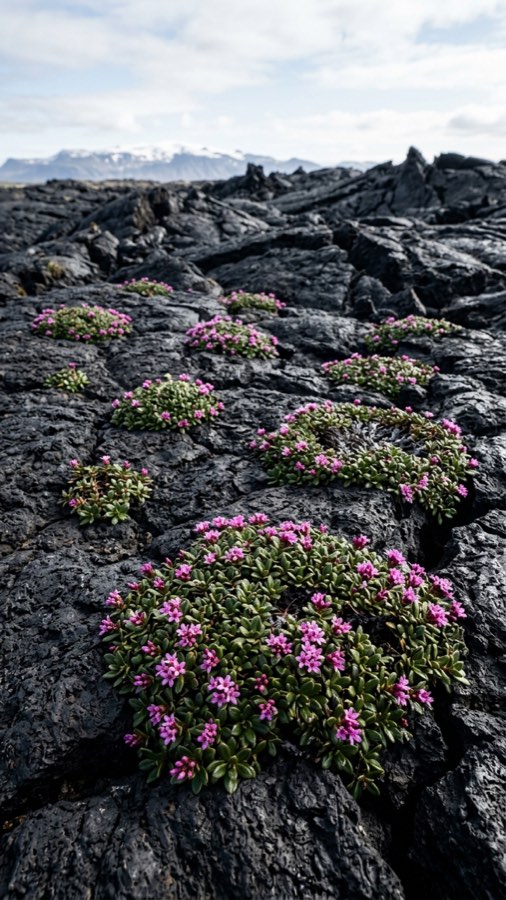 PLATE VI
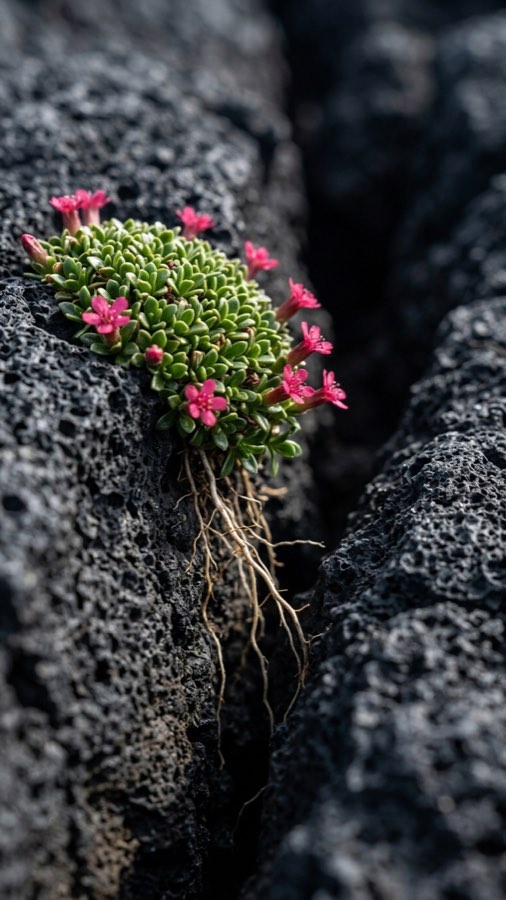 PLATE VIIPLATE VIII
On this lava, it is the only thing to bloom first.
Not another speck of green is to be seen.
A new lava field in Iceland.
A black land that a volcano poured out and that cooled hard.
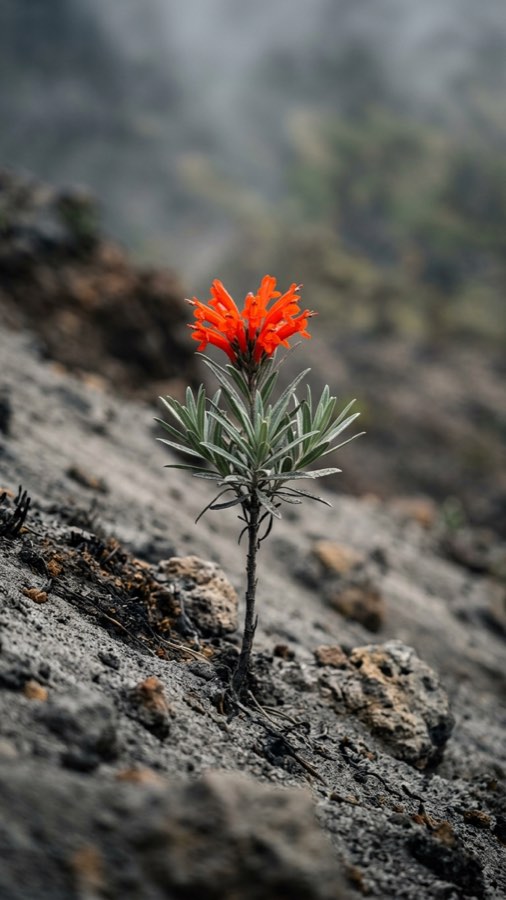
The Lava Pioneer drives its roots into the thin cracks.
It layers leathery deep-green leaves and blooms small deep-pink stars.
In late June, the deep pink star-shaped flowers were seen only on the south-facing sides of fissures. They faded within about three days, leaving only the calyces sunk among black gravel. From a distance they could easily have been entered as escaped catchfly, or in damp hollows as a small primrose. If confined to bare lava only a few years after eruption, it would often be reduced to leaf cushions by the time ordinary floristic surveys arrived.
The corolla opens, yet the anthers stand close to the stigma, and some plants set fruit while remaining partly closed on windy days. On clear afternoons, small flies rising from the coastal lowlands may visit the clusters briefly, but the flower is not built to depend on them. The seeds are light; when dry they spill from the capsule, bounce in gusts, and fall into cooled fissures. The population forms sparse lines, not a continuous mat.
The roots do not spread deeply; the fine roots concentrate on shallow ledges where tuffaceous powder and windblown dust collect. The leathery leaves and low cushion form avoid drying winds and night cooling, while the deep pink color suggests anthocyanin accumulation under strong ultraviolet light as much as pollinator attraction. Once mosses and grasses increase on older lava, the germination sites disappear. It is best read as a short-lived pioneer, waiting as dormant seed for the next bare fissures.