Specimen · N°023 · Darkness · ▶ Film
Umbraflora pallidaPale Ghost-flower
A flower with no green at all blooms only on the dark forest floor.
FOUND 1.5°N 114.0°E · Lowland rainforest of Borneo · ✝ EX · Last seen 2003
A flower with no green at all blooms only on the dark forest floor.
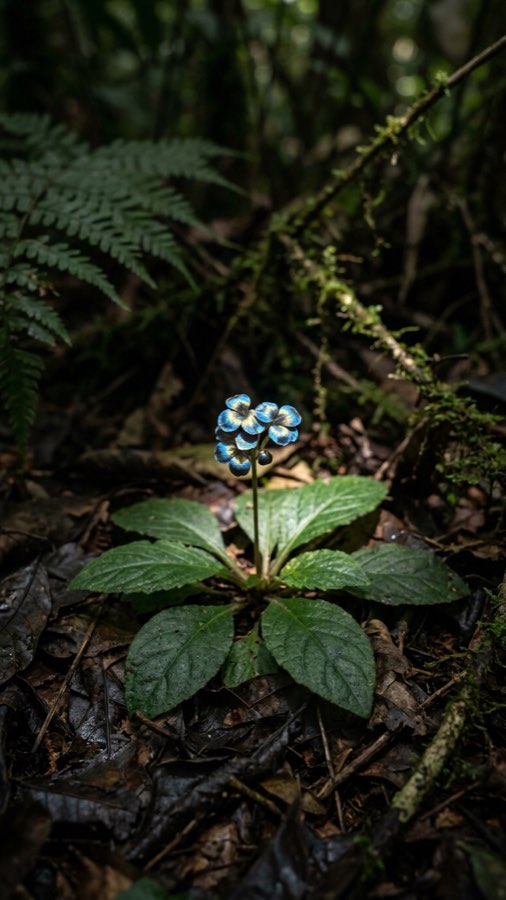
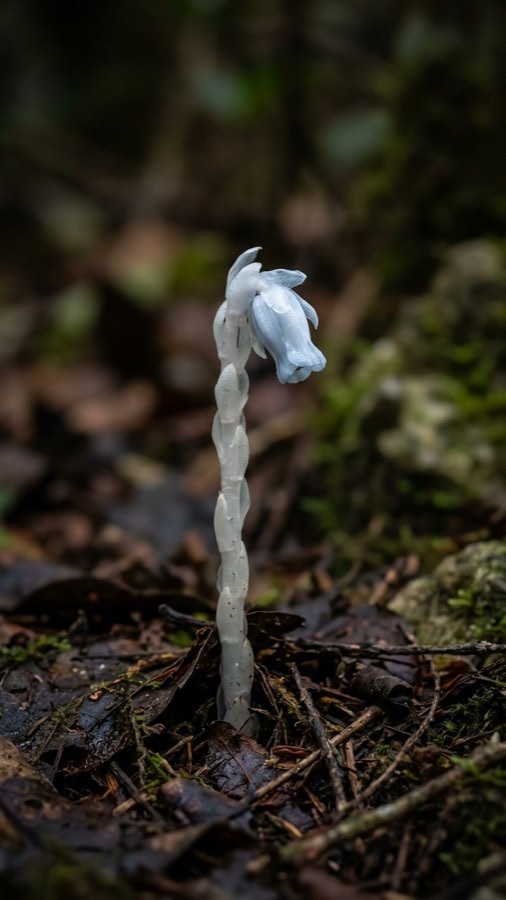
A small plant 5–9 cm tall. Lacking chlorophyll, it is translucent white throughout. It has no ordinary leaves, only small white scale-like bracts on the stem, and bears a single bluish-white urn-shaped flower at the tip. It takes its nourishment from fungi underground.
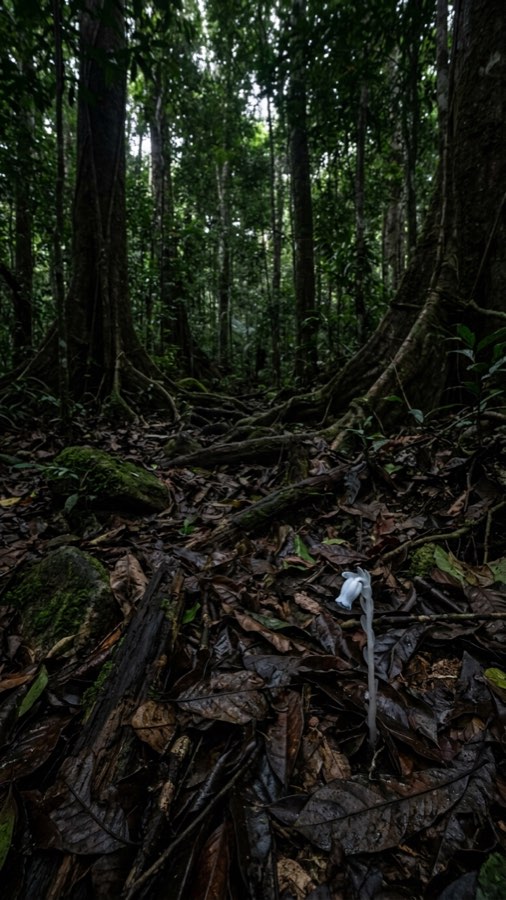 PLATE I
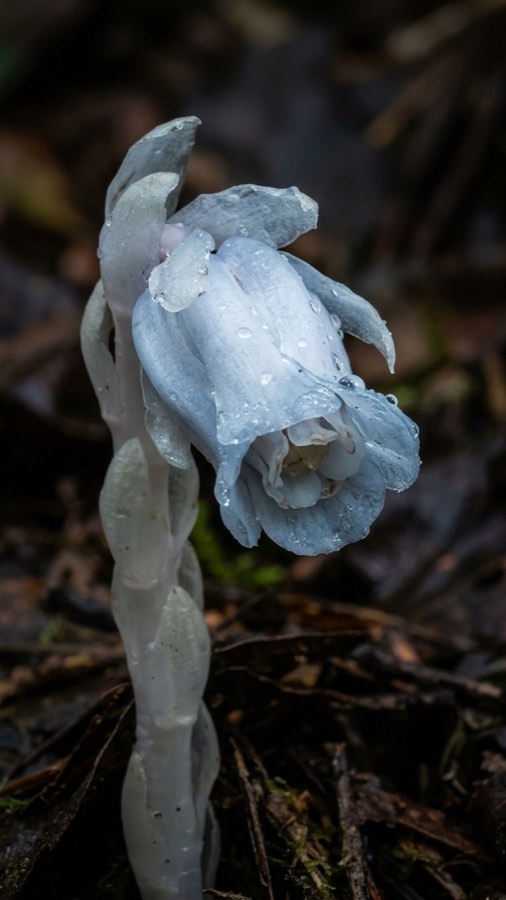 PLATE II
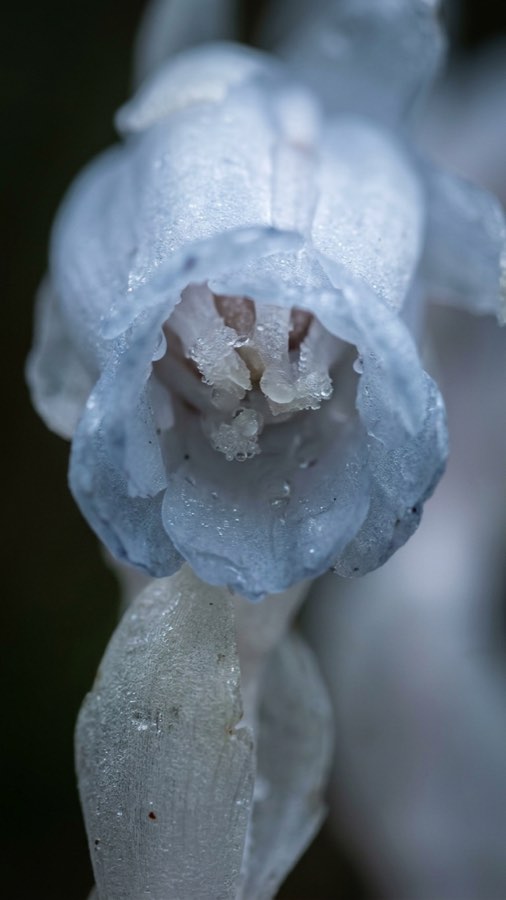 PLATE III
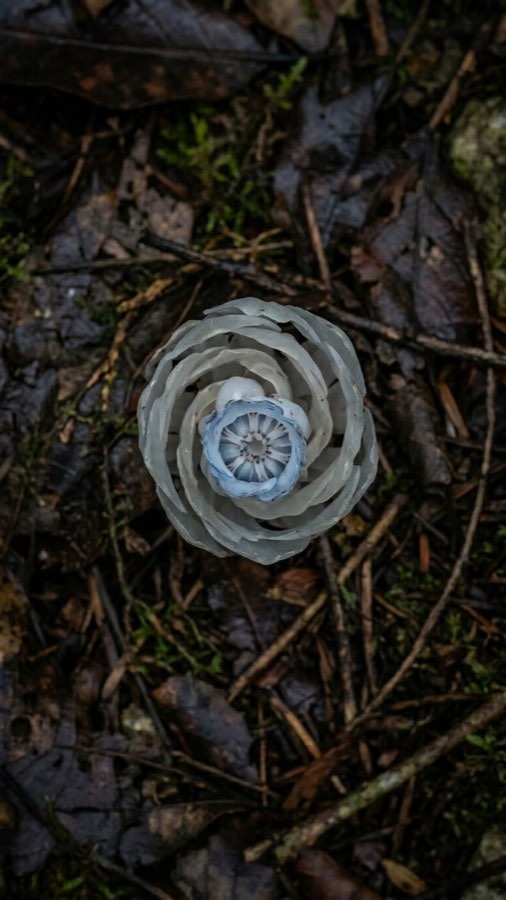 PLATE IV
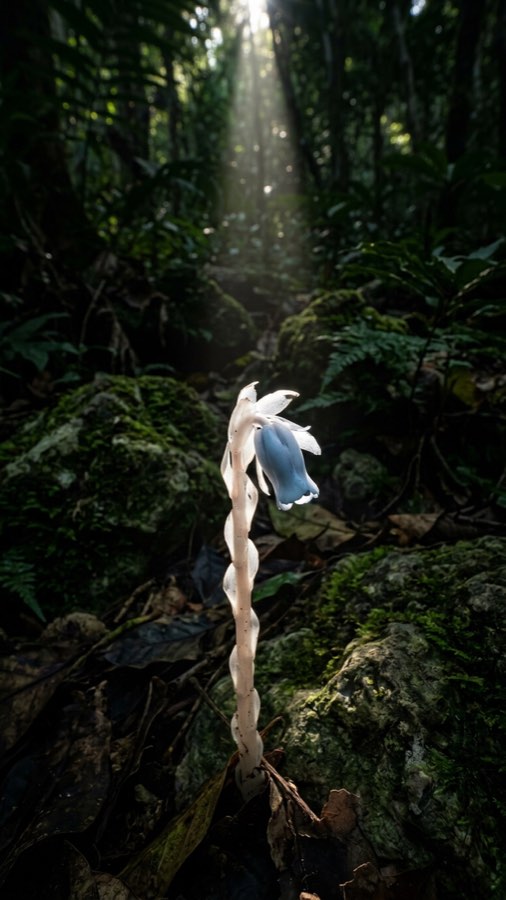 PLATE V
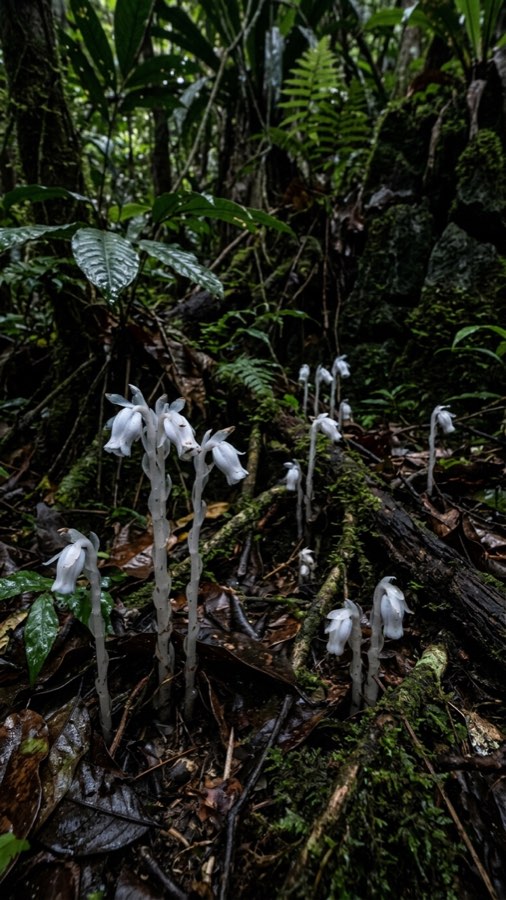 PLATE VI
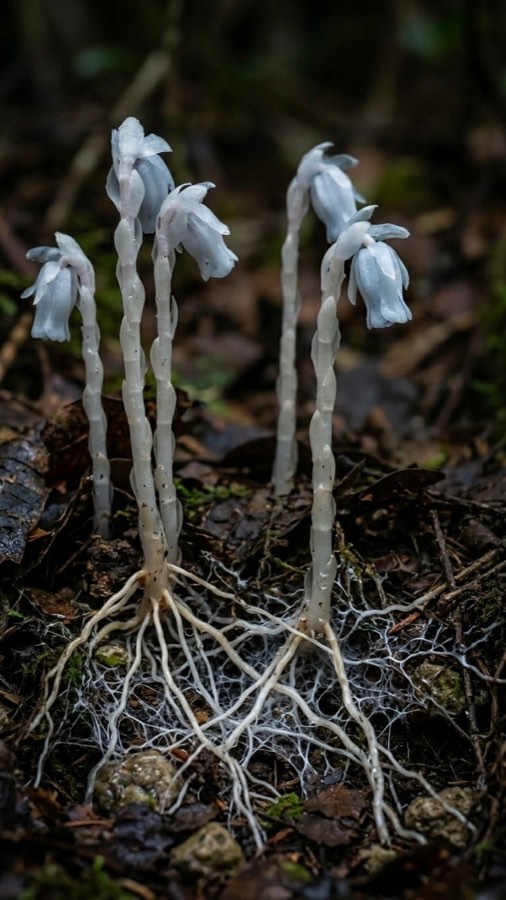 PLATE VIIPLATE VIII
A flower with no green at all blooms only on the dark forest floor.
It is a plant that gave up using light for itself.
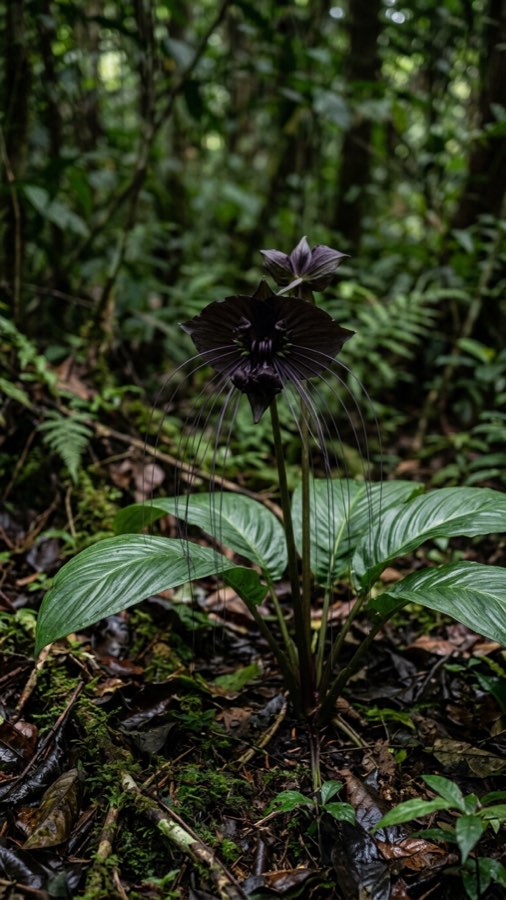
The dim tropical forest of Borneo.
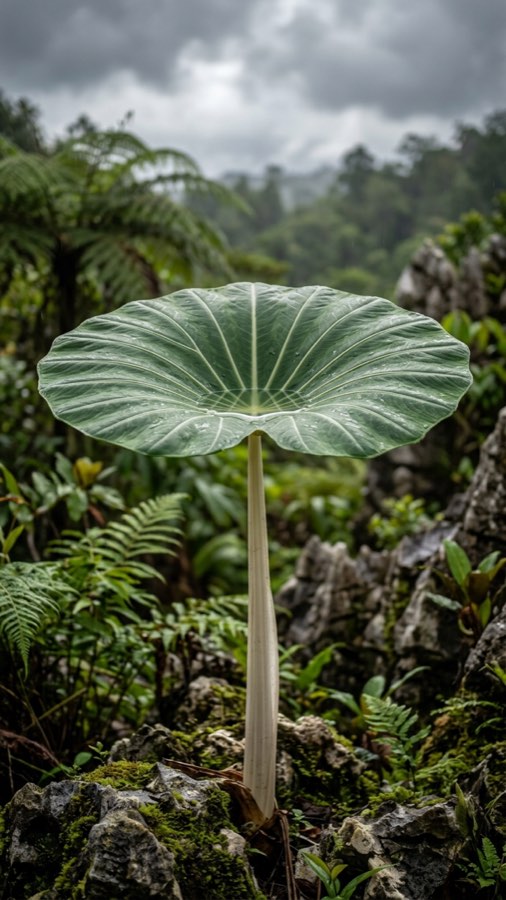
A dark limestone valley where light barely reaches.
The Pale Ghost-flower is translucent white throughout and bears no ordinary leaves.
Instead, it links to fungi underground and takes its nourishment from them alone.
After roughly three days of rain in the valley bottom, Umbraflora pallida loosens its corolla only before the wet leaf litter dries. The urn holds little nectar, but gives off a faint fermenting odor like humus. Fine pollen smears on the rim suggest that small flies moving through the dark understory enter by chance and touch the stigma as they leave.
Around fruiting plants, powder-like seeds lie thinly over the moss after the capsule splits. They are light enough to be carried by water dripping from the valley wall and drawn into limestone fissures. Only those reaching the right fungal layer appear to germinate, so colonies do not spread broadly; a few dozen pale stems line a single hidden flow of water.
Collected stems darken within half a day, and the urn-shaped flower collapses until it is hard to distinguish from leaf debris. It was likely dismissed in older notes as a fungus or an immature orchid. Hunters and resin gatherers may have remembered the “shadow flower” because, on wet animal tracks leading from limestone gullies back to the main river, its white points marked the direction underfoot.