Specimen · N°059 · Darkness · ▶ Film
Chalybanthus congoensisFoil-flash Bloom
色素をひとつも持たないのに、これは地上でもっとも強く輝くflowerです。
FOUND 2.8°S 20.5°E · 西から中央アフリカの熱帯林 · ✝ EX · Last seen 2005
色素をひとつも持たないのに、これは地上でもっとも強く輝くflowerです。
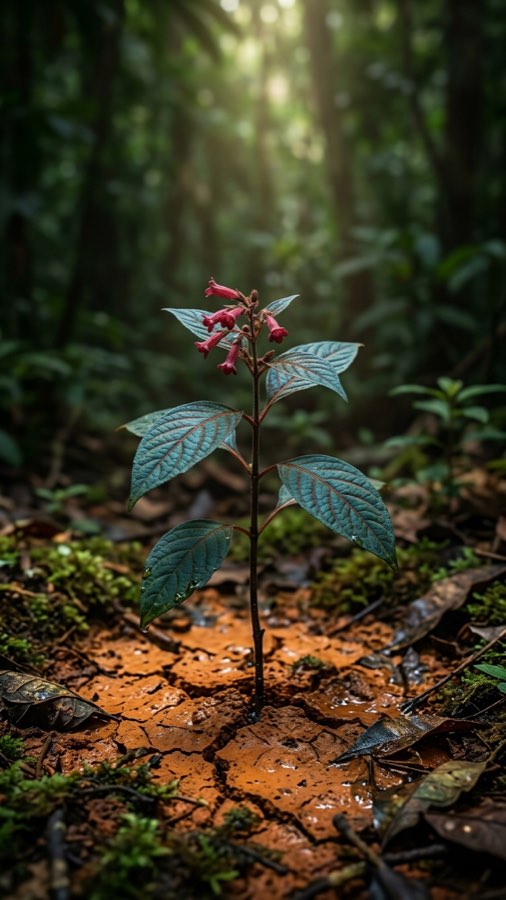
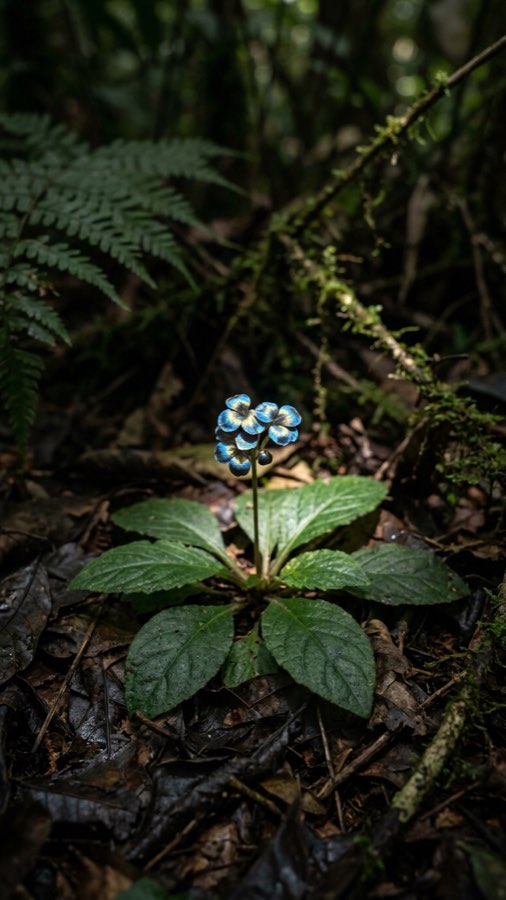
Foil-flash Bloomは、暗い熱帯林の林床に低く広がる小さなplant。広い濃緑のleafを低いロゼット状に重ね、その中心に丸みを帯びたflower弁を小さくひとかたまり咲かせる。flower弁には色素がまったく無い。深いshadowの下ではくすんだ黒っぽい破片にしか見えず、見過ごされてしまう。ところが樹冠の隙間から一条の木漏れ日が差し込み、ある角度でflower弁に当たった瞬間、金属箔を叩き出したような青が一気にフレアする。この色は顔料ではなく、flower弁表面の微細な層状構造(フォトニック構造)が特定の波長だけを反射してつくる構造色で、lightの入射角がずれると青から金へと移ろう。だから顔料としては無色なのに、既知のflowerのなかで最も強い輝きを放つ。flower弁を潰すと微細構造が壊れ、色は跡形もなく消える。押しleafにすれば、標本はただ褐色にsinkingだけだ。
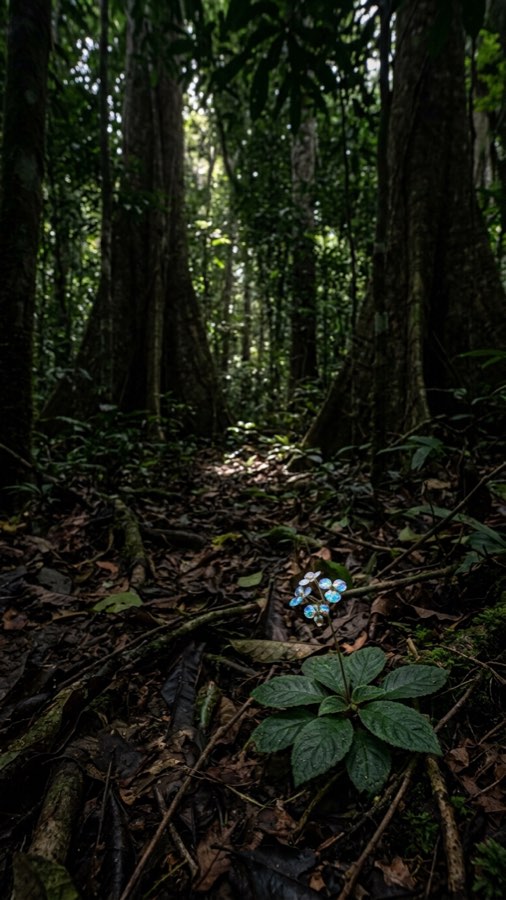 PLATE I
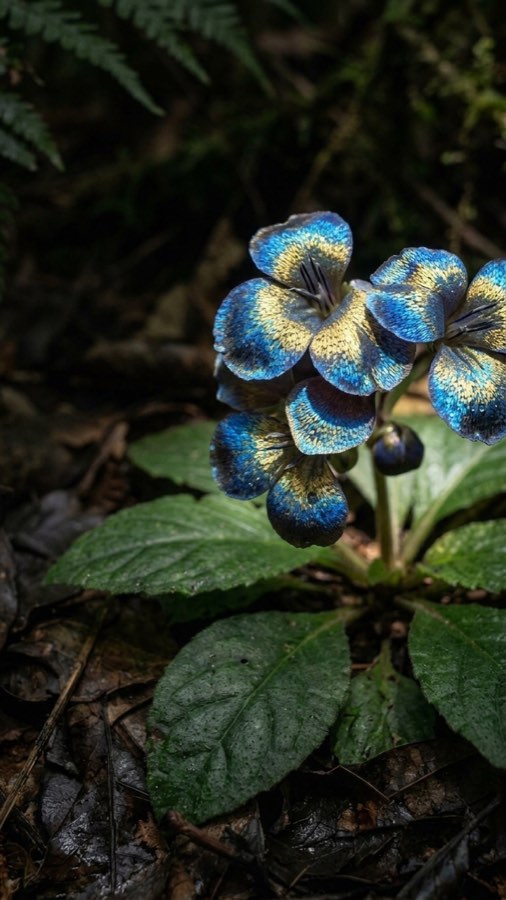 PLATE II
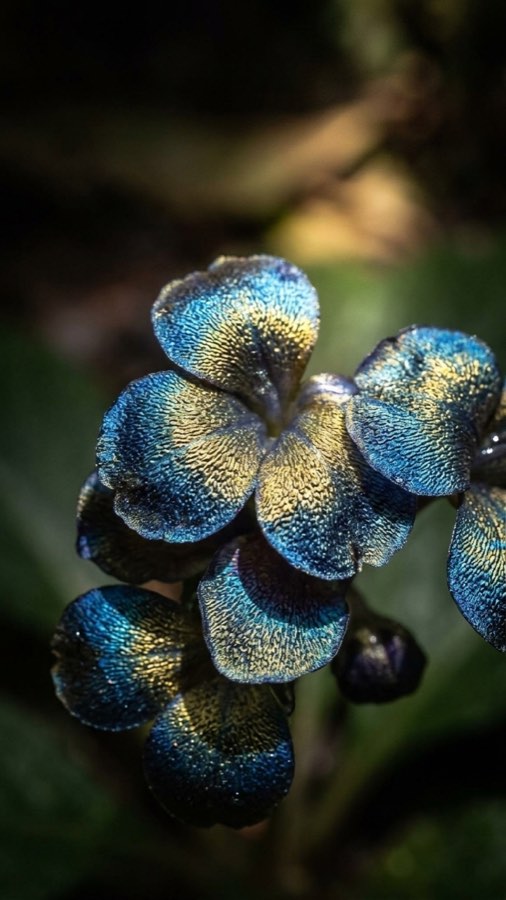 PLATE III
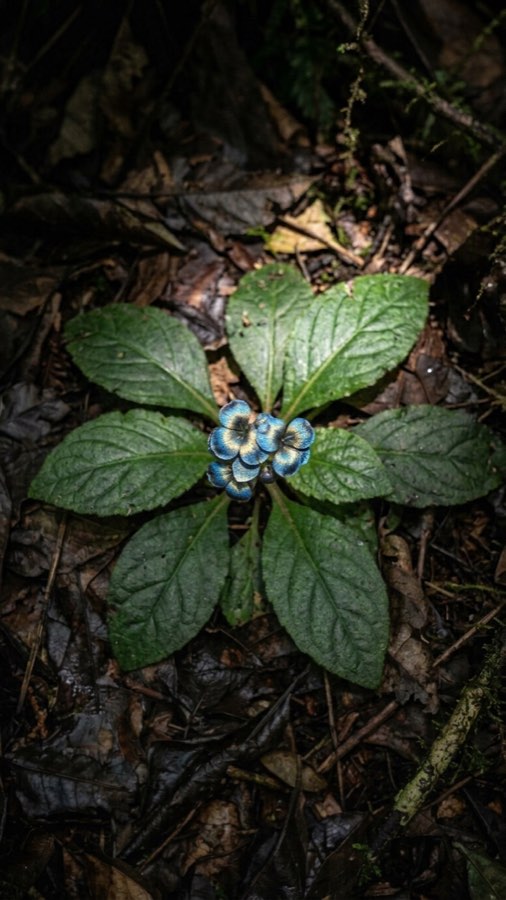 PLATE IV
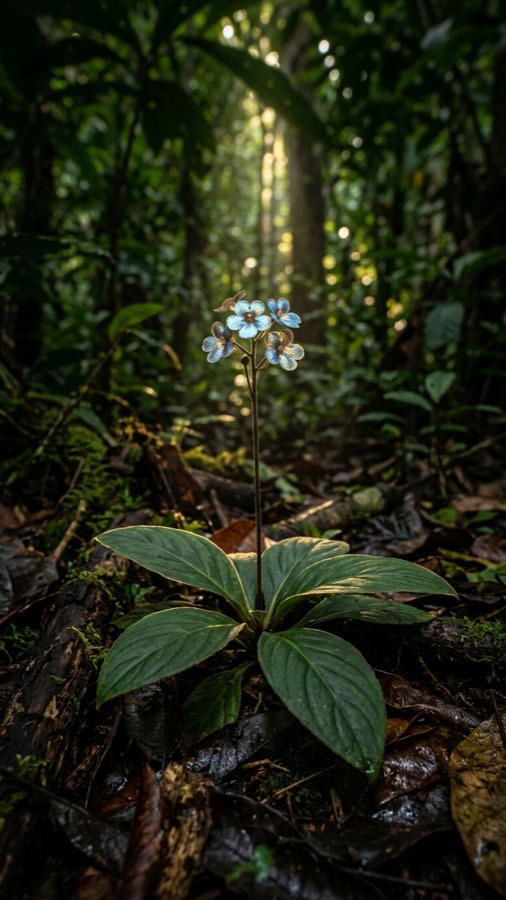 PLATE V
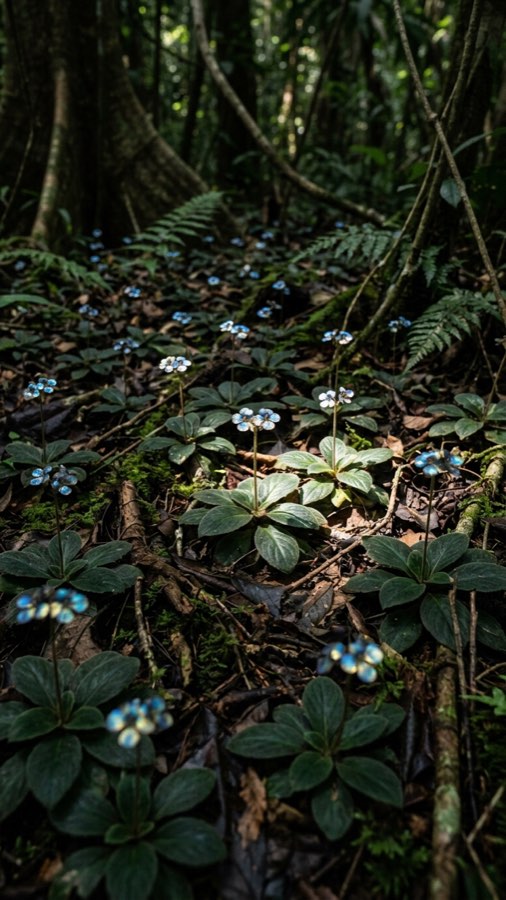 PLATE VI
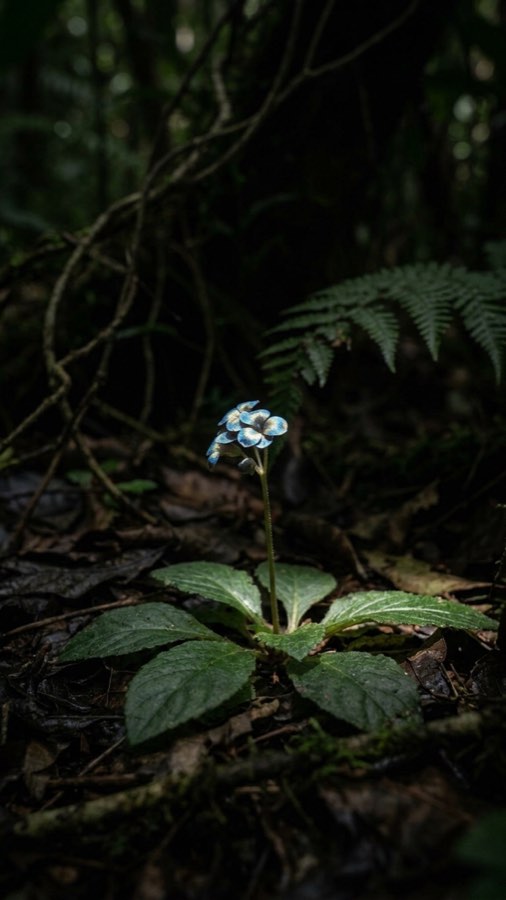 PLATE VIIPLATE VIII
色素をひとつも持たないのに、これは地上でもっとも強く輝くflowerです。
西から中央アフリカの熱帯林、ほとんど陽の届かない暗い林床。
shadowの下では、くすんだ黒い破片にしか見えません。
けれど一条の木漏れ日がflower弁に当たった瞬間、金属箔を叩き出したような青がフレアします。
その色は顔料ではなく、flower弁表面の微細な構造だけがつくる構造色です。
lightの角度がずれれば、青は金へと移ろいます。
Following flowering plants from morning to dusk, I found that the star-shaped bloom scarcely opened, the anthers pressed directly against the stigma. It is not built to wait for visiting insects, but behaves like a near-cleistogamous self-pollinating flower. By the next day, raindrops split the thin fruit wall, and dust-like seeds rode the surface film, darkening only along the margins of cracks. This explains why its colonies persist in narrow lines.
No remains are visible on the dry rock, yet a needle inserted into a fissure brought out pale green dormant buds enclosed in a mucilaginous sheath. Petrofissura should not be treated as a moss, but as a minute angiosperm with a liverwort-like habit. The discarded leaves and flower are short-lived working organs; the perennial body is only the growing point kept in the shade of stone. Against glare and evaporation, this is not extravagant retreat, but the only economy bare granite permits.
At the beginning of the rains, herders hurry their animals over the inselberg paths, yet they avoid surfaces where Petrofissura has just withdrawn. Wet granite is treacherous, and a hoof can strip seeds and dormant buds from the cracks together with the thin grit. The taboo against touching a “rock gone to sleep” is therefore not mere allegory. It serves the weather-bound life of the uplands, the safety of the path, and the practical preservation of the next colony.