Specimen · N°053 · Wetland · ▶ Film
Gradiradix aestuariaWandering Stilt-Tree
歩く木は、一生をかけてたった数メートルだけ進みます。
FOUND 5.0°N 115.0°E · 東南アジア、ボルネオ島北岸 · ✝ EX · Last seen 1995
歩く木は、一生をかけてたった数メートルだけ進みます。
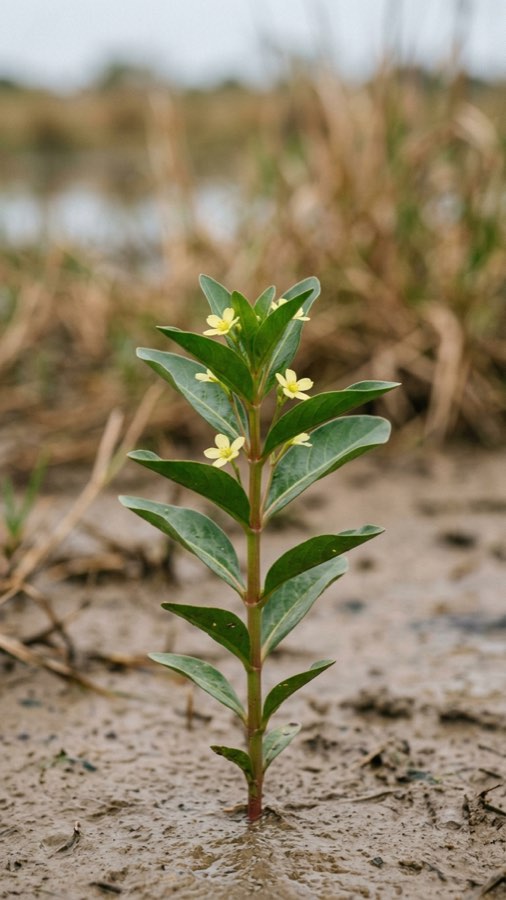
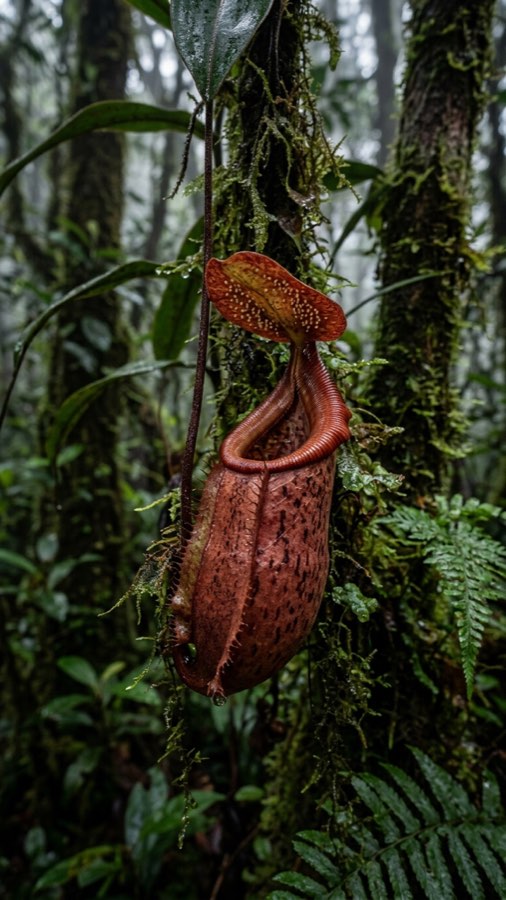
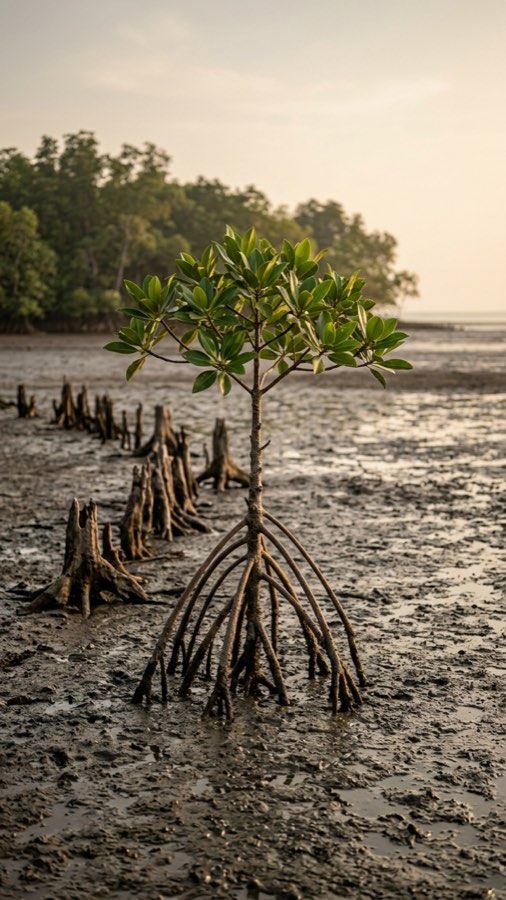
Wandering Stilt-Treeは、泥干潟のmarginに立つ高さ二、三メートルの低木で、体を幾本ものアーチ状の支柱根で泥の上に持ち上げている。細い脚で立つように見えるこの根は、成長の向きに強い偏りがある。tideが引いて泥が現れるSea側にだけ新しい支柱根を次々と下ろし、陸側の古い根は役目を終えて朽ちていく。新しい根が幹を支えきると、幹の付け根はわずかにSea側へ引き寄せられ、古い根の位置にはやがて泥だけが残る。この根の架け替えを何十年もくり返すうち、幹の中心は生まれた場所から数メートル、後退するtideを追うように移動していく。一年あたりの歩幅は指の幅ほどで、目には止まらない。だが背後に点々と残る古い切り株の列をたどれば、木が歩いてきた道筋がそのまま地面に刻まれている。
 PLATE I
 PLATE II
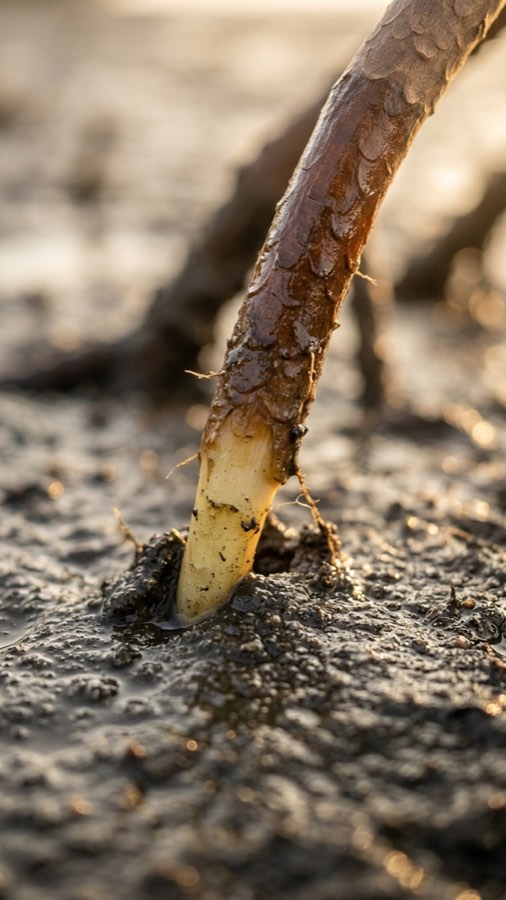 PLATE III
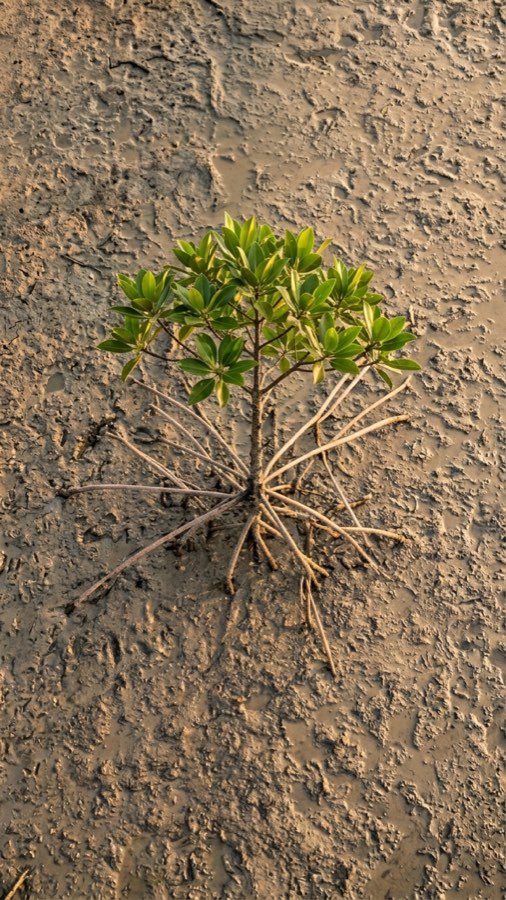 PLATE IV
 PLATE V
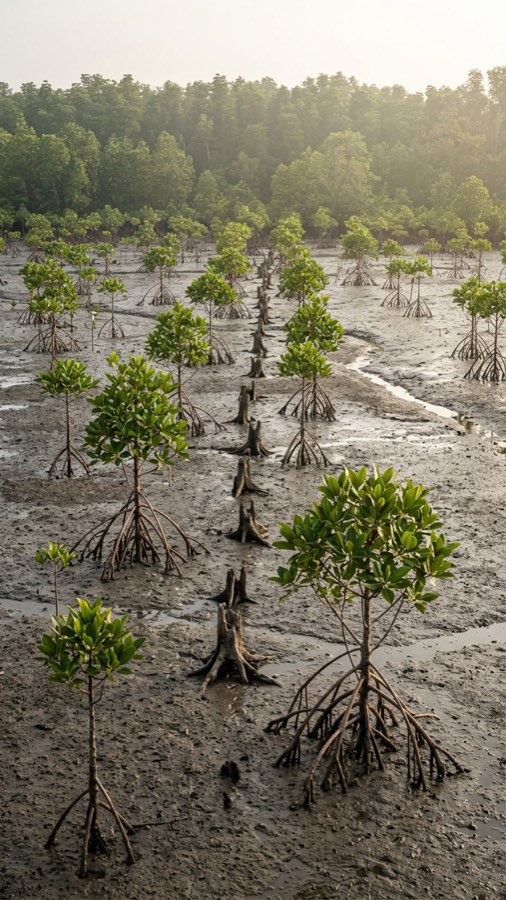 PLATE VI
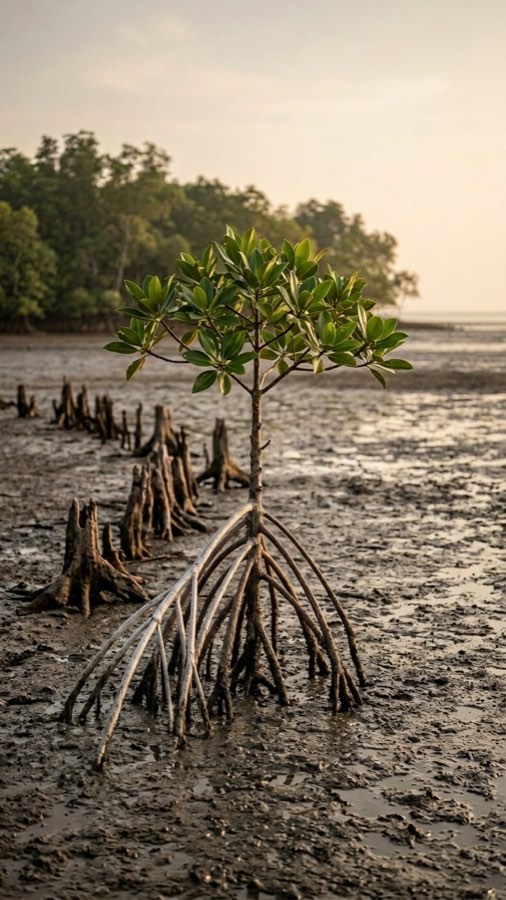 PLATE VIIPLATE VIII
歩く木は、一生をかけてたった数メートルだけ進みます。
tideが引くたびに、古い支柱根を捨て、新しい脚をSea側へ架け替えるからです。
東南アジア、干潟とマングローブが出会う泥のmargin。
アーチ状の支柱根で体を持ち上げ、まるで幾本もの脚で立つように見えます。
Seaへ向かう側にだけ新しい根を伸ばし、陸側の古い根は静かに朽ちていきます。
こうして根の歩幅のぶんだけ、幹の中心は少しずつtideを追って動いていきます。
In pits that bear the flower, a sandy loam of glacial origin is exposed beneath the black film of leaf humus, often no wider than a boot tip. Soon after windthrow the soil remains moist but not compacted, and the mineral layer reddens slightly where air reaches it. Pitfall Starflower does not appear in hollows of humus alone; its shoots follow this oxygenated boundary. The cue that breaks dormancy seems to be not light alone, but also the altered mycorrhizal community of overturned soil.
Flowering is confined to the interval before beech and lime leaves unfold, while meltwater still lingers at the pit bottom. On clear mornings I observed small hoverflies and early solitary bees pausing briefly within the pale, violet-washed tepals. The low flower is sheltered from wind, and the pit wall forms a sun pocket several degrees warmer than the surrounding forest floor. The pale golden center is strongest in plants receiving oblique spring light, suggesting better carotenoid development in the anthers.
A single root pit supports the plant only during its first few years, not throughout the decades in which the hollow slowly levels. Each plant spends two or three springs as leaves, then flowers once in a year with sufficient light, sheds seed onto the pit floor and slope, and dies. As leaves and fragments of fallen wood accumulate and saplings begin to shade the hollow, germination ceases. Its disappearance is not failure, but the normal end of the colony, with seed left in the soil to wait for another windthrow.