Specimen · N°052 · Wind · ▶ Film
Nivifenestra himalayensisSnow-window Bloom
雪が降ったばかりの朝にだけ、雪の上に小さな窓が開きます。
FOUND 27.8°N 88.1°E · ヒマラヤ東部、標高約5000mの吹きだまりの雪田 · ✝ EX · Last seen 1981
雪が降ったばかりの朝にだけ、雪の上に小さな窓が開きます。
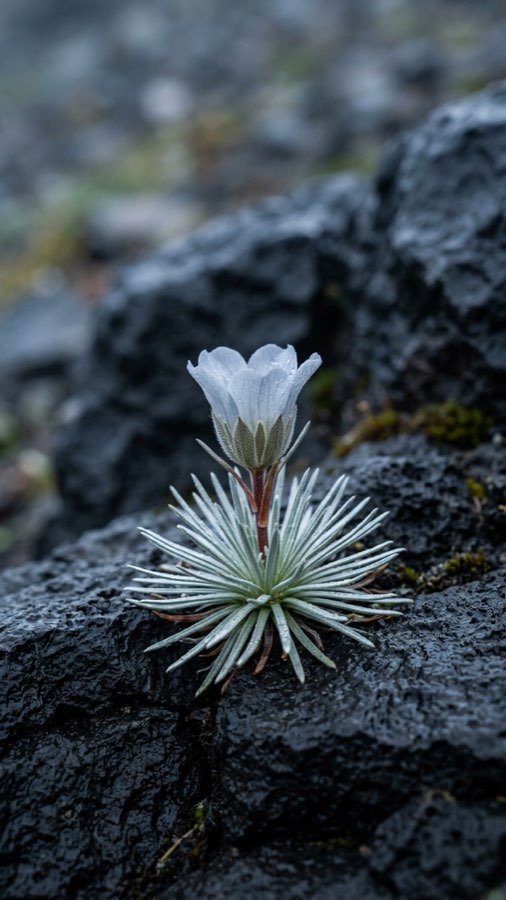
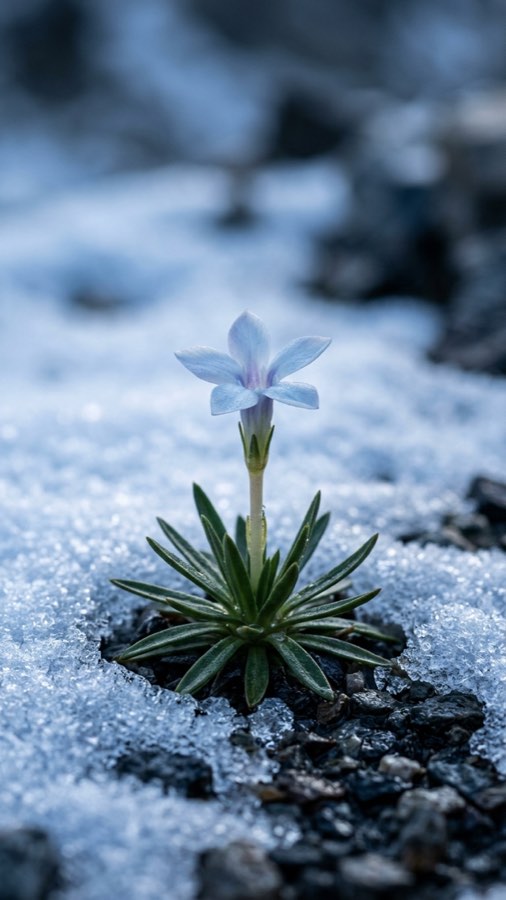
Snow-window Bloomは、雪面から5cmほど顔を出す小さな高山plant。細い革質の濃緑のleafを低いロゼット状に重ね、透き通った淡色の短い茎の先に、淡いpale星形の小flowerをひとつ咲かせる。flowerの喉にはかすかな菫色がにじむ。ふだんは岩屑の上の薄い雪の下でじっと過ごし、ふわりと軽い新雪が積もった朝にだけ動きだす。flowerはわずかに熱を持ち、まわりのゆるい雪を静かに溶かして小さな空洞をつくる。透明な茎は新雪のやわらかさを感じとって伸び、淡いflowerを雪面まで届かせる。ところが時間がたって雪が締まり硬くなると、flowerは茎を縮め、音もなく雪の下へ戻っていく。だから硬くなった雪原には、もうflowerの跡は残らない。咲いていたのは、新雪がまだやわらかかった数時間だけだ。
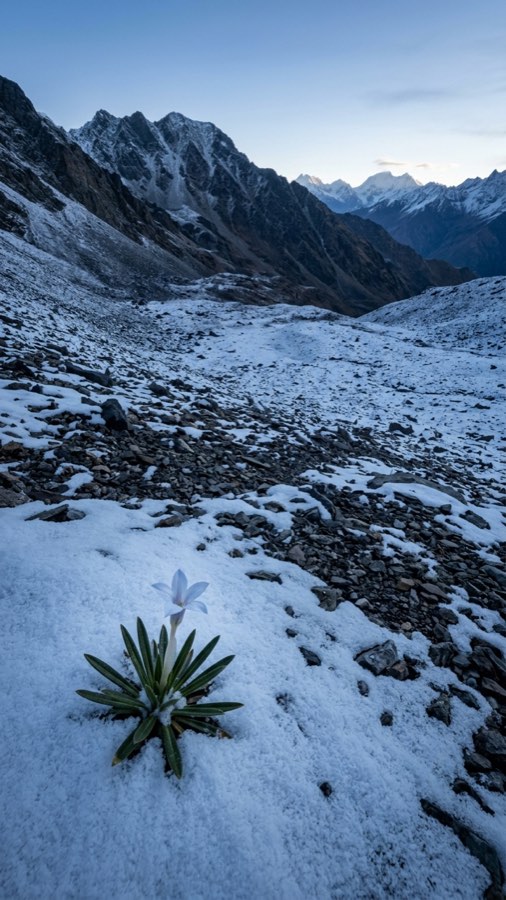 PLATE I
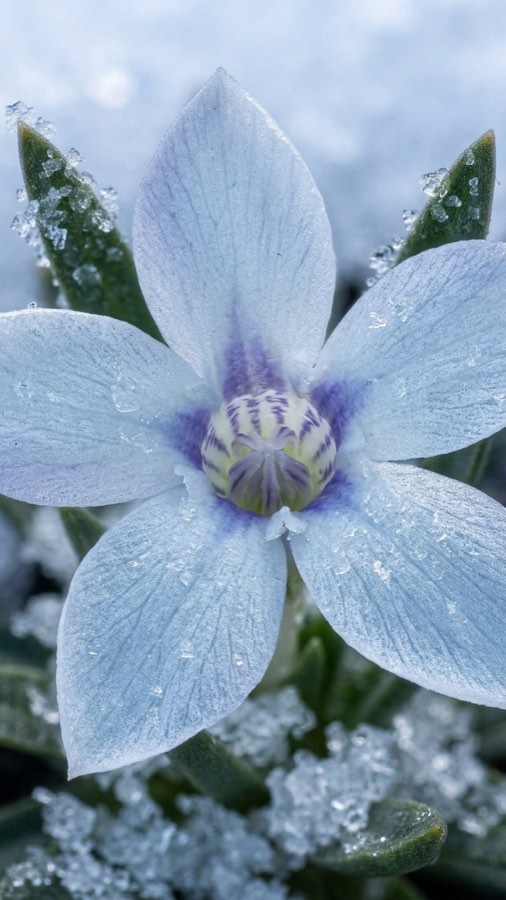 PLATE II
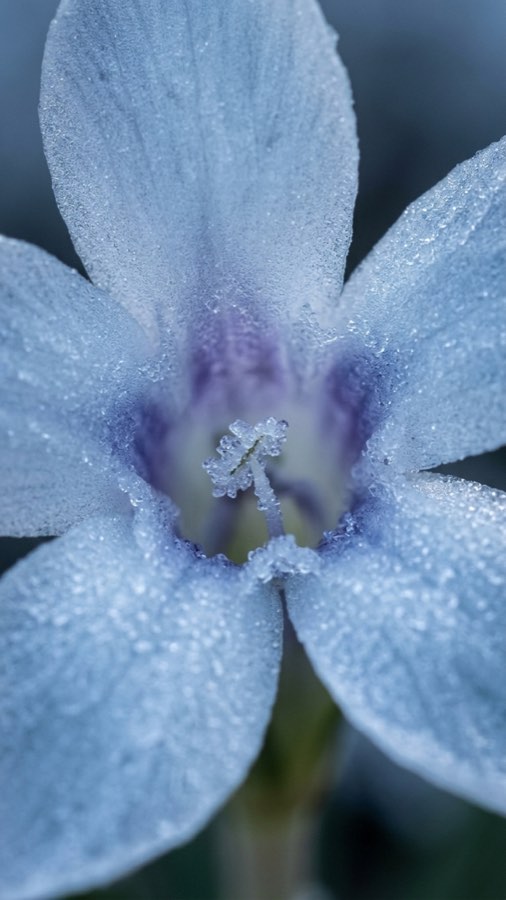 PLATE III
 PLATE IV
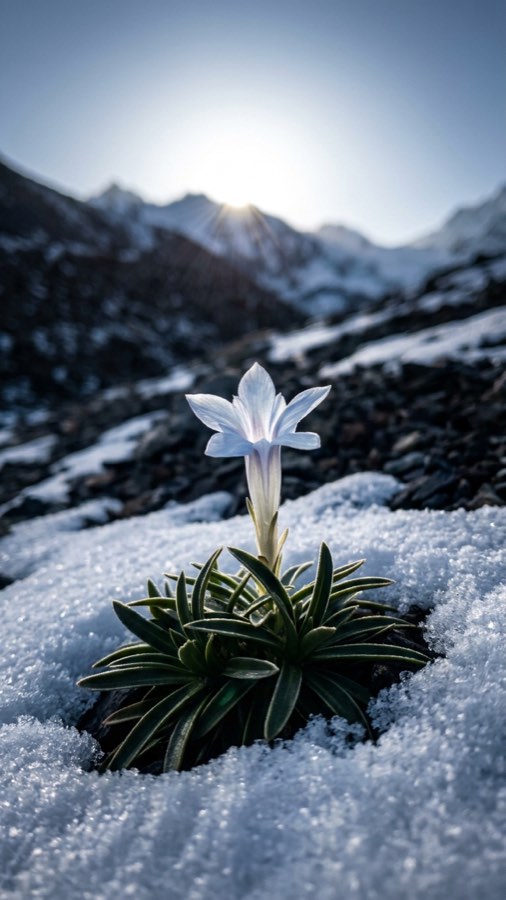 PLATE V
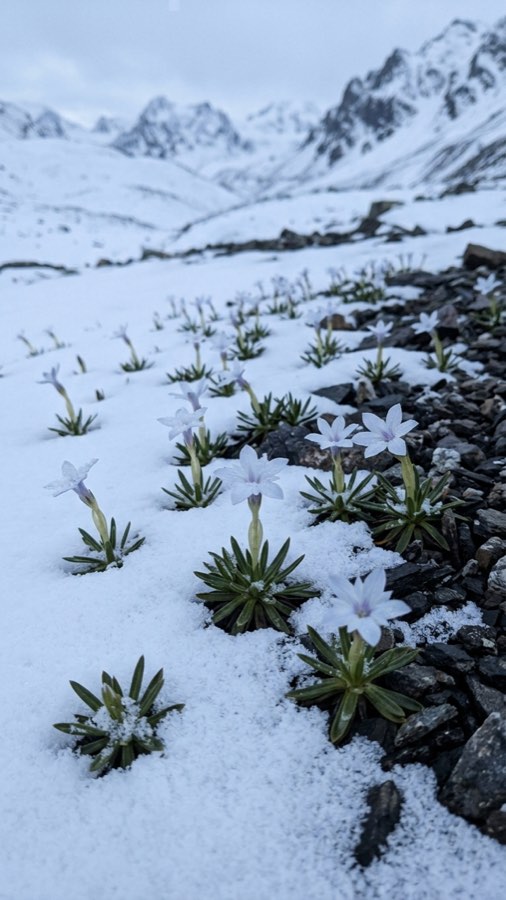 PLATE VI
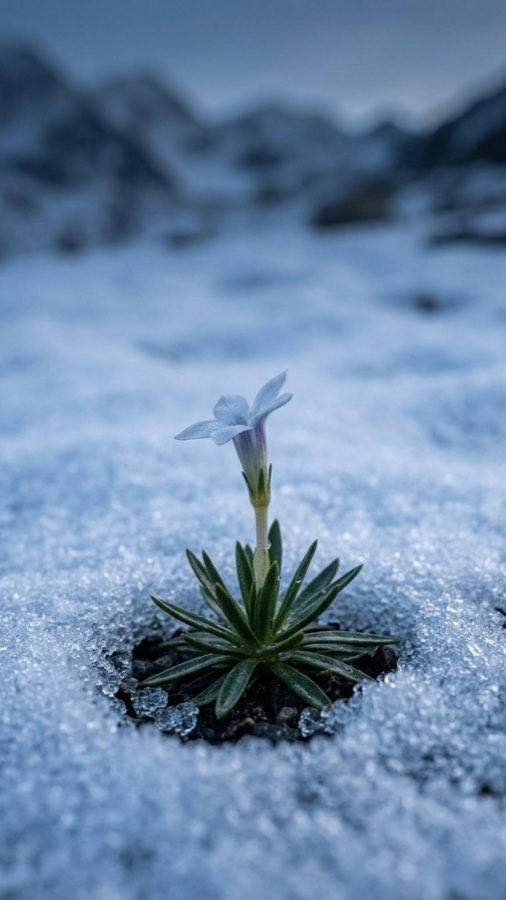 PLATE VIIPLATE VIII
雪が降ったばかりの朝にだけ、雪の上に小さな窓が開きます。
のぞき込むと、その奥でflowerが咲いています。
ヒマラヤ東部、標高五千メートルの吹きだまり。
ふわりと軽い新雪が積もると、Snow-window Bloomはわずかに熱を出し、ゆるい雪をそっと溶かします。
透き通った茎を伸ばし、淡いpaleflowerを雪面まで届かせます。
けれど雪が締まって硬くなると、flowerは茎を縮め、音もなく雪の下へ戻っていきます。
On mornings of fresh snow, the cavity around each bloom is no more than two or three sun across, yet its air is slightly warmer than the outside. The anthers appear to split before the perianth is fully open, dusting the stigma and completing self-pollination. Only near noon, when meltwater wets the scree, have I seen small flies enter by the snow-window and briefly probe the violet throat. Insect visitation seems a contingency, not the rule.
Uprooted plants show roots far deeper than the leaves suggest. Fine roots follow cracks in dark gneiss and mica schist, drawing on the brief meltwater held beneath stones warmed by sun. I have not found it below pale calcareous cliffs; it is confined to dark, fast-draining scree. The flower appears in whiteness, but the plant’s true living place is the heat-catching fissure of stone.
Their simultaneous flowering in the same hollow is likely because the lee drift gathers seeds as well as snow. When capsules ripen in the hard-snow season, they split close to the ground, and the thin seeds skate over the crust into the bottom of the drift. As spring compacts the snow, the flower-holes vanish; by summer only scree remains. To the untrained eye, absence proves nothing. Herders read that silence as a sign the pass-snow has become firm enough to cross.