Specimen · N°029 · Storm · ▶ Film
Tonitrophila montanaAfterstorm Bloom
It opens only on the morning after the storm has passed.
FOUND 32.0°N 90.0°E · Highland grassland of the Tibetan Plateau · ✝ EX · Last seen 2013
It opens only on the morning after the storm has passed.
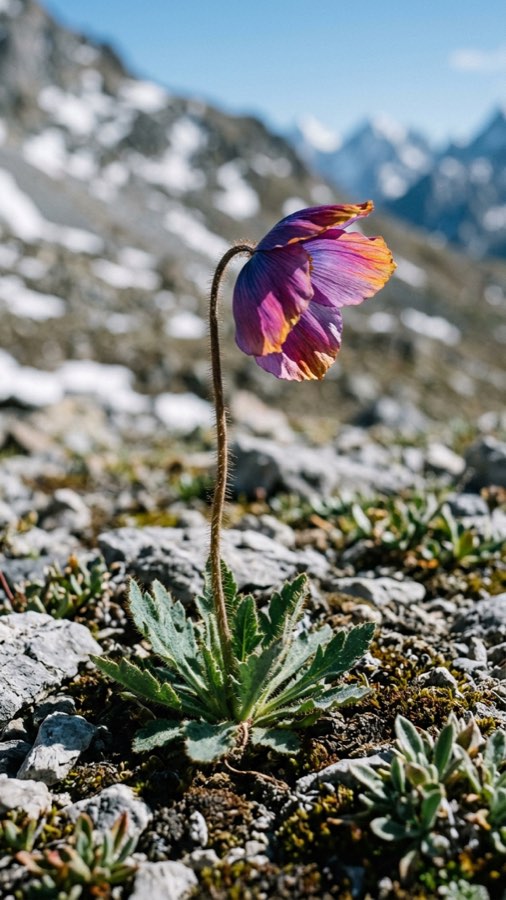
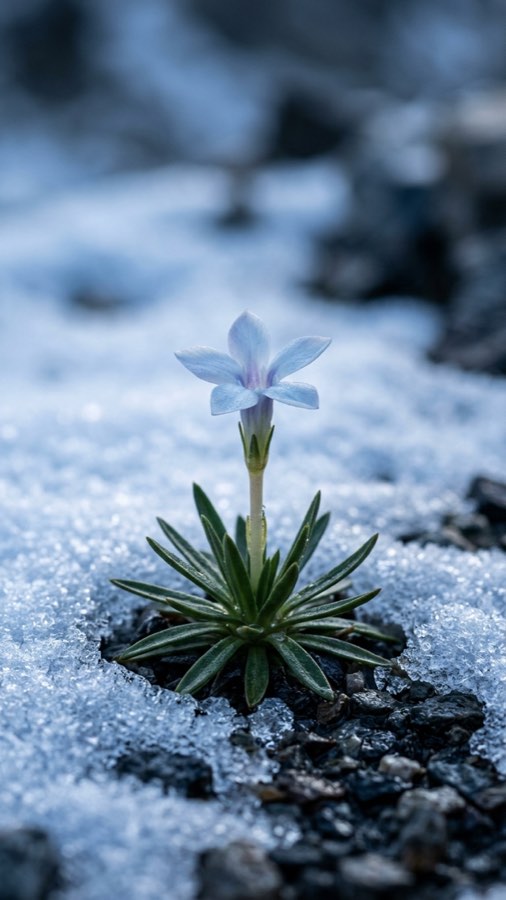
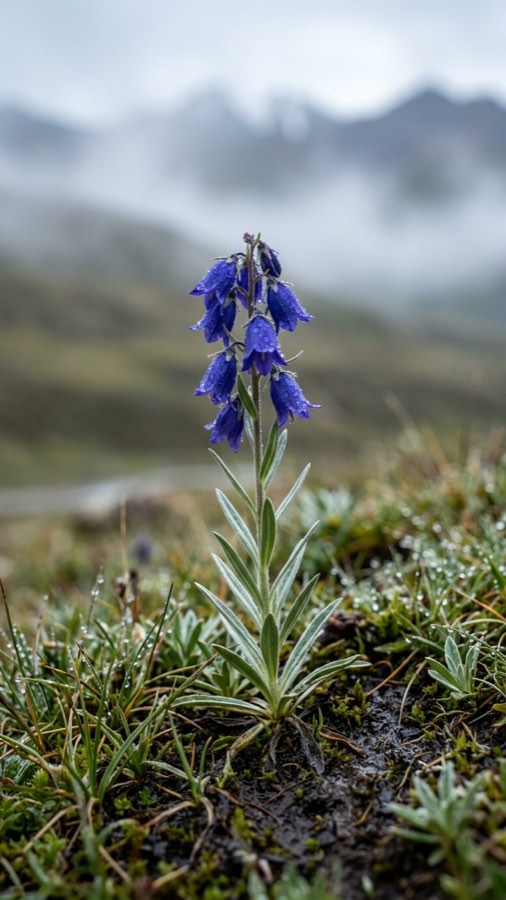
The Afterstorm Bloom is an alpine plant 15–20 cm tall, with slender silver-green leaves. Only on the morning after a thunderstorm has washed the air, under damp and clarified skies, does it open its deep indigo flowers all at once. On dry, clear mornings it does not open at all.
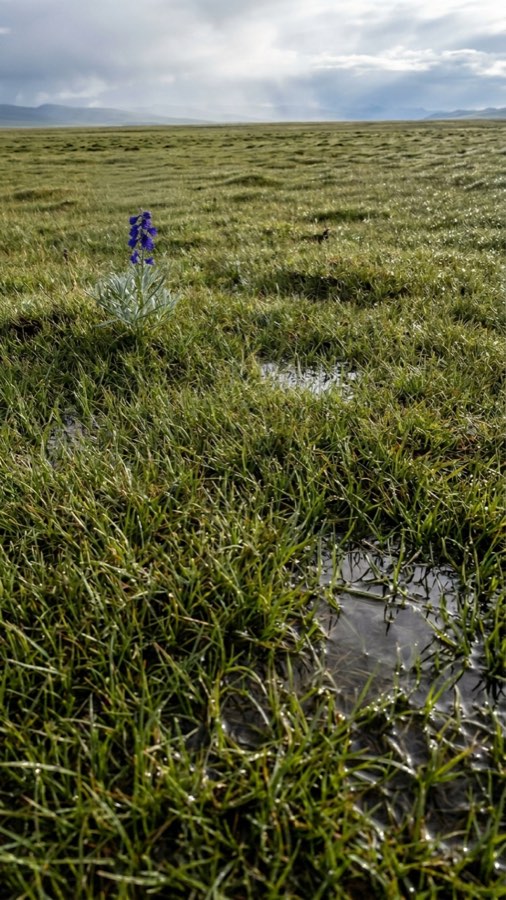 PLATE I
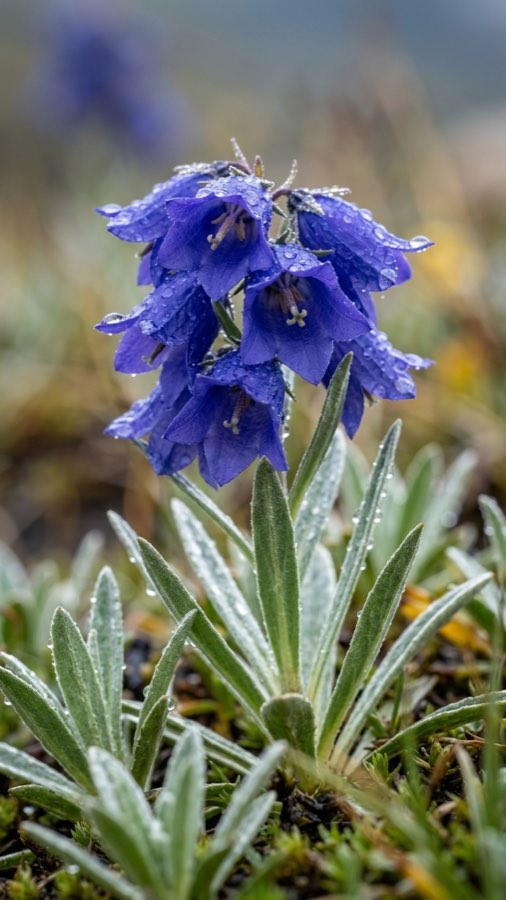 PLATE II
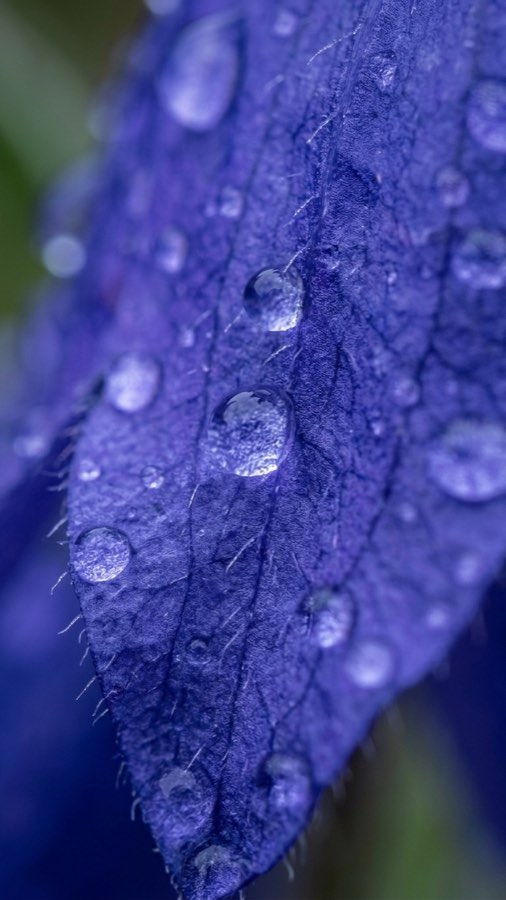 PLATE III
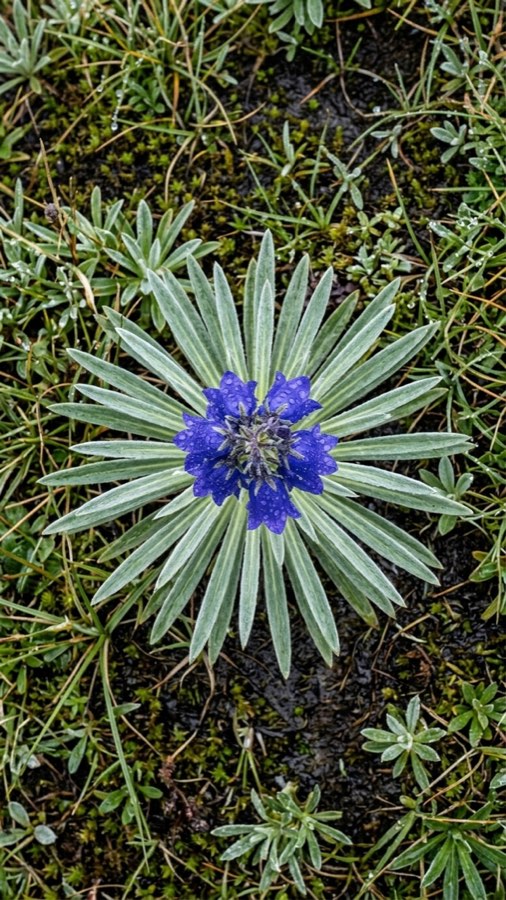 PLATE IV
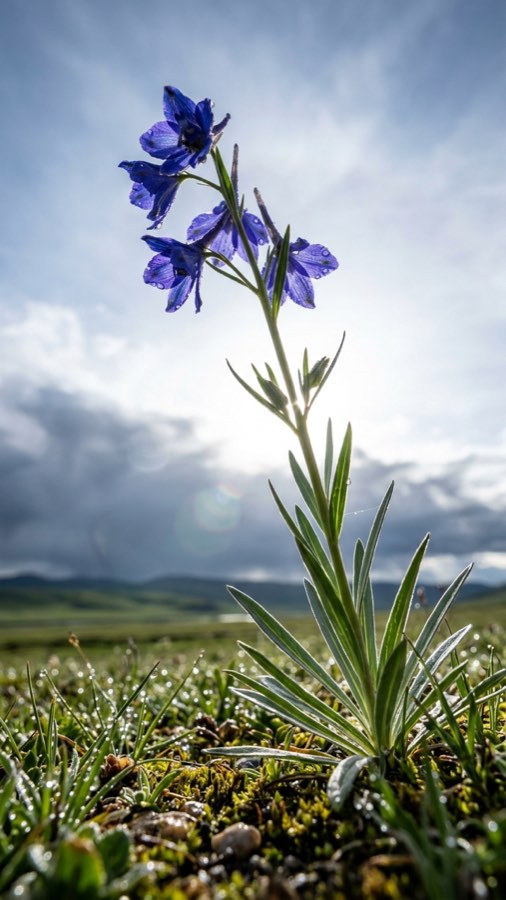 PLATE V
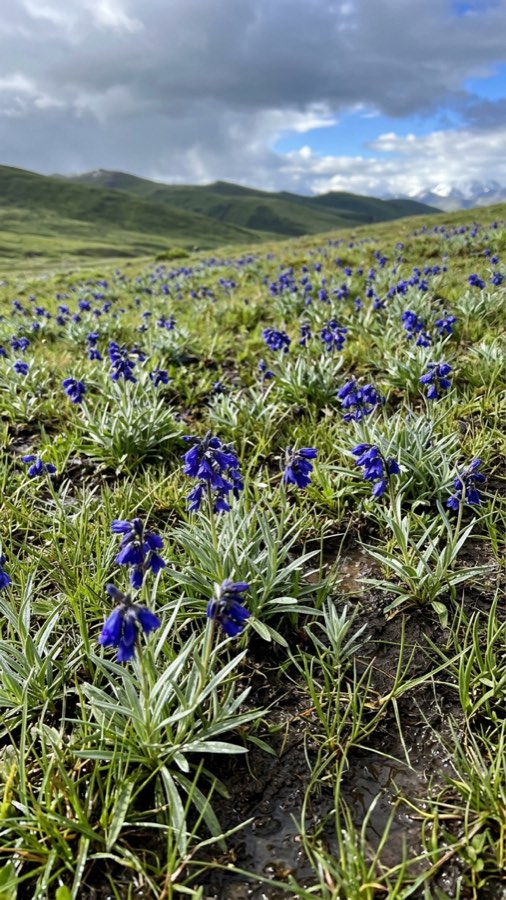 PLATE VI
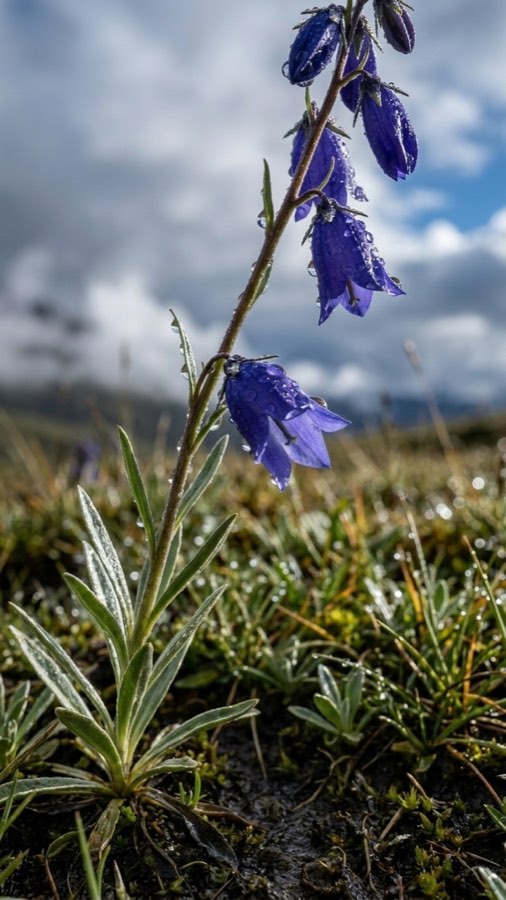 PLATE VIIPLATE VIII
It opens only on the morning after the storm has passed.
On dry, clear mornings, it never opens.
The Tibetan Plateau — grassland at four thousand metres.
A land where thunderstorms wash the sky on summer afternoons.
In the clear morning air, after the rain has rinsed the atmosphere,
the Afterstorm Bloom opens its deep indigo flowers all at once.
Tonitrophila montana is not scattered evenly through the meadow; it favors the shoulders of small frost-heaved hummocks where shallow calcareous gravel lies over the plateau turf. Beneath the surface, narrow clay lenses hold water for only half a day after a thunderstorm. Its silvery green leaves seem not merely a guard against harsh light, but evidence of a plant unable to root deeply in such thin, fast-draining soil.
Flowering is synchronized within the few humid hours after a stormy night. A small amount of dilute nectar lies deep in the corolla, apparently attracting minute hoverflies that fly close to the ground after rain. If no visitor arrives, the stamens bend inward by afternoon and touch the stigma. The mass opening of a colony increases the chance of outcrossing, while this automatic selfing keeps the brief alpine season from being lost.
On a dry, clear morning the same plant appears only as a tuft of narrow silvery leaves, the deep blue flower closed and hidden beneath the calyx. A collecting party passing before noon would preserve little more than foliage easily confused with related alpine herbs. Its brief window after thunderstorms, its scattered colonies on gravelly ground, and the loss of floral color in pressed specimens likely pushed this plant to the margins of the record.