Specimen · N°030 · Desert · ▶ Film
Psammophila erransSandwake Bloom
It shows itself only after the sandstorm has passed.
FOUND 38.5°N 83.5°E · Taklamakan Desert · ✝ EX · Last seen 2024
It shows itself only after the sandstorm has passed.
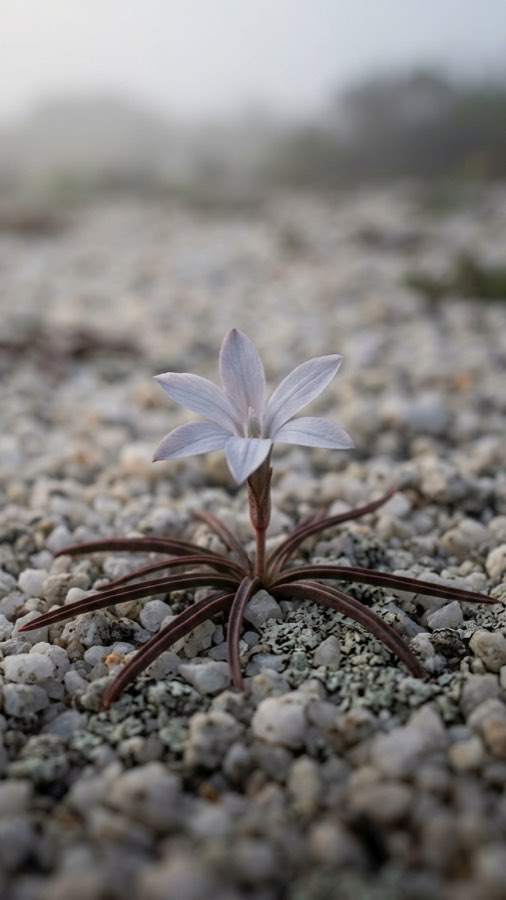
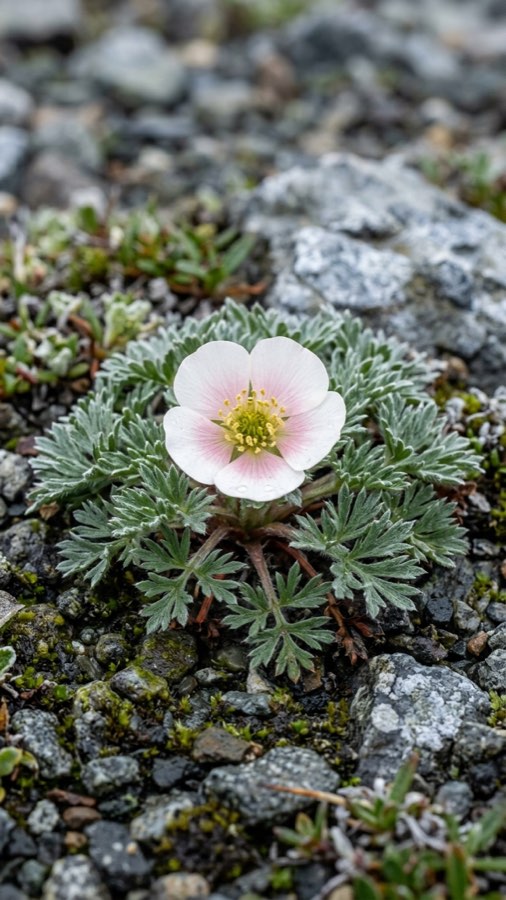
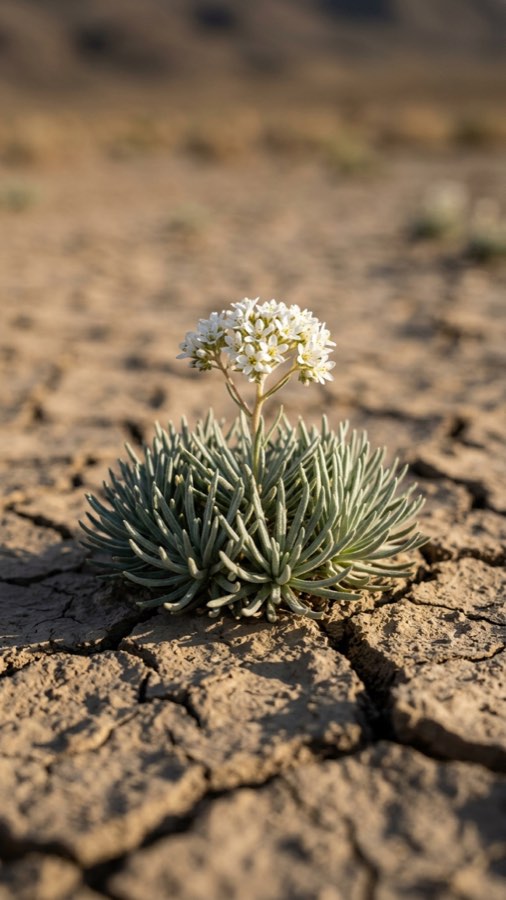
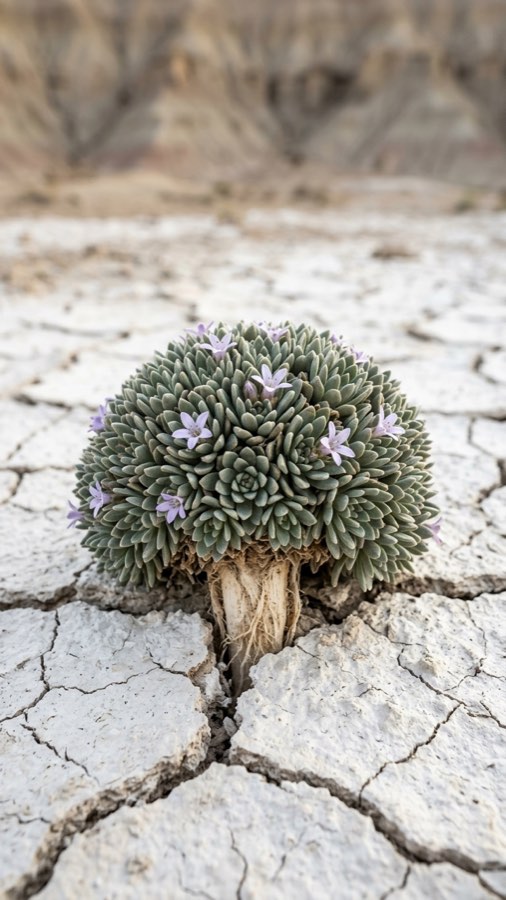
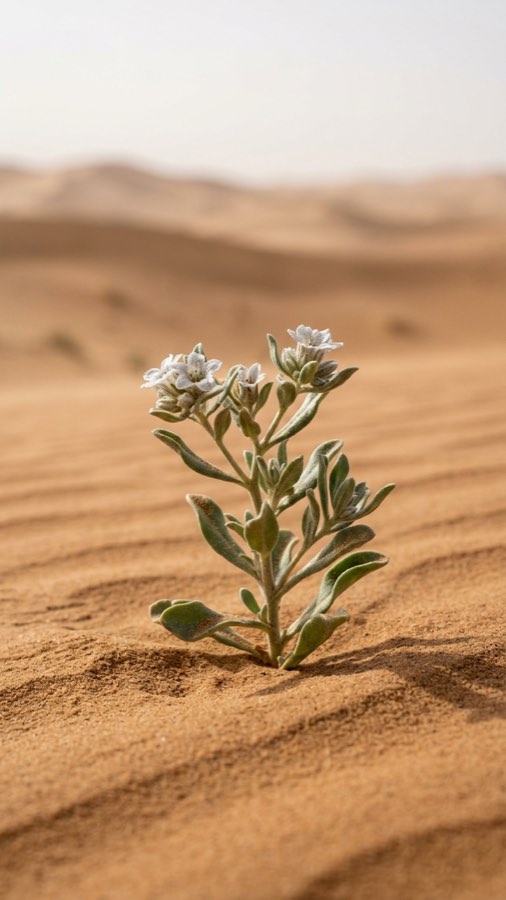
The Sandwake Bloom is a desert plant some 10 cm tall, with thick fleshy leaves; the plant lies dormant beneath the sand for years. When a sandstorm shifts the dunes and strips away the covering sand, it is exposed, and opens small silver-white flowers in the dry wind. Before the sand buries it again, it gives its seeds to the wind.
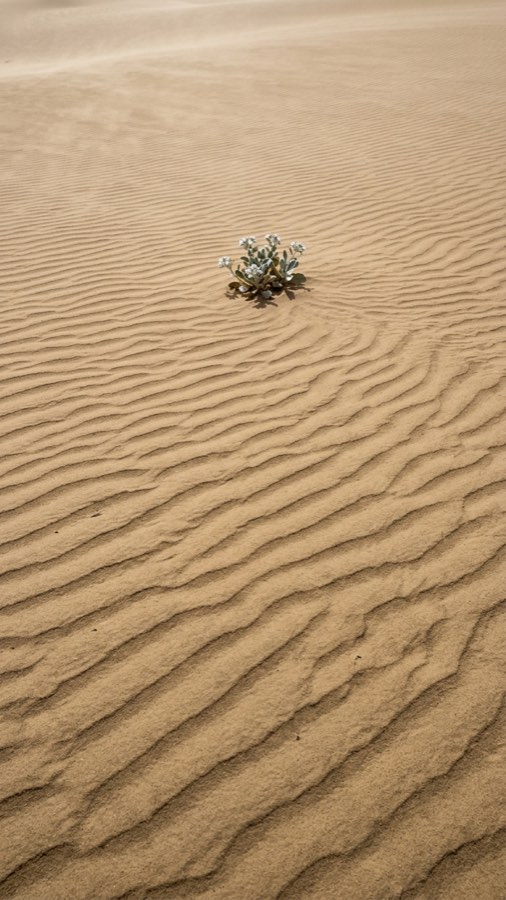 PLATE I
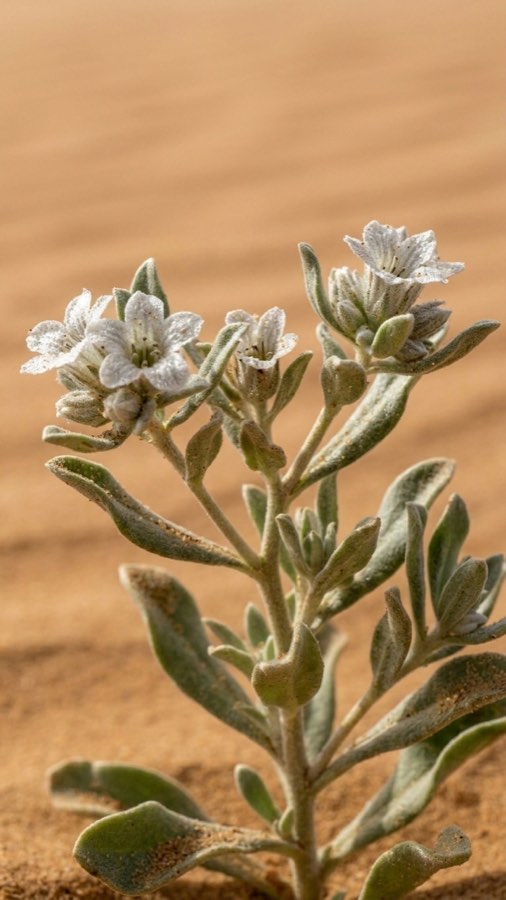 PLATE II
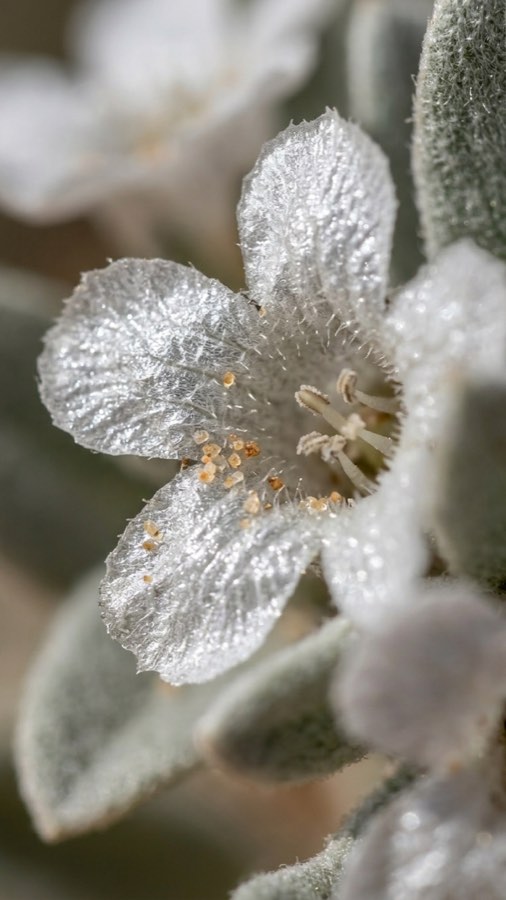 PLATE III
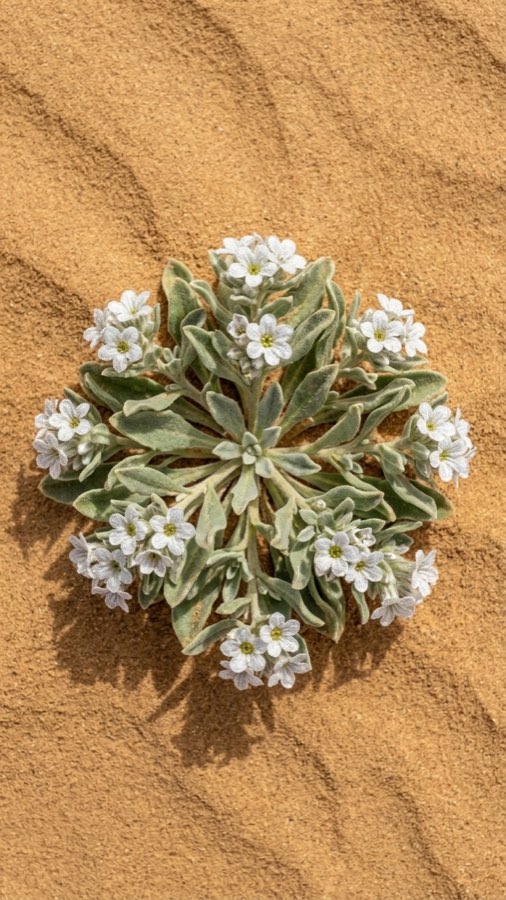 PLATE IV
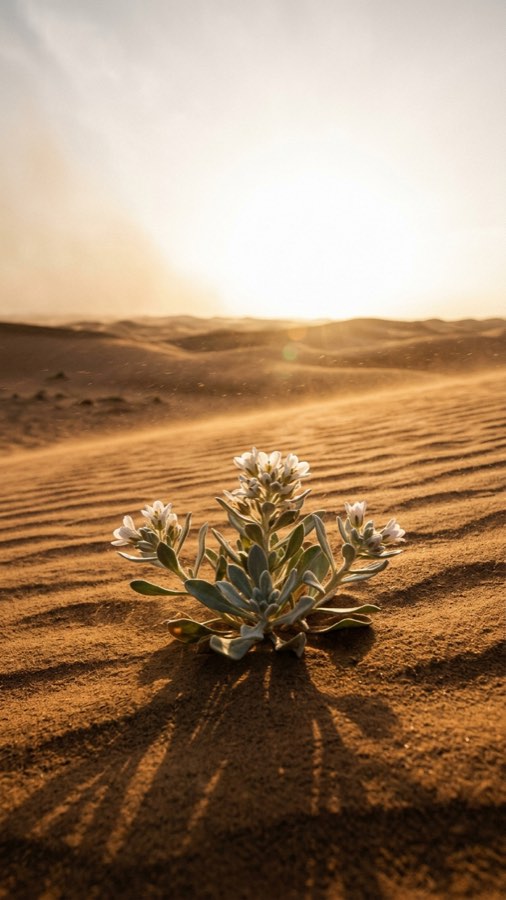 PLATE V
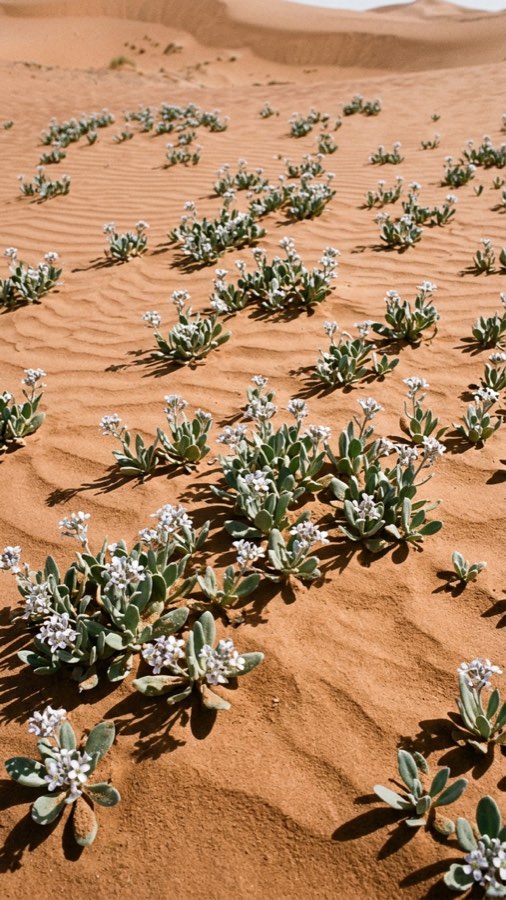 PLATE VI
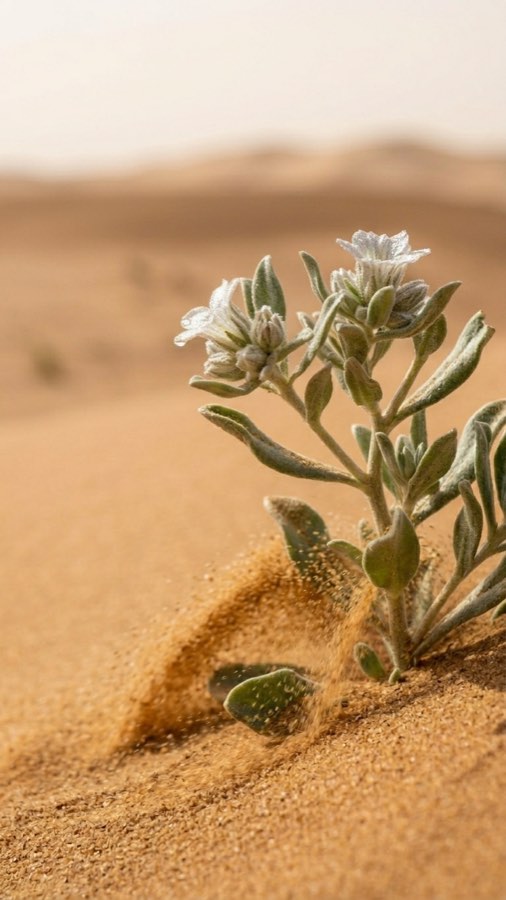 PLATE VIIPLATE VIII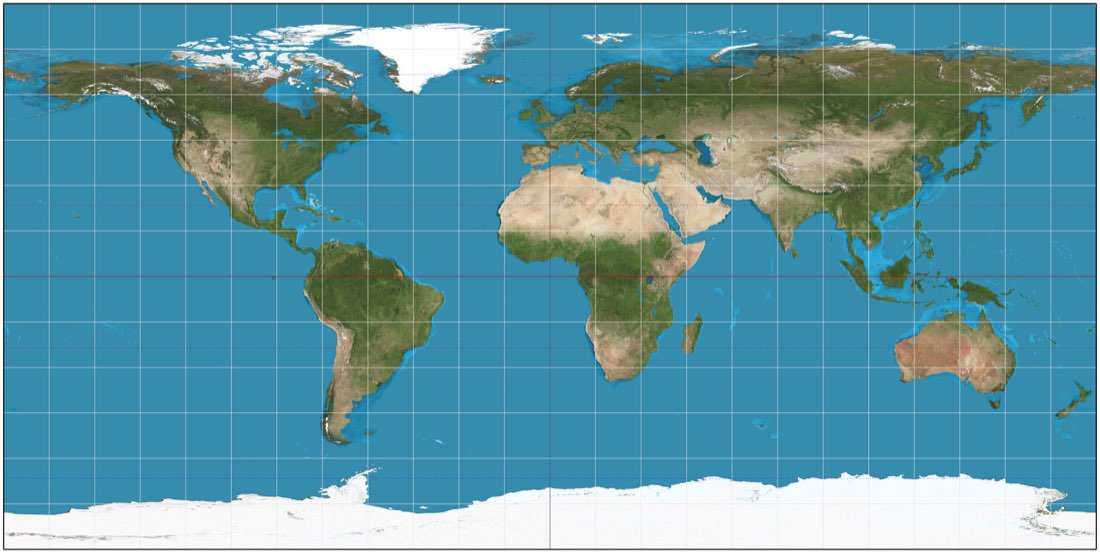
It shows itself only after the sandstorm has passed.
The plant sleeps on beneath the sand, year after year.
Taklamakan Desert
A land where sandstorms drive the dunes and plane the ground away.
When the covering sand is swept aside,
the Sandwake Bloom opens its small silver-white flowers in the dry wind.
The plants do not appear on every freshly scoured dune face. At the recorded locality, beneath the loose surface sand lay a compact pale-gray layer suggestive of an old river channel, mixed with gypsum flakes and salt crust. The rhizomes seemed to lie along the upper surface of this firmer bed, sending shoots upward only in years when the cover sand was stripped away.
In exposed plants, the aerial parts appeared to have been nearly formed already within the dormant bud. By the following morning the succulent leaves had opened, and on the second day the silvery-white flowers trembled in the dry wind. The anthers were short and curved inward, touching the stigma whenever gusts shook the corolla. The plant seems less to wait for visitors than to use the wind itself as the trigger for self-pollination.
Following the sand surface said to mark an old caravan route for several hundred paces, the flowers did not appear continuously. A dozen plants might stand together in one hollow, while the next similar slope held none at all. This patchy absence is difficult to explain by wind dispersal alone. Probably only where buried dormant buds coincide with saline sand derived from an ancient riverbed does the colony reappear, once every several years.