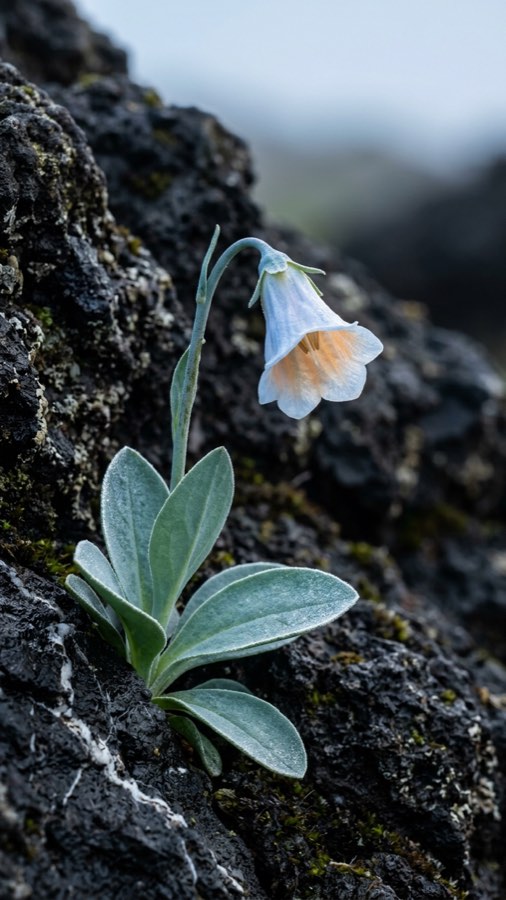
Specimen · N°002 · Desert · ▶ Film
Nebulophyta pallescensDawn-fading Mistbloom
Almost no specimens remain.
FOUND 24.7°S 15.1°E · Coastal gravel of the Namib Desert, where sea fog drifts in before dawn · ✝ EX · Last seen 1989
Almost no specimens remain.
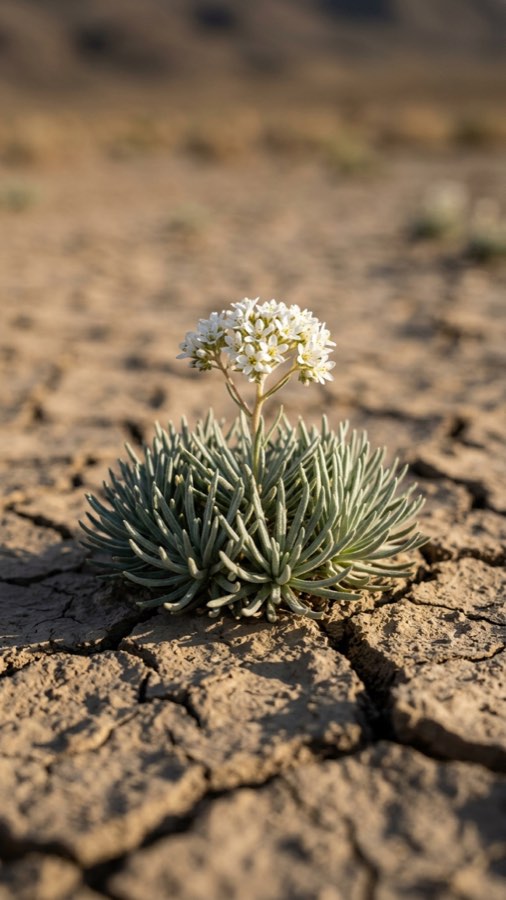
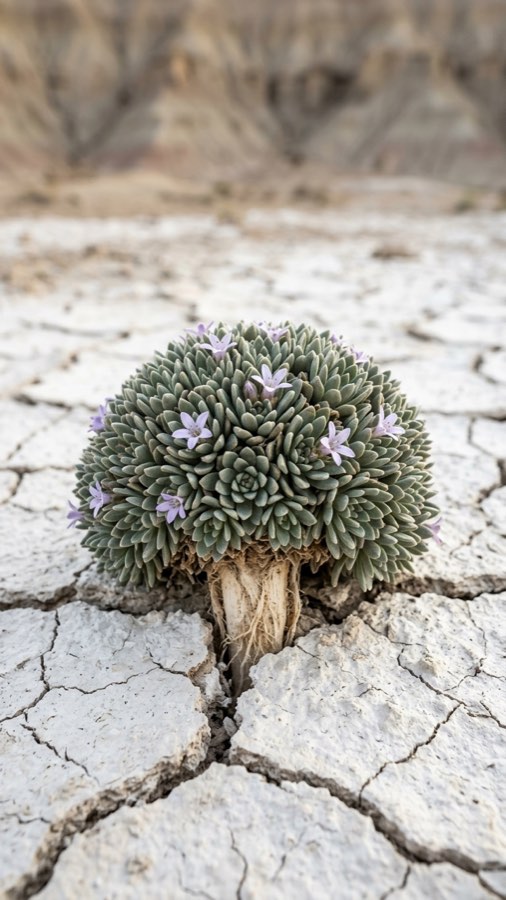
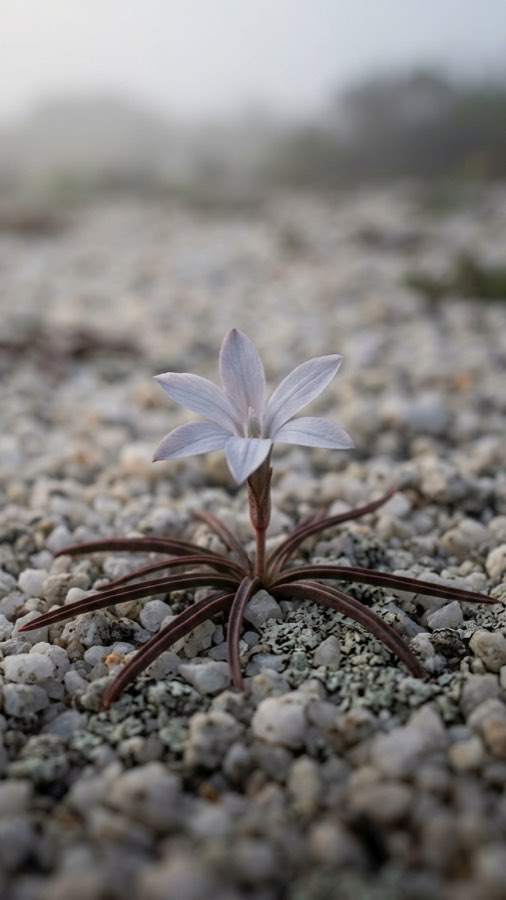
A small perennial 10–18 cm tall. It spreads dark-red slender leaves near the ground and draws water through them only during the few foggy hours. Its roots depend on a thin acidic soil layer made by lichens and fungi, and it lies dormant for long spells on the dry gravel. The flowers are deep wine-purple at night, turning pale grey-violet before dawn as fog swells their cells.
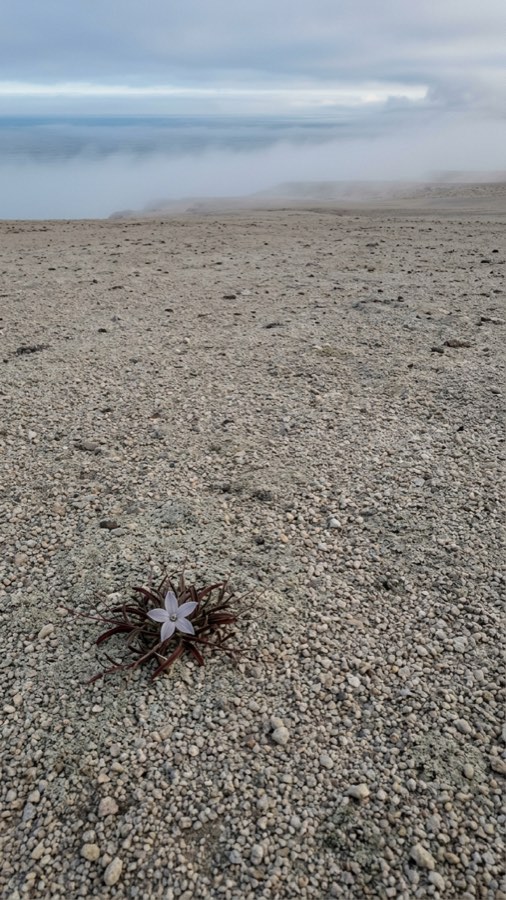 PLATE I
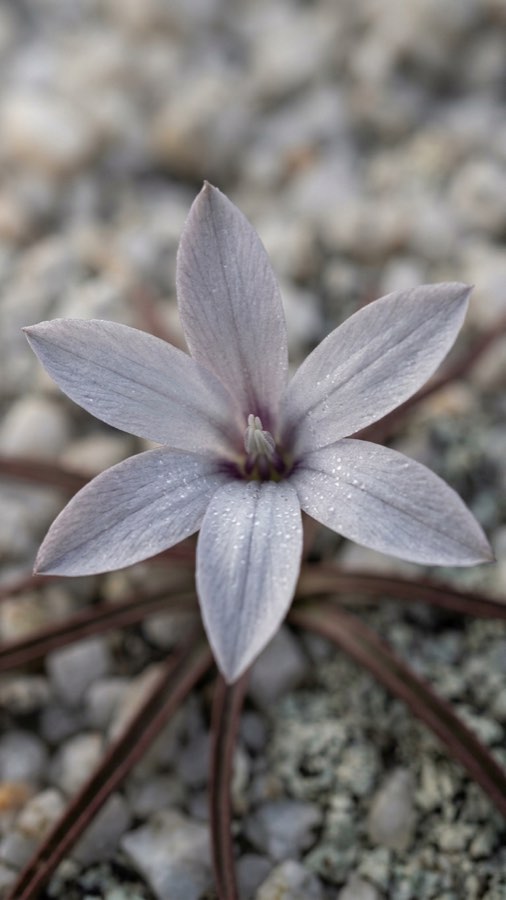 PLATE II
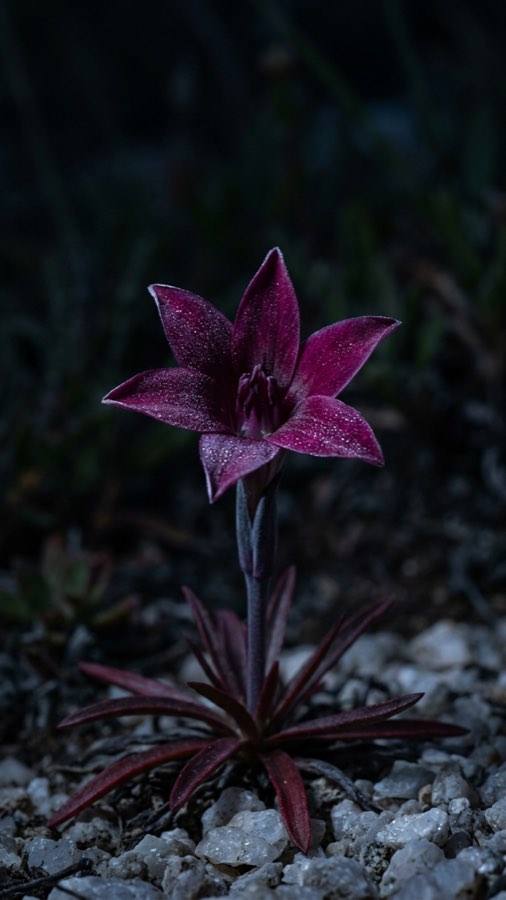 PLATE III
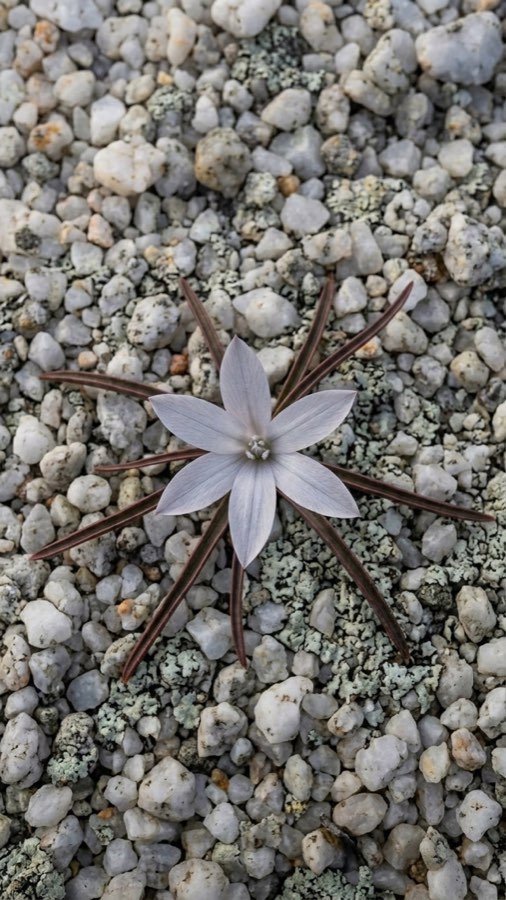 PLATE IV
 PLATE V
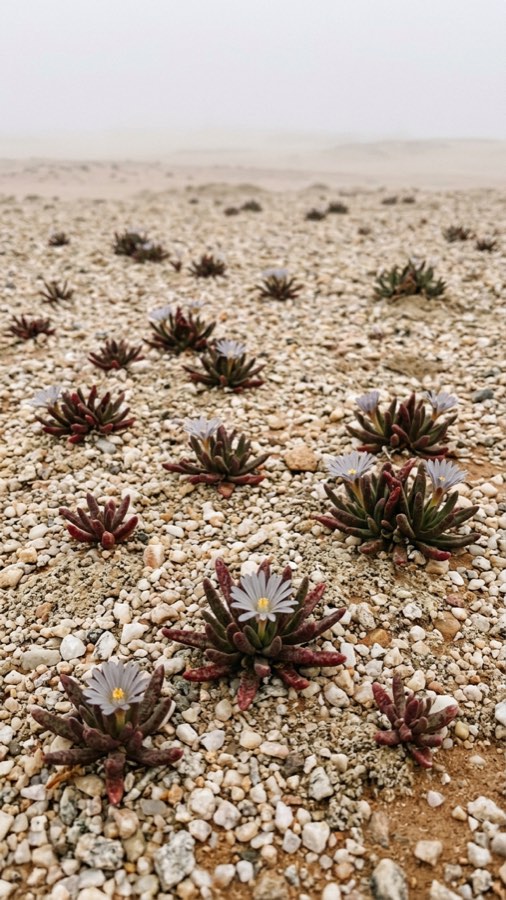 PLATE VI
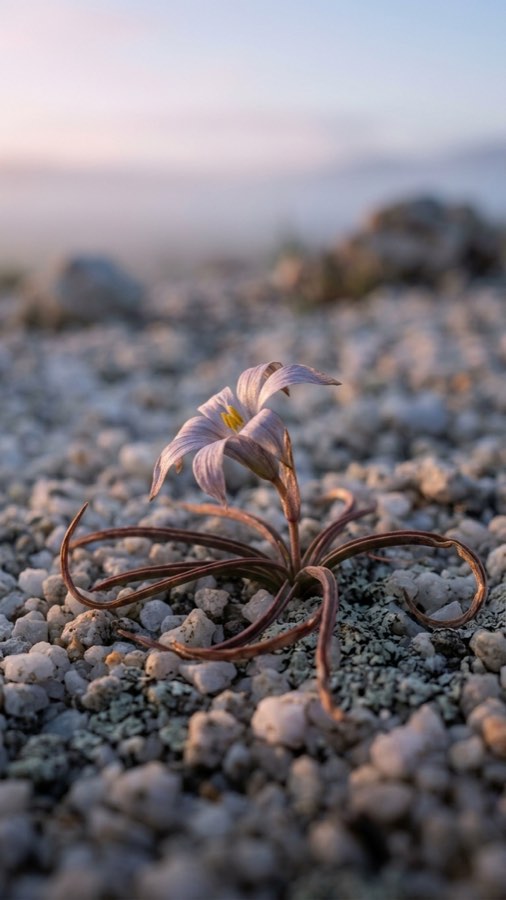 PLATE VIIPLATE VIII
This flower loses its colour before morning.
And so almost no specimens remain.
Along the Namib coast lies gravel that fog reaches only before dawn.
There, it is said, the Dawn-fading Mistbloom appears.
Through the night the flower is a deep grape-purple.
But in the short time the fog is thickest, the petals take in water and fade to grey-violet.
On mornings when the pre-dawn fog is dense, the corolla opens for scarcely two hours, and the anthers bend inward to touch the stigma. The flower retains the posture of an insect-visited bloom, yet traces of small moths were rare in the plants observed; self-pollination is likely dominant. Its flower seems less an advertisement to distant visitors than a mechanism for setting seed during the brief wet interval.
After fruiting, the small pericarp splits as it dries, releasing seeds that become adhesive again when touched by fog. They do not travel far on the wind, but cling to the lower edges of quartz gravel and to the thin lichen crust. The patchy colonies in shallow hollows are therefore not merely a failure of dispersal, but the result of repeated selection for microrelief where fog water lingers for a few hours.
The nocturnal grape color appears deep not only because of concentrated anthocyanins, but because the dry epidermal cells absorb light. When fog swells the cells, the petals become partly translucent, and scattered light returns as a pale grey violet. Before the dry easterly wind, this turgor is brief; by the next day both flower and leaf sink back into the color of the gravel. “Lamp Before the Wind” is the collector’s translation, preserving a local weather-name used in fishing and herding to read the failing fog.