Specimen · N°003 · Mist · ▶ Film
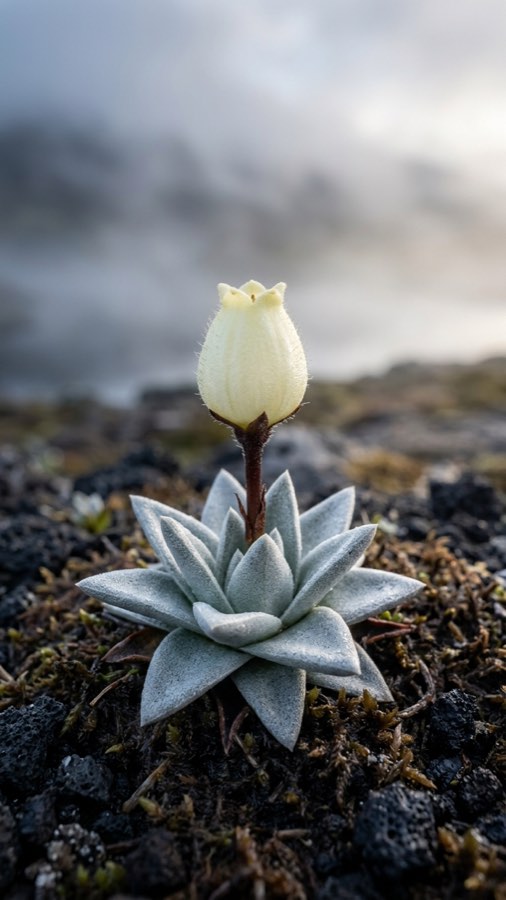
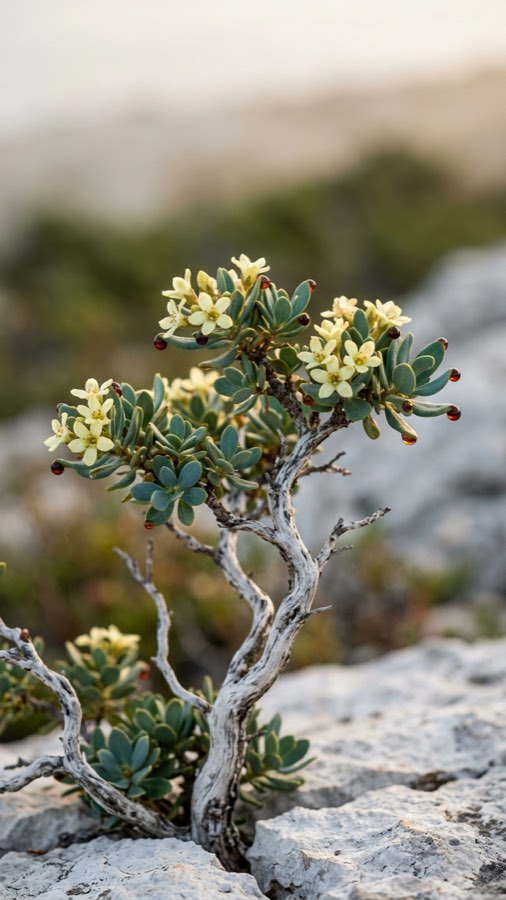
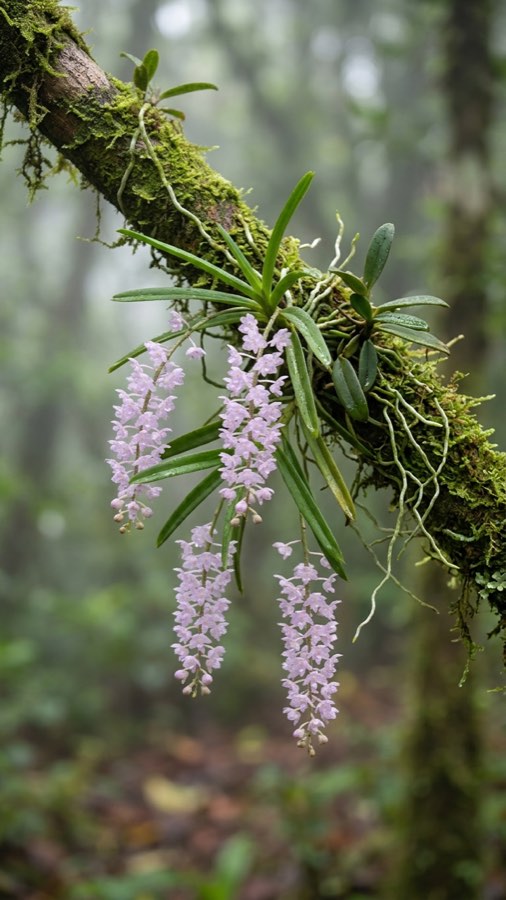
Lavaricola aurorensisAurora Glasscup
Almost no one has seen its colour change.
FOUND 28.3°N 16.6°W · The edge of old lava slopes and laurel forest in the Canary Islands · ✝ EX · Last seen 2003
Almost no one has seen its colour change.
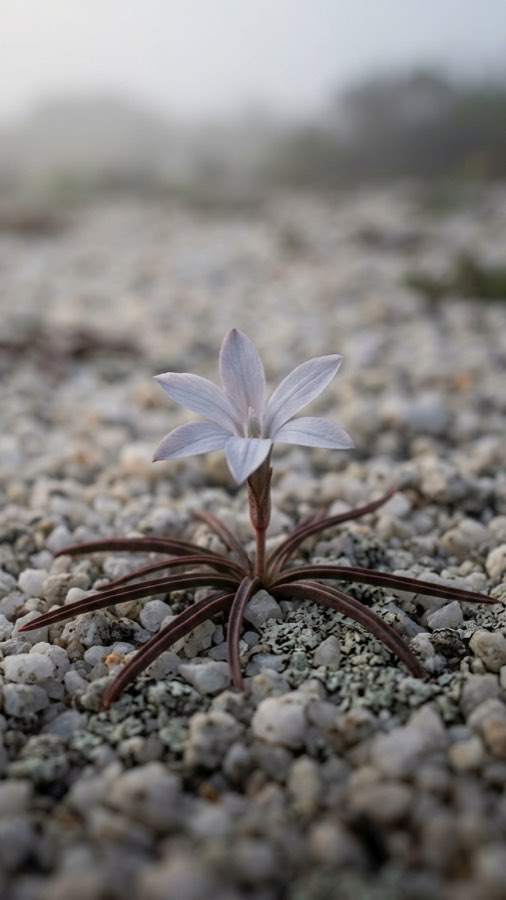
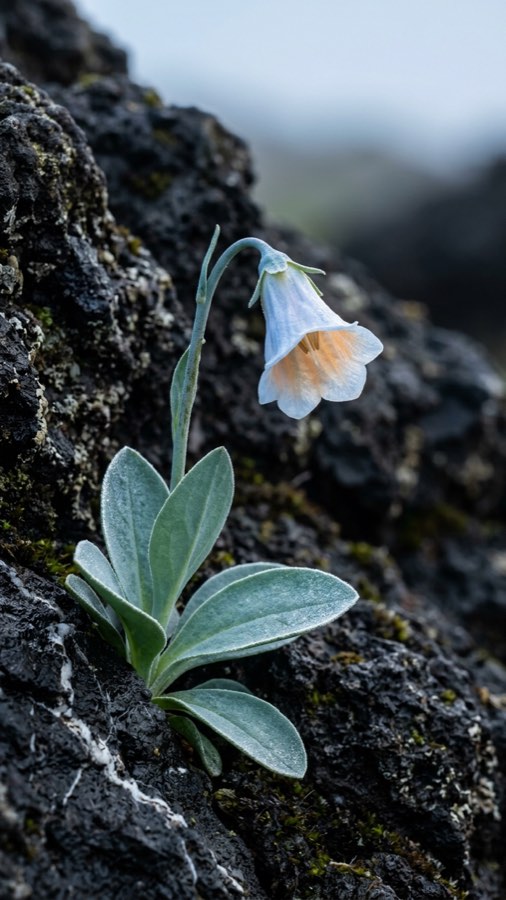
A perennial 15–22 cm tall. It threads slender roots into cracks of black lava, growing along calcium-rich mineral veins. The leaves are thick blue-green ovals edged with a faint silver bloom. The flowers are a clear pale blue at night, taking on a soft apricot only before dawn and wilting rapidly before the rock dries.
 PLATE I
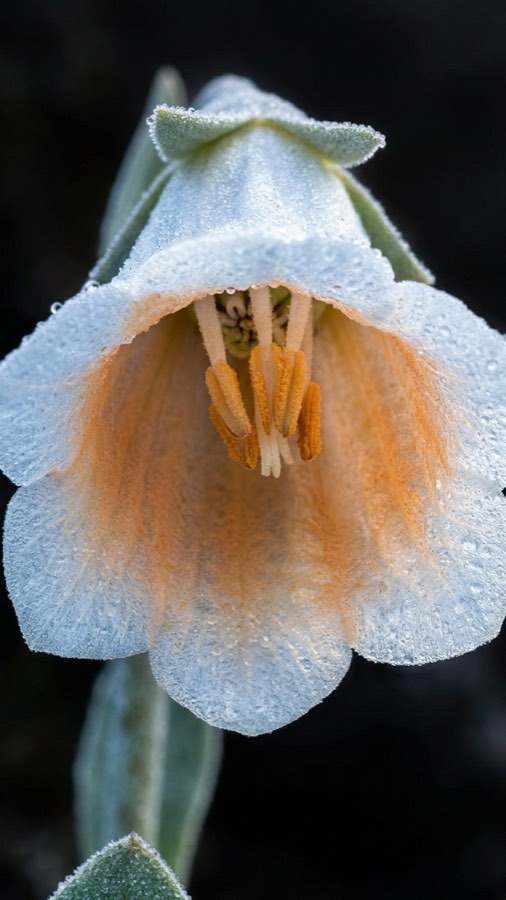 PLATE II
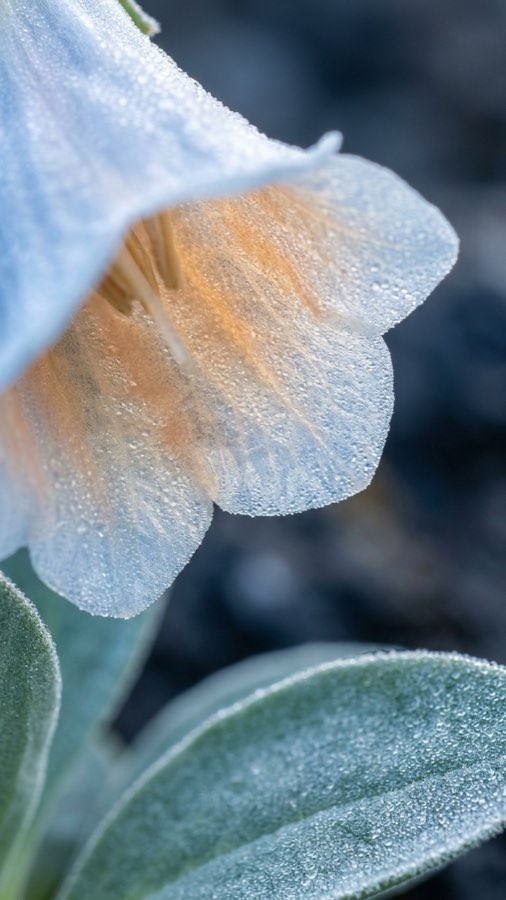 PLATE III
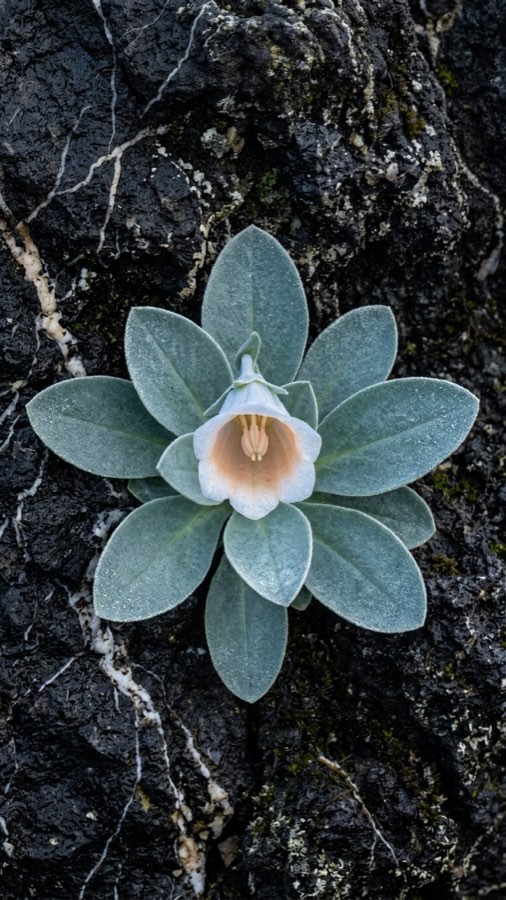 PLATE IV
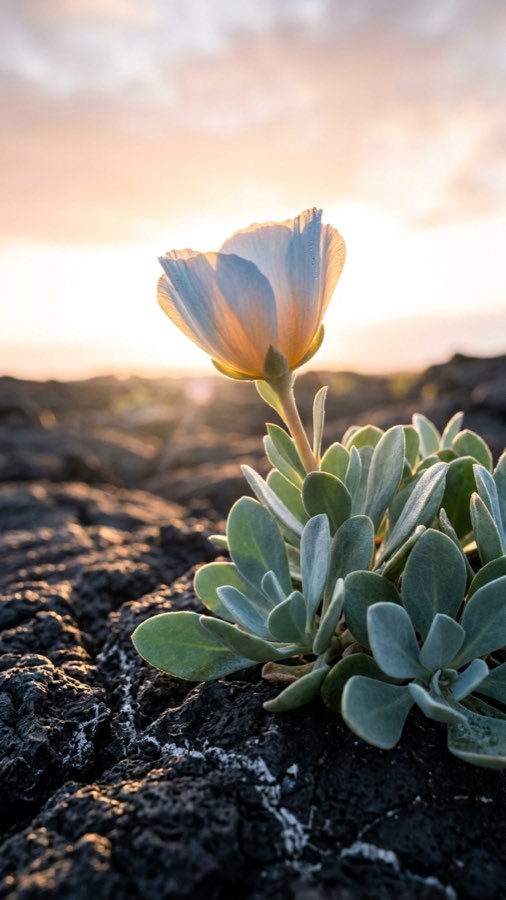 PLATE V
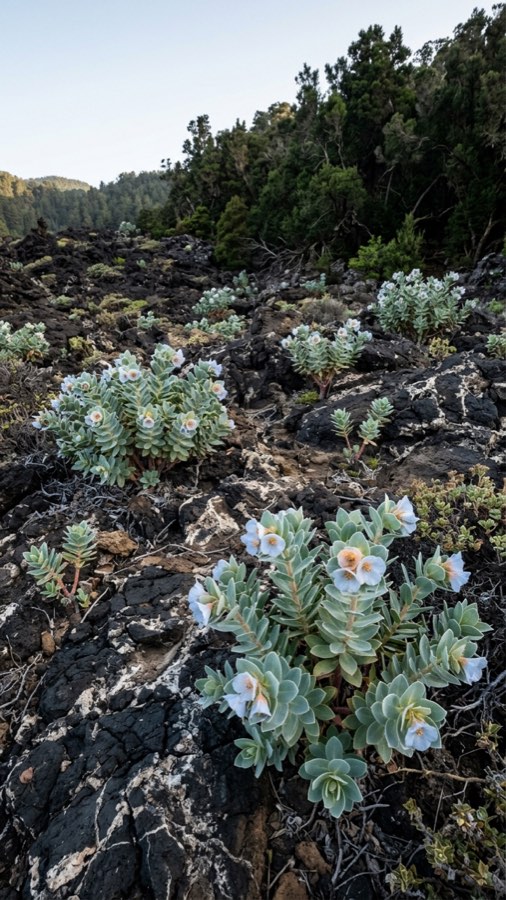 PLATE VI
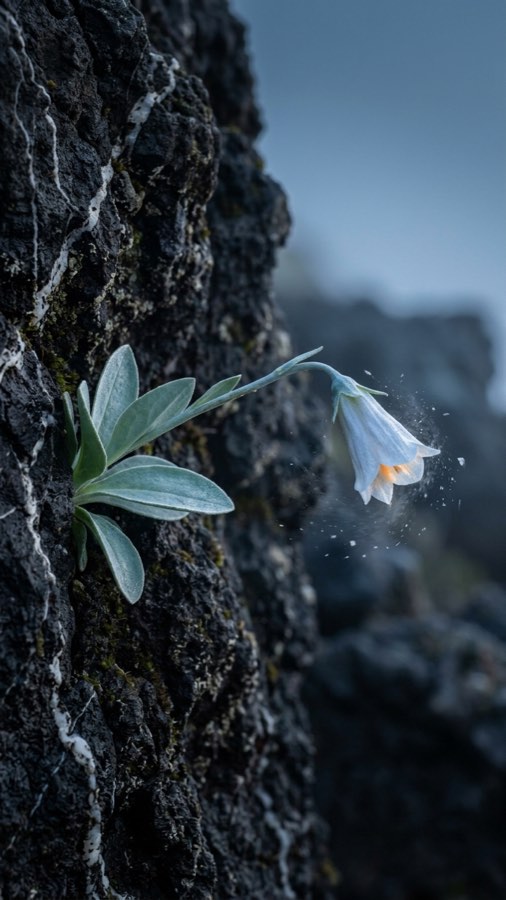 PLATE VIIPLATE VIII
For only a few minutes before dawn, it changes colour.
Almost no one has seen that moment.
The old lava slopes of the Canary Islands.
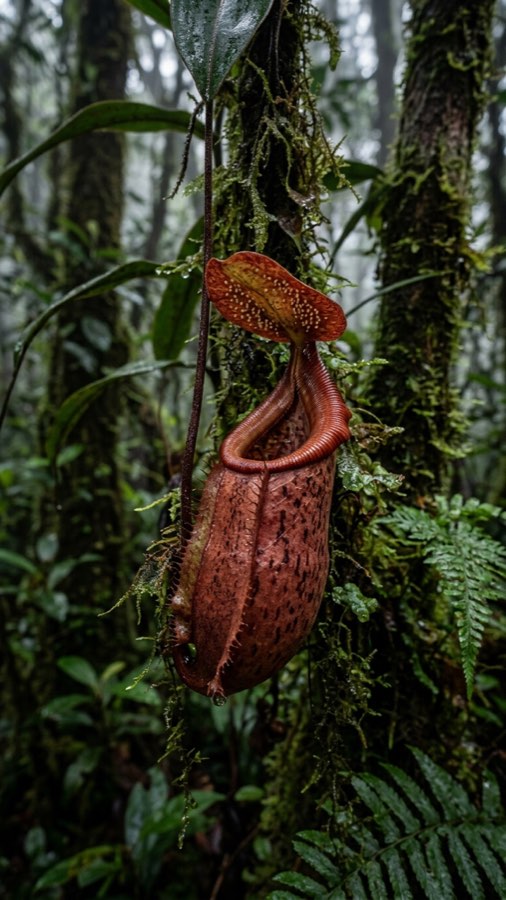
At the edge where laurel-forest mist still lingers, the Aurora Glasscup is said to appear.
Its leaves, rising from cracks of black rock, are blue-green, edged with a silver bloom.
By night the flower is a translucent pale blue.
When plants still held the night fog were followed before dawn, the anthers bent inward just before the corolla took on its apricot tint, pressing pollen against the stigma. This is better read not as a structure waiting for outside pollinators, but as self-pollination timed to the brief wet interval. Once mature, the capsules split on dry mornings, and the fine seed seems to fall first into the lava cracks beneath the plant rather than travel far on the wind.
By the time the sun rises, the flowers have contracted, leaving only thick blue-green leaves along the pale mineral veins. In that state the plant is easily confused with small succulents of the laurel-forest edge, and pressed specimens would lose the color change of the flower. Because flowering appears to occur only for a few days each year, and only on slopes where fog persists until morning, daytime surveys probably dismissed it as a familiar succulent.
At night the petals are translucent pale blue and scarcely open, as if conserving the thin film of water on their surface. Shortly before dawn, when the rock warms slightly and fog droplets begin to retreat, a faint apricot color spreads from the base of the floral tube. This seems less like display than a physiological signal marking the close of pollination and the approach of drying. The silvered leaf margins likely belong to the same response to glare and desiccation.