Specimen · N°005 · Mist · ▶ Film
Sanguilarmis socotranaSocotran Bloodtear
Only at dusk does this tree shed red drops.
FOUND 12.5°N 53.9°E · Limestone plateau of Socotra · ✝ EX · Last seen 2024
Only at dusk does this tree shed red drops.
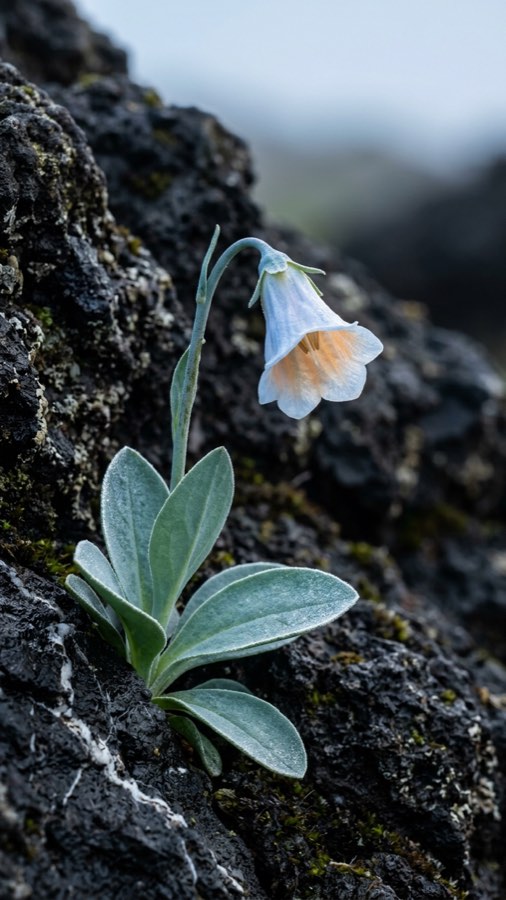
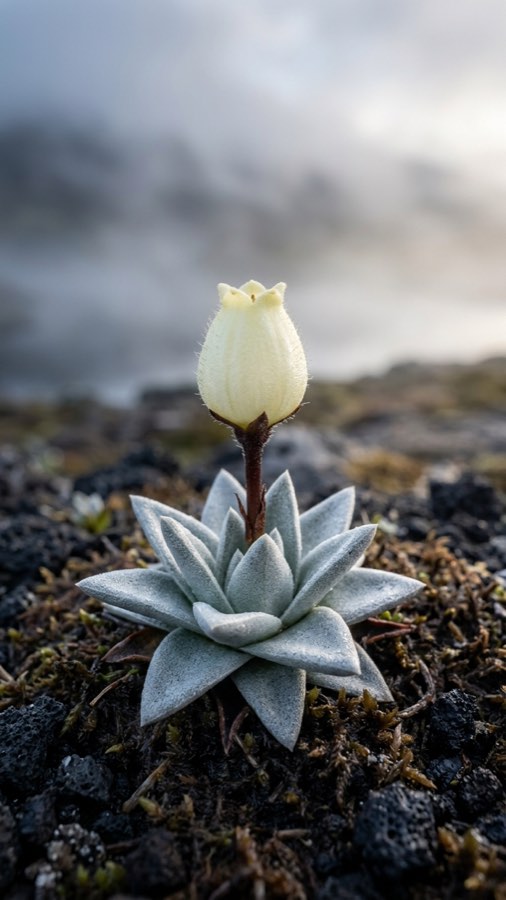
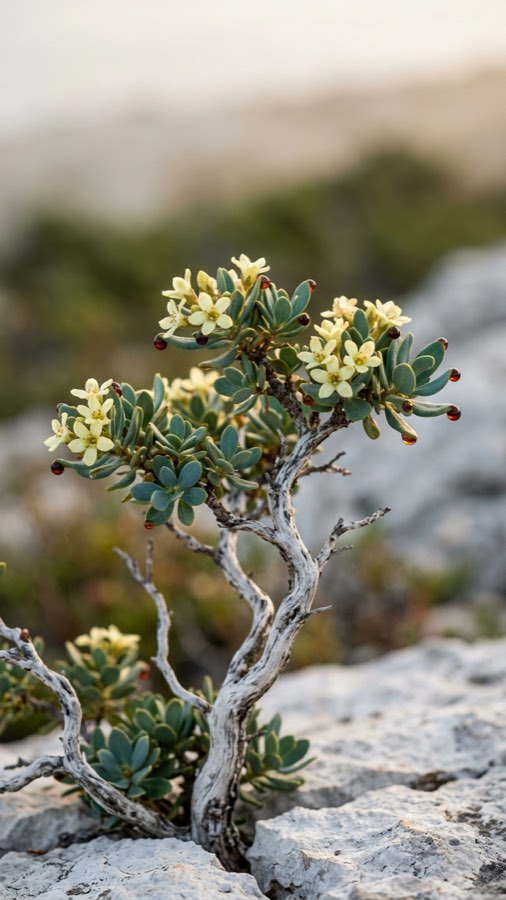
A low succulent shrub about 20–30 cm tall. On a twisted grey-white trunk it bears dense, thick, leathery blue-green leaves. As the sun lowers it secretes dark-red resin drops from the leaf tips, which harden black in the dry night air. The flowers are small, yellow-white and inconspicuous.
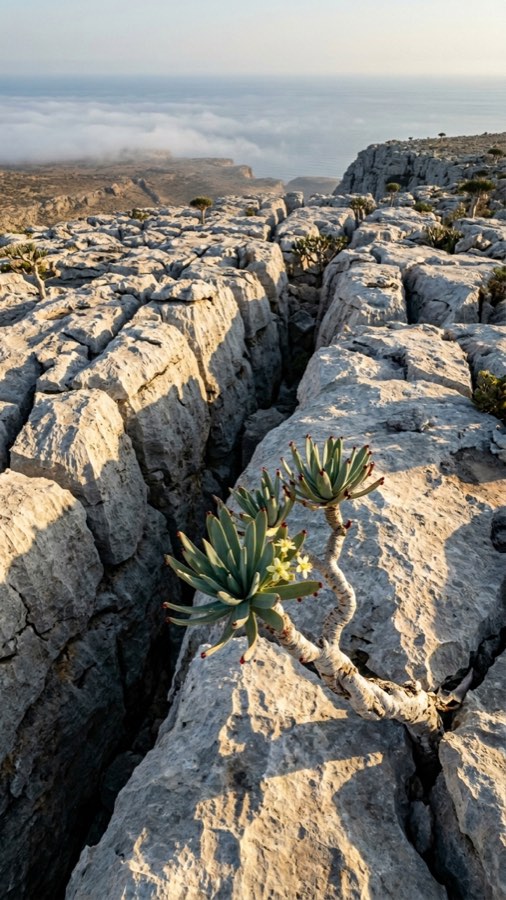 PLATE I
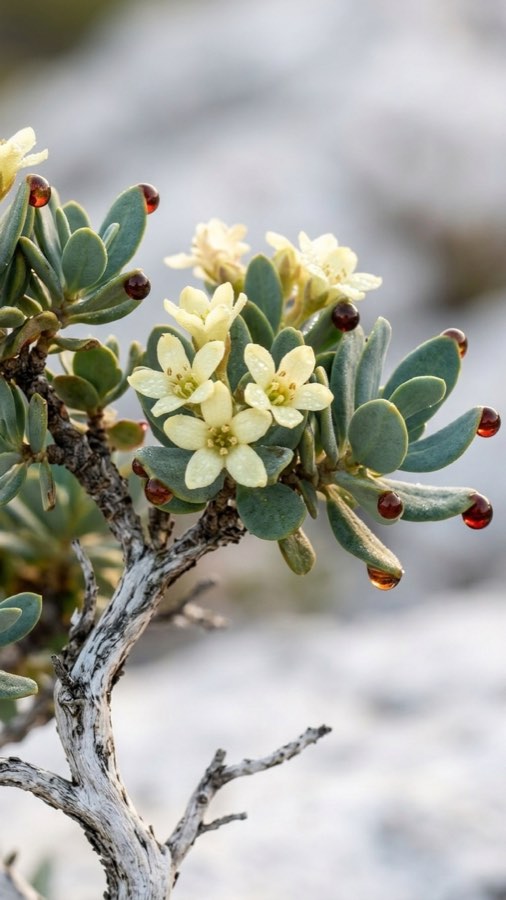 PLATE II
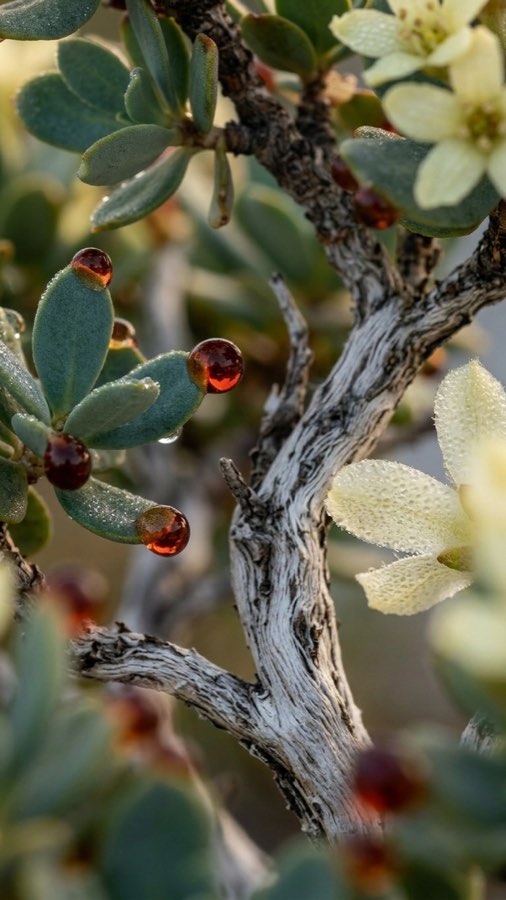 PLATE III
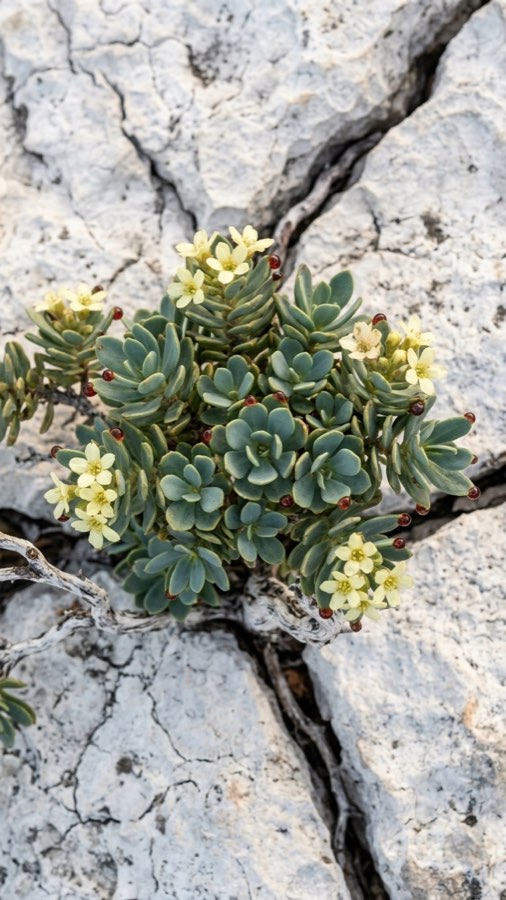 PLATE IV
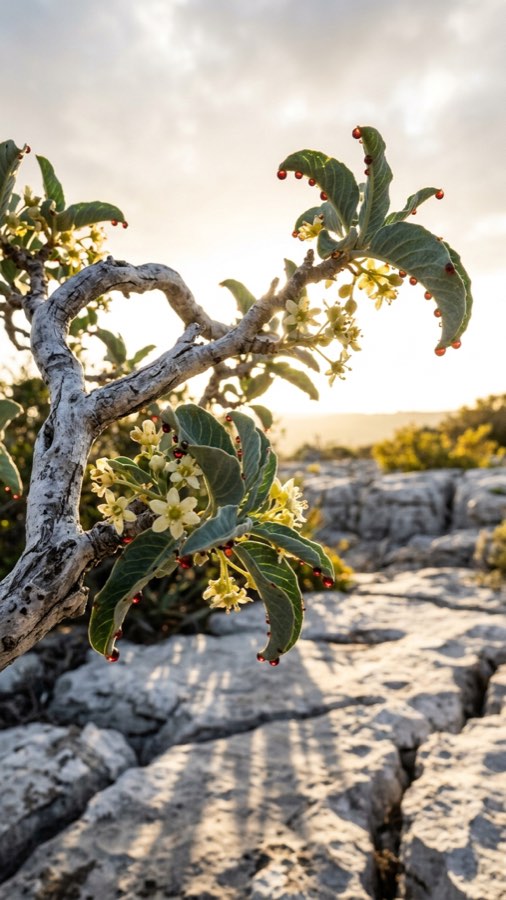 PLATE V
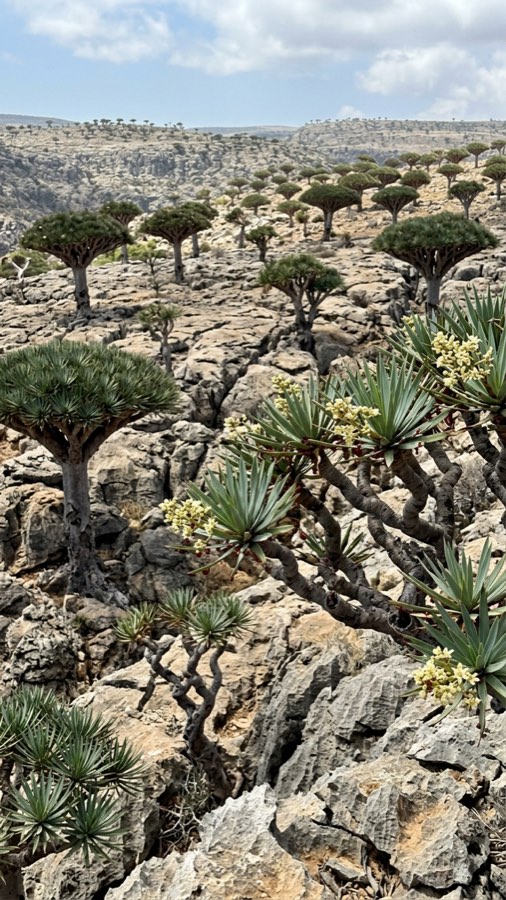 PLATE VI
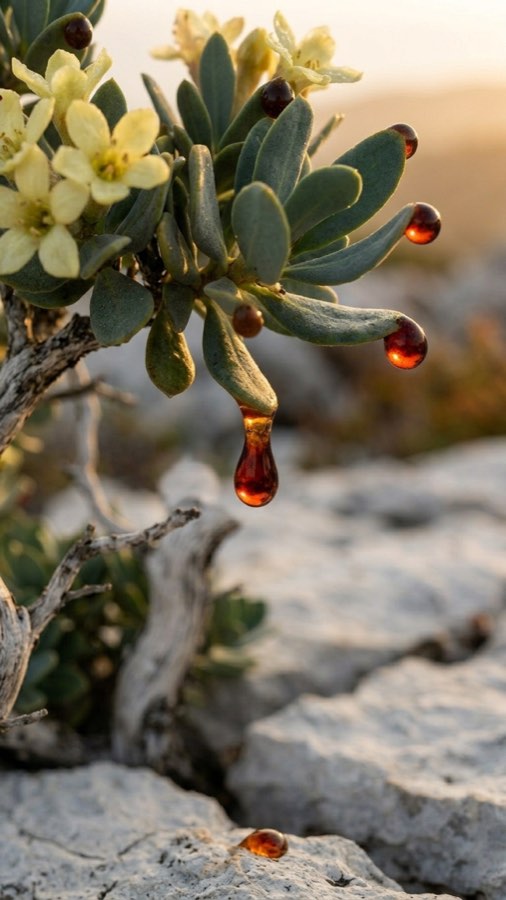 PLATE VIIPLATE VIII
Only at dusk does this tree shed red drops.
What those blood-like drops truly are is still not understood.
The white limestone plateau of Socotra.
In rock cracks left after the sea fog withdraws, the Socotran Bloodtear takes root.
On a twisted grey-white trunk, thick blue-green leaves are arrayed.
As the sun lowers, dark-red resin slowly seeps from the leaf tips.
A follow-up survey suggests the red droplets fall only at dusk on the day after a sea mist — perhaps tied to the moisture the mist carries. The cause is still not identified. The same misted ecosystem also holds Nebulocampa campanulata.
Young plants are seldom found directly beneath the parent, but often form thin lines on the downslope side of fissures. Beneath the blackened resin flakes, pale scars of the flower stalks remain. The seeds seem not to travel far from the capsule, falling instead into fog-damp limestone dust and cracks opened by goat tread. Germination appears to require brief moisture followed by rapid aeration; no seedlings are found in soil-filled hollows.
The yellow-white flowers remain nearly closed by day and open only shallowly after the evening sea fog withdraws. They carry no strong scent, and the pollen is dry and light. Branches covered with cloth still set a small number of fruits, suggesting self-compatibility. Yet fine scales are sometimes found on the corolla before dawn, leaving open the possibility that small nocturnal moths assist in carrying pollen.
By day, the tree sinks visually into the limestone, its pale trunk and bluish leaves resembling either a juvenile of a known small succulent or a wind-damaged dwarf shrub. The red drops are distinct for only a few tens of minutes after sunset, then harden into black crusts by night, placing the diagnostic feature outside ordinary collecting hours. Herders read the change as a warning of the next day’s dry wind, but as practical guidance for delaying travel rather than as a lasting botanical name.