Specimen · N°020 · Mist · ▶ Film
Nubivola pendulaCloudforest Orchid
Touching no soil, it blooms on a branch, drinking only the fog.
FOUND 13.2°S 71.5°W · Cloud forest of the Andes · ✝ EX · Last seen 2024
Touching no soil, it blooms on a branch, drinking only the fog.
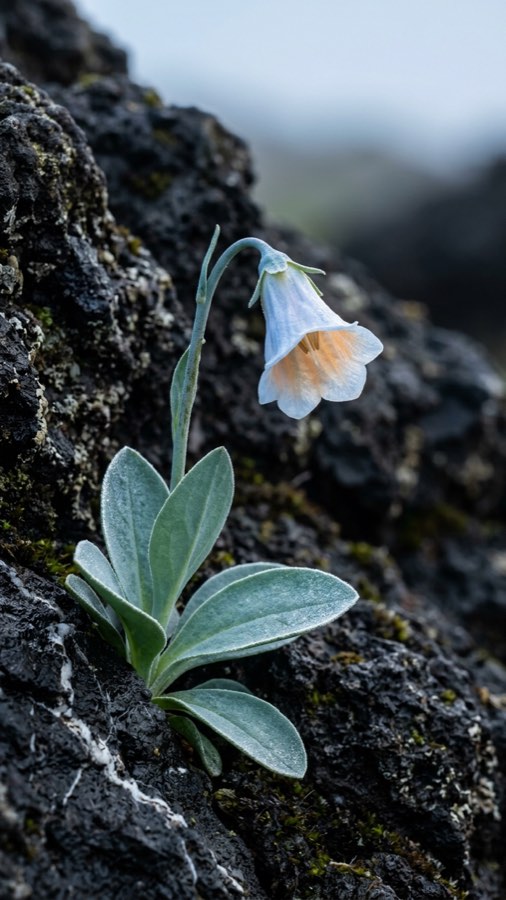
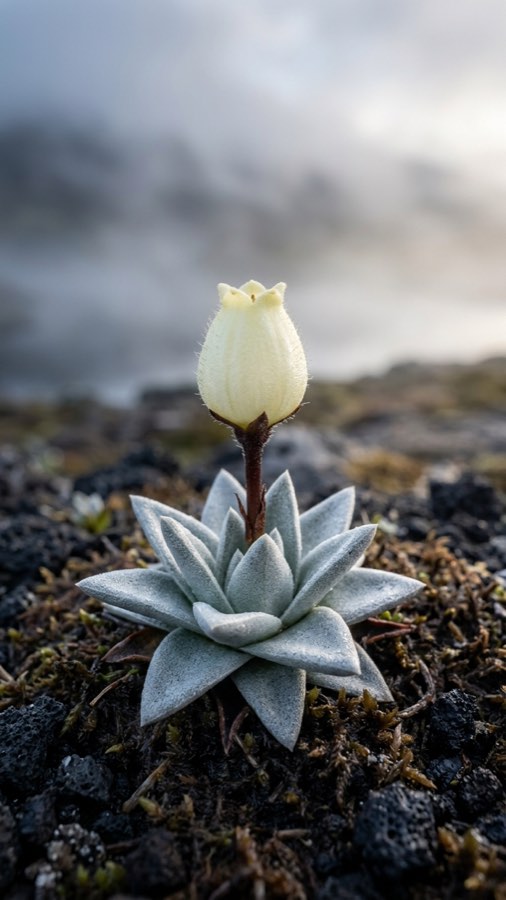
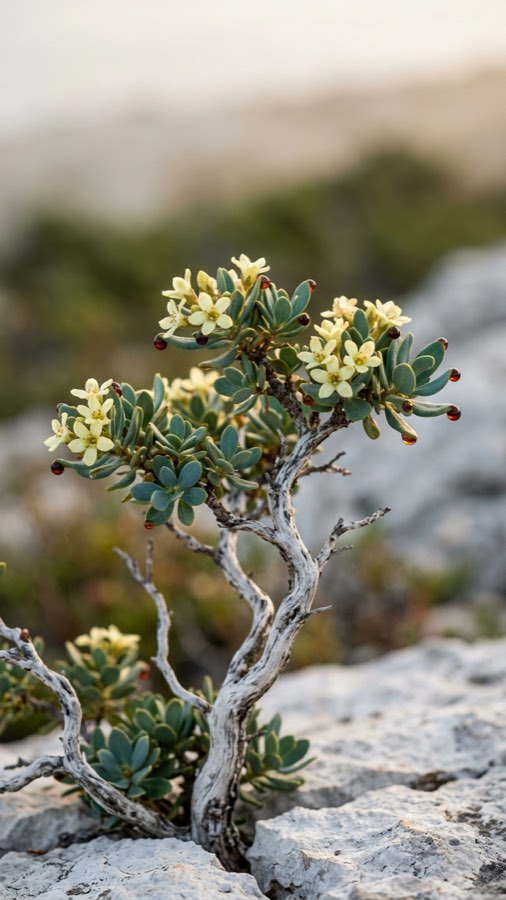
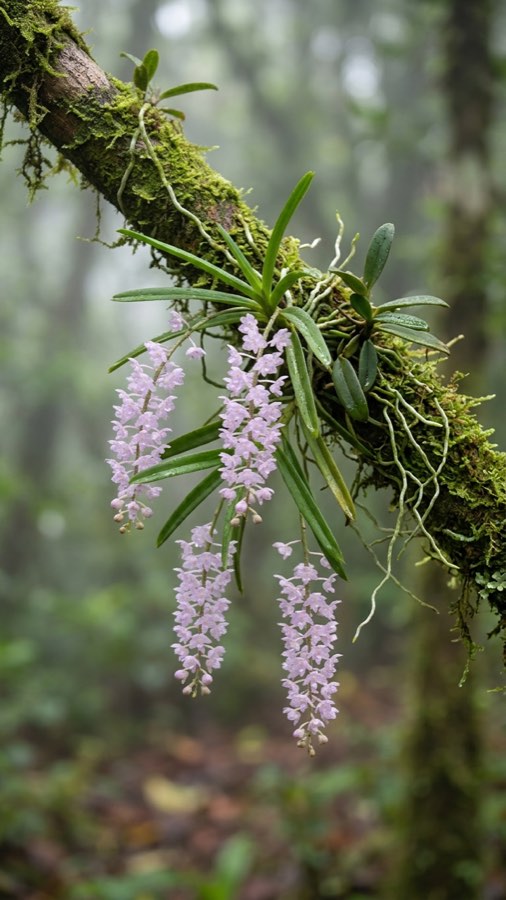
An epiphyte 8–14 cm tall. Rooting in no soil, it winds slender roots around mossy branches and takes water from the drifting fog. It bears thick green leaves and small pale-lilac flowers that hang from the branch.
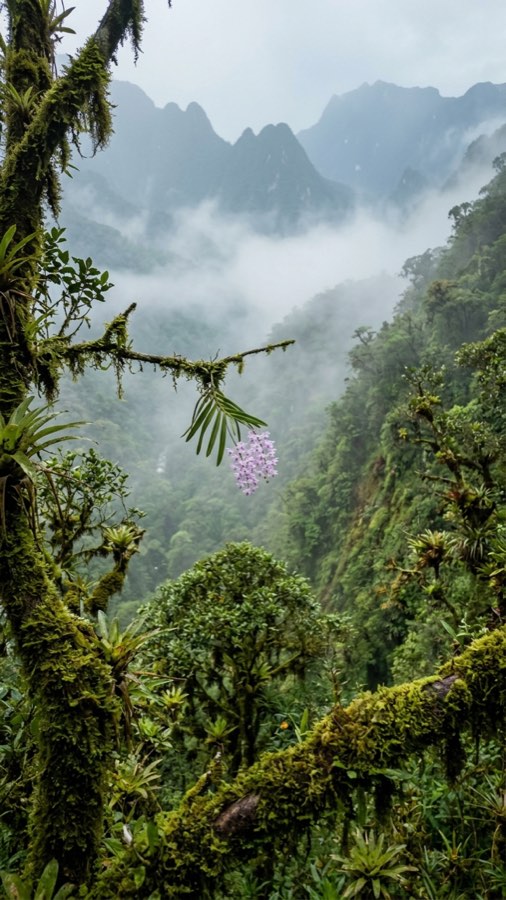 PLATE I
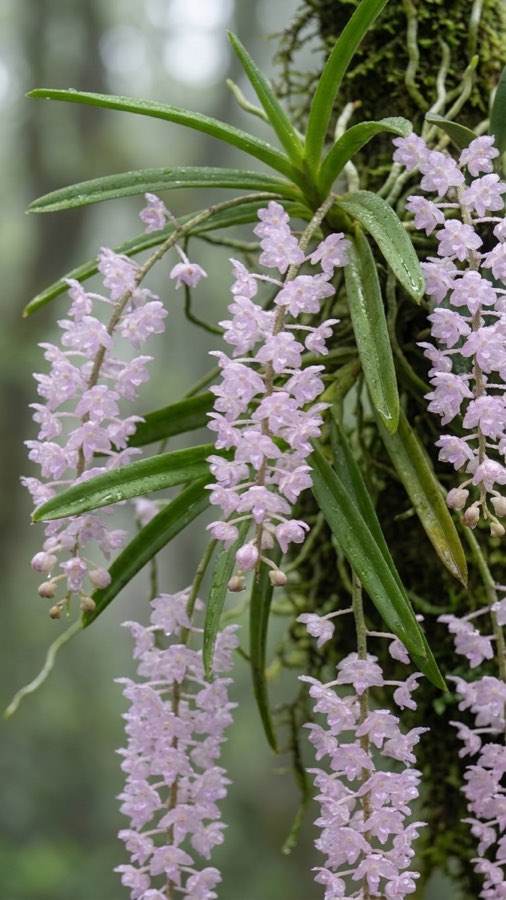 PLATE II
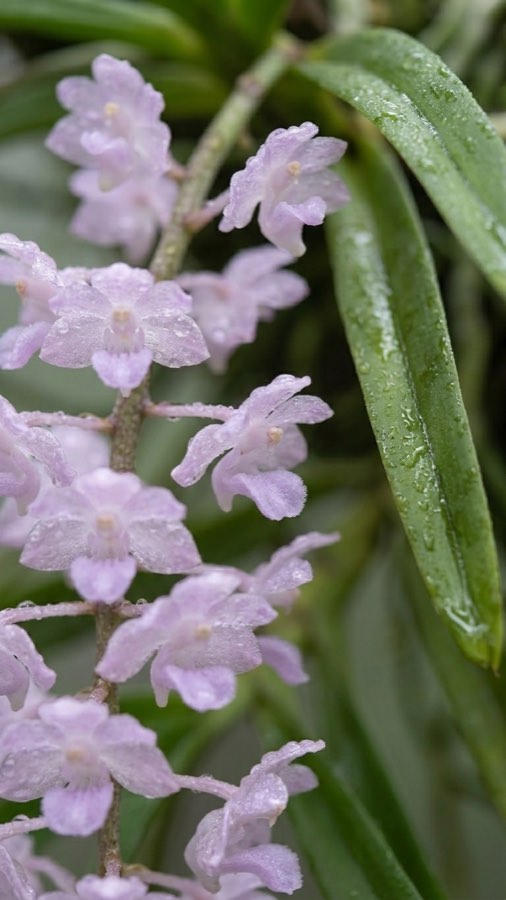 PLATE III
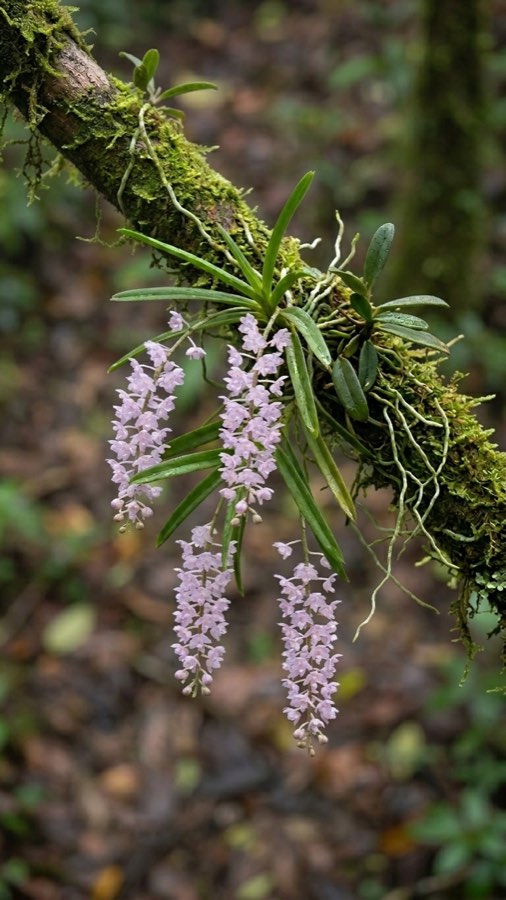 PLATE IV
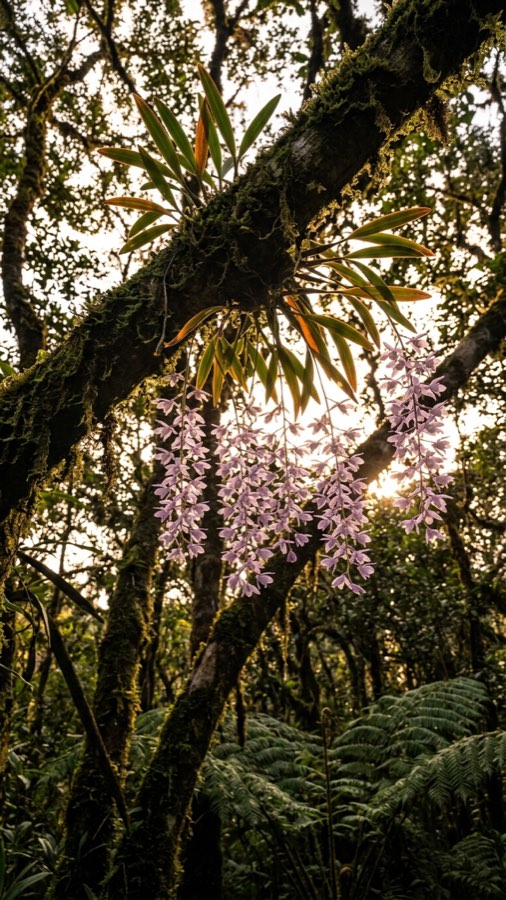 PLATE V
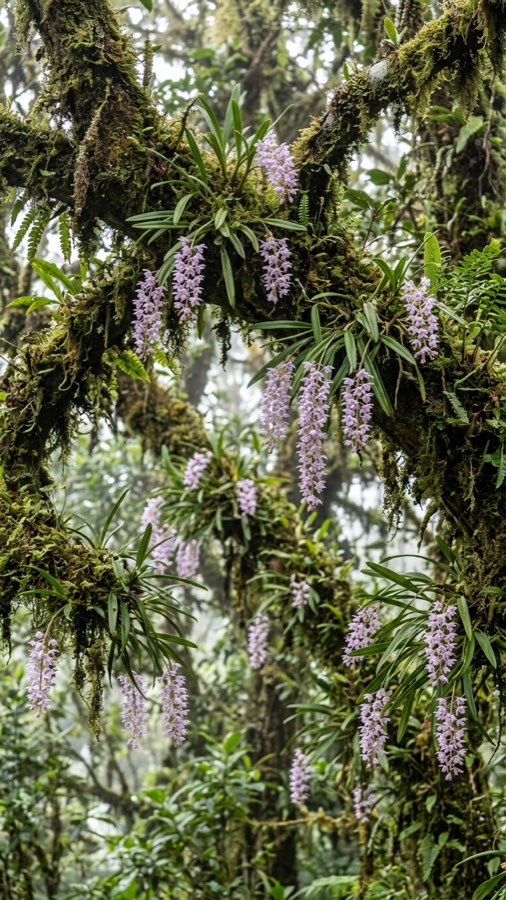 PLATE VI
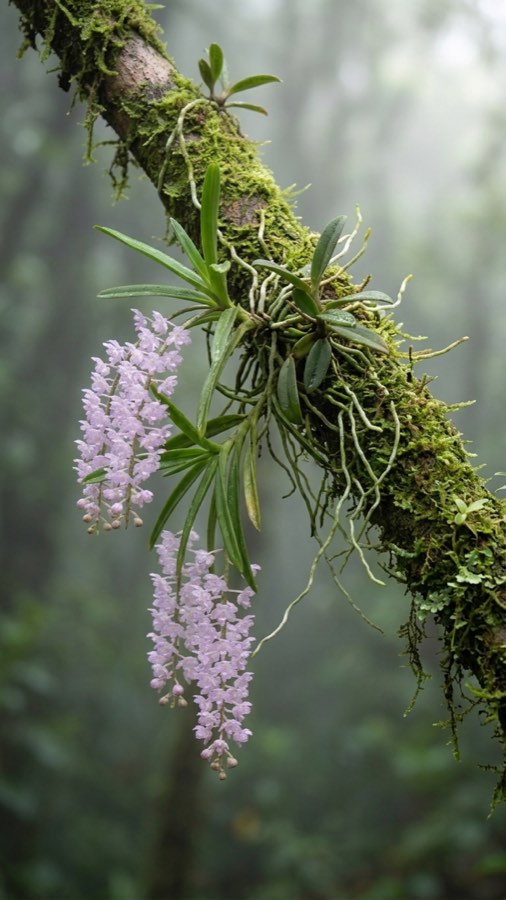 PLATE VIIPLATE VIII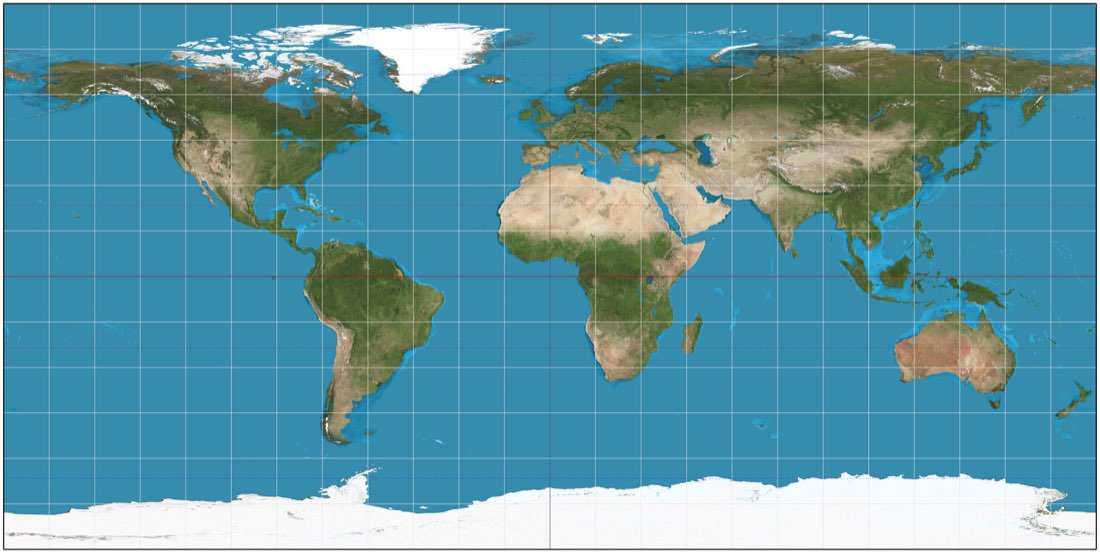
Touching no soil, it blooms on a branch, drinking only the fog.
Its roots never once reach the ground.
The cloud forest of the Andes.
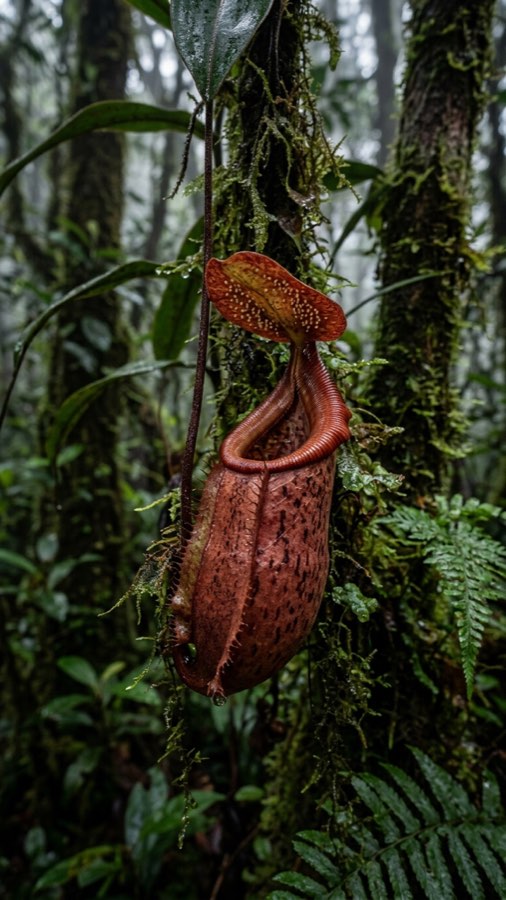
On mossy branches in a forest of ceaseless fog, the Cloudforest Orchid grows as an epiphyte.
Thick green leaves spread as if hanging from the branch.
From between them, small pale-lilac flowers open.
Near 13.2°S, 71.5°W, steep eastern Andean ravines lift damp air almost every afternoon, while cool slope winds pass over schist and sandstone outcrops and wet the canopy. In forests on thin, acidic soils, moss mats on branches remain more stable than the ground layer. The fine roots of Nubivola pendula bind only into that wet fiber. It appears less a plant that refuses soil than one whose seedbed survives chiefly above it.
The flowers increase only for two or three weeks in years of heavy fog, opening most fully during the brief hour when morning mist begins to thin. No visitor was recorded in the footage, yet the flower size and faint scent suggest reliance on small bees or hoverflies. After fruiting, the dustlike seeds move with valley wind and disturbed fog droplets. Germination, however, seems confined to branches where particular bark fungi coincide with a deep moss layer.
Its absence from records is not easily explained by rarity alone. The plant is scarcely thumb-sized, flowers briefly in the foggiest part of the season, and hangs from mossy branches high in the canopy. Once dried without flowers, a specimen shows mostly thick leaves and fine roots, inviting placement among related miniature epiphytic orchids. Only the older field label name, “fog-drinker,” suggests that some collections may have held something else.