Specimen · N°021 · Wetland · ▶ Film
Paludis mergensSinking Bloom
Once open, the flower sinks into the peat and vanishes within hours.
FOUND 58.4°N 4.5°W · Peat bog of northern Scotland · ✝ EX · Last seen 1975
Once open, the flower sinks into the peat and vanishes within hours.
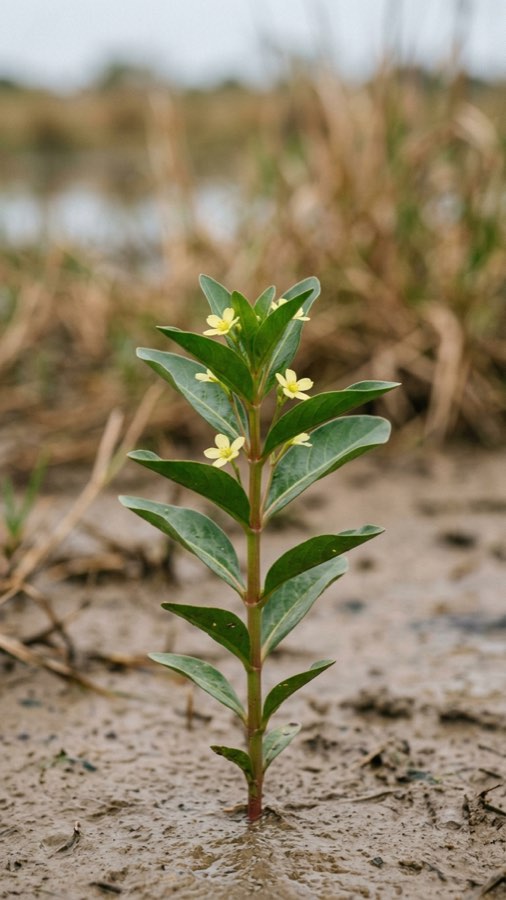
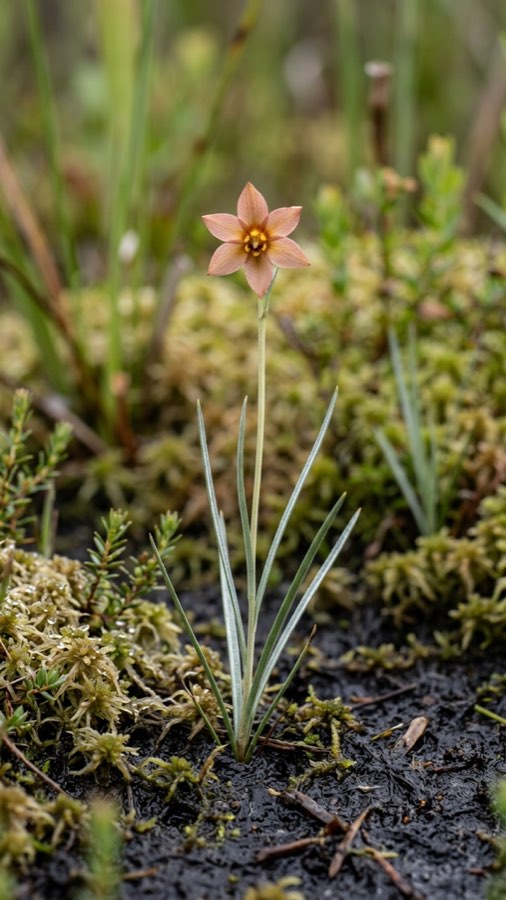
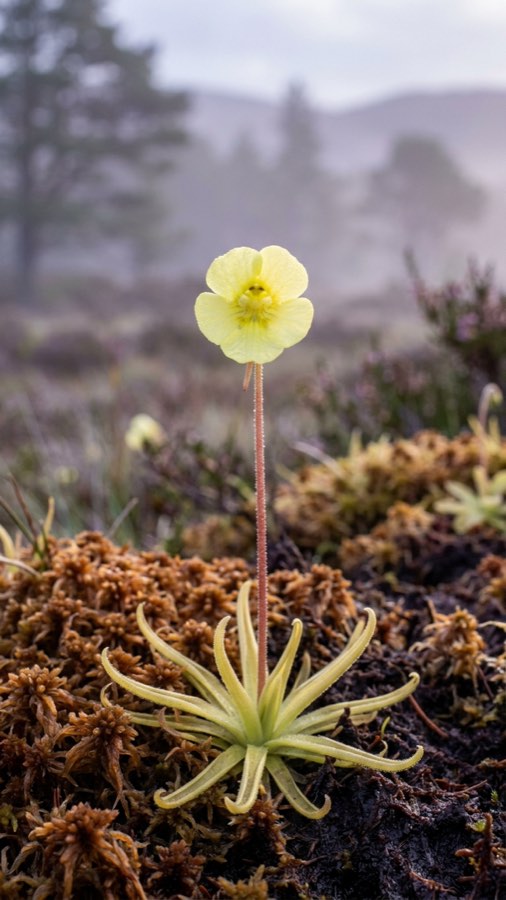
A wetland plant 10–18 cm tall. It roots shallowly in spongy peat and spreads linear green leaves in a rosette. On a long slender stalk it bears a single pale-yellow cup-shaped flower, which opens at dawn and closes within hours.
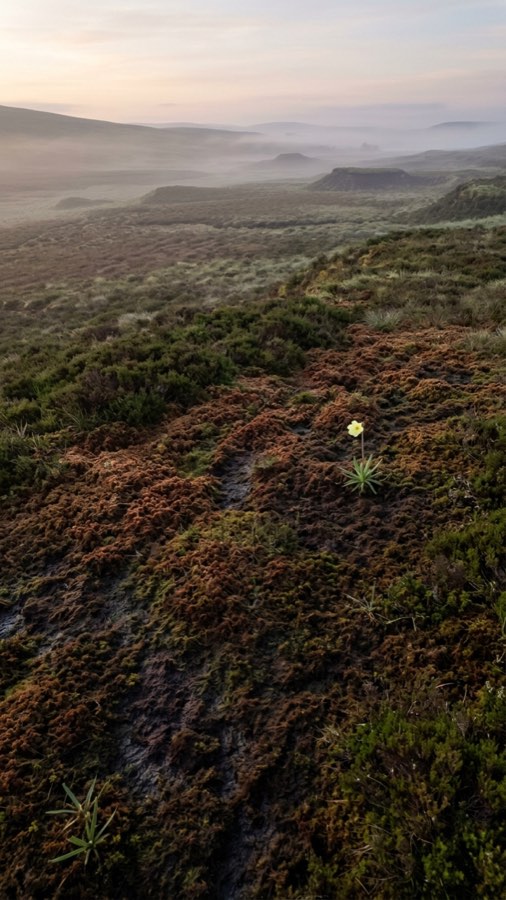 PLATE I
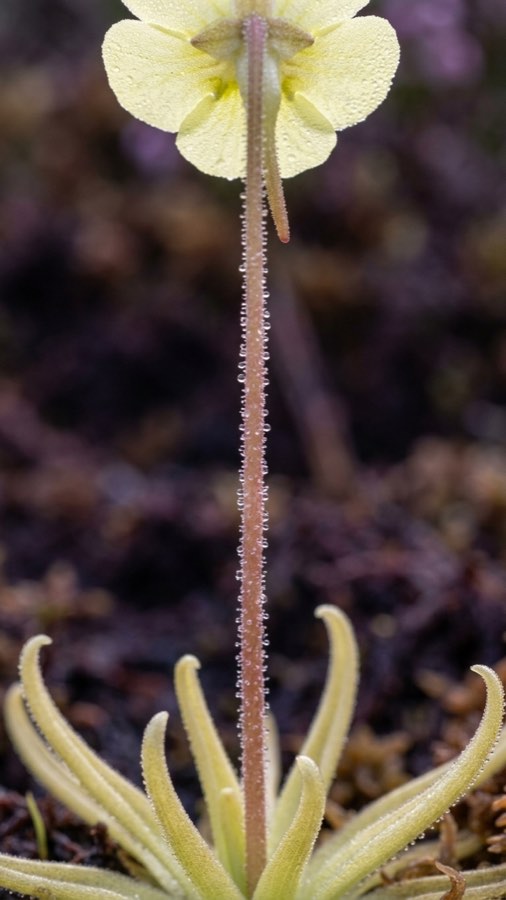 PLATE II
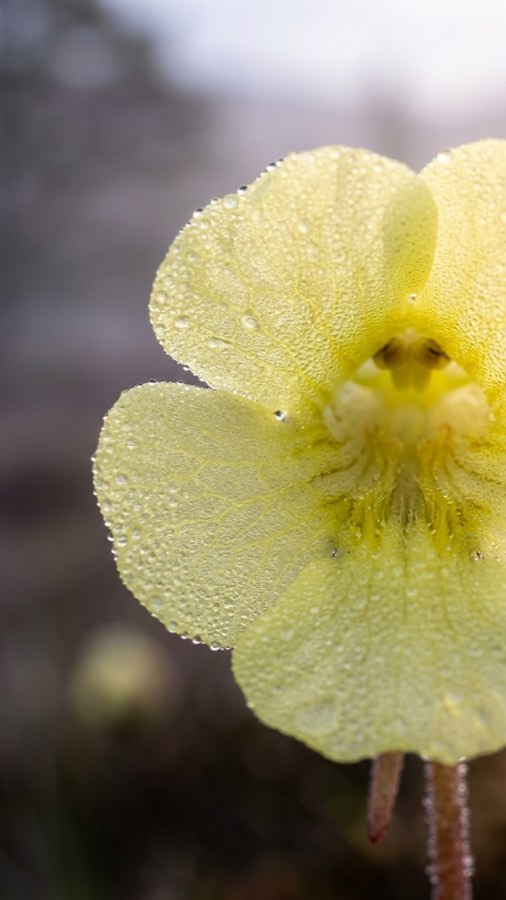 PLATE III
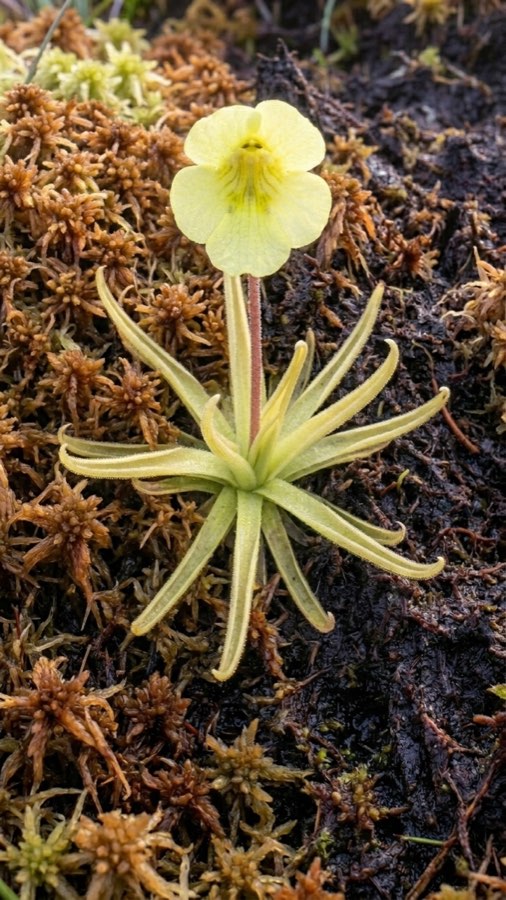 PLATE IV
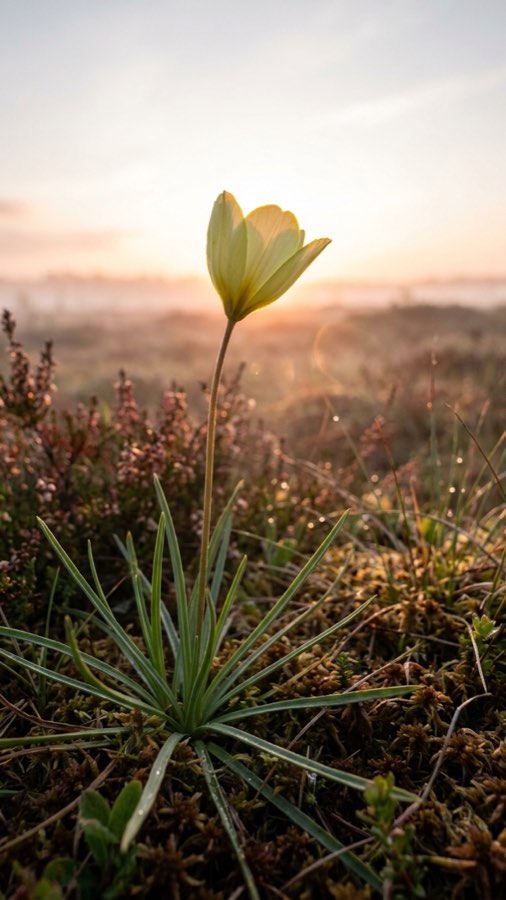 PLATE V
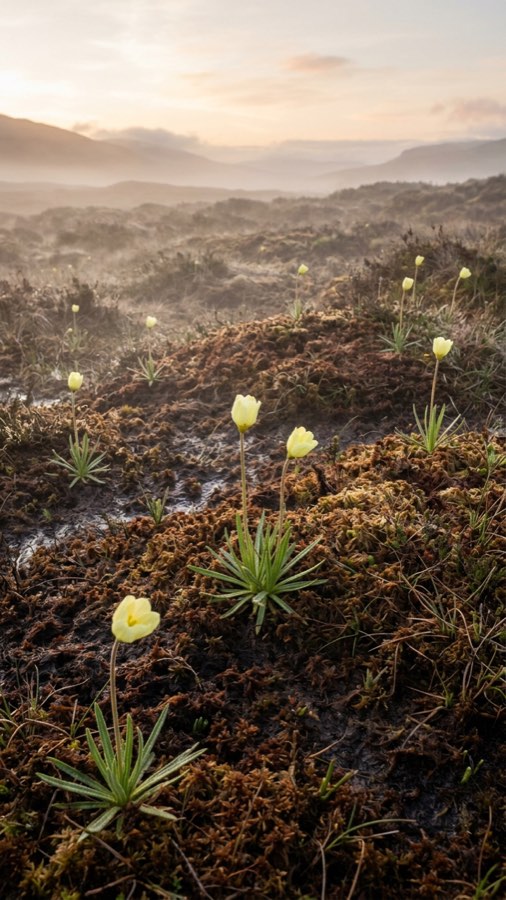 PLATE VI
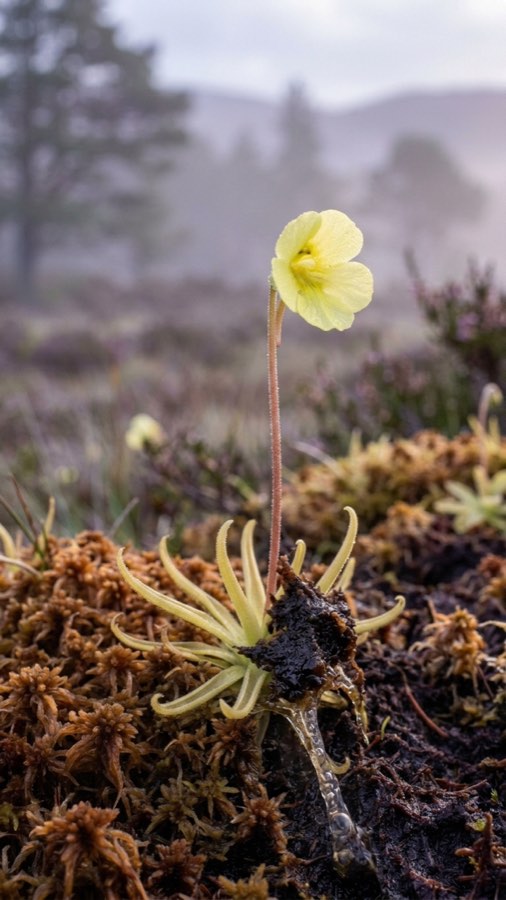 PLATE VIIPLATE VIII
Once open, the flower sinks into the peat and vanishes within hours.
By the next day, no trace remains.
The peat bog of northern Scotland.
A land of water-laden, acidic mud.
At dawn, in the mist, a pale-yellow cup opens at the tip of a slender stem.
But within hours the flower closes, and soft peat covers it over.
Just after opening, the inner cup holds a fine moisture distinct from dew. The anthers stand close to the stigma, so pollen falls inward even on windless mornings; most seed set is therefore best read as self-pollination. Yet after low-water dawns, minute dipteran tracks sometimes mark the pollen surface, leaving a narrow route for occasional crossing.
After closure, the pedicel does not merely collapse. It bends slowly near the base and returns the ovary to shallow hollows where sphagnum capillary water persists. Rather than lifting seed into drying wind, the plant lays its fruit back against the acidic, saturated surface, effectively choosing the germination bed for itself.
The colonies can appear extensive, but flowering occurs only a few times a year, usually at dawn after the water table has fallen by several centimetres. By noon the cup has closed, and by the next day the pedicel has sunk into the peat, leaving herbarium sheets with leaves alone. It was likely folded into old county records of bladderworts or small bog buttercups.