Specimen · N°063 · Wetland · ▶ Film
Nyctomersa igniferaSunken Lantern Lily
Nightにだけ咲いて、朝が来る前に、Waterの底へ消えていくflowerがあります。
FOUND 3.1°S 64.8°W · アマゾンの後背Wetland(バルゼア)の、flowの止まった暗い止Water面 · ✝ EX · Last seen 1995
Nightにだけ咲いて、朝が来る前に、Waterの底へ消えていくflowerがあります。
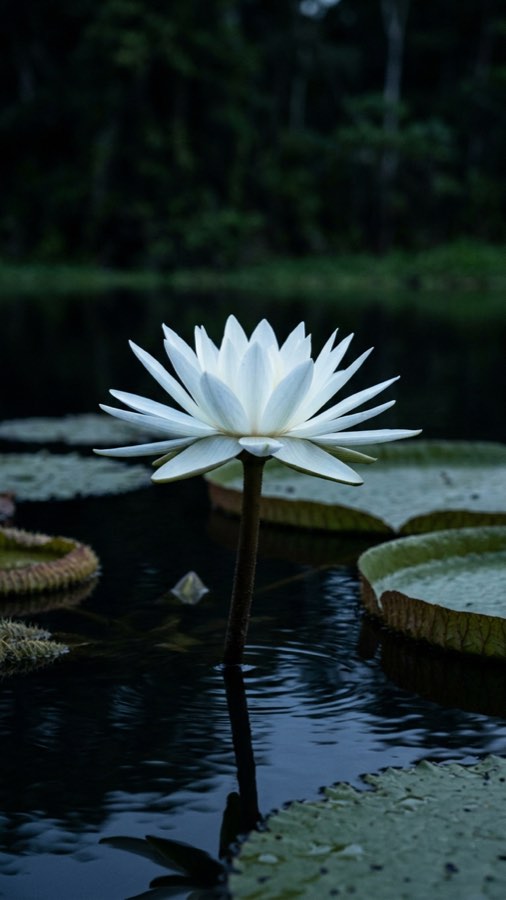
Sunken Lantern Lilyは、アマゾンの後背Wetland(バルゼア)の、flowの止まった暗いWater面に浮かぶ巨大なWater生plant。直径三メートルに達する円い浮きleafをWater面いっぱいに広げ、その間から一Nightにひとつだけflowerを立ち上げる。flowerは日没とともに開き、内部に蓄えたデンプンを一気に燃やして自ら発熱する。冷たいNight気より十度ほど高くなったflowerは、白いflower弁を大きく開いて熱とにおいをNightに放つ。初めのNightは白く、翌るNightにはflower弁が赤みを帯びていく。二晩を咲き切ると、flowerは太い柄をゆるめてWater面から離れ、音もなくWater底へと沈んでいく。だから朝のWater面には、昨Nightあれほど大きかったflowerの跡も、輪郭さえも残っていない。開いていたのは、日が沈んでから昇るまでの、暗い数時間だけだ。
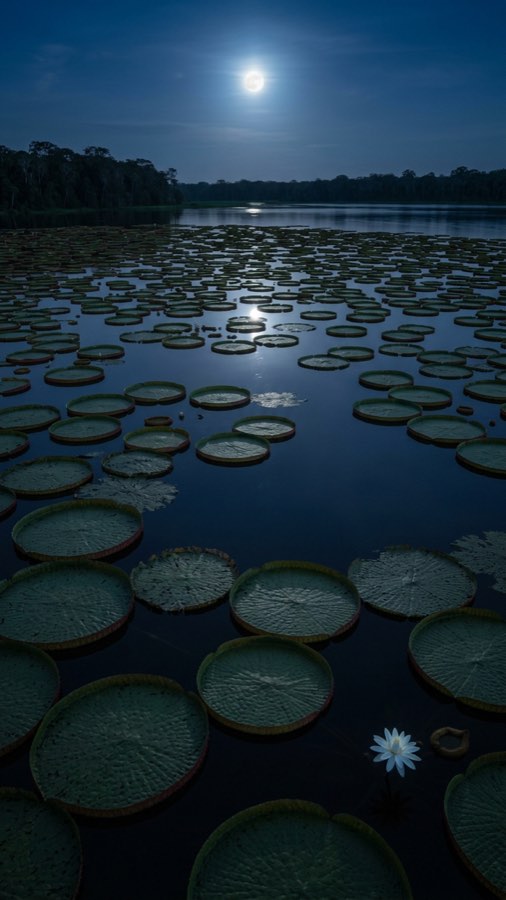 PLATE I
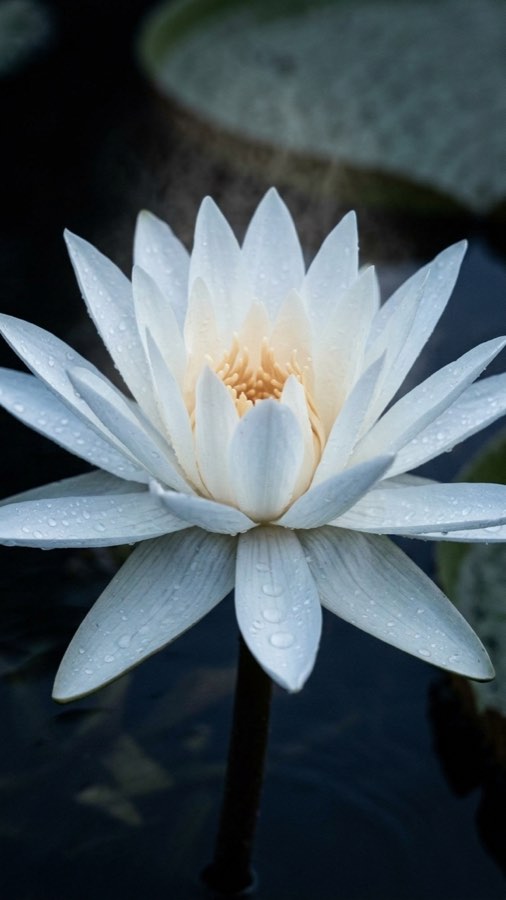 PLATE II
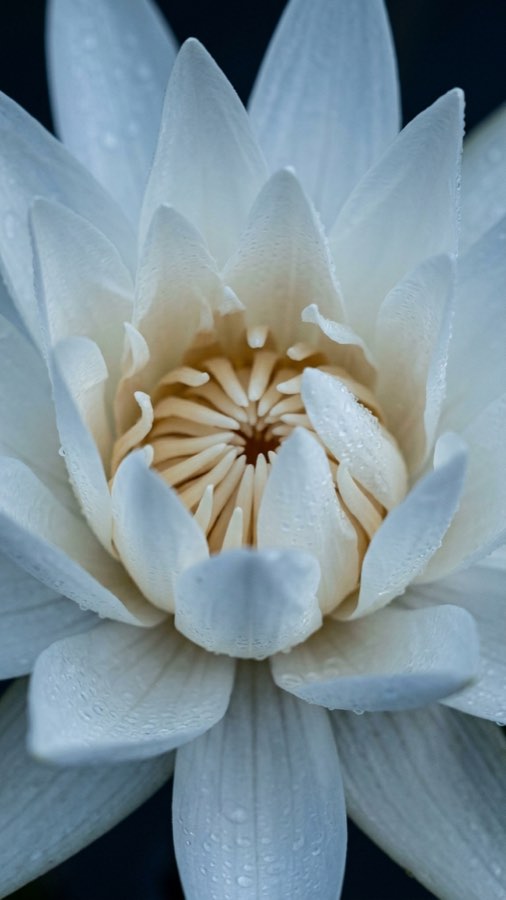 PLATE III
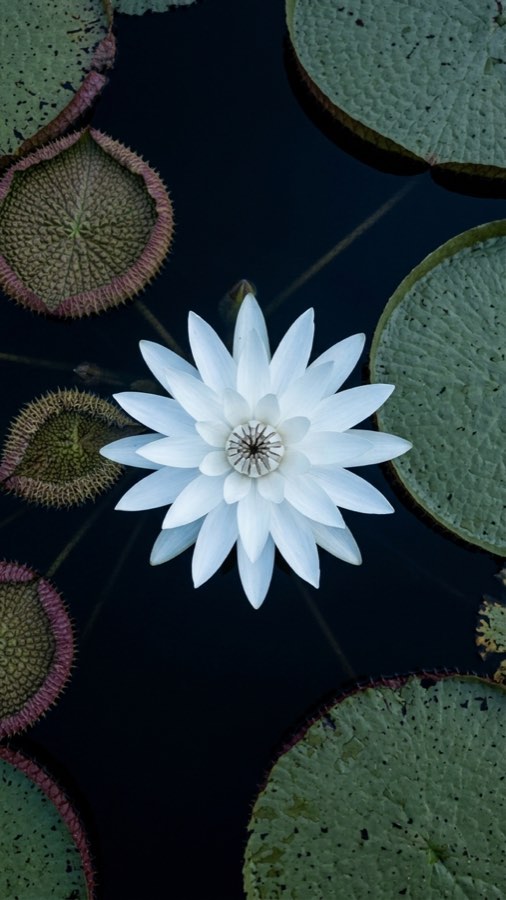 PLATE IV
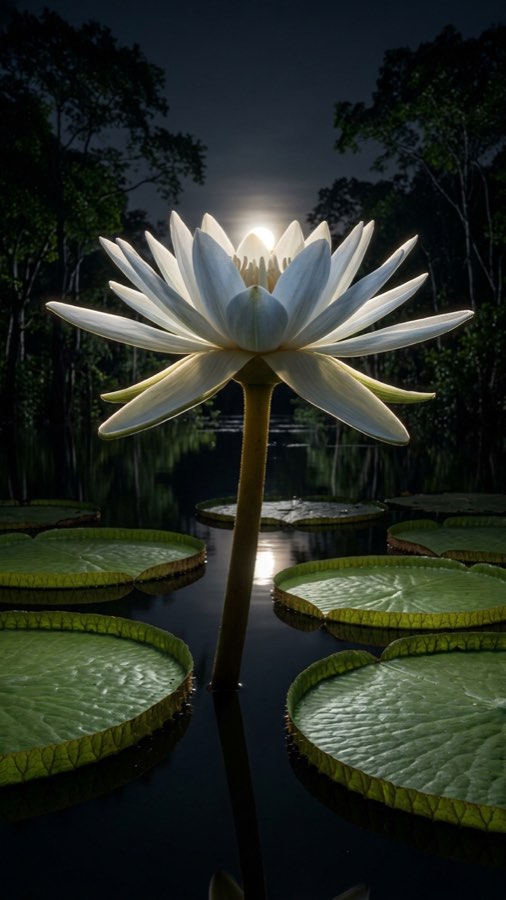 PLATE V
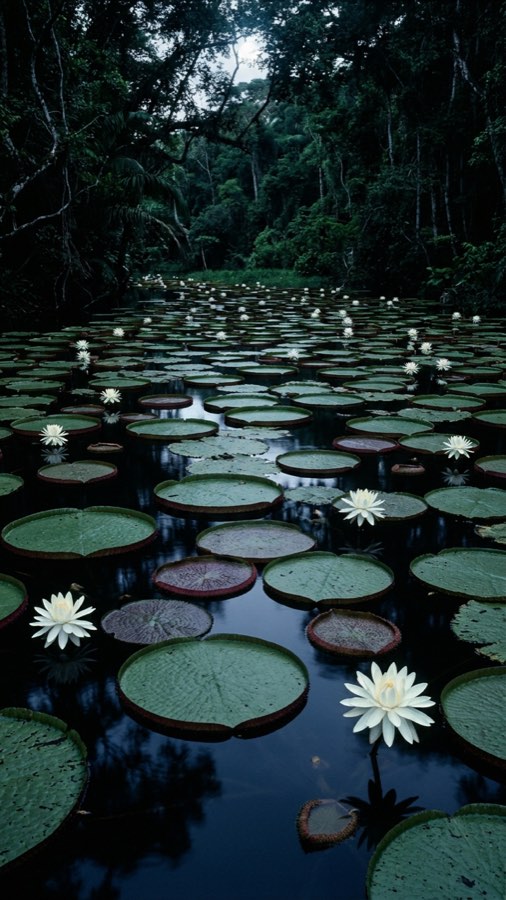 PLATE VI
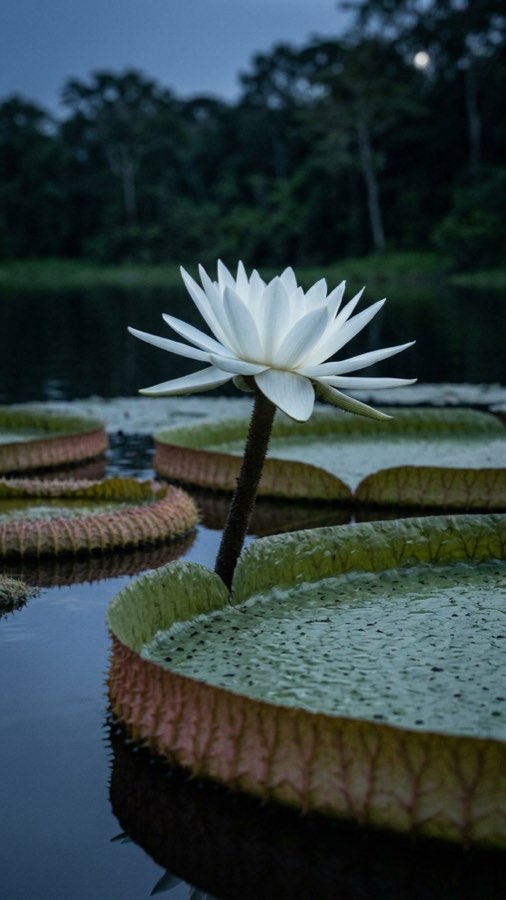 PLATE VIIPLATE VIII
Nightにだけ咲いて、朝が来る前に、Waterの底へ消えていくflowerがあります。
アマゾンの、flowの止まった暗いWater面。
日がsinkingと、巨大な白いflowerがひとつ、自ら熱を持って開きます。
冷たいNight気の中で、そのflowerだけが、ほのかに温かい。
最初のNightは白く、次のNightには赤く染まり、
二晩を咲き切ると、flowerは柄をほどいて、静かに沈んでいきます。
The flowers are not showy, but near windless midday they part their reddish-brown sepals slightly. As the obsidian surface warms, small solitary bees and hoverflies move among the dwarf herbs of the same slope and brush these flowers in passing. In years of fog or hail, the anthers bend toward the stigma; seed set is poor, yet self-pollination keeps the line from failing.
When ripe, the capsules split without throwing their seeds far; most fall at the edge of the parent plant. During snowmelt, however, thin trickles run beneath the obsidian shards and carry the light seeds a few dozen centimeters. Germination is confined to places where fine volcanic ash remains under the dark stones and nightly condensation persists, so the colony spreads only in scattered spots.
The red-rimmed leaf scars visible at collection darken within days in a dried specimen, making the plant hard to separate from ordinary alpine succulents. Its flowers last only two or three weeks in late summer, and at obsidian localities frequented by mineral collectors the lowest plants were probably overlooked. Some old labels noting a scorched chenopod-like herb may have referred to this species.