Specimen · N°062 · Mist · ▶ Film
Nebulofilix resolvensFogloom Tree Fern
Mistの濃いNightにだけ、羊歯は握った拳をほどきます。
FOUND 6.2°N 116.7°E · ボルネオ島のcloudMist林、標高約1800mの尾根筋 · ✝ EX · Last seen 1981
Mistの濃いNightにだけ、羊歯は握った拳をほどきます。
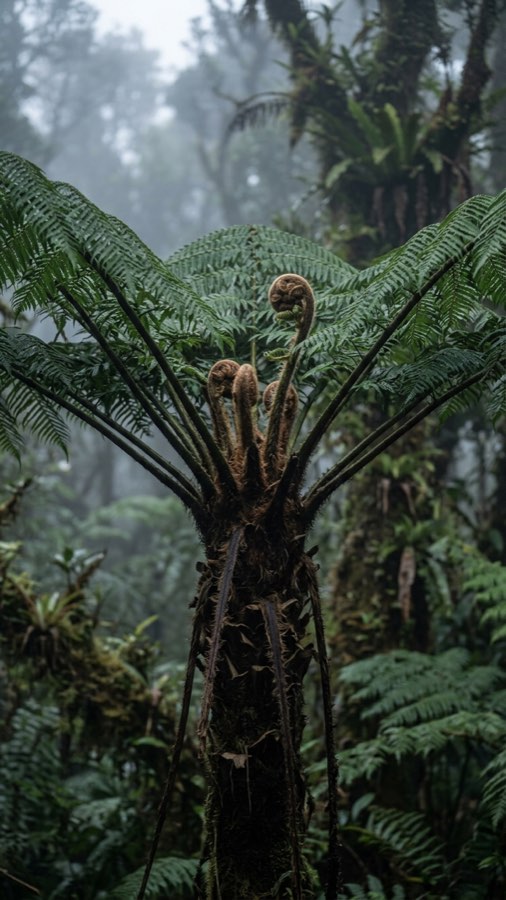
Fogloom Tree Fernは、cloudMist林の尾根に立つ木性シダ。高さ二〜三メートルの太い幹は木ではなく、古いleaf柄の付け根と細い根が幾層にも積み重なった繊維の柱で、その層は歳月を年輪のように畳み込んでいる。幹の頂には大きなleaf冠が放射状に広がり、その中心で、これから伸びる若leafが拳のように固く渦を巻く(フィドルヘッド)。この渦は乾いた昼のあいだは締まったままだが、Mistの濃いNightになると、繊維の幹が空気のWater分を吸い上げ、若leafの細胞がふくらんで内圧が高まり、渦はゆっくりと、音もなくほどけていく。朝、Mistが晴れて空気が乾くと、まだ若い渦はふたたび少し締まる。だからleafを広げきるまで、このplantはMistのNightだけを選び、幾晩もかけて拳を少しずつほどいていく。
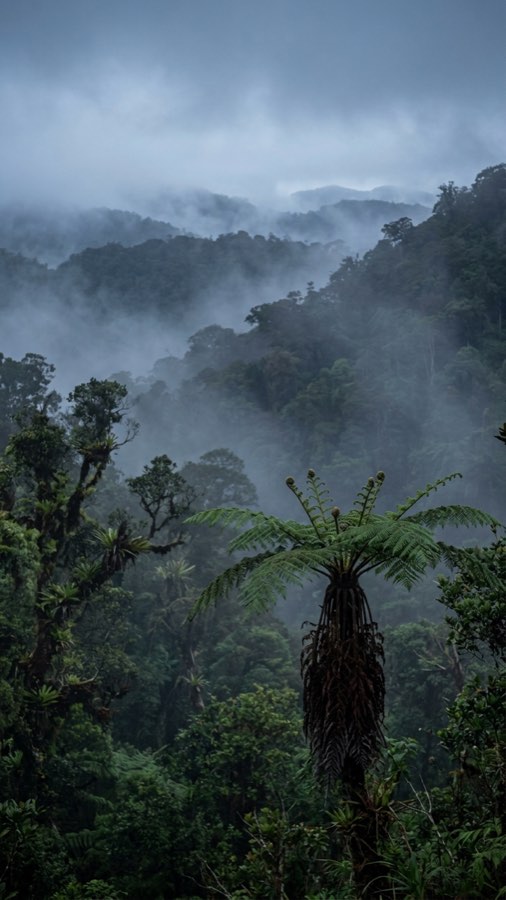 PLATE I
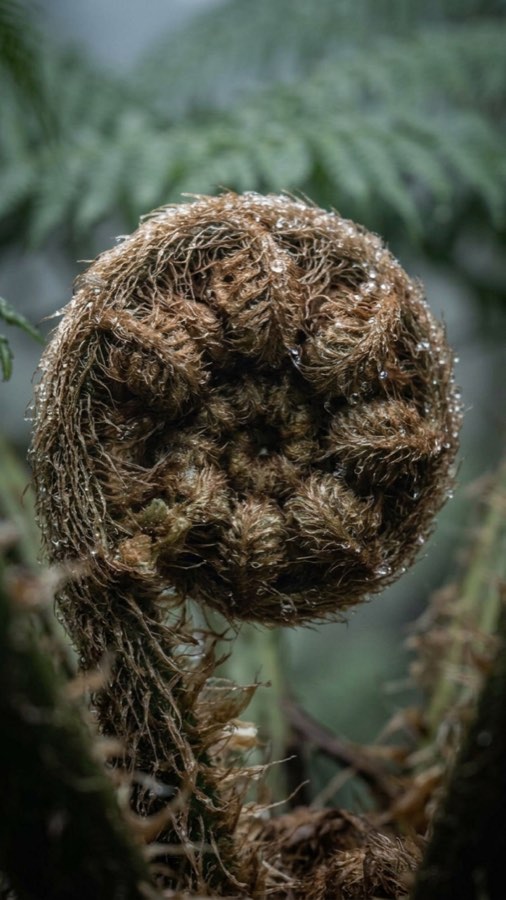 PLATE II
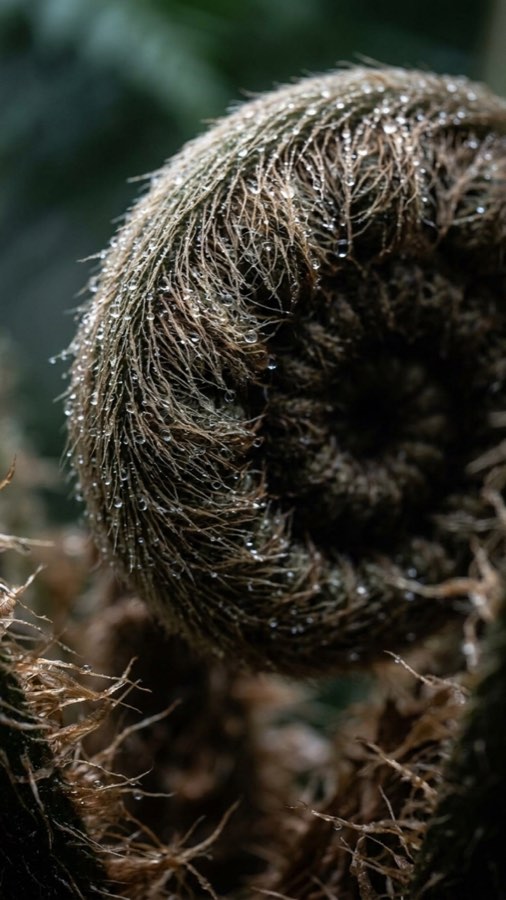 PLATE III
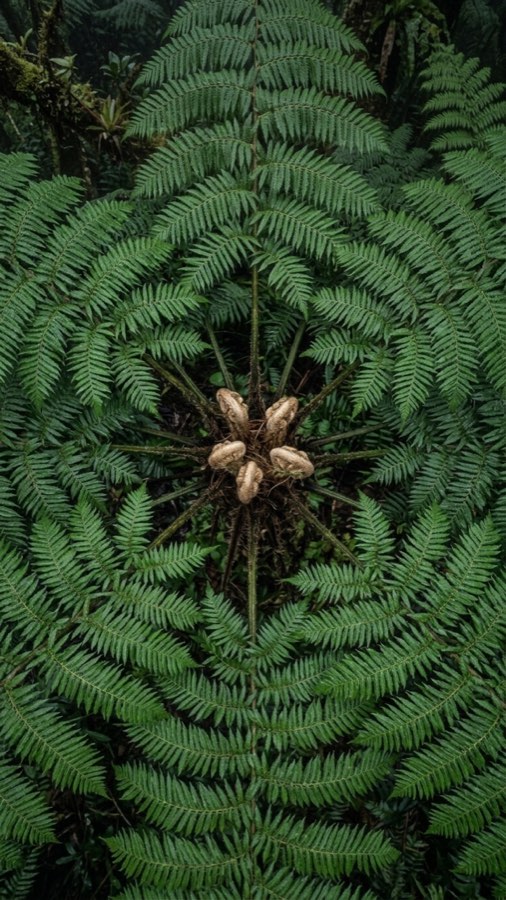 PLATE IV
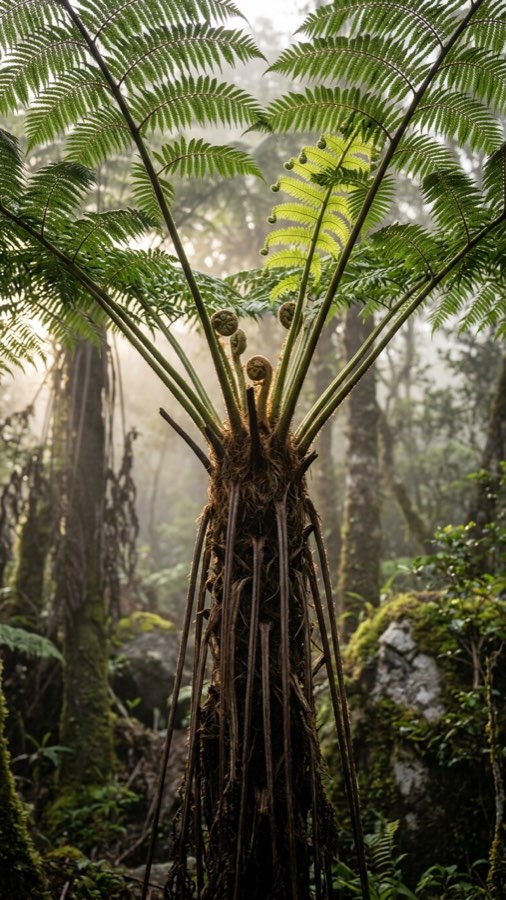 PLATE V
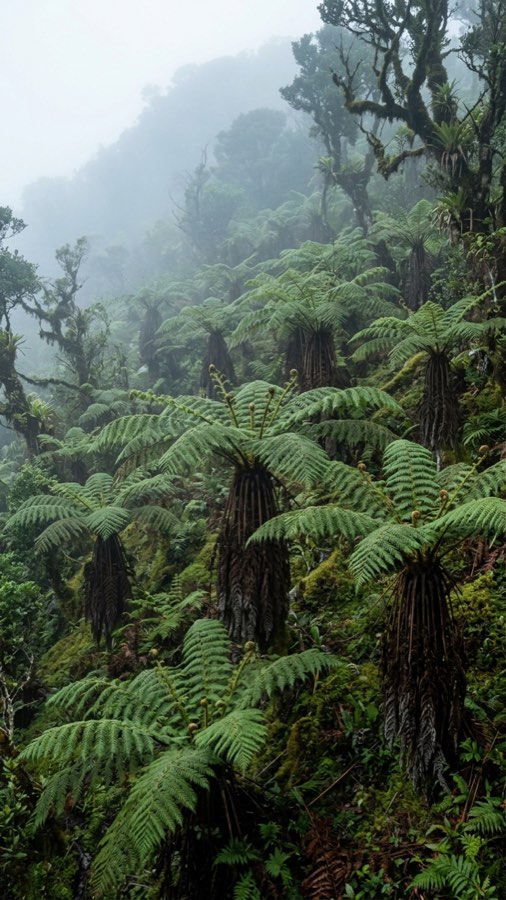 PLATE VI
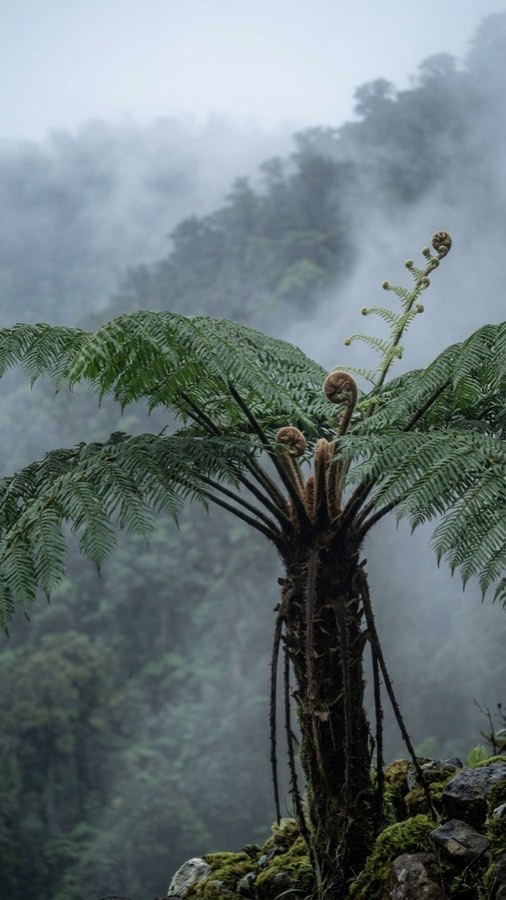 PLATE VIIPLATE VIII
Mistの濃いNightにだけ、羊歯は握った拳をほどきます。
濃いMistが、乾いて締まっていた新芽の渦をゆるめるからです。
cloudMist林の尾根、絶えずMistの湧く高さ千八百メートル。
太い幹は木ではなく、古いleafの付け根と細い根が積もった繊維の柱で、歳月を年輪のように畳み込んでいます。
その頂のleaf冠の中心で、若leafは拳のように固く渦を巻いてNightを待ちます。
Mistが幹に染み込むと細胞がふくらみ、渦はゆっくりと、音もなくほどけていきます。
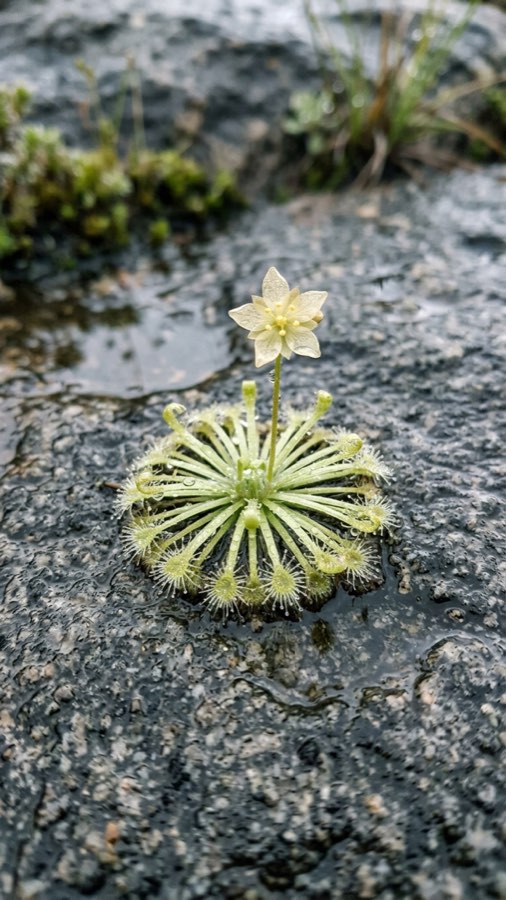
For roughly three days before flowering, the silver-gray edging nearly vanishes, leaving the plant difficult to separate from the surrounding thread sedges. Outside flowering, its metallic dust returns, yet the low rosette is easily dismissed as a young sundew or a mud-stained seedling. When pressed, the marginal powder often falls away during drying, and the useful character disappears before it reaches the label.
The plants are not scattered evenly through the bog, but form small colonies below slopes where acidic seepage carries a trace of iron. Two or three years after a burn, competing grasses remain low and the silver margins are conspicuous; once lilies and sedges recover, the plants disappear from view again. Their patchy range and local clustering are thus not contradictory, but seem to follow narrow branches of seep water.
The flowers open white from daybreak until late morning, and appear to be visited only on still, damp mornings by minute native bees. Even in poor visitation years a few seeds are set, suggesting the plant has not entirely abandoned selfing. Among beekeepers and families who managed burns along the bog edge, a morning when the silver had ebbed was remembered as a cue for moving hives or checking unburned patches.