Specimen · N°061 · 岩 · ▶ Film
Petrofissura ephemeraCleftkeeper Moss-bloom
この草は、自分の体の大半を毎回捨てます。
FOUND 6.2°N 10.5°E · カメルーン高地、剥き出しのflower崗岩がドーム状に盛り上がるalpine岩丘 · ✝ EX · Last seen 1967
この草は、自分の体の大半を毎回捨てます。
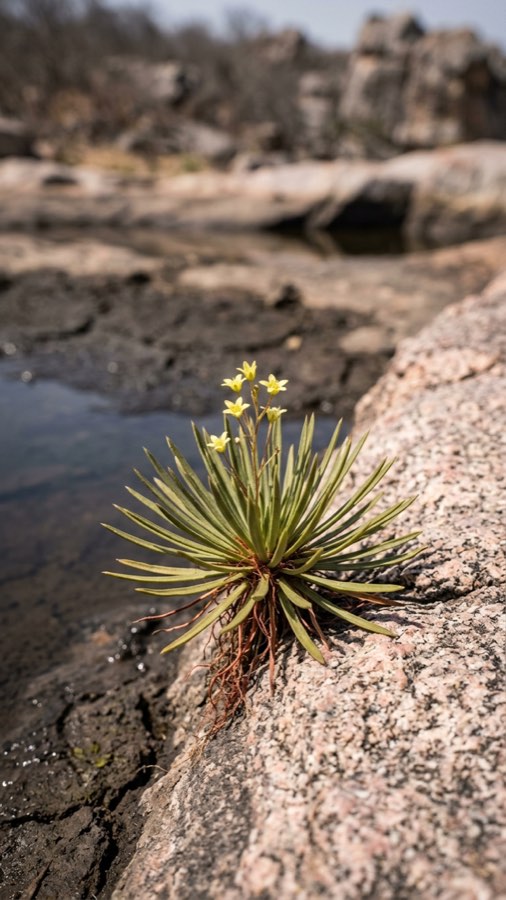
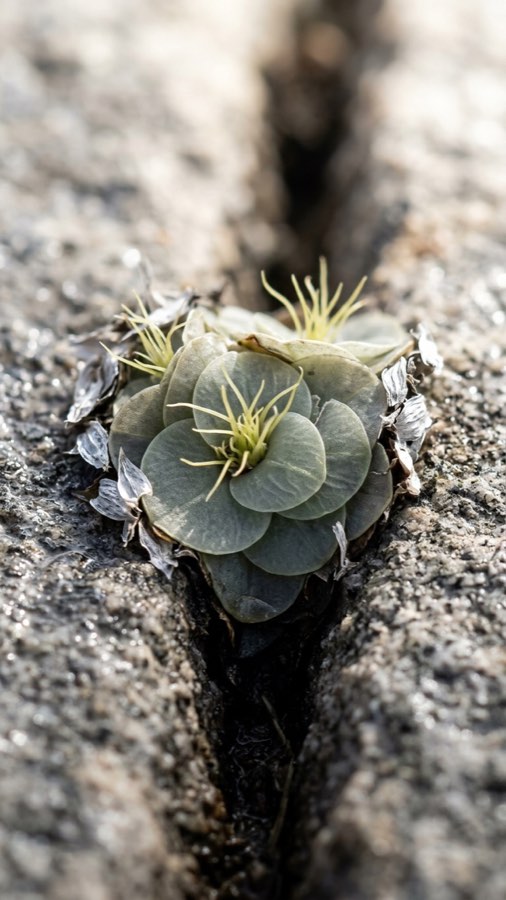
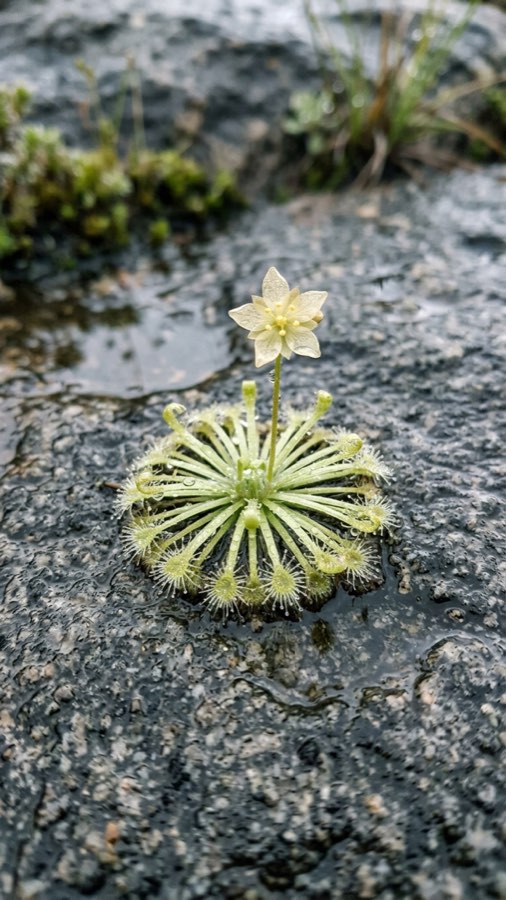
Cleftkeeper Moss-bloomは、Rain季の朝に岩の上を薄くflowるWaterの膜が張ったとき、わずか数日だけ姿を現す極小のplant。flower崗岩の表面に、淡い緑の細かなleafを放射状にびっしり広げ、その中心から透き通ったクリーム色の小さな星形のflowerをひとつ立ち上げる。Waterの膜があるあいだ、leafもflowerもみずみずしく開いている。ところが膜が乾きはじめると、Cleftkeeper Moss-bloomは広げたleafとflowerのほとんどを自分から枯らして手放し、岩の細い亀裂のなかへ、針の先ほどの成長点だけをそっとしまい込む。乾いた岩面には、もうleafもflowerも残らない。強い日差しが照りつけるほど、このplantは表に出した部分を惜しげもなく捨て、亀裂の奥に隠した次の再生の核だけを守る。だからCleftkeeper Moss-bloomは、自分の体の大半を毎回捨てることで生き延びている。咲いて広がっていたのは、岩が濡れていた数日だけだ。
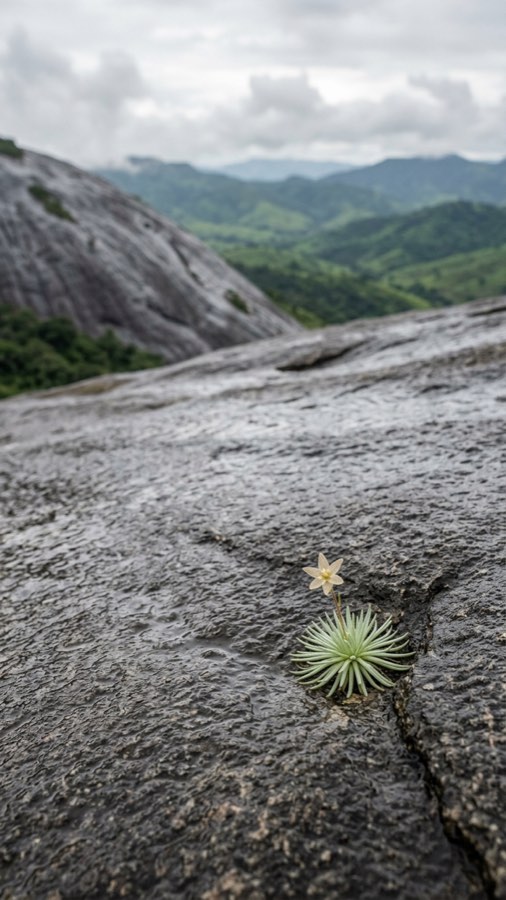 PLATE I
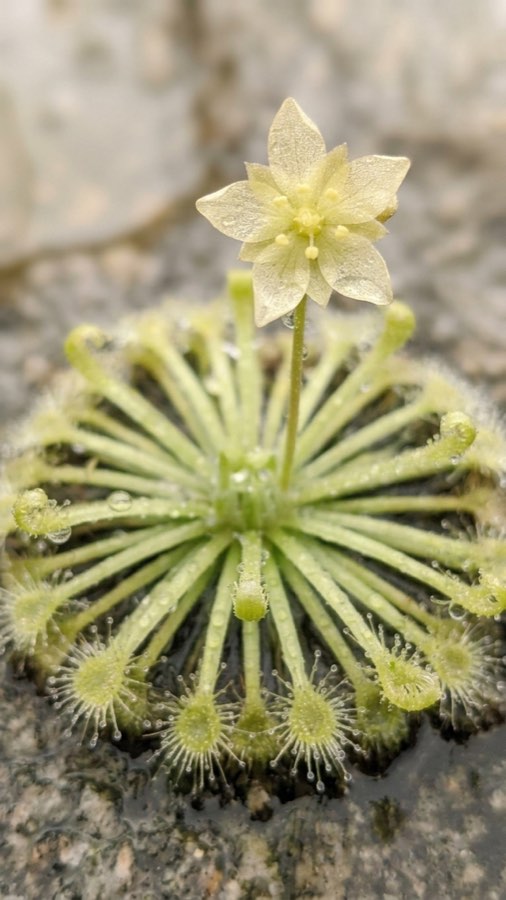 PLATE II
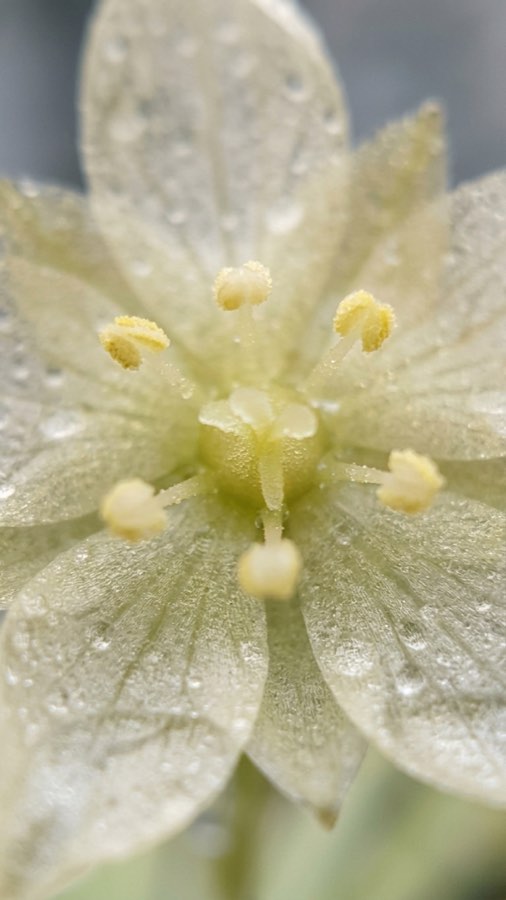 PLATE III
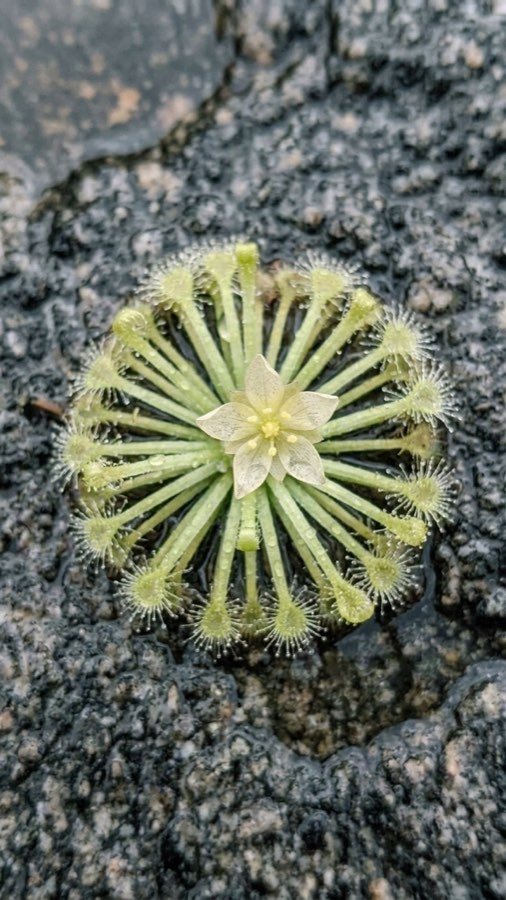 PLATE IV
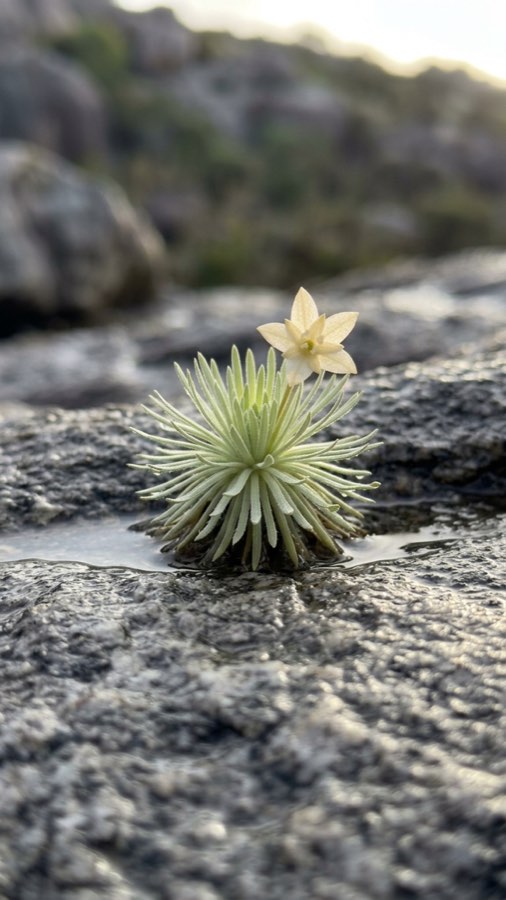 PLATE V
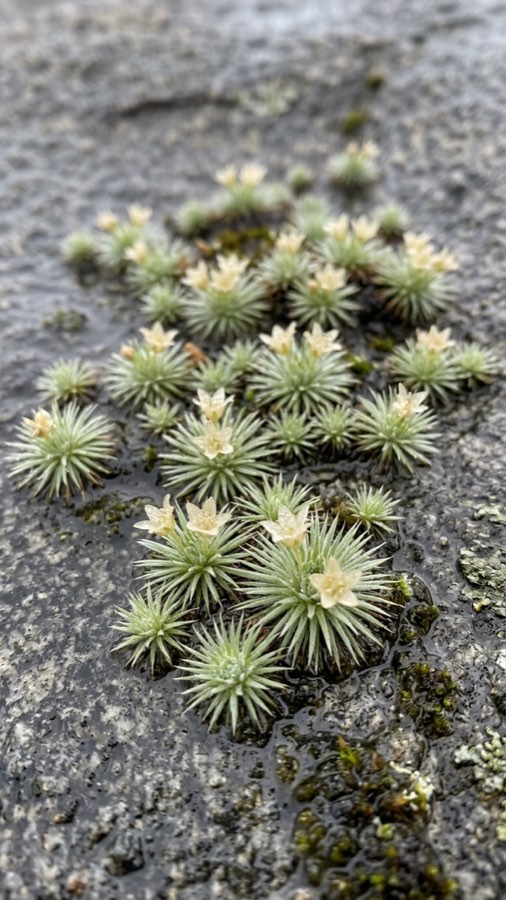 PLATE VI
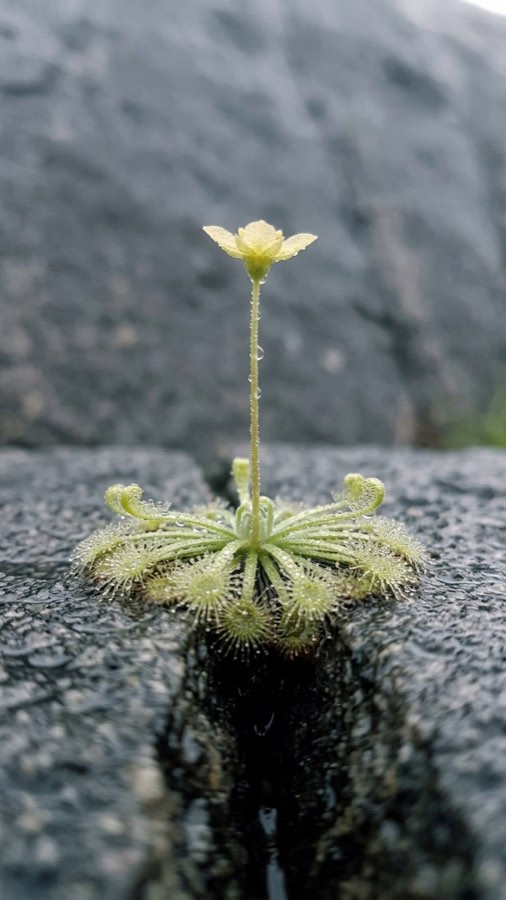 PLATE VIIPLATE VIII
この草は、自分の体の大半を毎回捨てます。
強い日差しに乾くと、leafもflowerもほとんど枯らしてしまうからです。
カメルーン高地、剥き出しのflower崗岩がドーム状に盛り上がる岩丘。
Rain季の朝、岩の上を薄いWaterの膜がflowると、Cleftkeeper Moss-bloomは数日だけ姿を現します。
淡い緑のleafを放射状に広げ、透き通ったクリーム色の星形のflowerを立ち上げます。
けれど膜が乾きはじめると、広げた体をみずから手放していきます。
The flowers open as small white stars only during clear morning intervals, and the anthers already touch the stigma before full expansion. A plant with only a few days above ground cannot depend on visitors, so seed set appears largely secured by self-compatibility. Yet once, on a still morning, minute halictid bees dusted with pollen moved between flowers in the same hollow. The stand is probably kept from becoming a perfect clone by this slight outcrossing, together with the mixing of seed-bank cohorts from different years.
The capsule does not open along a dry seam; it loosens only after receiving the next drops of rain. The short stem holds it a few centimeters above the rock, so splashing water lifts the thin mud film and carries the fine seeds only as far as the rim of the same hollow. No mechanism for long-distance dispersal is evident. This matches the plant’s patchy occurrence, not across the whole plateau, but along the outlines of older rain pools.
One old herbarium sheet I examined held a flowerless fragment filed among undetermined small wetland herbs resembling Lindernia. Its label gave only “early monsoon,” with no note of the three wetting and drying cycles. Visit the plateau in the regular rains and the plant has already collapsed; visit in the dry season and only sandy mud remains. It was probably not wholly undiscovered, but passed once through the record without its conditions being understood.