Specimen · N°041 · Rock · ▶ Film
Selectiva obsidianaObsidian Star
Only the most scorched bud remains for the year to come.
FOUND 40.2°N 44.8°E · Obsidian scree of the Geghama Mountains, Armenia · ✝ EX · Last seen 1967
Only the most scorched bud remains for the year to come.
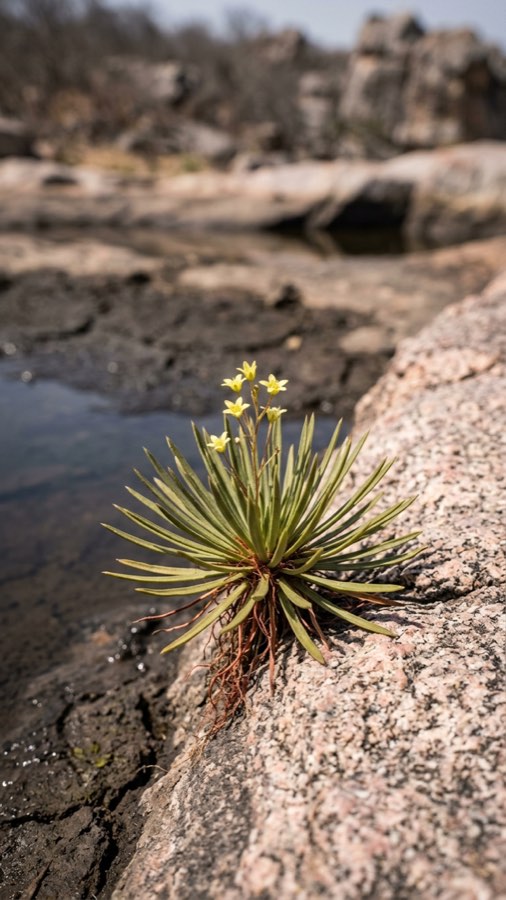
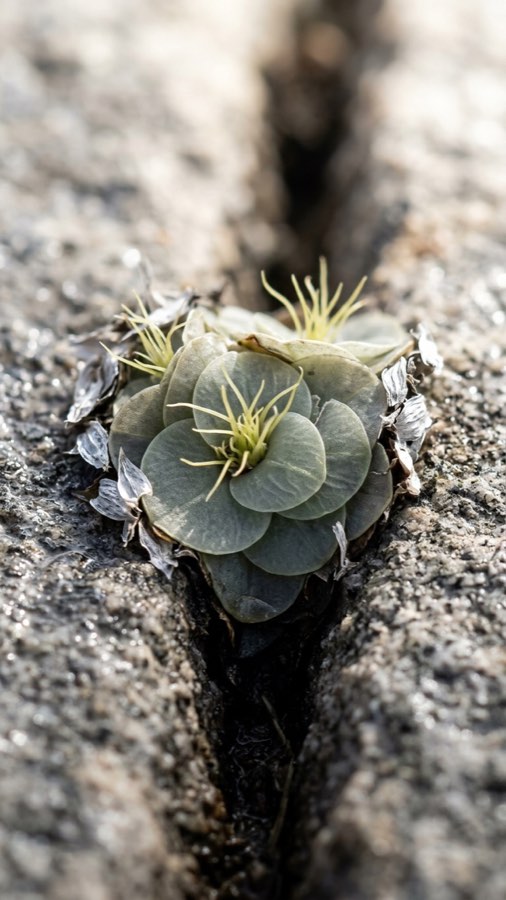
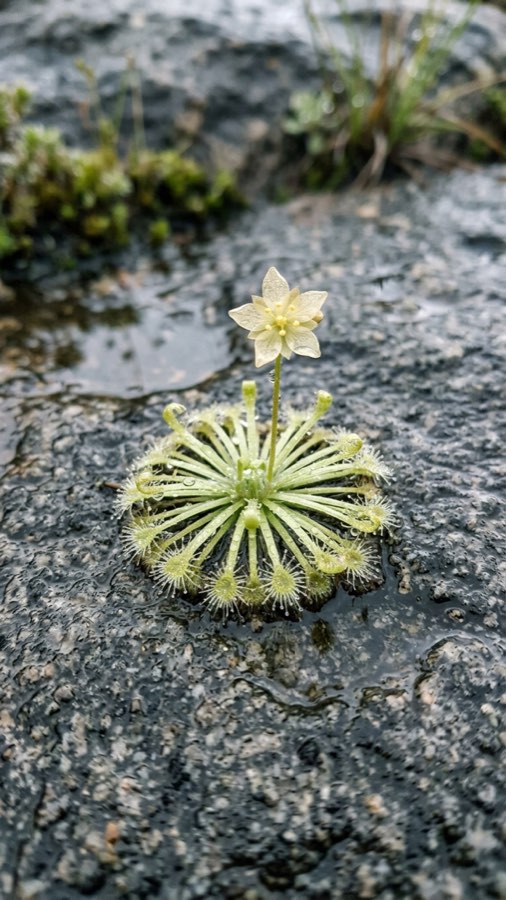
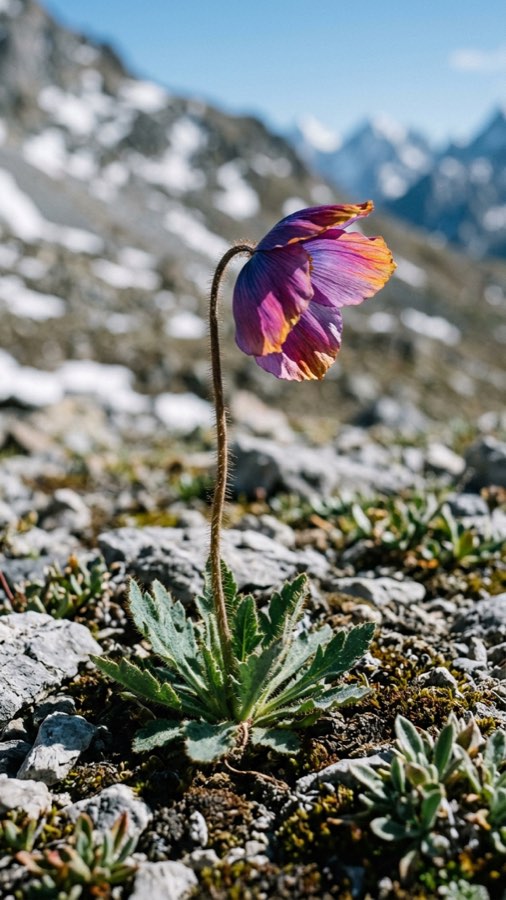
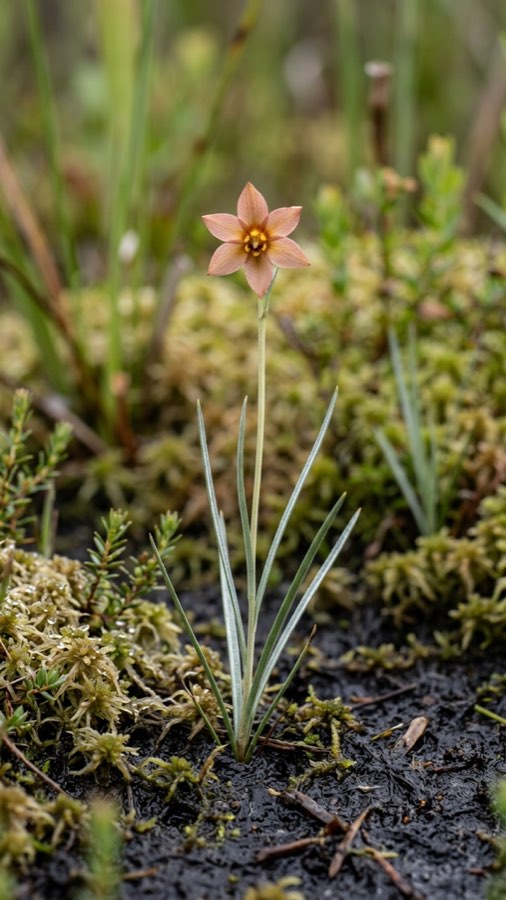
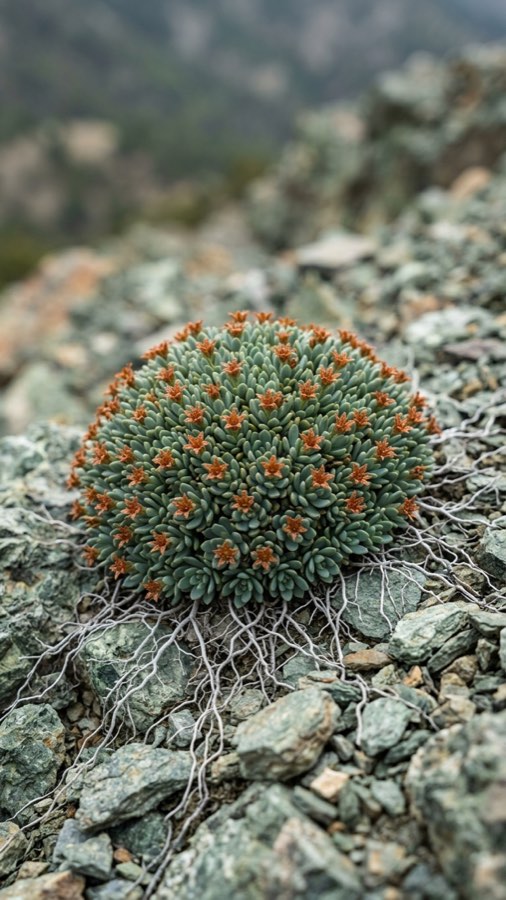
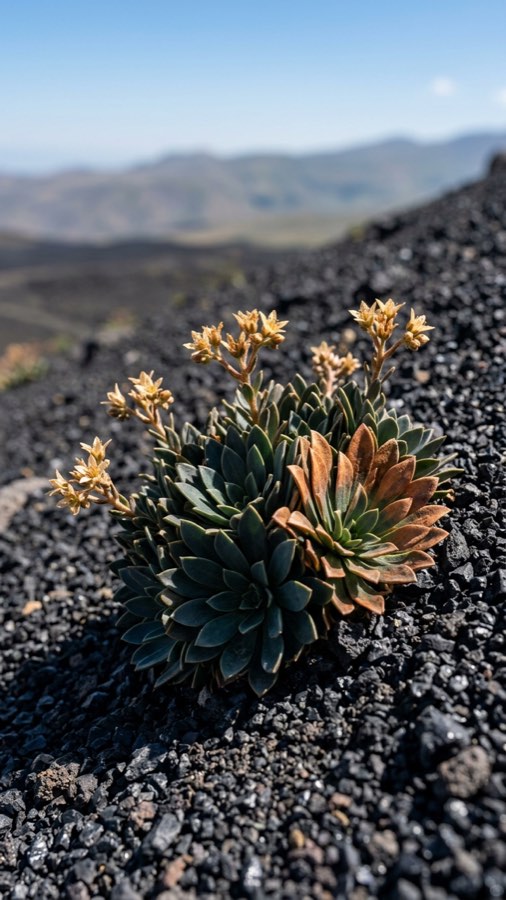
The Obsidian Star is a low cushion plant some 10 cm tall. It packs blackish blue-green leathery leaves into a dense rosette, and on short branched stems bears small star-shaped flowers of pale amber. On each plant, the side most exposed to the sun is scorched by ultraviolet light, its leaves bruising to copper. Where most plants avoid injury, this one does the opposite: it chooses as next year’s leading shoot the bud from its most damaged side. The size of the scar stands as proof of how strongly that bud repaired its DNA. Only the buds that healed completely remain, and year by year, shifting its place across the scree, it goes on opening its pale star-shaped flowers.
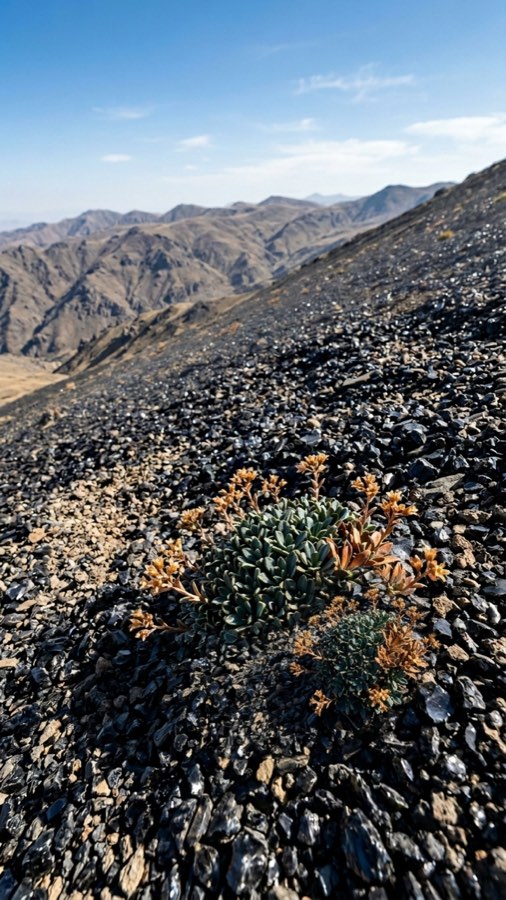 PLATE I
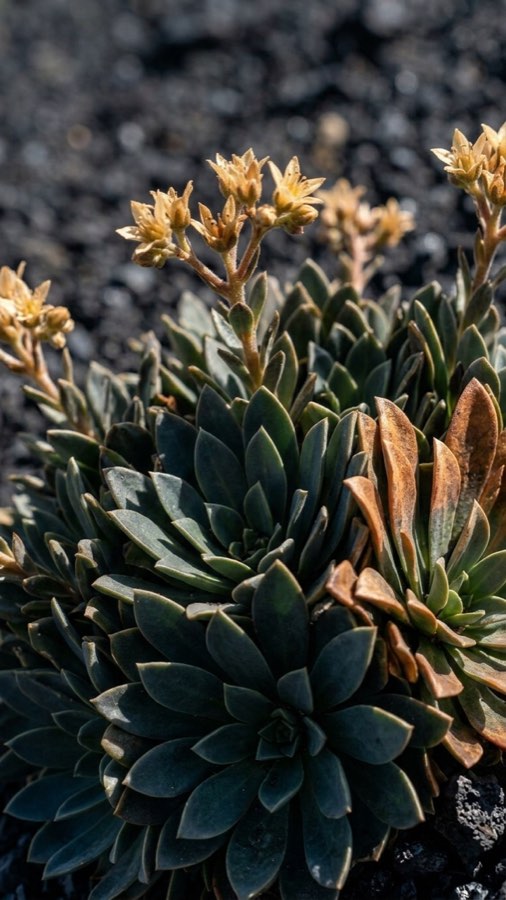 PLATE II
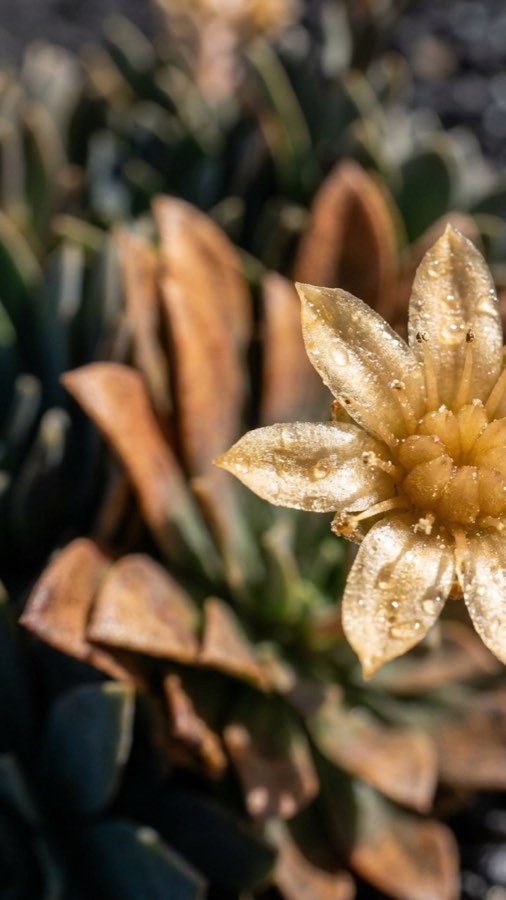 PLATE III
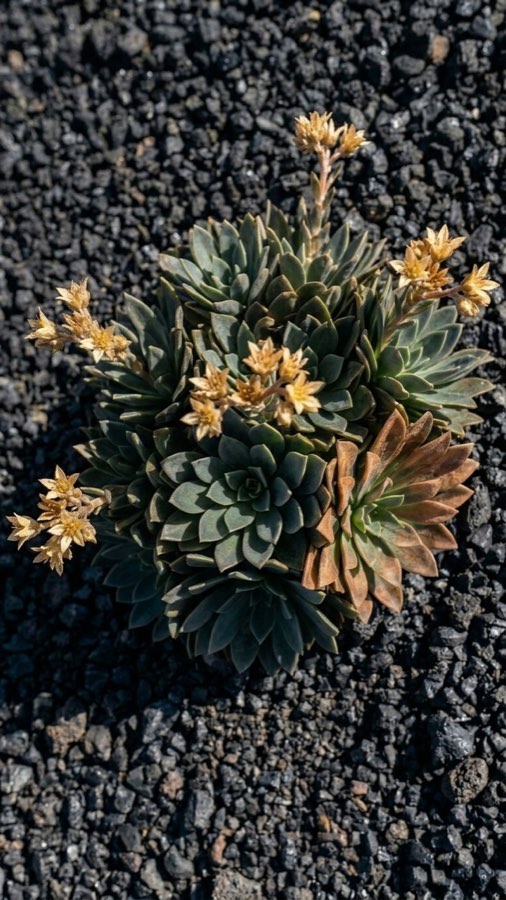 PLATE IV
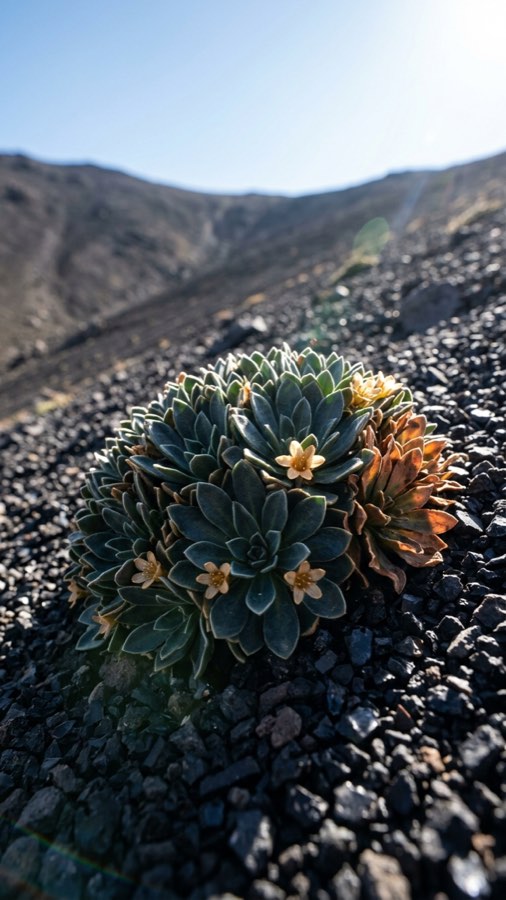 PLATE V
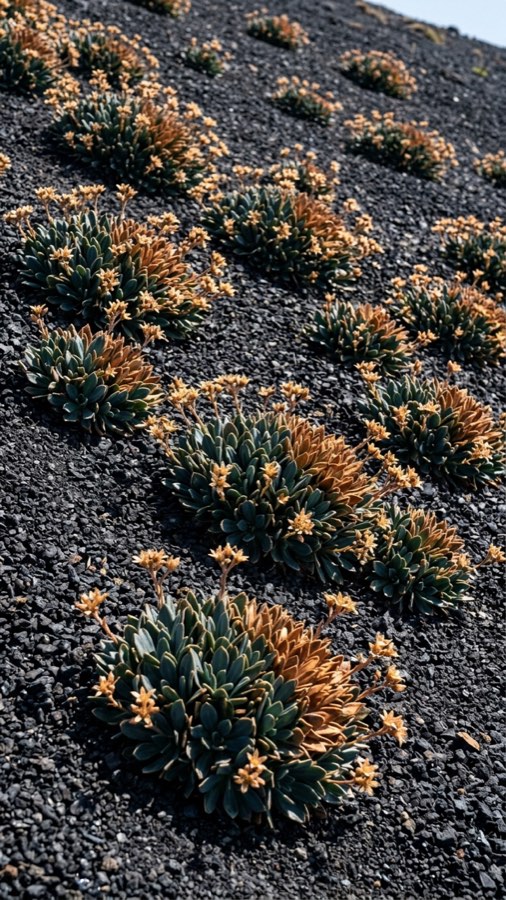 PLATE VI
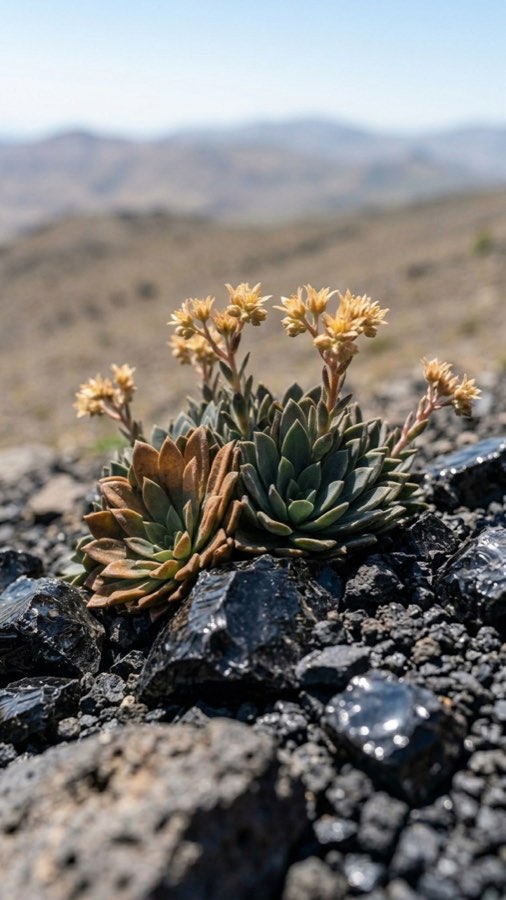 PLATE VIIPLATE VIII
Only the most scorched bud remains for the year to come.
It does not avoid its wounds — it chooses by the size of them.
Obsidian scree of the Geghama Mountains, Armenia
The black glass stones drink the sun, and throw back fierce ultraviolet light.
The Obsidian Star roots only in the gaps between the stones.
Its sunward side scorches; the leaves bruise to copper.
The flowers opened for only two or three days after the edge of snowmelt crossed the scree. By afternoon, reflected heat from the obsidian gravel had already wilted the petals. In dry-season specimens, only copper-burned rosettes remained, which likely explains why many records dismissed it as an aged alpine cushion plant.
Small alpine hoverflies visited the flowers briefly in the early morning, but their visits varied from plant to plant. Because the anthers stand close to the stigma, even wind-shaken corollas can drop pollen onto it; fruit set therefore appears to rely chiefly on self-compatibility. The seeds do not travel far, and only those falling between obsidian stones find spring moisture.
On obsidian screes away from the summer grazing tracks, few paths remain visible. Shepherds are said to have remembered that, among the black stones once linked with blades and fire-striking, only the scorched bud rose the following year. The name “scorched-bud star” seems to come less from the flower than from a local habit of reading burn marks in the ground.