Specimen · N°042 · Mineral · ▶ Film
Bifidoradix troodosensisSplit-root Herb
One plant — doing two opposite things below the ground.
FOUND 34.9°N 32.9°E · Old copper mines of the Troodos Mountains, Cyprus · ✝ EX · Last seen 1981
One plant — doing two opposite things below the ground.
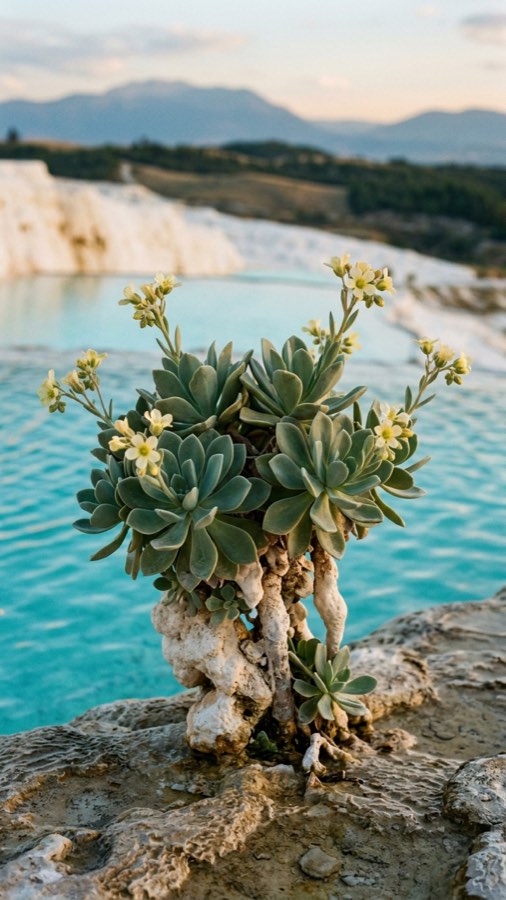
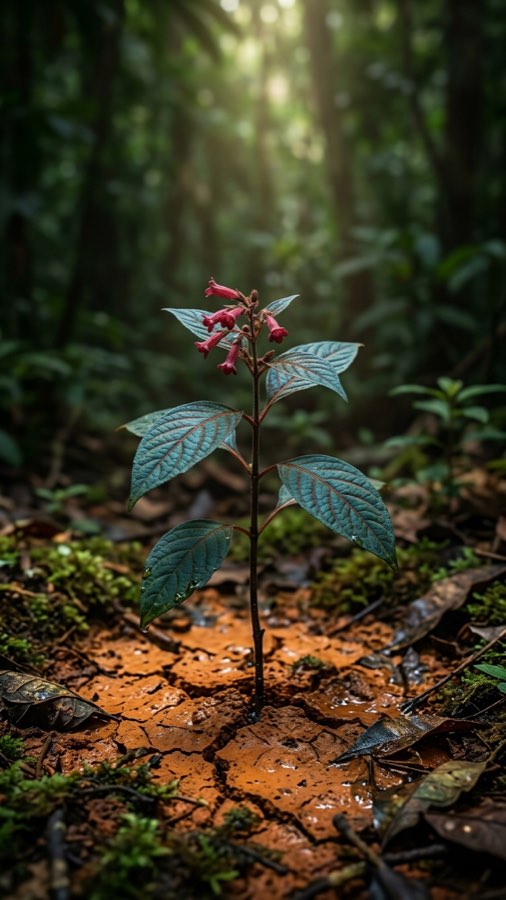
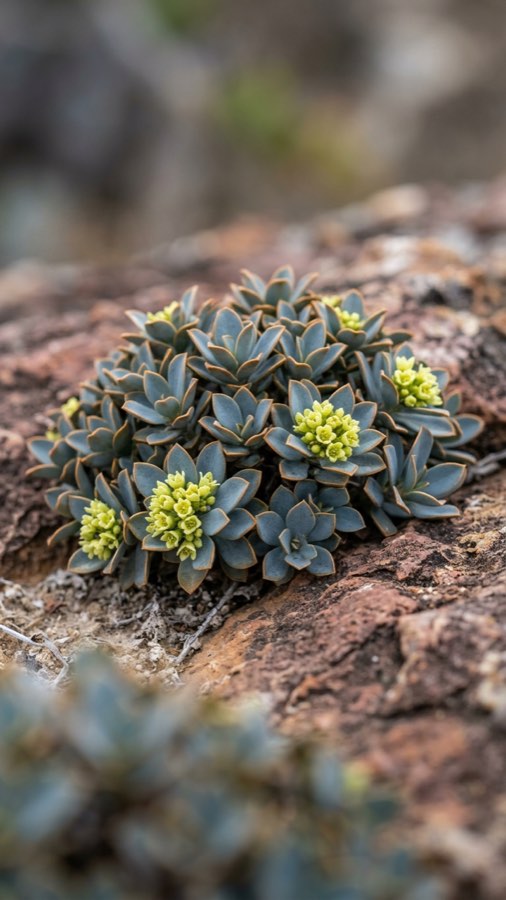
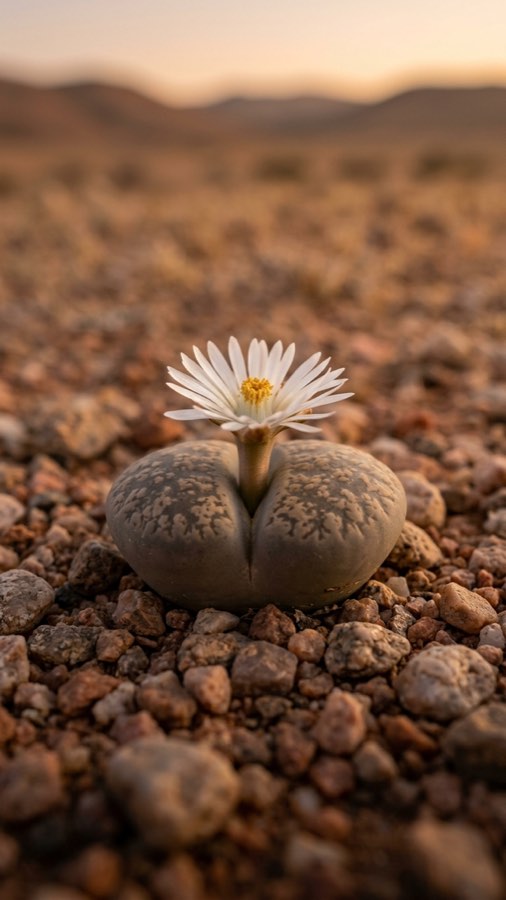
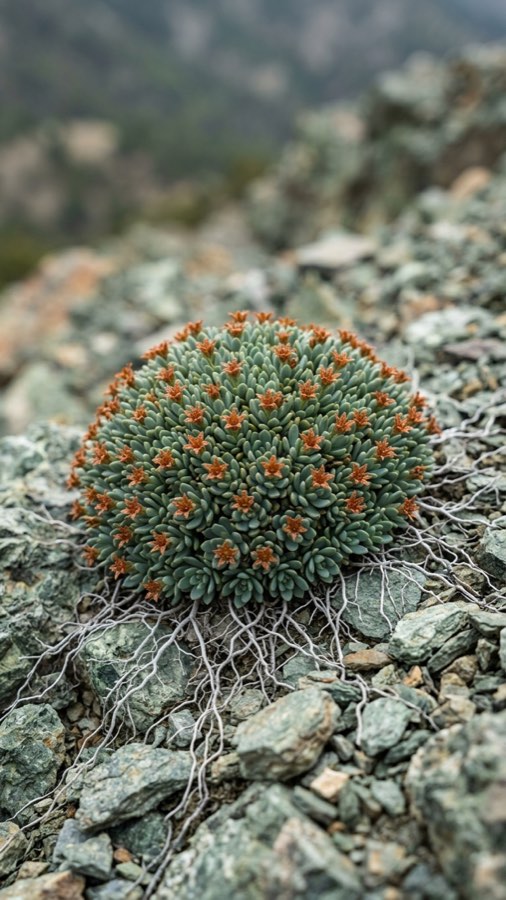
The Split-root Herb is a low cushion plant some 10 cm tall. It layers small dull blue-green fleshy leaves densely together, and on short stems bears rusted-orange star-shaped flowers. Over the broken serpentine rubble it clings, spreading pale grey-white roots like a spider’s web. Within a single plant that root system divides in two: one set of roots reaches into the metal-rich rock and takes the metal in, while the other shuns it stubbornly, drinking only water. Below ground it keeps two roots of opposite conduct at once; above ground it blooms as one quiet plant.
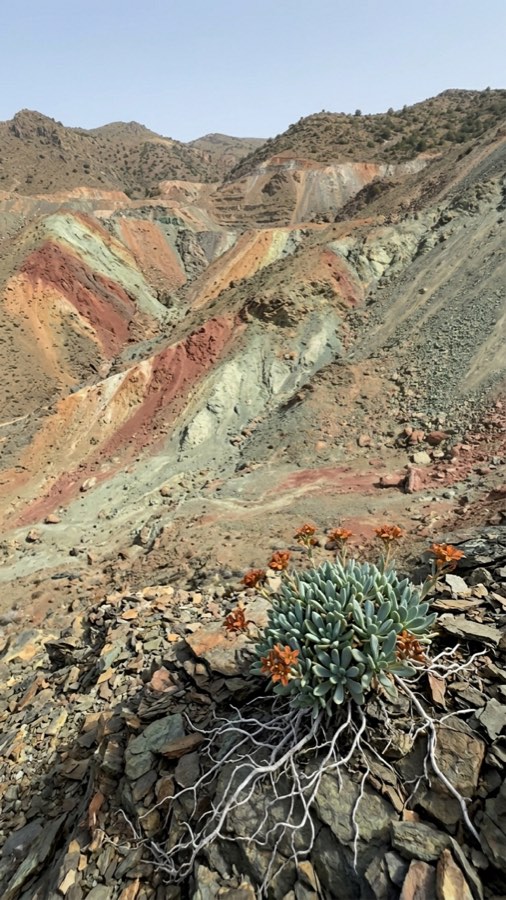 PLATE I
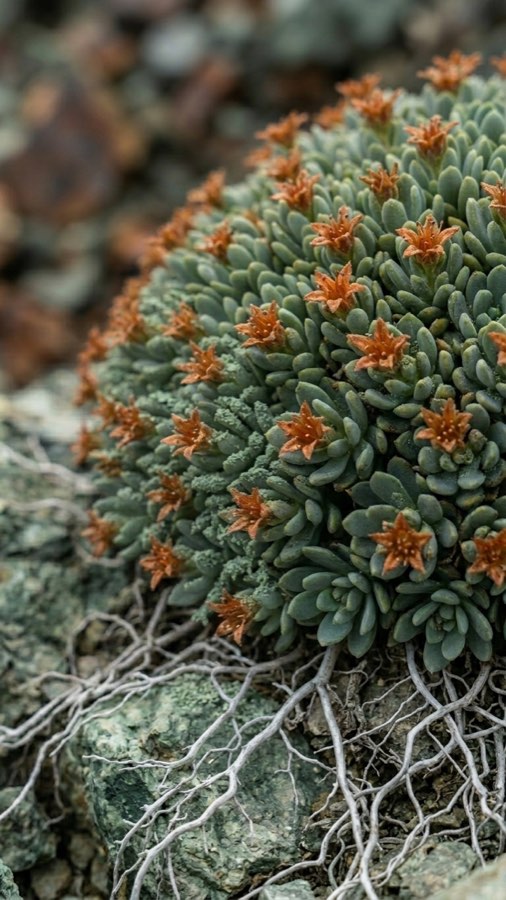 PLATE II
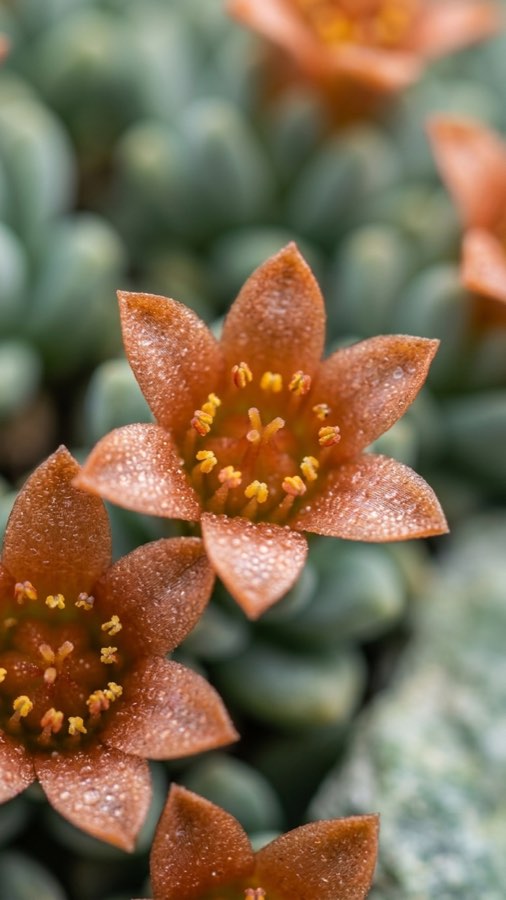 PLATE III
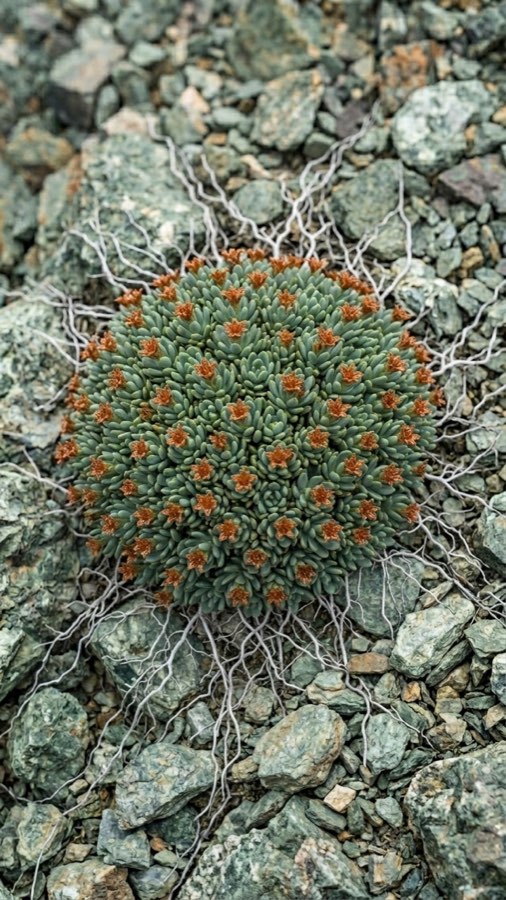 PLATE IV
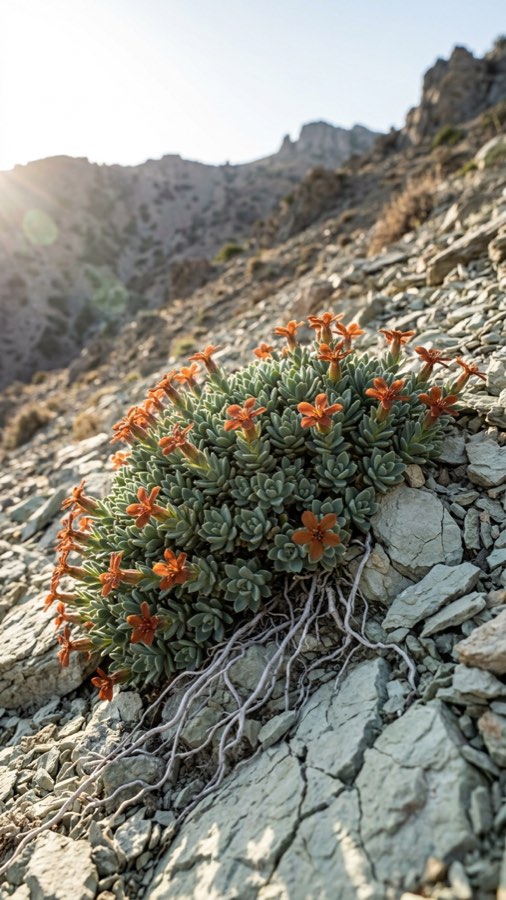 PLATE V
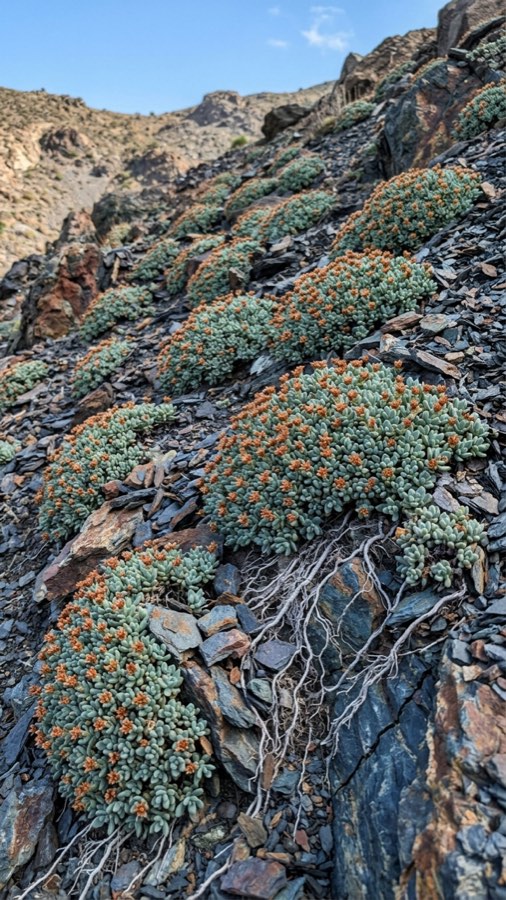 PLATE VI
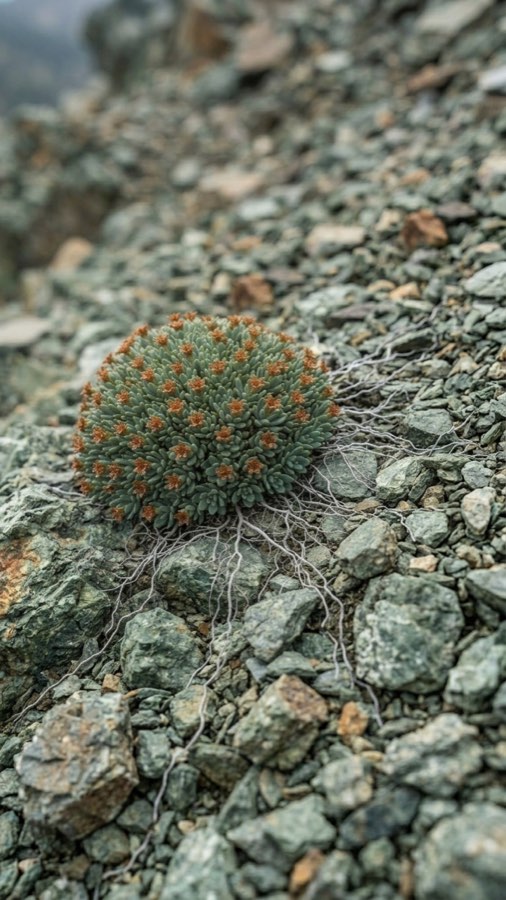 PLATE VIIPLATE VIII
One plant — doing two opposite things below the ground.
One root takes in the poison; the other refuses it.
Old copper mines of the Troodos Mountains, Cyprus
It roots only in the ruined diggings, where metal has soaked the serpentine.
The Split-root Herb spreads its pale roots over the rubble like a spider’s web.
Some roots reach for the metal rock; others shun it stubbornly, drinking only water.
In early April, the rust-orange star-shaped flowers opened fully only on mornings when the serpentinite scree below the adit still held moisture. A thin film of nectar lay inside the corolla, and small hoverflies only a few millimetres long moved low between cushions. By windy afternoon the visits ceased, so fruiting appears concentrated on the lee side of the slope. This is less a general pioneer of bare ground than a remnant specialist timed to the brief spring moisture window of the mine spoil.
As the dry season begins, the pedicels collapse and the split fruits spill dark, heavy seeds at the base of the plant. They have no pappus or wing; raindrops merely knock them into crevices in the scree a few dozen centimetres downslope. Their power to cross a ridge is therefore slight. The colonies would have followed old channels of mine waste and copper-rich gravel in broken strips, without easily reaching the same rock type in the next valley.
When dry, both the pale roots and the leaves take on the colour of the scree, and outside the flowering season the plant is easily confused with known serpentinite dwarf herbs. If the roots are washed during collection, the arrangement of fine roots avoiding metal and thicker roots entering ore is lost; in a pressed specimen it becomes only a tangled root mass. Even a plant avoided by miners and well-diggers as a sign of the boundary between poisonous stone and water could have slept in museum drawers as a juvenile of another species.