Specimen · N°017 · Mineral · ▶ Film
Lapidanthus pamukkalensisPetrifying Bloom
Only flowers touched by the spring water turn to stone.
FOUND 37.9°N 29.1°E · Pamukkale, Turkey · ✝ EX · Last seen 1985
Only flowers touched by the spring water turn to stone.
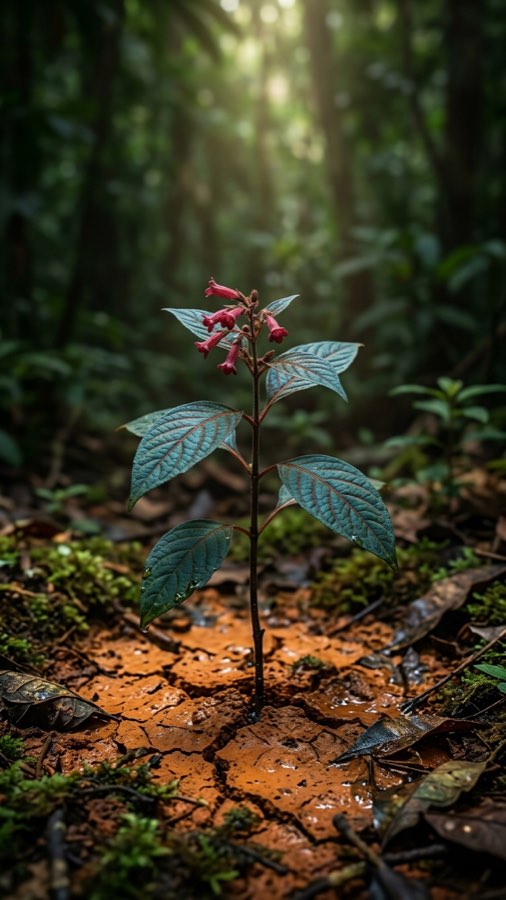
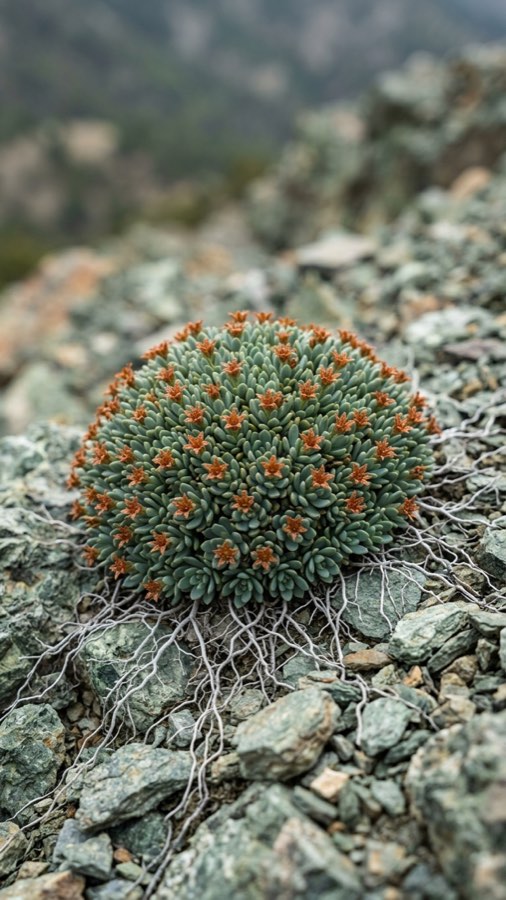
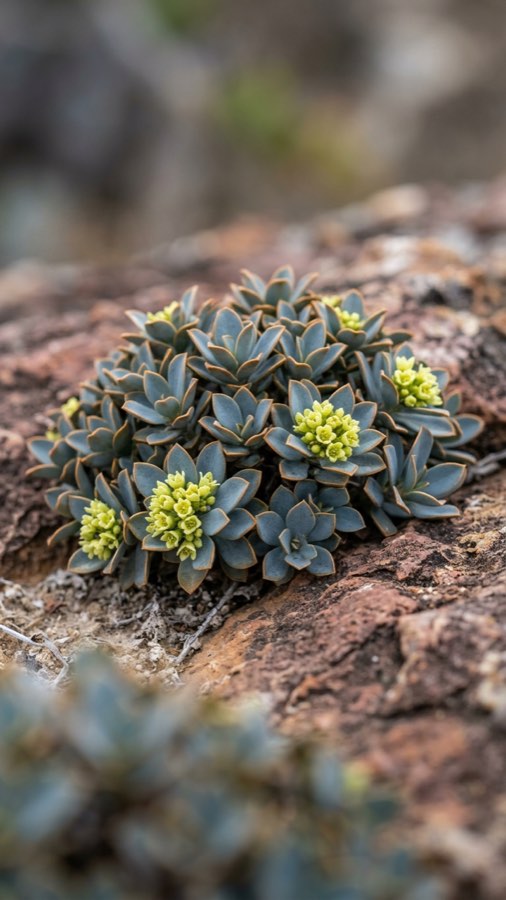
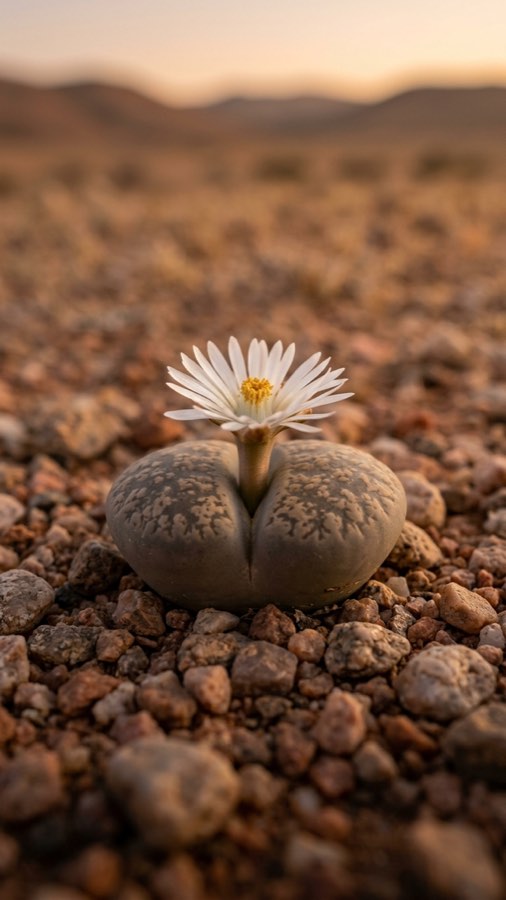
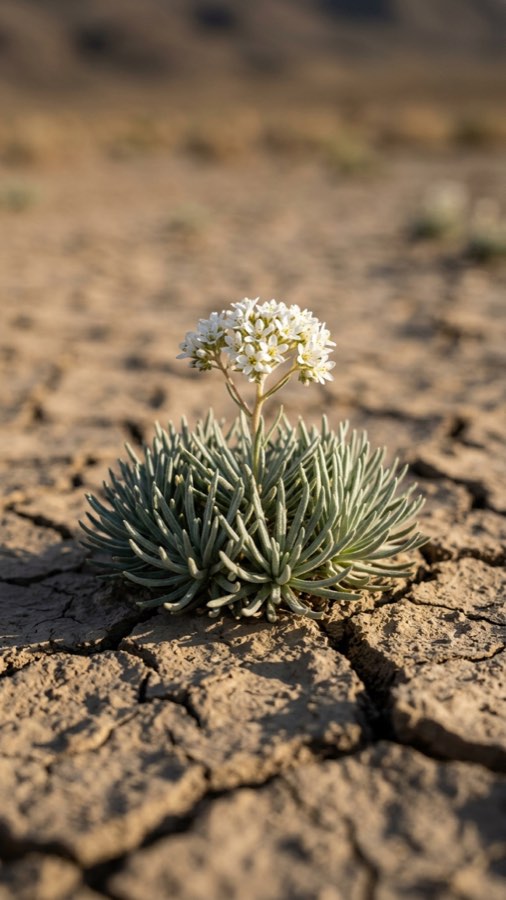
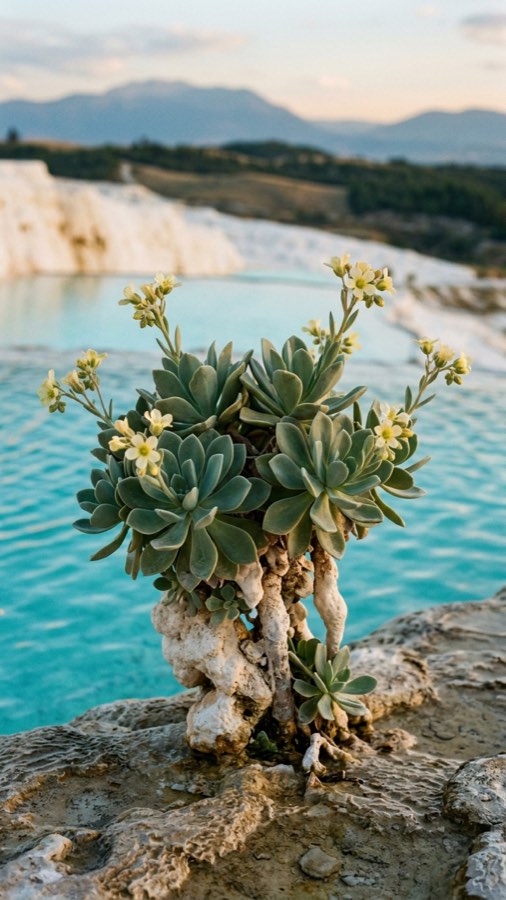
A perennial 10–16 cm tall, with thick grey-green leaves and small pale yellow-white flowers. Constantly touched by calcium-rich spring water, it is coated from its base in a white mineral crust; old plants eventually harden like stone in the very shape of their flowers.
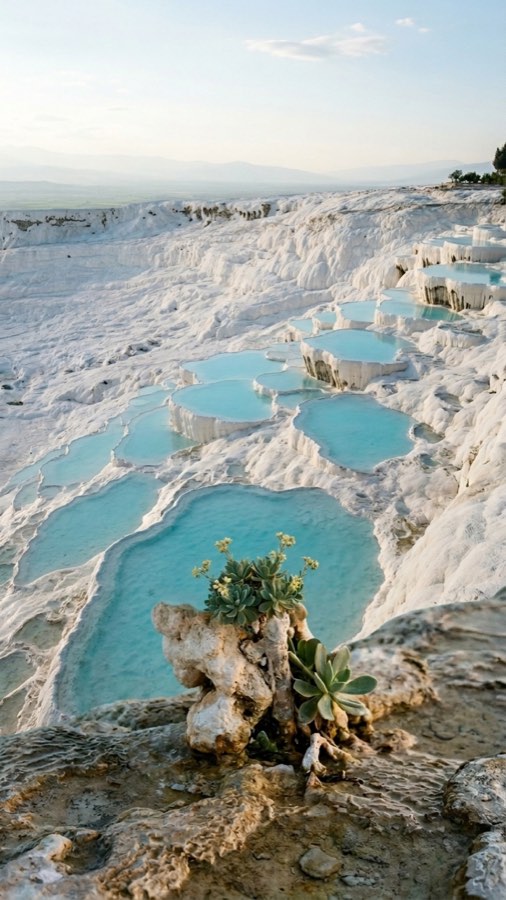 PLATE I
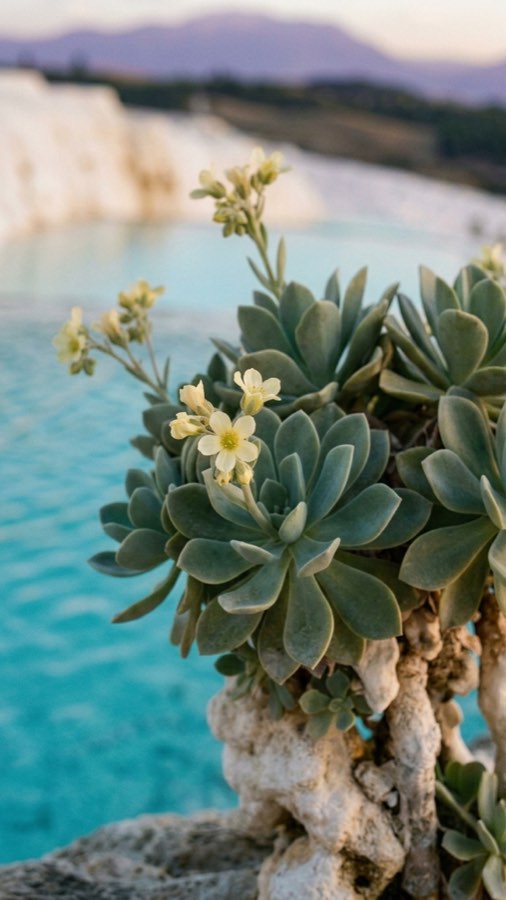 PLATE II
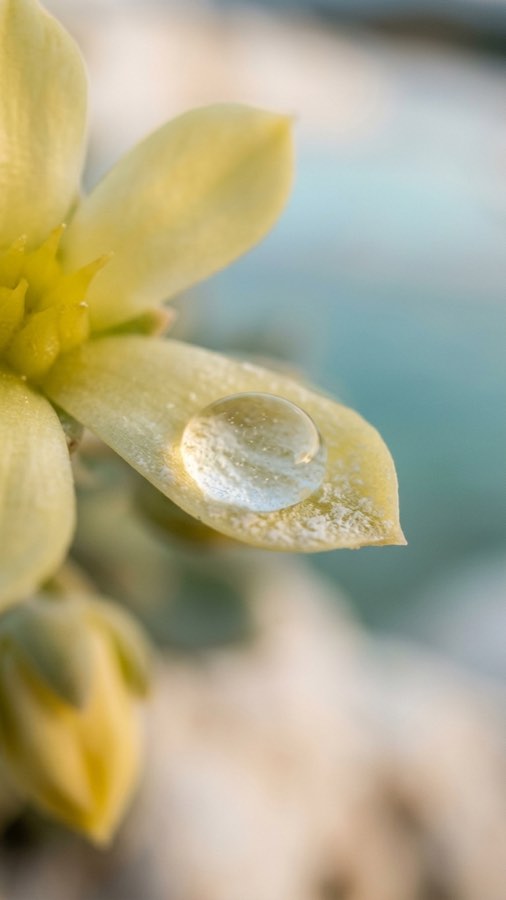 PLATE III
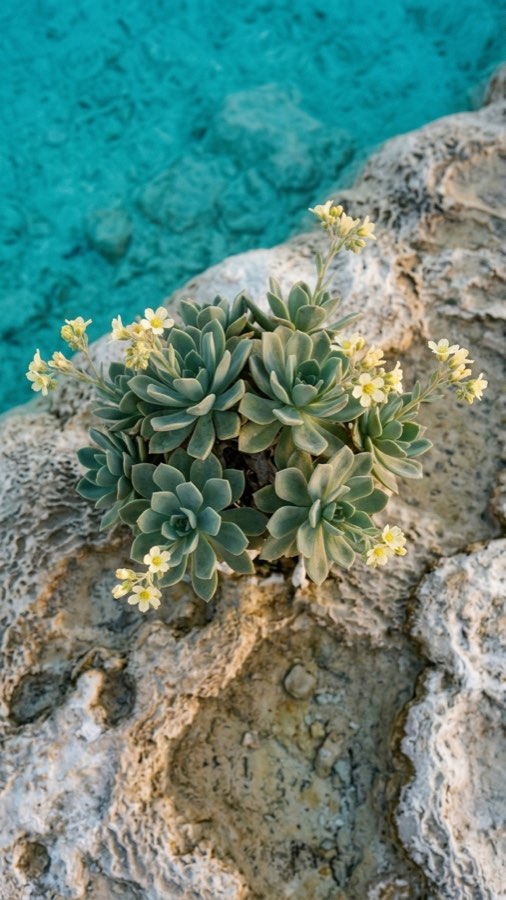 PLATE IV
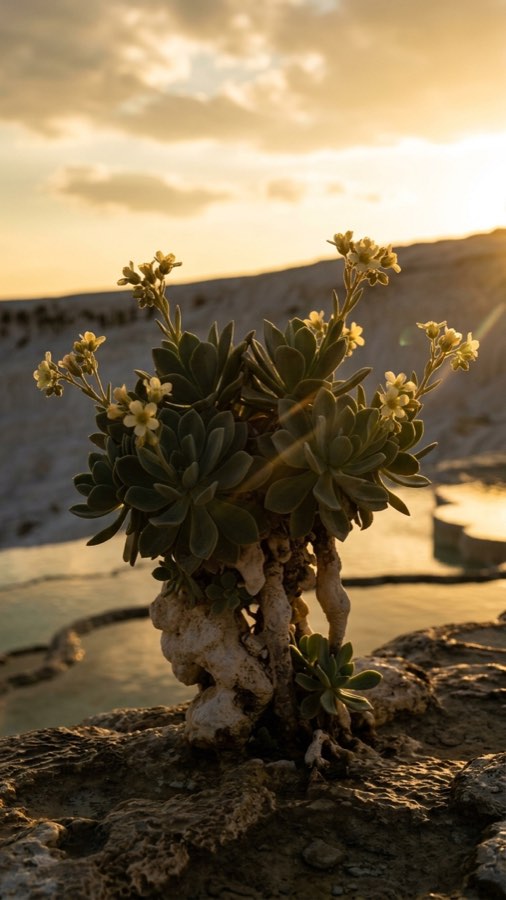 PLATE V
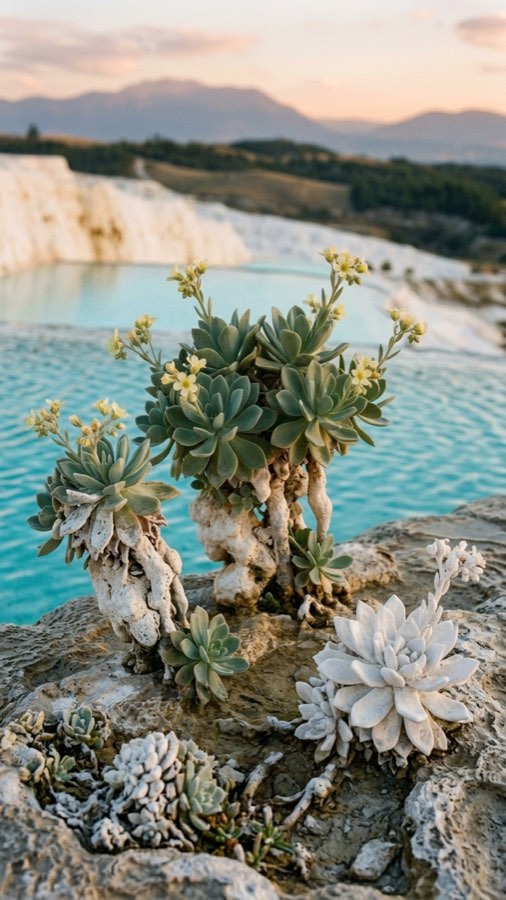 PLATE VI
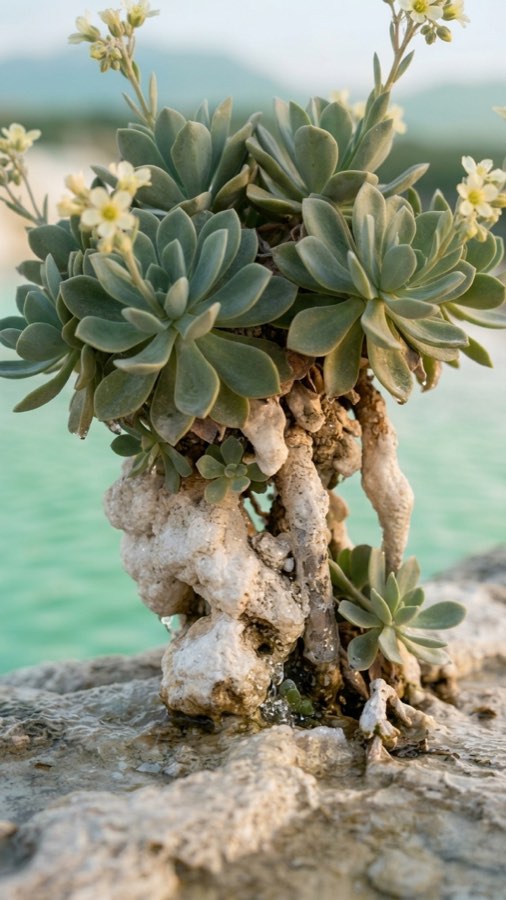 PLATE VIIPLATE VIII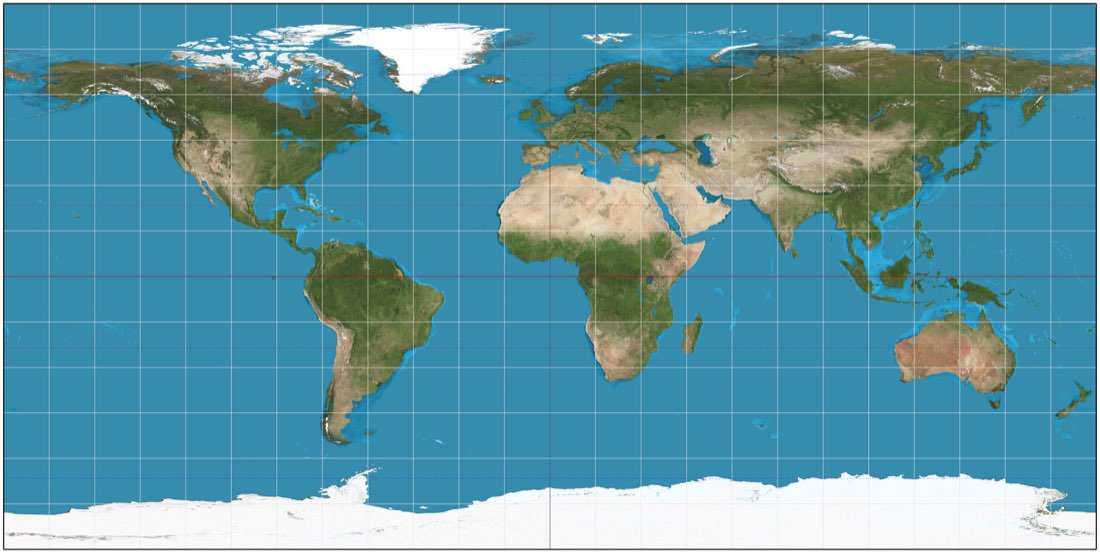
Only flowers touched by the spring water turn to stone.
Almost no one has seen that moment.
The white travertine terraces of Pamukkale, Turkey.
At the water's edge fed by calcium-rich springs, the Petrifying Bloom takes root.
Thick grey-green leaves spread low along the water's rim.
At their centre, a small pale yellow-white flower opens.
In late May, the pale yellow-white flowers were visible between the leaves only on mornings when the warm runnel had slightly weakened. They scarcely opened; the anthers stood close to the stigma, and the flower did not appear built to wait for wind or insects. Within days the perianth shrank, leaving a small capsule at the base. Along a travertine edge where every foothold is unstable, self-pollination seems the surer course.
When a ripe capsule was touched, it released fine brown seeds almost like dust. Dry, they are light enough for air to move them, yet in place they are quickly taken by the thin film of water passing beneath the leaves, sliding only a few dozen centimeters along the terrace lip before stopping. Seedlings cluster just downstream of older plants. Its failure to travel far is what stitches this species to the runnel edge.
The whitened old plants, seen from a short distance, look less like vegetation than small knobs of travertine. Even the green-gray living leaves are lost among algae and damp mineral deposits along the water’s lip. One old collection note appears to describe a “bryophyte-like encrustation on travertine,” but no specimen remains. Most living plants now occur on the narrow edges of restricted spring channels, where from the tourist paths they disappear into the white ground.