Almost no specimens, and no firm records, remain.
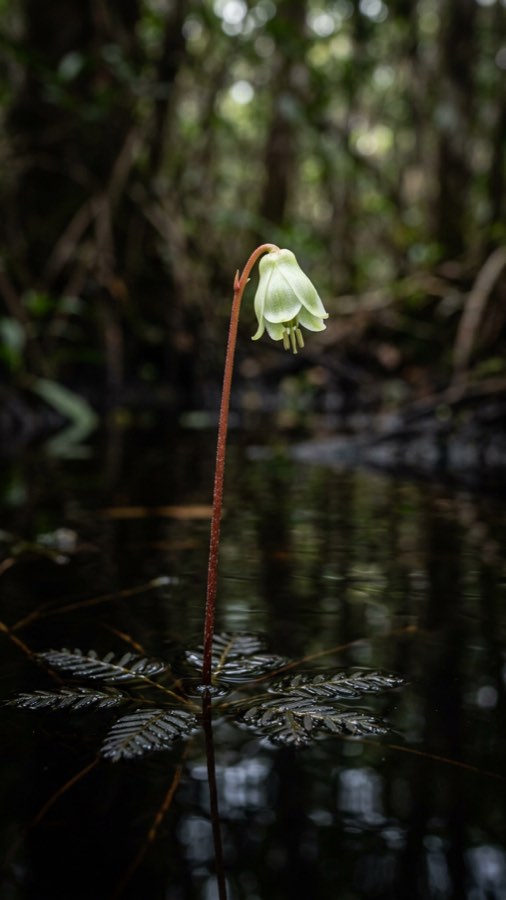
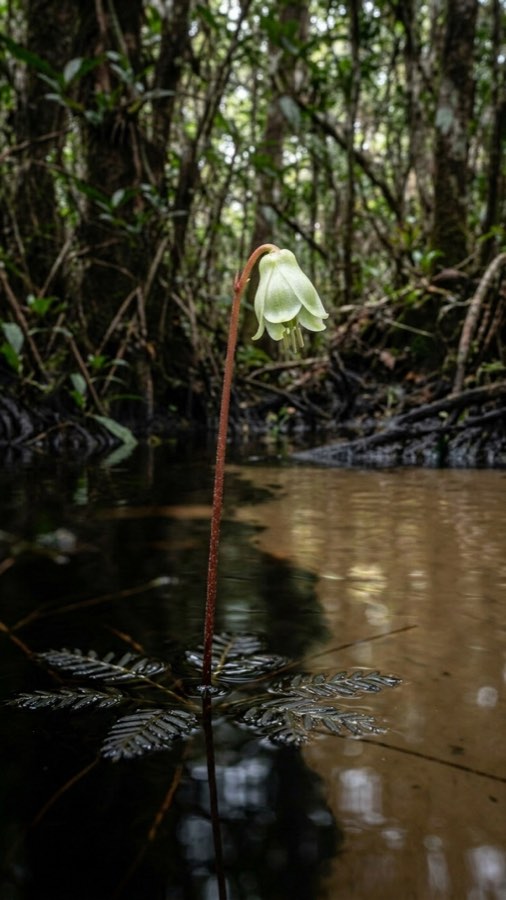
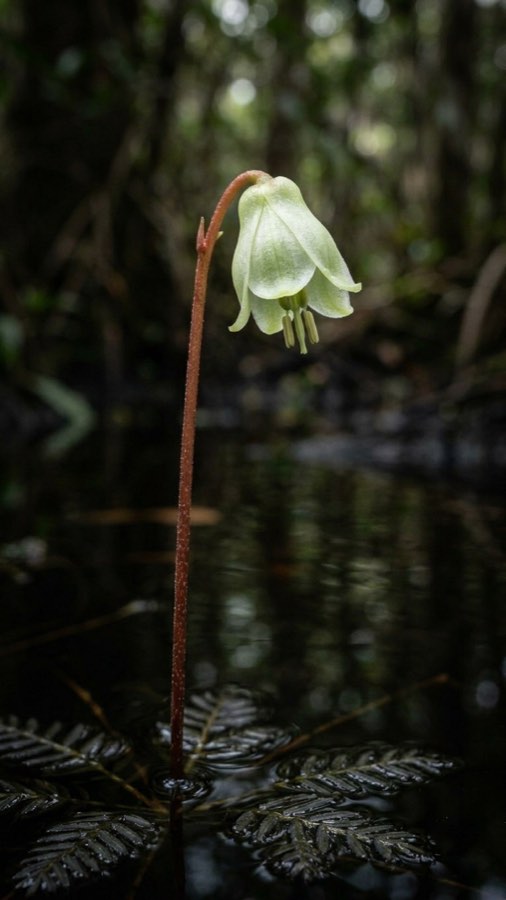
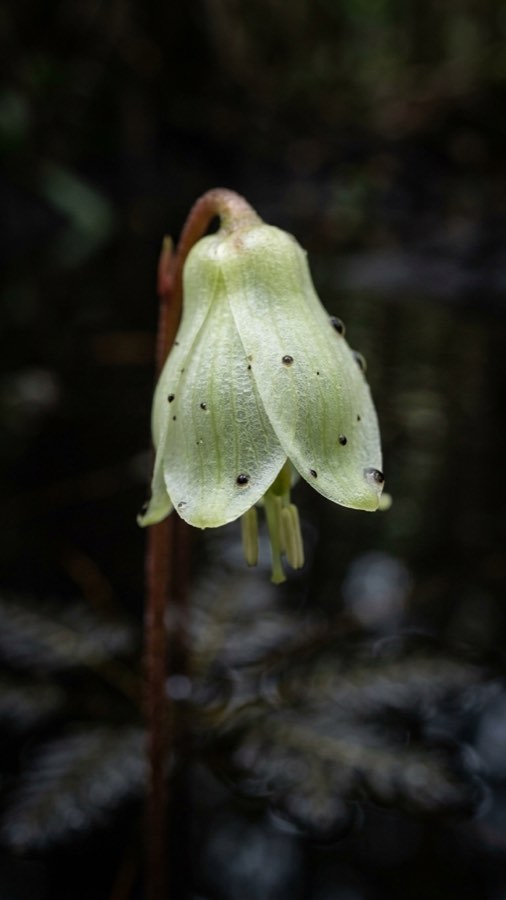
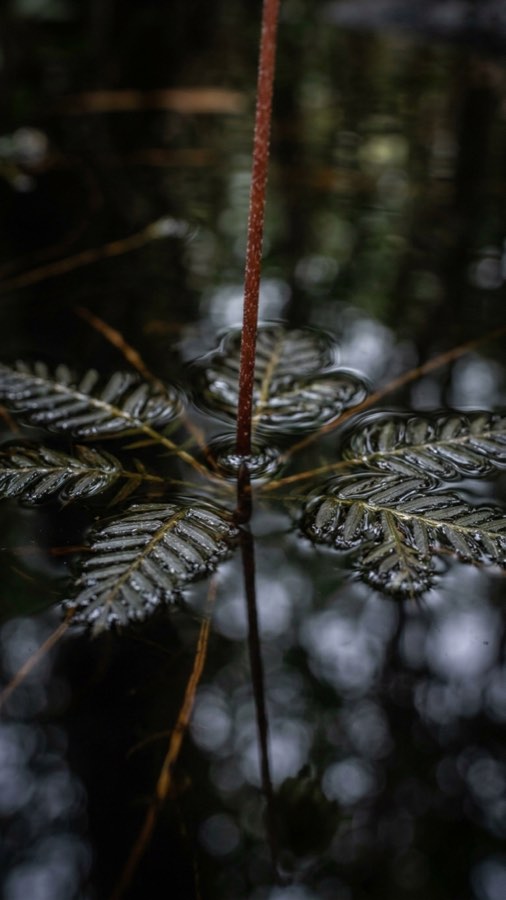
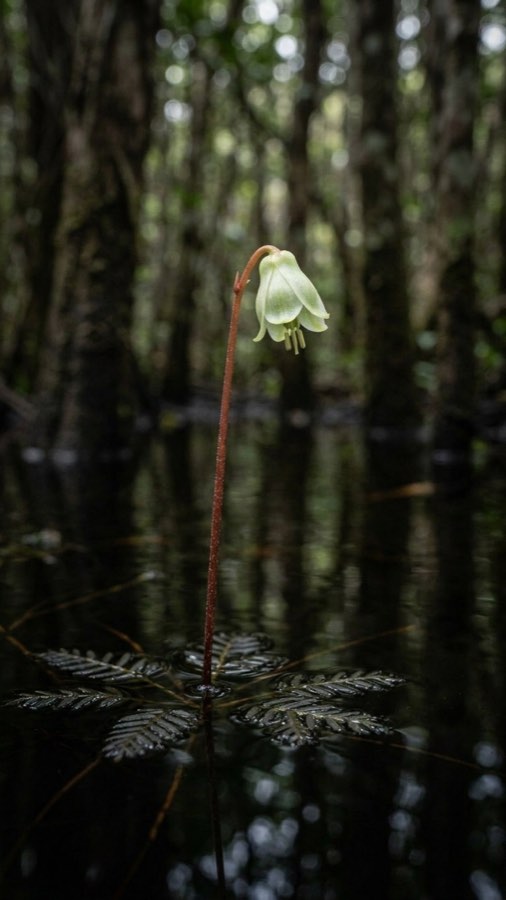
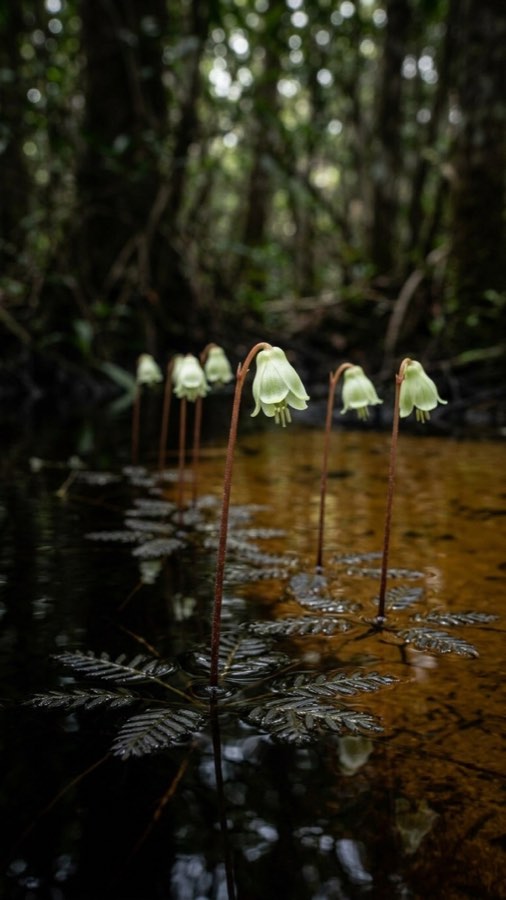
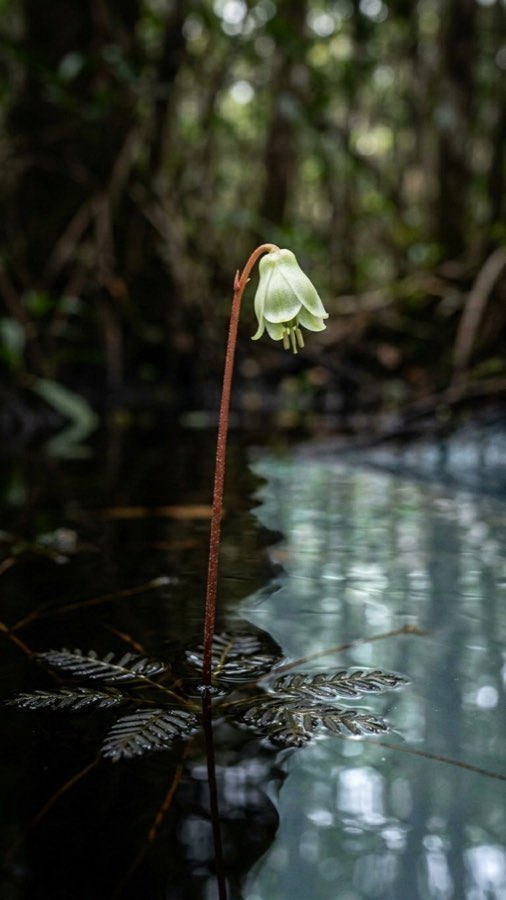
A perennial submerged plant that spends most of the year underwater. It raises a flower stalk neither where flooding is deepest nor longest, but only at the chemical border where two water masses mix and the acidity shifts sharply, just once. Because its appearance cannot be explained by water level, records long stayed unstable. Submerged, it spreads slender dark-olive leaves; when the waters meet it sends a reddish stalk to the surface and opens a single pale green-white waxy flower. It can stay in the air only the few days the mixing lasts.
PLATE I
PLATE II
PLATE III
PLATE IV
PLATE V
PLATE VI
PLATE VII
PLATE VIII
Almost no specimens, and no firm records, remain.
For it appears not by water level, but only where the water's nature changes just once.
Northern Brazil, the Rio Negro — a tale of a forest drowned in black water.
It spends most of the year on the riverbed, showing itself for only a few days.
Where clear tributary water enters the acidic black water — only at that border does a slender flower stalk rise.
It blooms neither where the water is deepest, nor where it stays longest.
The tributary water is not clear only after rain. Groundwater passing through white sand soils and old sandy terraces enters the igapo with little humic matter and very low conductivity. Plants of Rheomarginis are found only along the tongue-like edge where this transparent water thins the blackwater. A few paces away, at the same depth and light, leaves may persist but no flowering stalks rise. The plant’s map is drawn less by water level than by the history of the water mass.
On the day before flowering, the tips of the submerged leaves become slightly rigid against the current, and the primordium of a red stalk swells from a node of the rhizome. Water samples show that only then does pH rise abruptly while conductivity drops. It is not dryness perceived by roots, but a change in acidity and ion content sensed by leaves and rhizomes. In years when the confluence breaks within two days, buds halt below the surface and sink back among the leaves within a week.
The flower is solitary, but the colony is not a single plant. Slender rhizomes in the mud link nodes from several years, and fragments broken by floodwater can root if held in slack water. During flowering, small water-edge flies settle on the waxy tepals and carry the pale pollen. When visits are scarce, the anthers bend inward, apparently allowing partial selfing. The seeds are light and gather in slow eddies along the mixing edge, yet rhizome renewal is the surer means of persistence.