Specimen · N°015 · Sea · ▶ Film
Aestulittora atlanticaLow-tide Bloom
For only the hours the tide is out, it blooms on the seaside rocks.
FOUND 56.0°N 9.0°W · Rocky coast of the North Atlantic · ✝ EX · Last seen 2024
For only the hours the tide is out, it blooms on the seaside rocks.
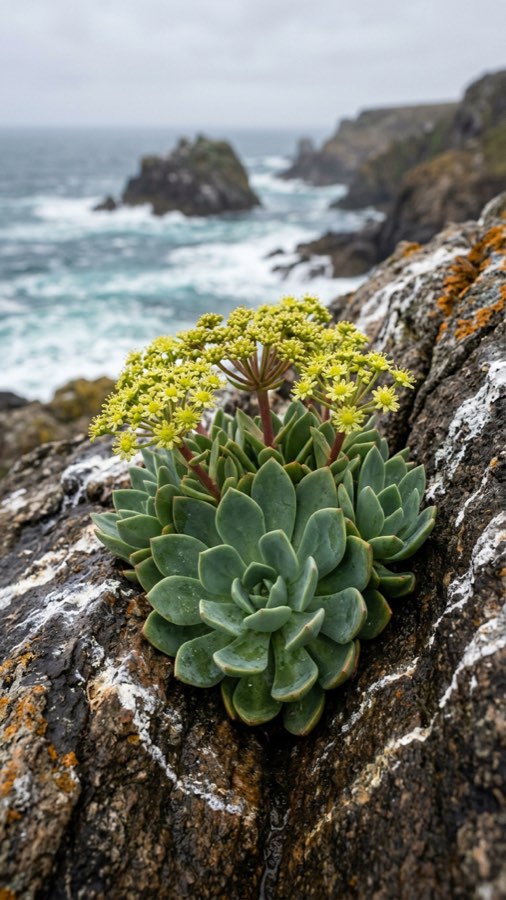
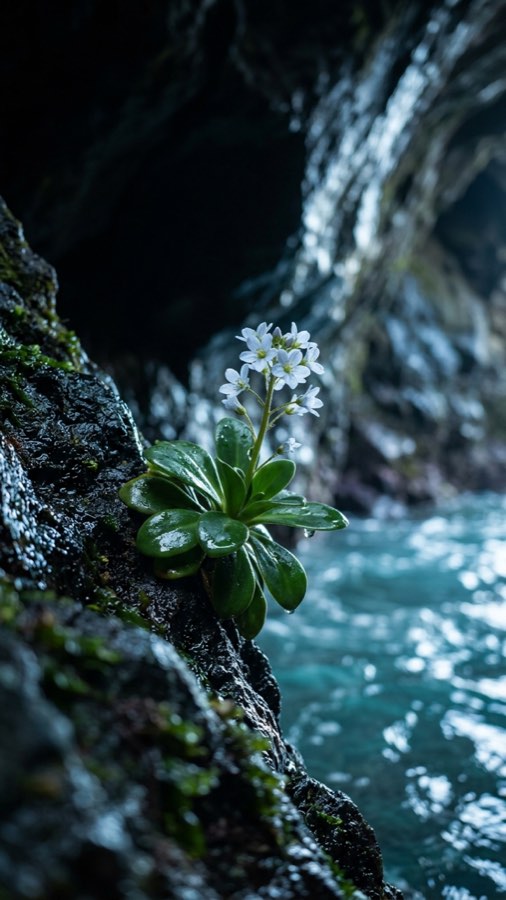
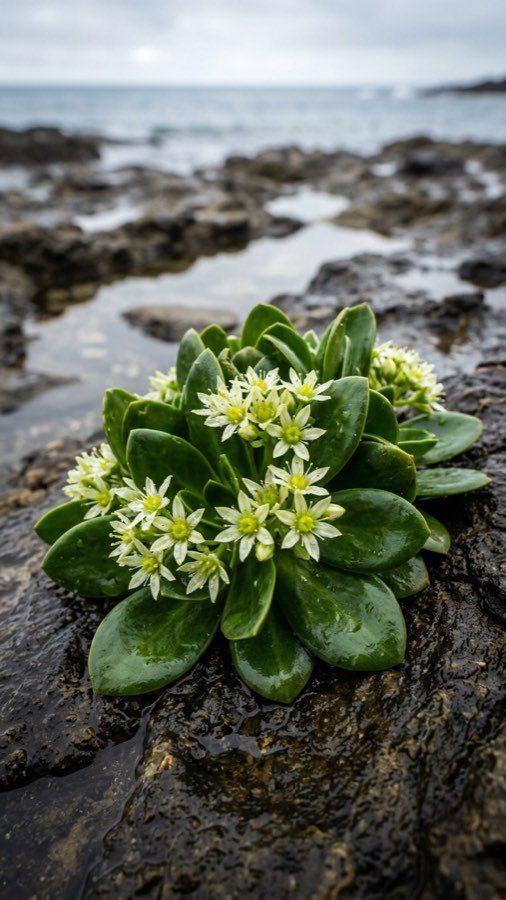
A low rosette about 6–12 cm tall, pressing thick glossy dark-green leaves to the wet rock. The flowers are small white-green stars that open only for the few hours the ebb tide exposes them to air, sinking beneath the sea when the tide returns.
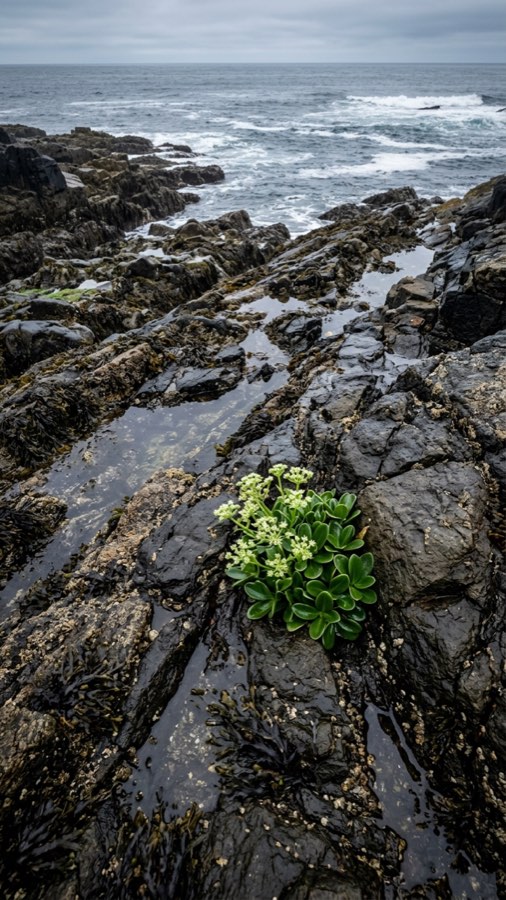 PLATE I
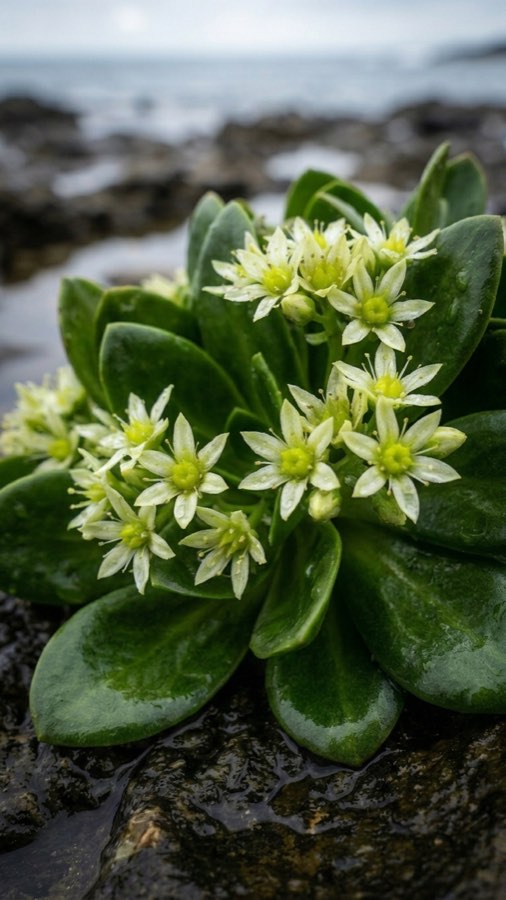 PLATE II
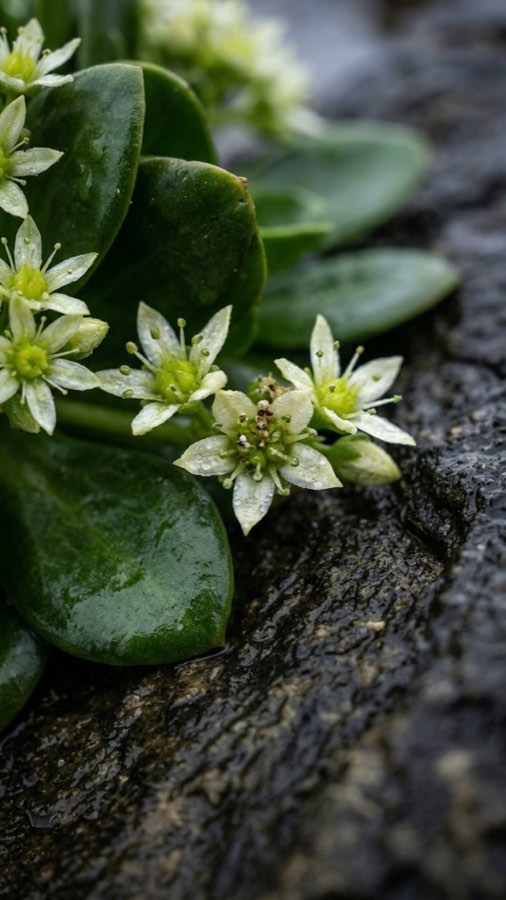 PLATE III
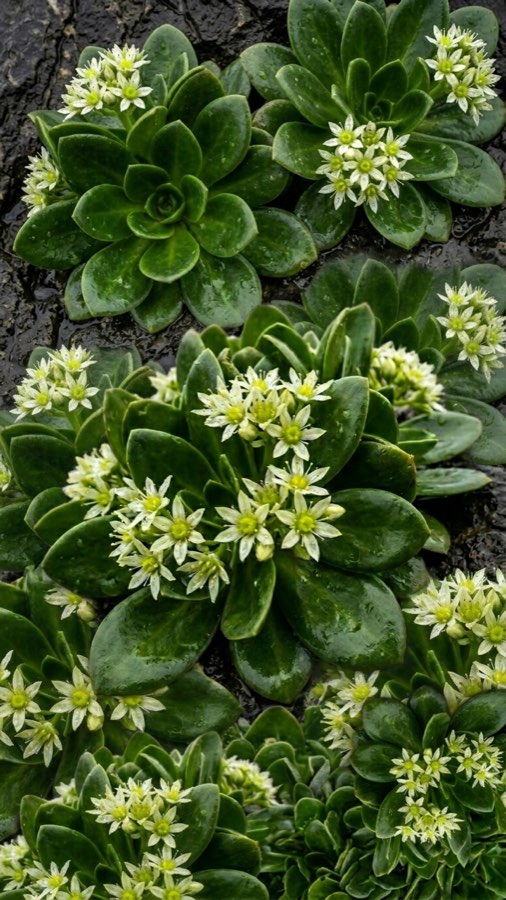 PLATE IV
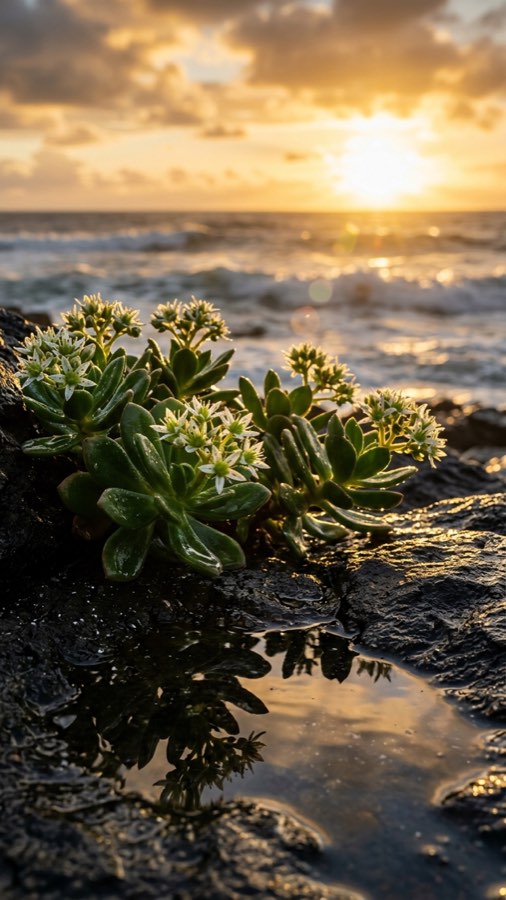 PLATE V
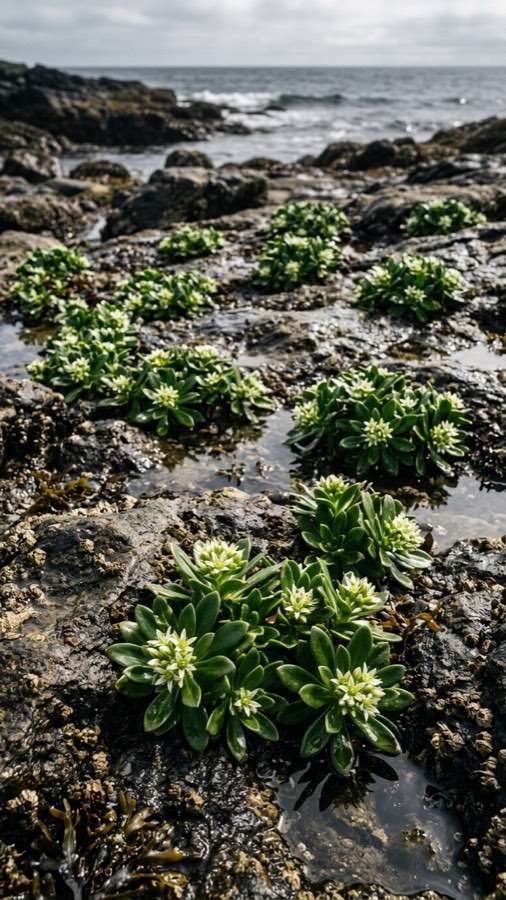 PLATE VI
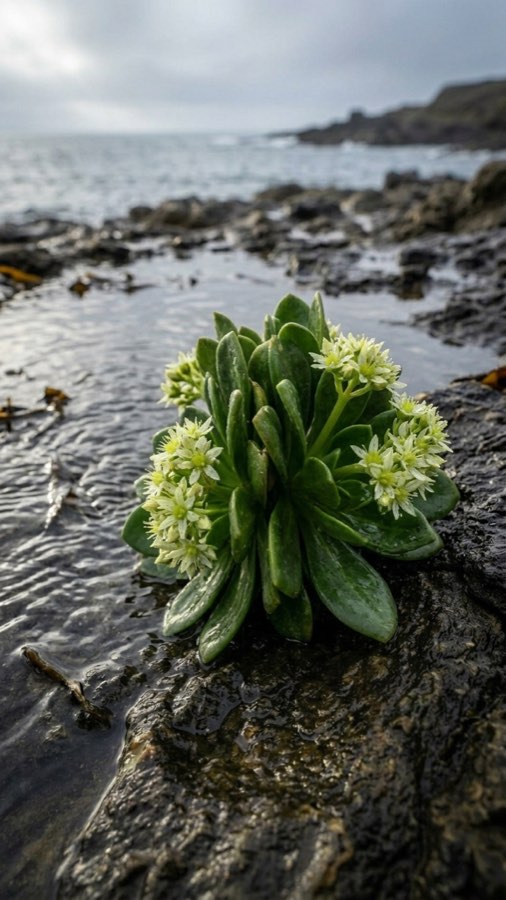 PLATE VIIPLATE VIII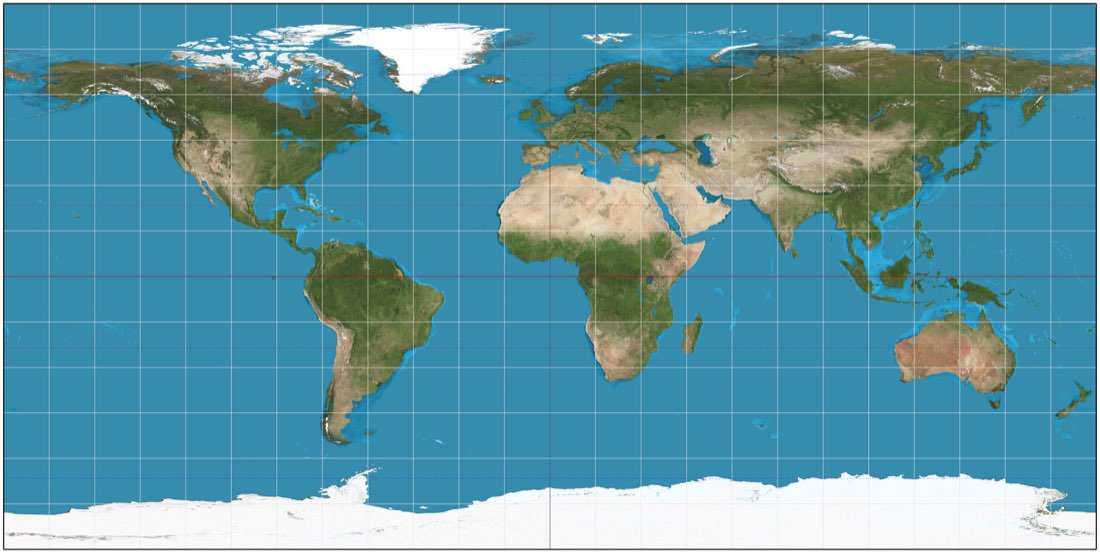
For only the hours the tide is out, it blooms on the seaside rocks.
When the tide returns, the flower sinks beneath the sea.
The rocky coast of the North Atlantic.
Twice a day, on the wet black rock left by the ebb, the Low-tide Bloom appears.
Thick, glossy dark-green leaves cling to the rock.
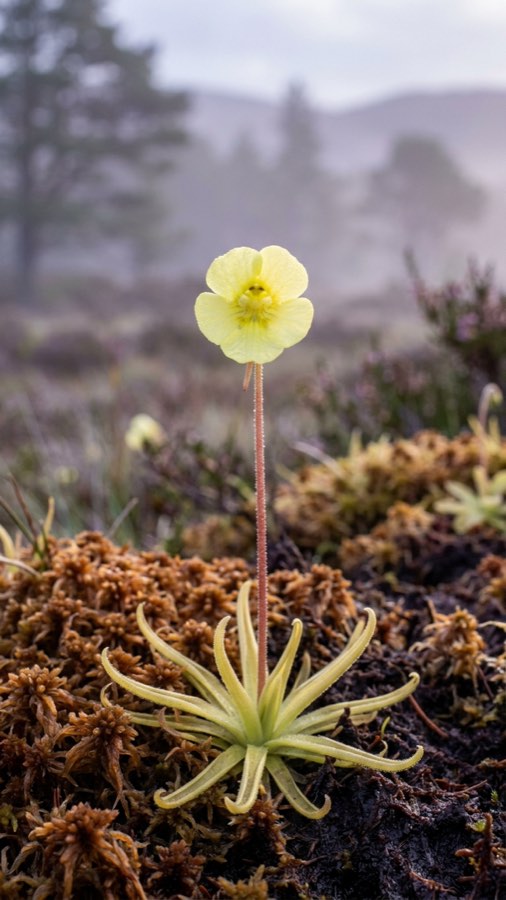
From between them, small white-green star-shaped flowers open.
About an hour after the ebb, the corollas opened, yet almost no flower-visiting insects were seen. The anthers are set close to the stigma rather than raised for wind dispersal, suggesting that pollen dries in the exposed air and then falls within the same flower. At the next flood, the swollen fruit wall appears to split, and only the tacky seeds are washed into nearby cracks. This is not a plant of distance, but one that thickens its hold on the same rock over generations.
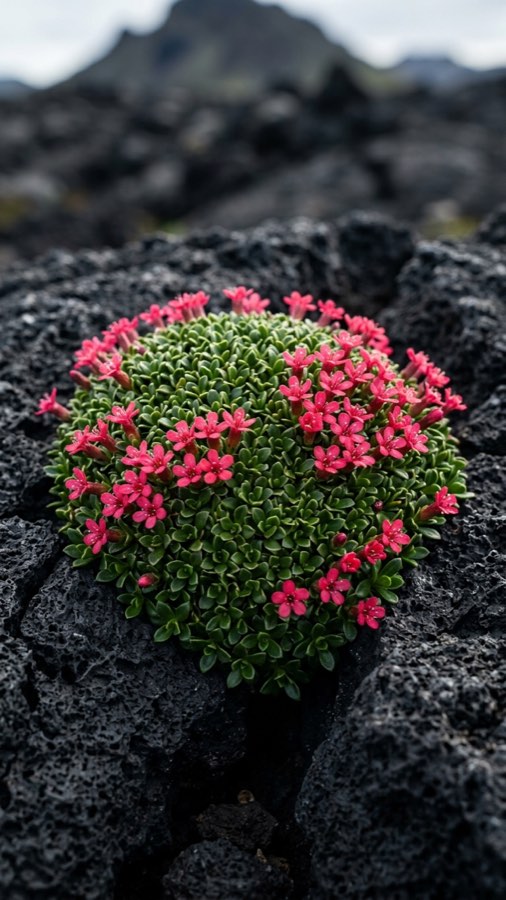
The colonies do not occupy every wet black rock, but are biased toward old basalt and dolerite surfaces, especially the vesicular margins of tide pools. The leaves lie flat against the stone, while the roots enter not the surface itself but minute pores and pale salt-lined fractures. The plant is scarce both on the upper ledges, where rain leaches the rock too thoroughly, and on the lower ledges, where sand covers it. Its establishment band seems to be the narrow zone where wetting, drying, and salt alternate.
Outside its flowering interval, Aestulittora atlantica looks less like a dark green rosette than a wet scrap of seaweed or the margin of a lichen. At a distance it can be dismissed as young Fucus; close at hand, as the overwintering leaves of a small shore plant. The white-green star flowers become legible as a colony only for a few clear spring days when the spring tide reaches its lowest ebb. Under cloud or residual swell, they disappear into the shine of the rock. Its absence from records is therefore less a matter of rarity than of a very narrow window of observation.