Specimen · N°014 · Volcano · ▶ Film
Cineranthus vulcanicusAshveil Flower
It blooms only the year after a volcano erupts.
FOUND 7.5°S 110.4°E · A volcano in Indonesia · ✝ EX · Last seen 2017
It blooms only the year after a volcano erupts.
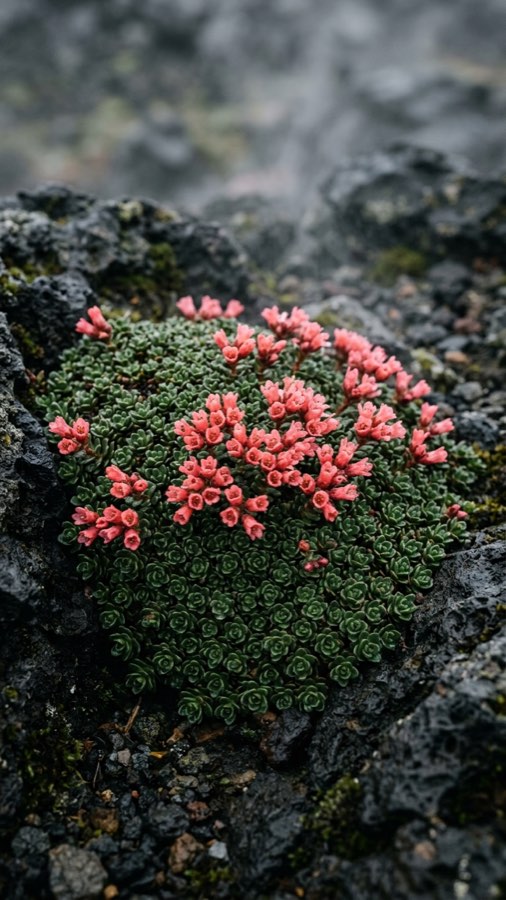
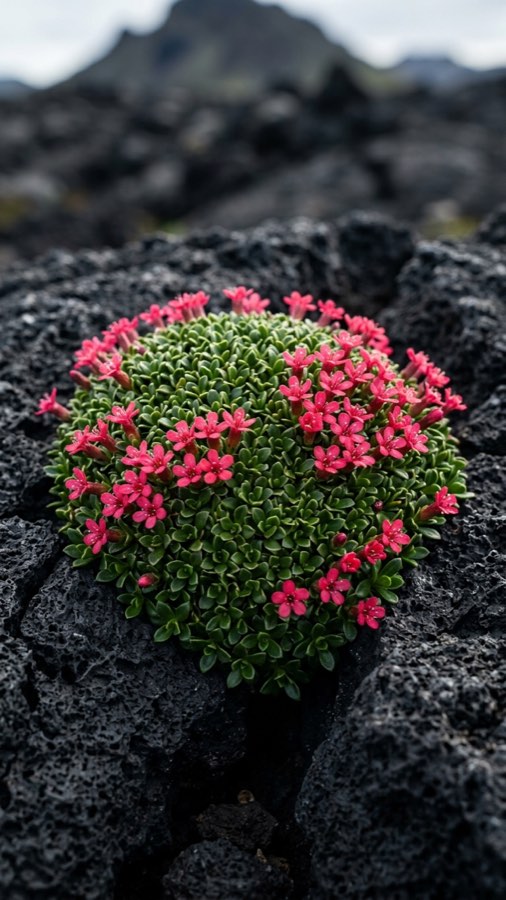
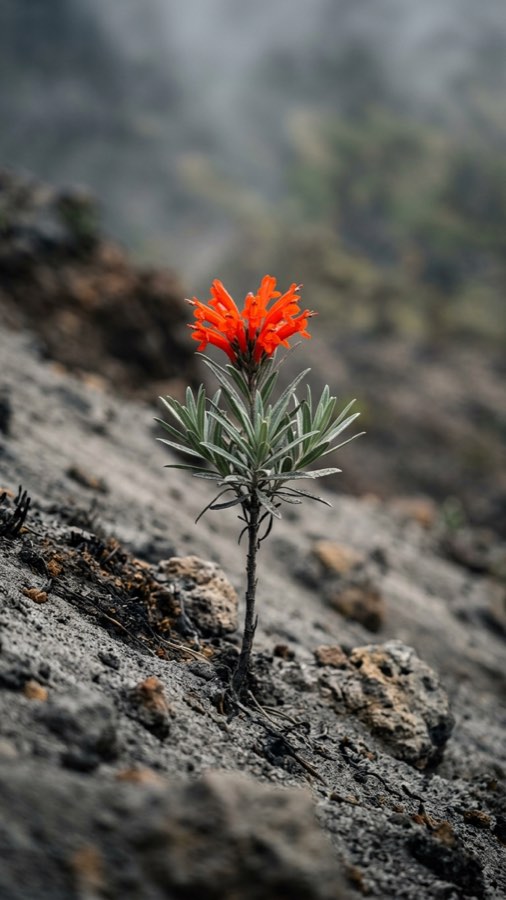
A slender annual about 12–18 cm tall, with thin green leaves dusted in ash and vivid scarlet tubular flowers. It germinates only on the heat and nutrients an eruption brings, blooming as if returning colour to the ash.
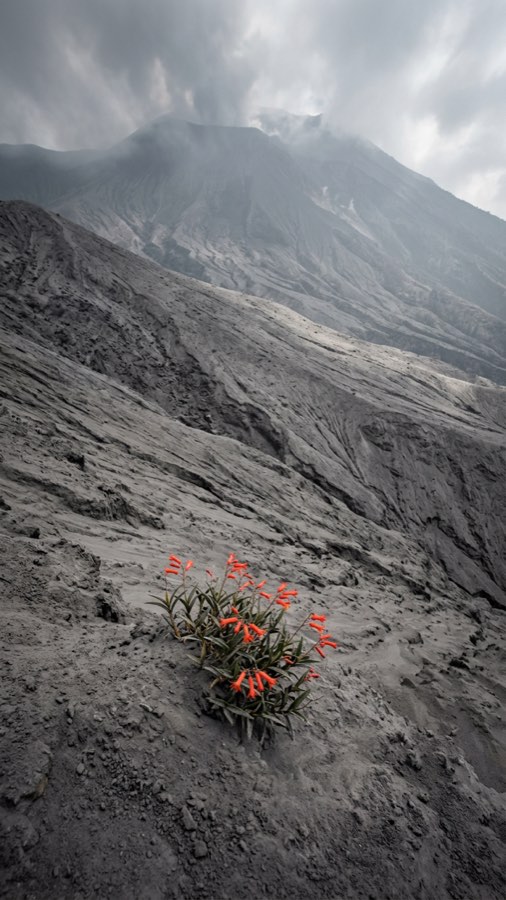 PLATE I
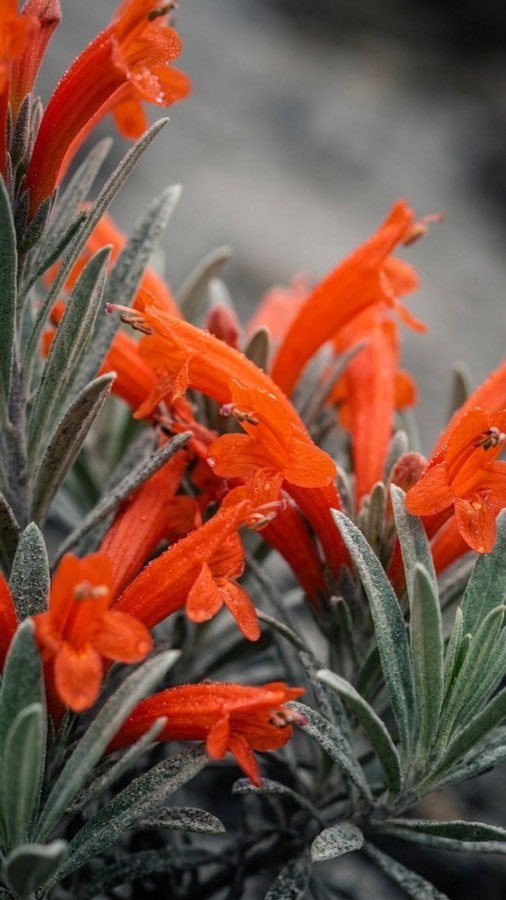 PLATE II
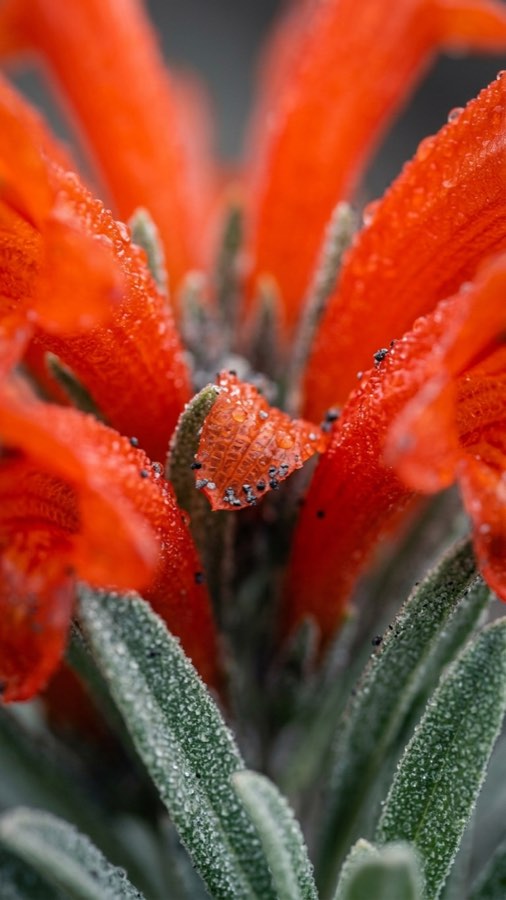 PLATE III
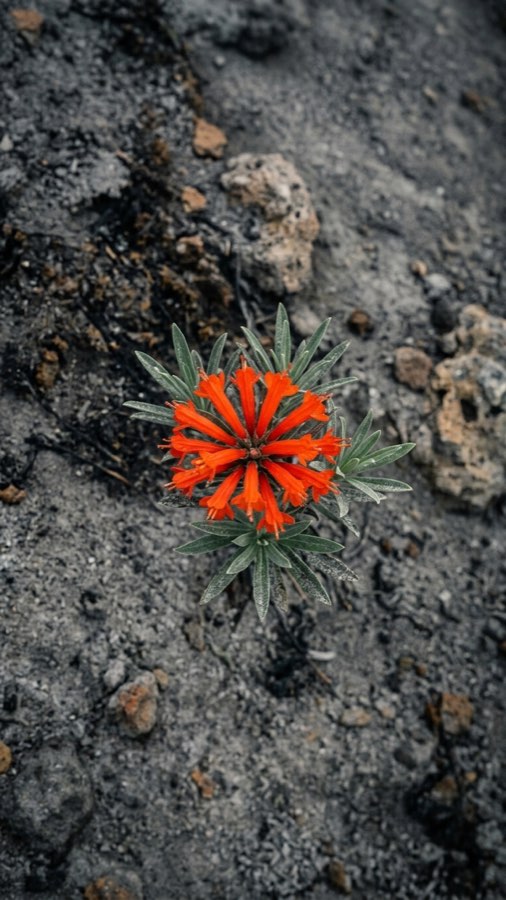 PLATE IV
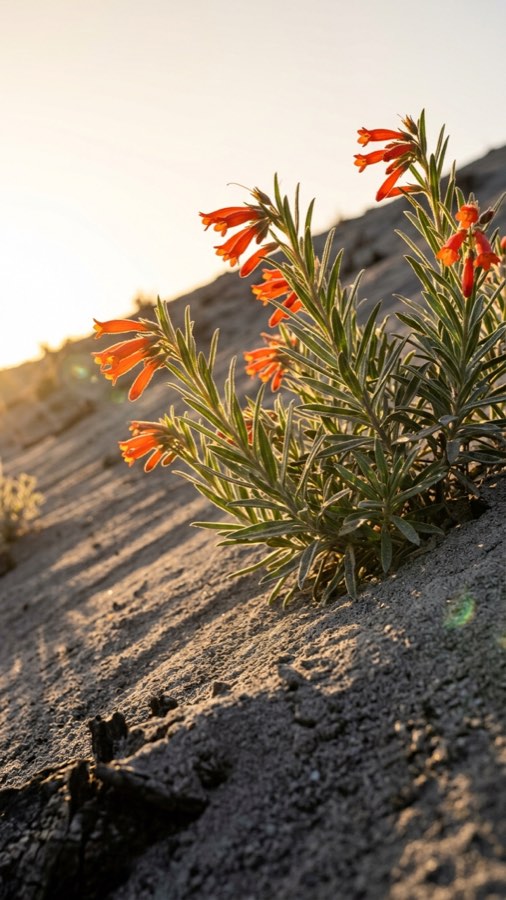 PLATE V
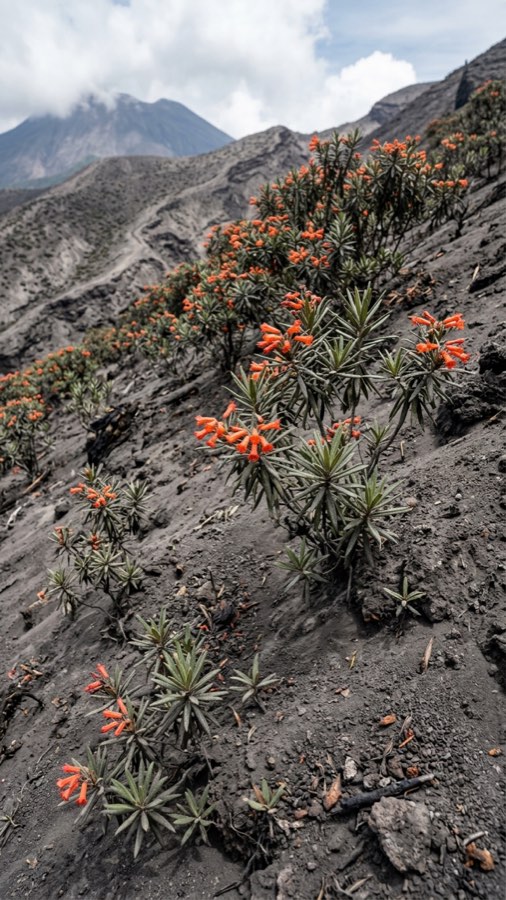 PLATE VI
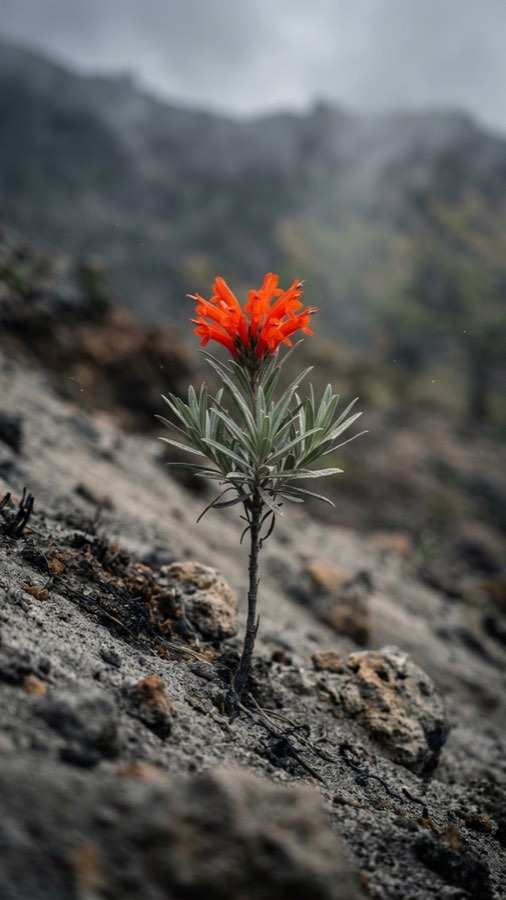 PLATE VIIPLATE VIII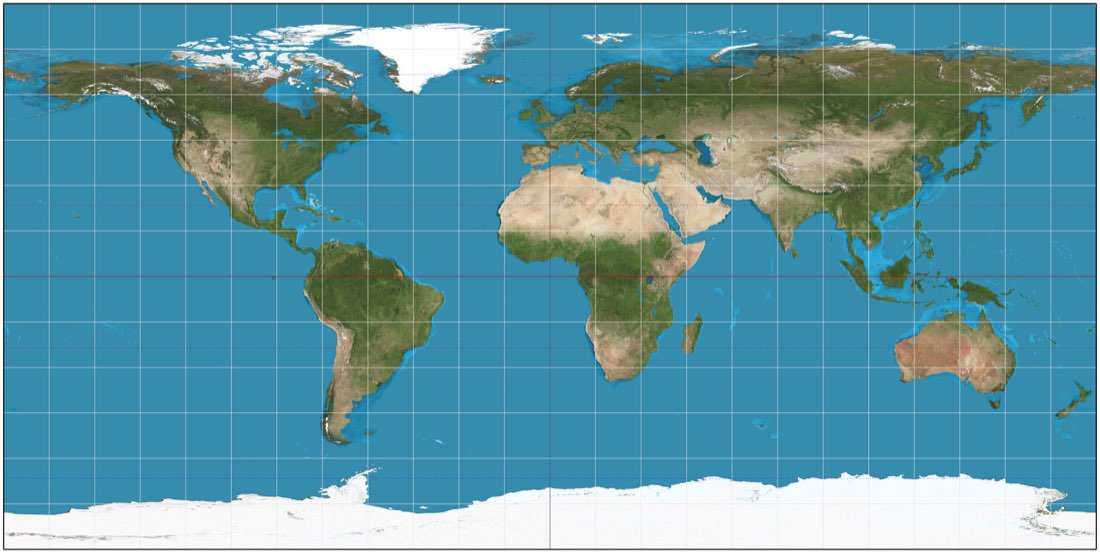
It blooms only the year after a volcano erupts.
To a slope of nothing but ash, colour suddenly returns.
A volcano in Indonesia, just after an eruption.
On ash slopes where no plant has returned, the Ashveil Flower appears all at once.
Thin green leaves dusted with ash rise here and there across the slope.
At their tips, vivid scarlet tubular flowers open.
Flowering is weighted toward dawn and the morning, when the vermilion tubes stand out sharply against the grey slope. A thin nectar lies deep in the corolla, reached only by white-eyes and large bees crossing the post-eruption barrens. Fruit set is sparse for the number of flowers, yet the whole stand blooms at once, and a few days of wind, birds, and bees appear sufficient.
After flowering, the capsules dry and split into three valves, spilling minute black-brown seeds onto the ash. They are too small and light to travel far; with the first rains they sink into cracks in the volcanic sand and beneath lapilli. By the time later herbs root over the slope, no trace remains above ground, but dormancy below the heat-scorched surface is the most likely explanation.
People on the slope also call the plant api tersisa in Indonesian and turahing geni in Javanese, both meaning roughly 'what is left of fire.' It flowers best after a major eruption has vented pressure from the mountain, leaving only fine ash in the following season. The belief that its bloom foretells quiet is less a prophecy than a field rule for reading post-eruption terrain and volcanic behavior.