Specimen · N°010 · Volcano · ▶ Film
Vaporanthus islandicusSteambloom
On a freezing morning, steam rises around this flower alone.
FOUND 64.1°N 20.3°W · Geothermal field of Iceland · ✝ EX · Last seen 2024
On a freezing morning, steam rises around this flower alone.
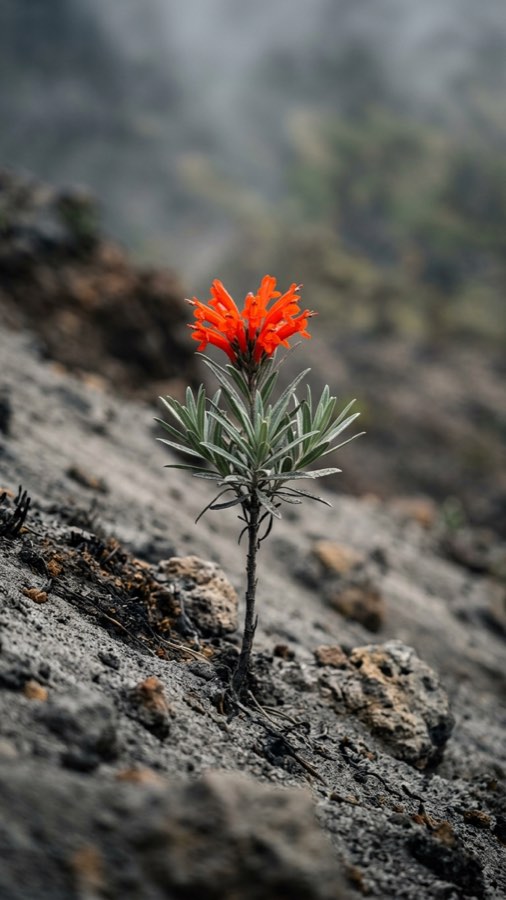
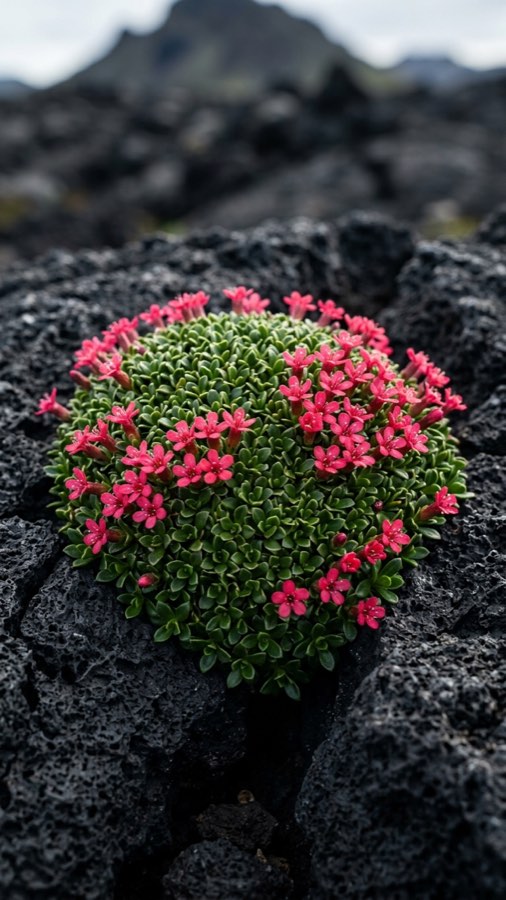
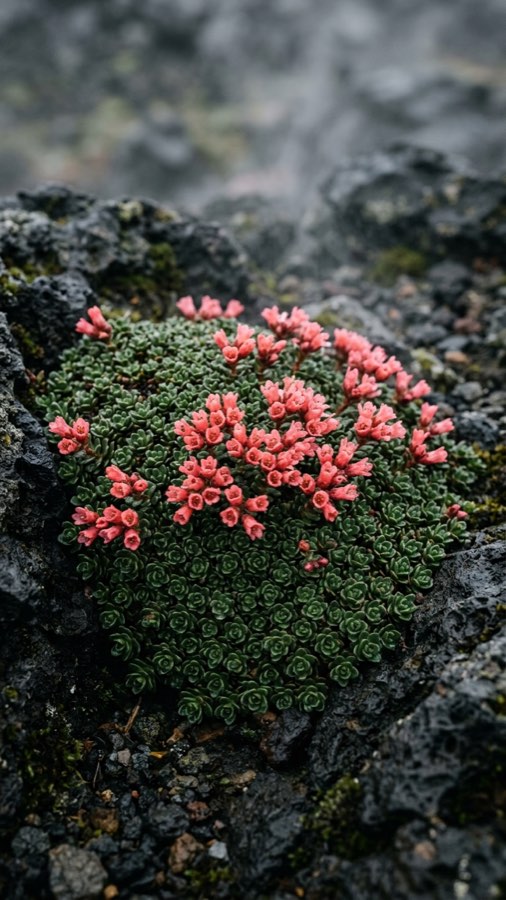
A cushion-forming perennial about 7–12 cm tall, its small dark-green leaves overlapping into a cushion. The flowers are small coral-coloured tubes in clusters. On cold mornings, air warmed by the ground's heat rises as steam around the plant alone.
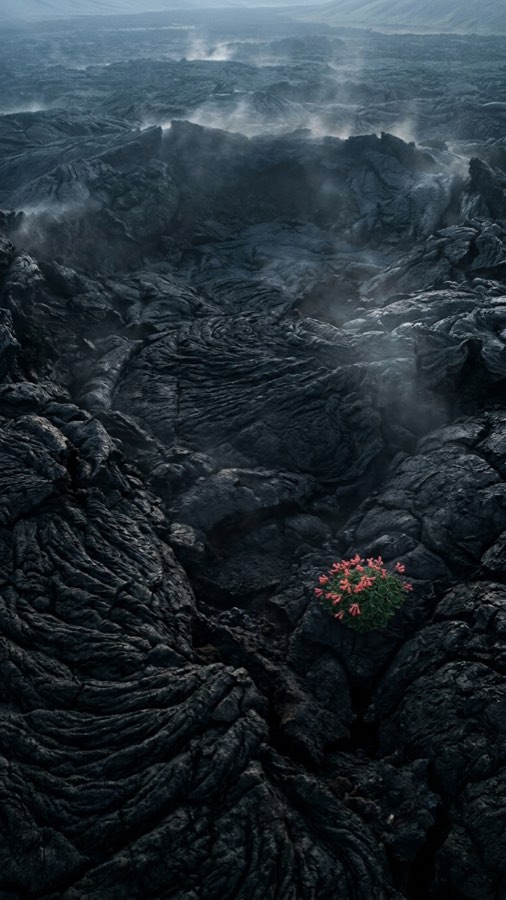 PLATE I
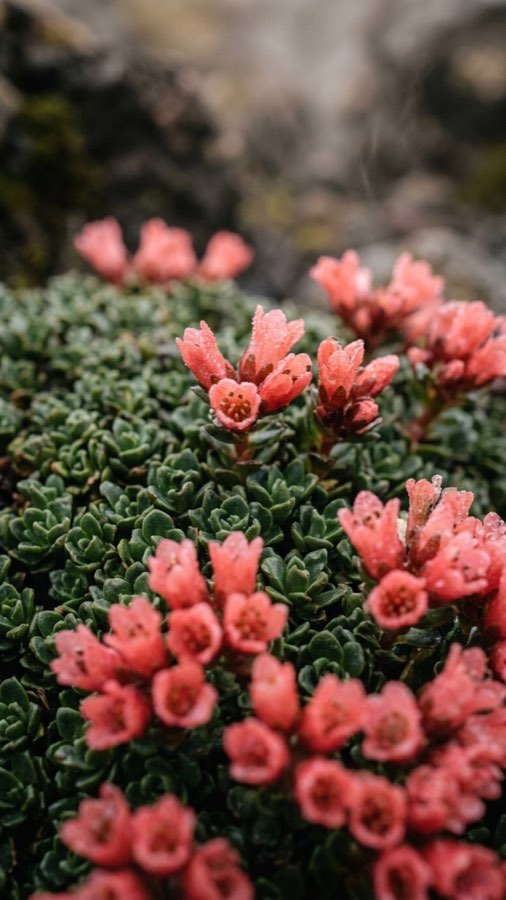 PLATE II
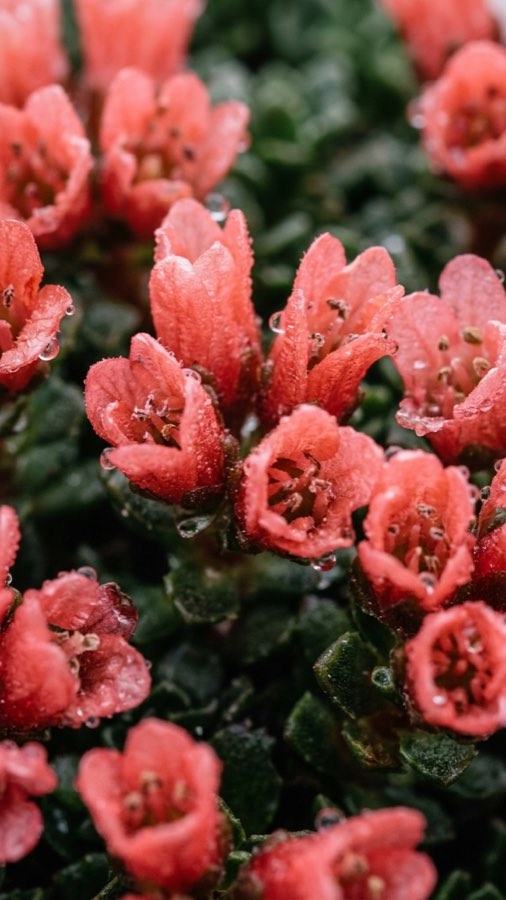 PLATE III
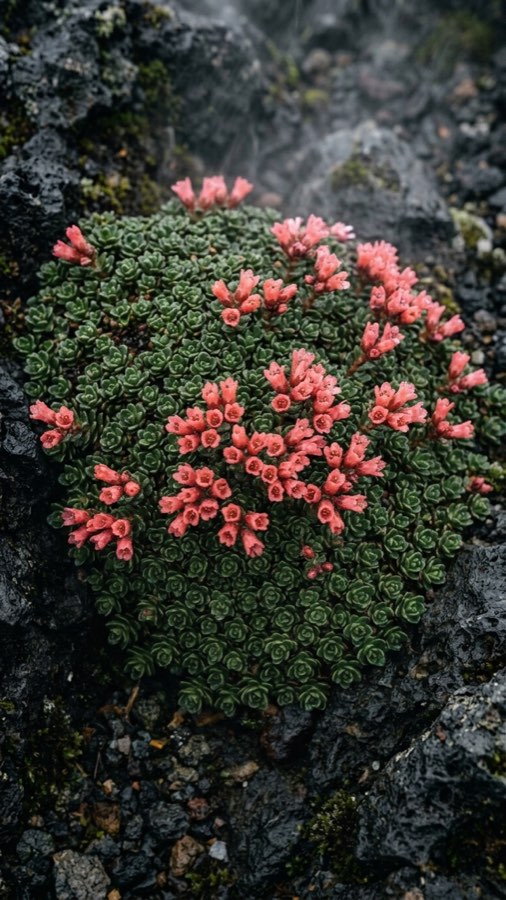 PLATE IV
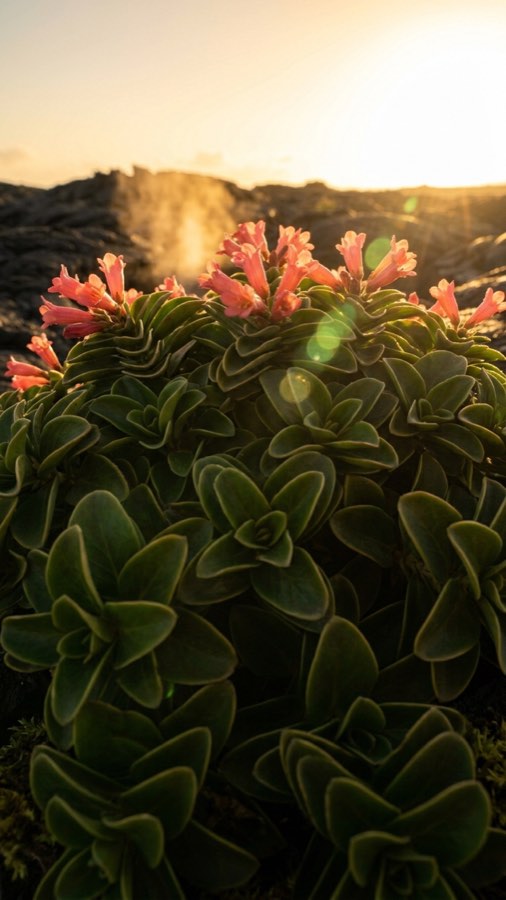 PLATE V
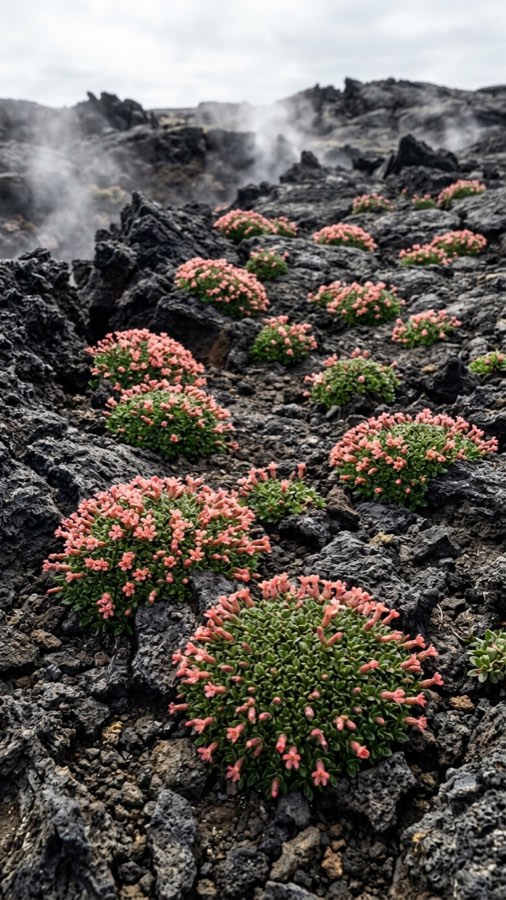 PLATE VI
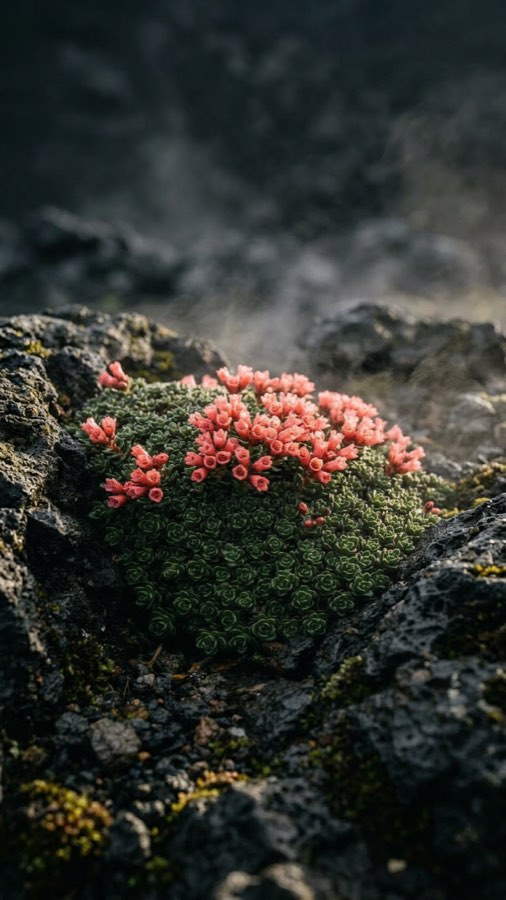 PLATE VIIPLATE VIII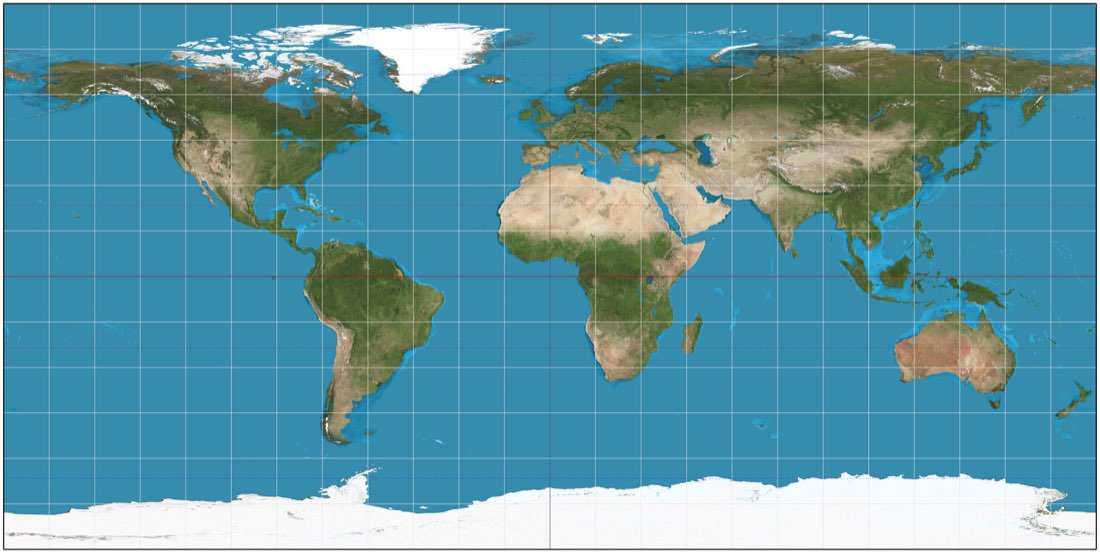
On a freezing morning, steam rises around this flower alone.
As if the ground breathed there, and only there.
The geothermally warmed lava field of Iceland.
In hollows where the ground is still faintly warm, the Steambloom blooms.
Small dark-green leaves overlap densely into a cushion.
Upon it, many small coral-coloured tubular flowers open in a cluster.
Vaporanthus appears to flower for only two or three weeks in early summer, when the contrast between ground heat and cold air is greatest. By afternoon the vapor has vanished, and its dark green cushions sink visually into black lava hollows, easily confused with mosses or young Saxifraga. Several old specimens labelled as dwarf Silene may belong here, judging from the hairs inside the floral tube and the overlapping leaves.
The tubular flowers look conspicuous, yet their openings are narrow; on still, bright mornings, pollen streaks suggest visits by small hoverflies. Their size would also suit minute nocturnal moths. In windy years, however, the anthers seem to bend inward onto the stigma, allowing selfing. The cushions are linked by short underground rhizomes and form palm-sized colonies along warm fractures in the lava.
Old route notes for sheep tracks in the southwest contain scattered references to gufublóm, literally “vapor flower.” Shepherds likely connected mornings when white breath rose only above these plants with changes in geothermal water level or minor seismic movement. The belief was less a prophecy than a practical geography: a way of reading frost, wind direction, and the smell of sulphurous steam.