Specimen · N°011 · Salt · ▶ Film
Halophilanthus uyunensisSalt Ember
On a land of nothing but salt, a single flower blooms.
FOUND 20.1°S 67.5°W · Salar de Uyuni, Bolivia · ✝ EX · Last seen 1975
On a land of nothing but salt, a single flower blooms.
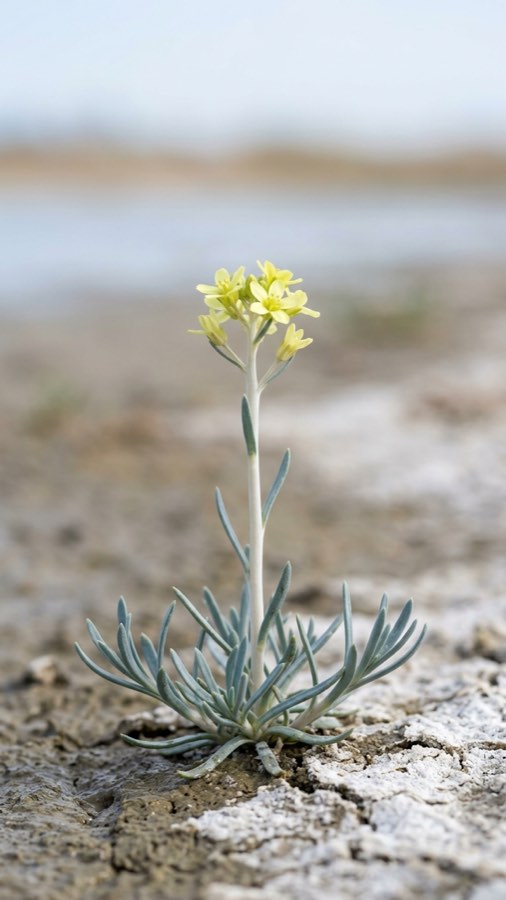
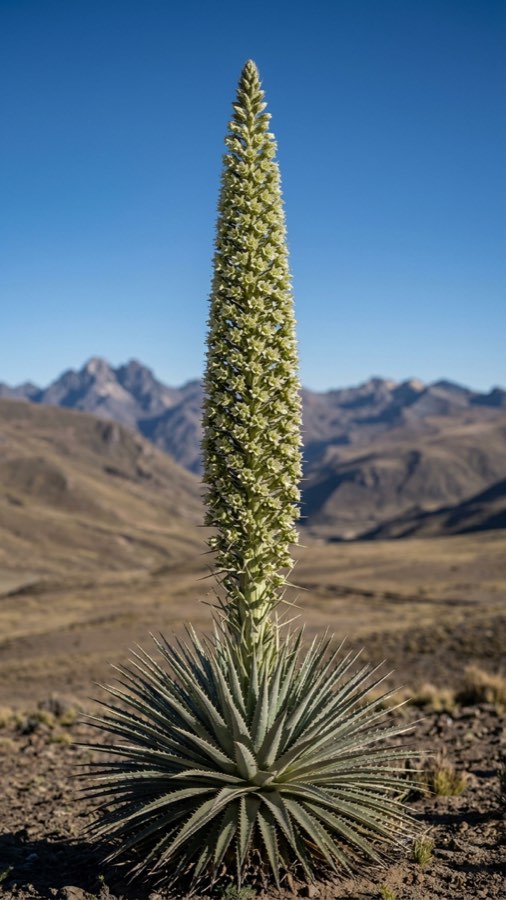
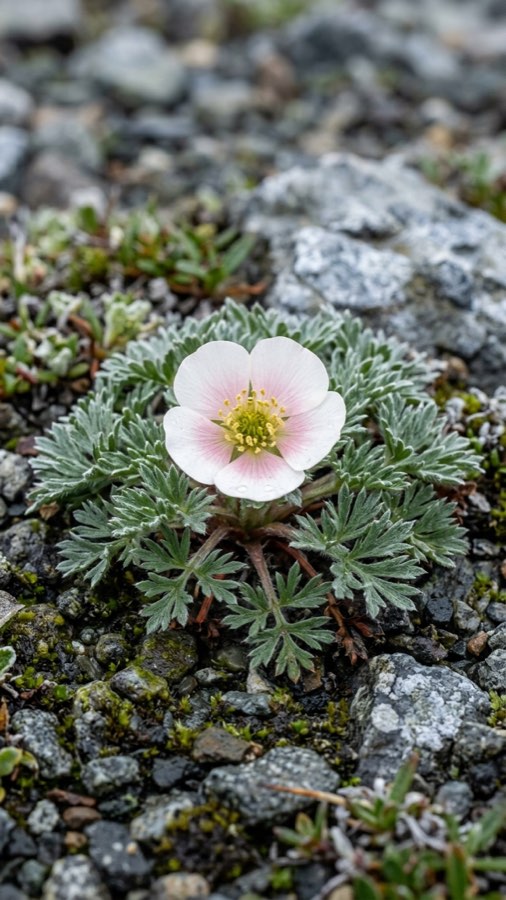
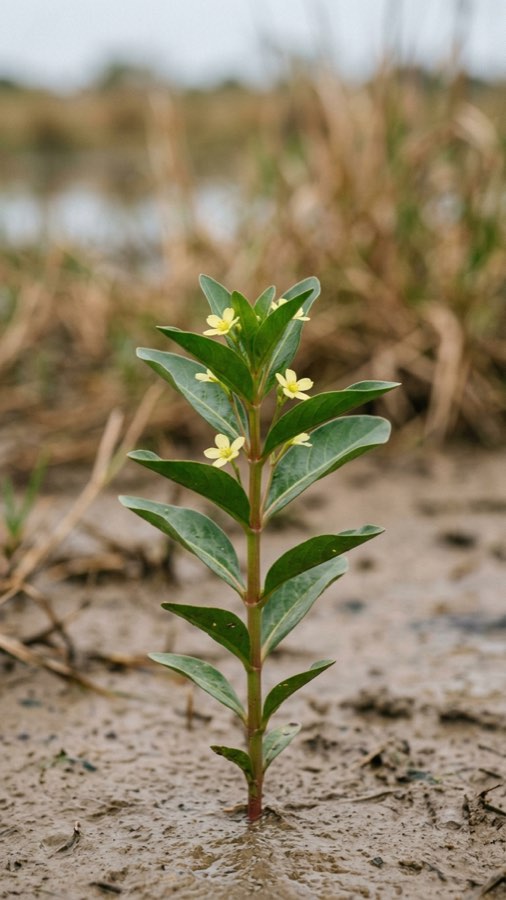
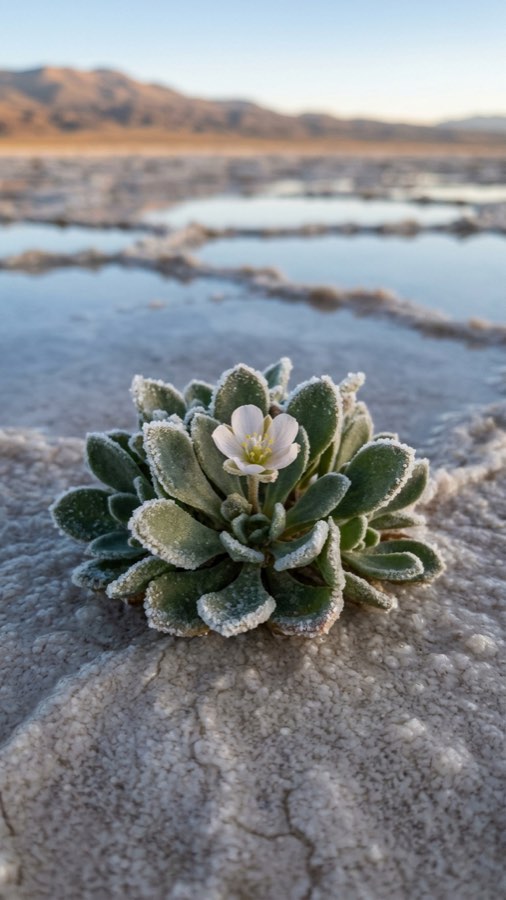
A low succulent rosette about 8–14 cm tall. It spreads thick grey-green leaves over the surface and, through the night, crystallizes fine white salt along their edges. Each plant bears a single small pale peach-white flower, rooting in the slightest gaps of the salt-rich crust.
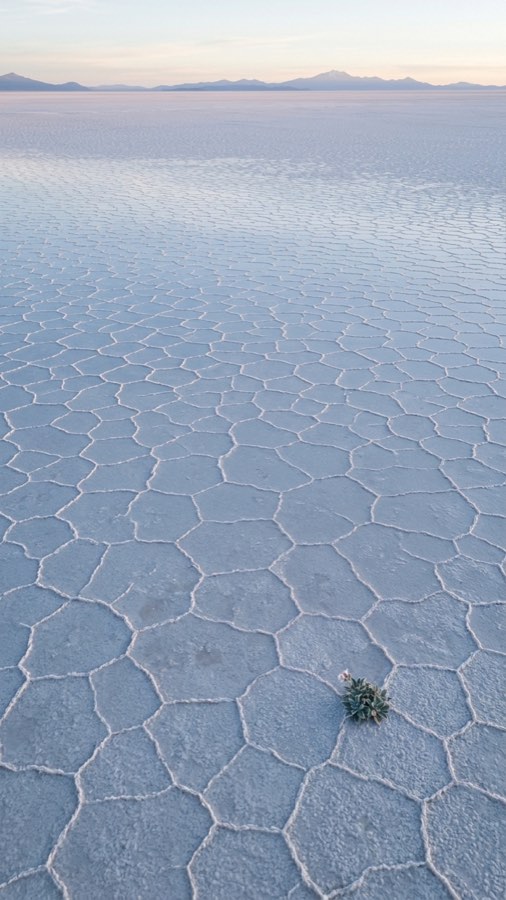 PLATE I
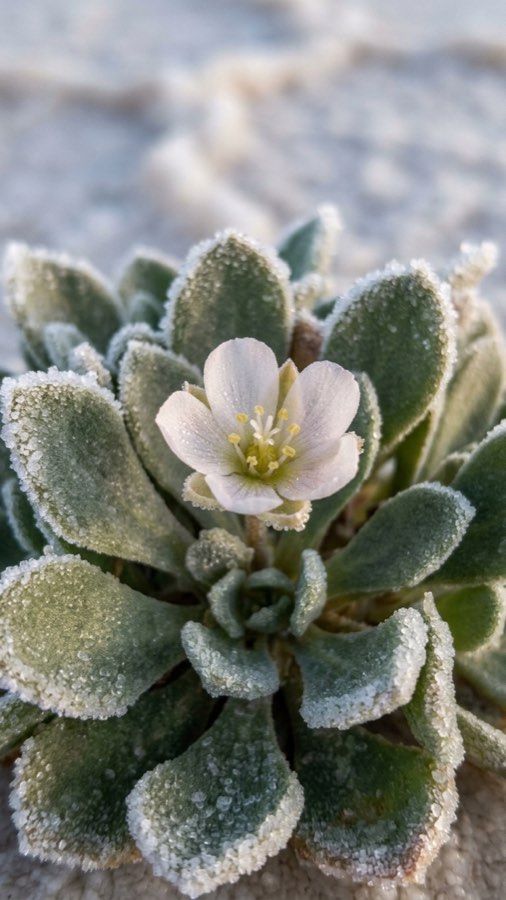 PLATE II
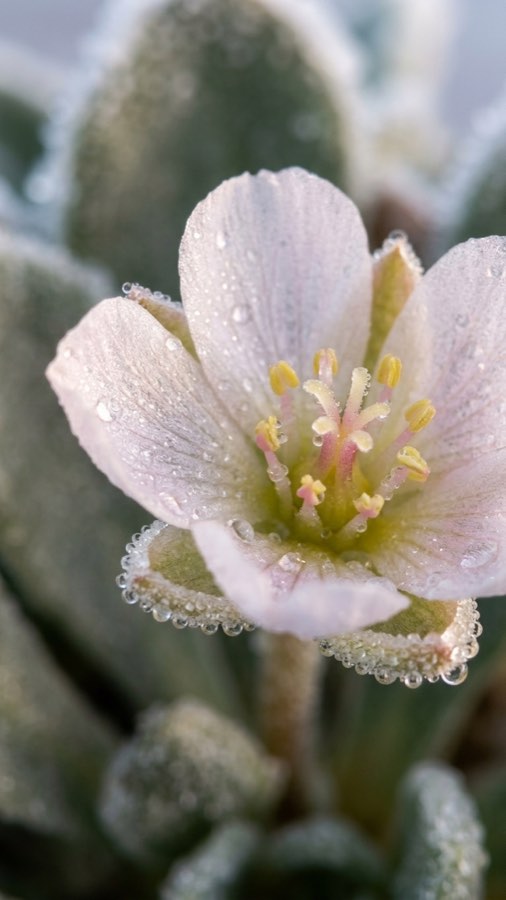 PLATE III
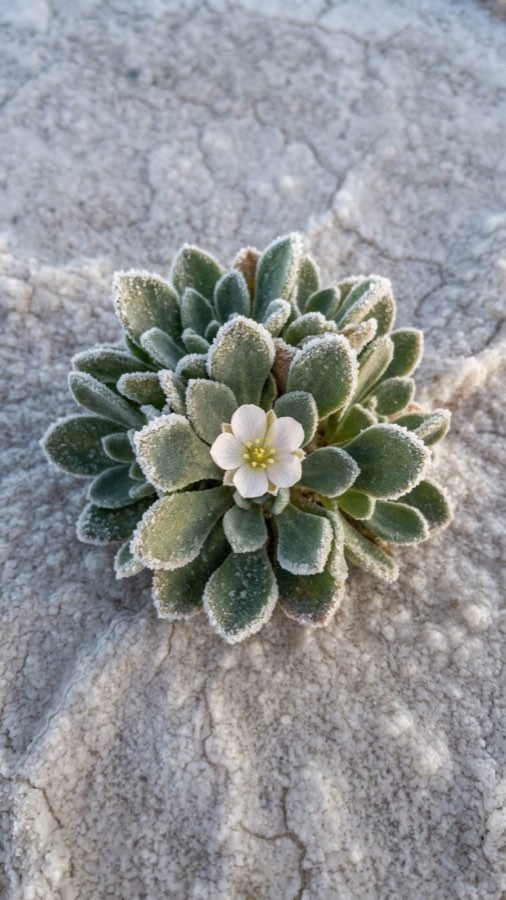 PLATE IV
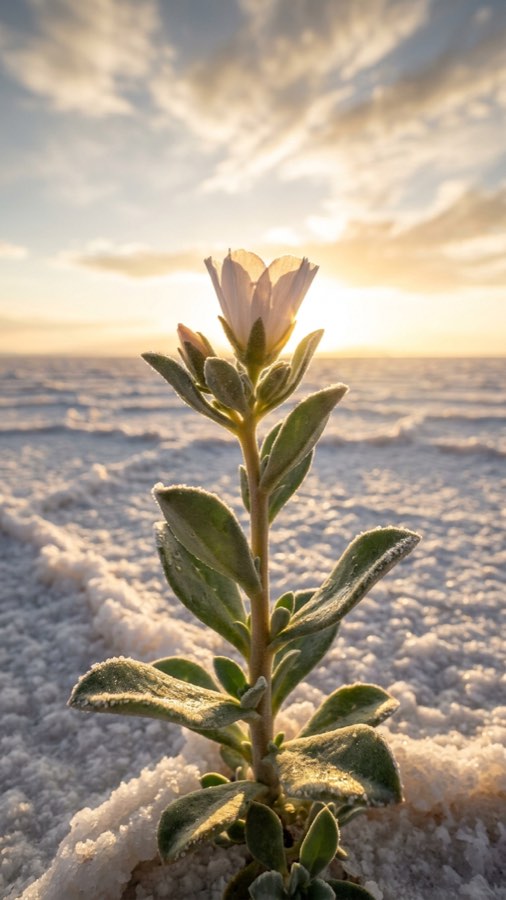 PLATE V
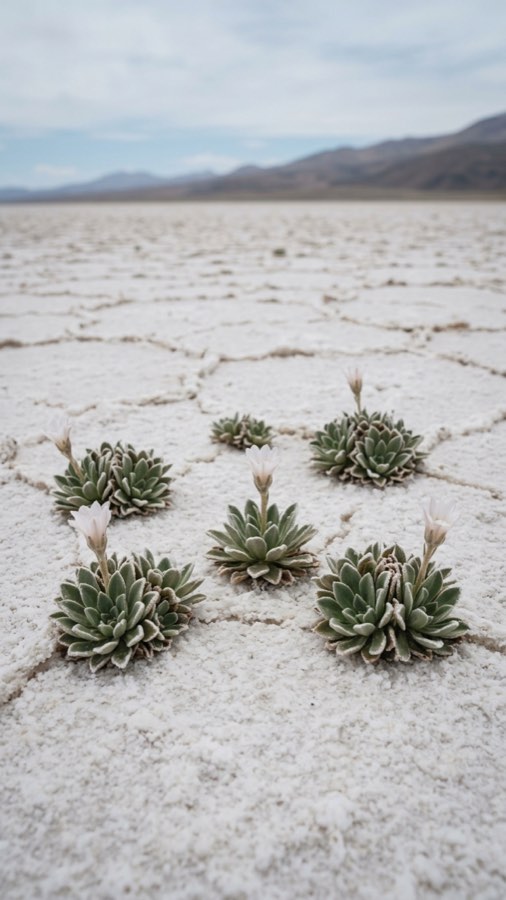 PLATE VI
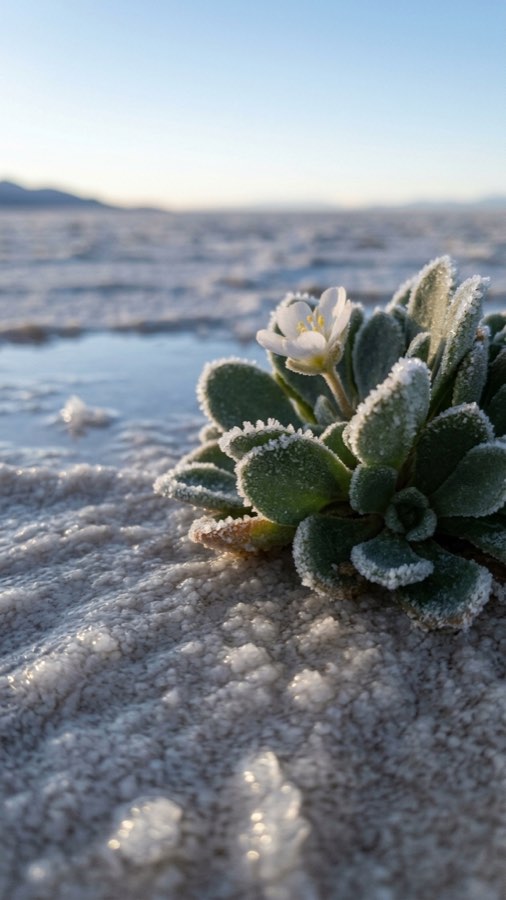 PLATE VIIPLATE VIII
On a land of nothing but salt, a single flower blooms.
As far as the eye sees, there is nothing but white crystal.
Salar de Uyuni, Bolivia.
At the end of the rainy season, at a dawn when the salt crust is barely damp, the Salt Ember appears.
Thick grey-green leaves spread low over the surface.
At their centre, a single small pale peach-white flower opens.
Each plant bears only one flower, yet the plants are not solitary. Along the rims of the hexagonal salt crust, rosettes of similar height recur every few paces, and the faint oblique wind before sunrise carries pale pollen along the cracks. Most flowers appear to self-pollinate as they close, but slight exchange between neighboring plants seems to maintain the patchy colony pattern.
The visible plant is only a brief surface expression of its life history. Beneath the shrunken post-floral axis, small seeds remain at the boundary between salt crust and muddy laminae, likely ungerminated for several years. Only for a few days at the end of the rainy season, as fresh water retreats and capillary rise sharpens the salinity gradient, do dormant buds swell. By the next morning, salt on the leaf margins already begins to obscure the plant’s outline.
Rarity alone does not explain its absence from tourist photographs. Once the sun rises, the leaves lose water rapidly, leaving only a rim of white efflorescence that reads at a distance as an ordinary evaporation trace. Salt gatherers and those crossing the lake margin at dawn with llama caravans called it in Aymara “jayu qhana,” the salt light, and treated mornings of thicker salt as a sign that the rains would end early.