Specimen · N°036 · Salt · ▶ Film
Sodaphyton pannonicumSoda-breath Herb
Only in certain years does it appear on the shore.
FOUND 46.8°N 19.2°E · Seasonal soda lakes of the Pannonian Plain, Hungary · ✝ EX · Last seen 1971
Only in certain years does it appear on the shore.
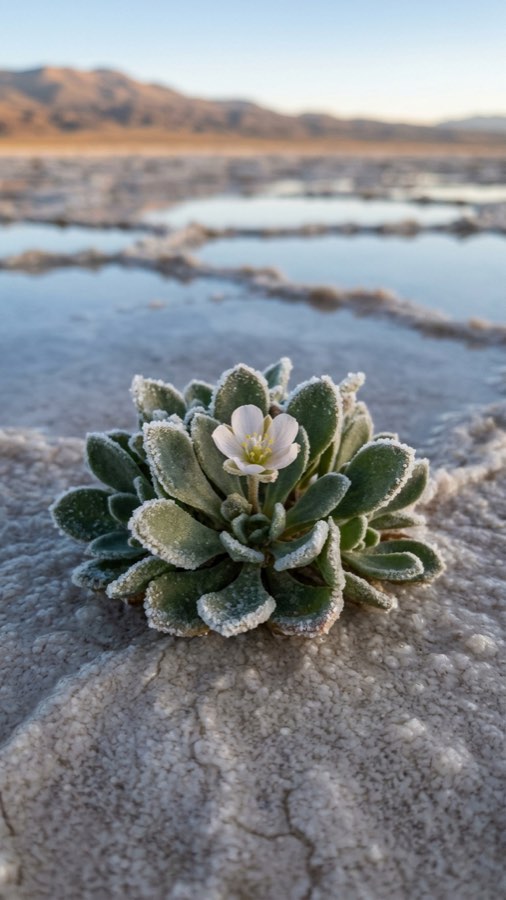
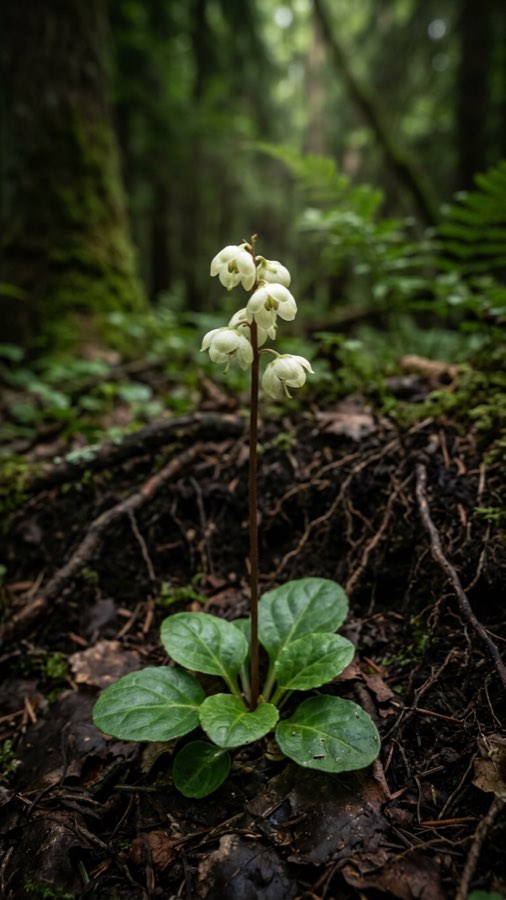
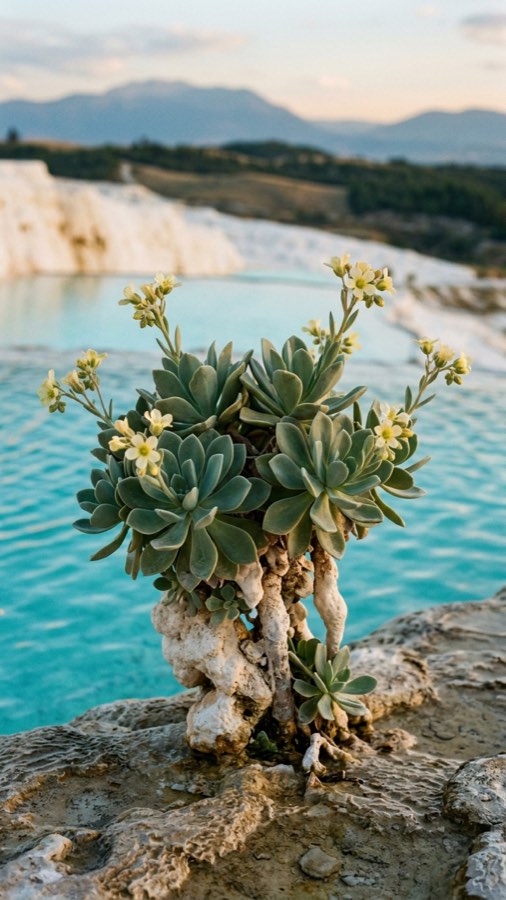
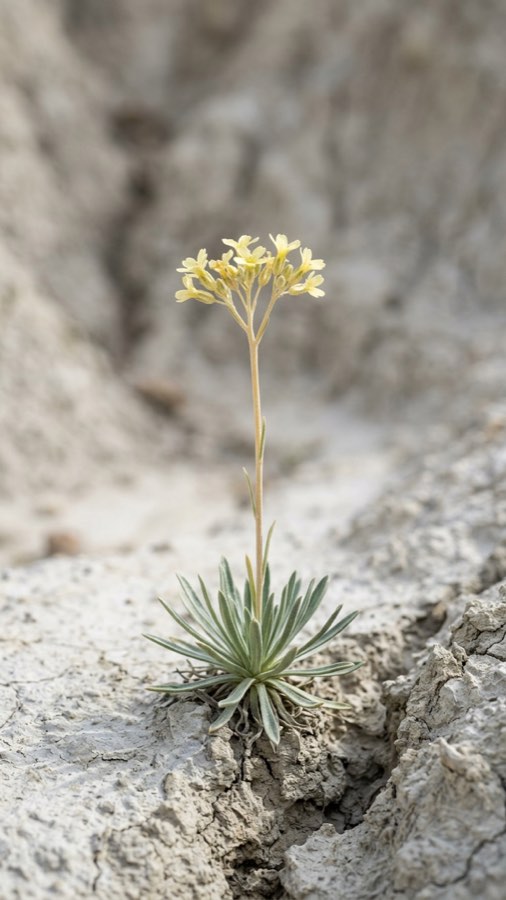
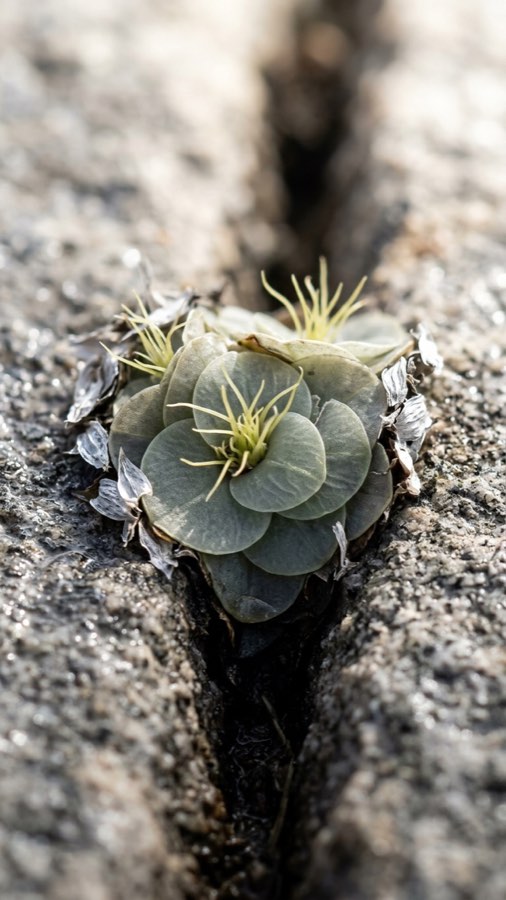
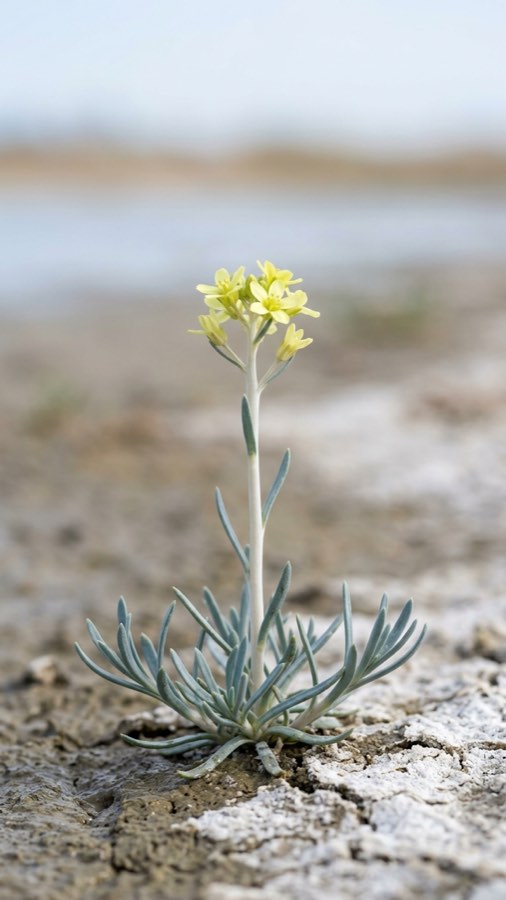
The Soda-breath Herb is a wetland plant some 20 cm tall. It spreads slender powder-white leaves tinged with blue low to the ground, and on pale milky stems bears small lemon-pale star-shaped flowers facing upward. Only in springs when fine bubbles of alkaline water rise from the lakebed does it appear, taking those bubbles into its roots to balance the oxygen underground. It roots in damp mud where the white salt crust has split, forming sparse colonies along the shore. In years without bubbles it stays below, leaving no trace on the lakebed; even at the same lake, it can be confirmed only in the years of breath.
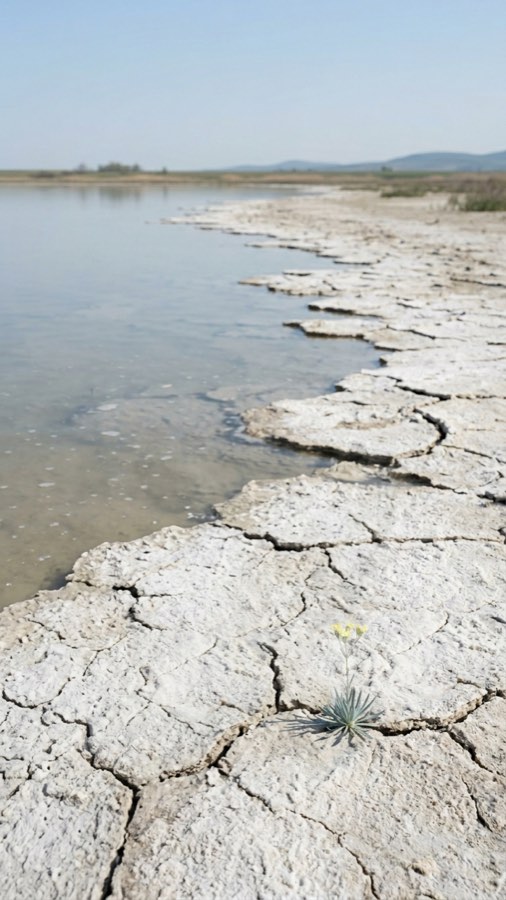 PLATE I
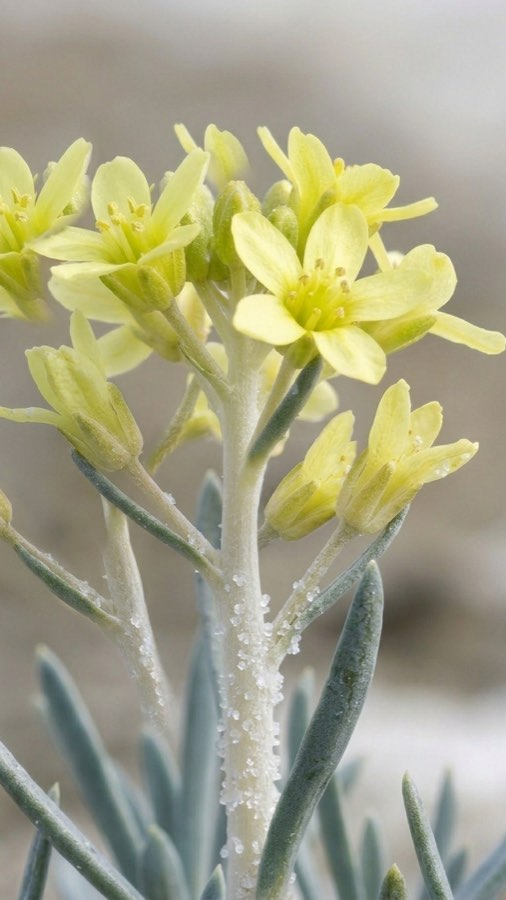 PLATE II
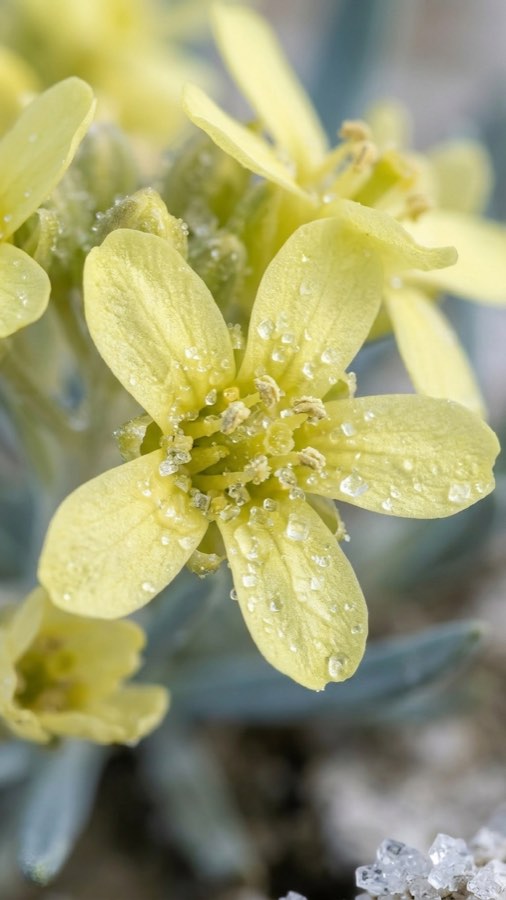 PLATE III
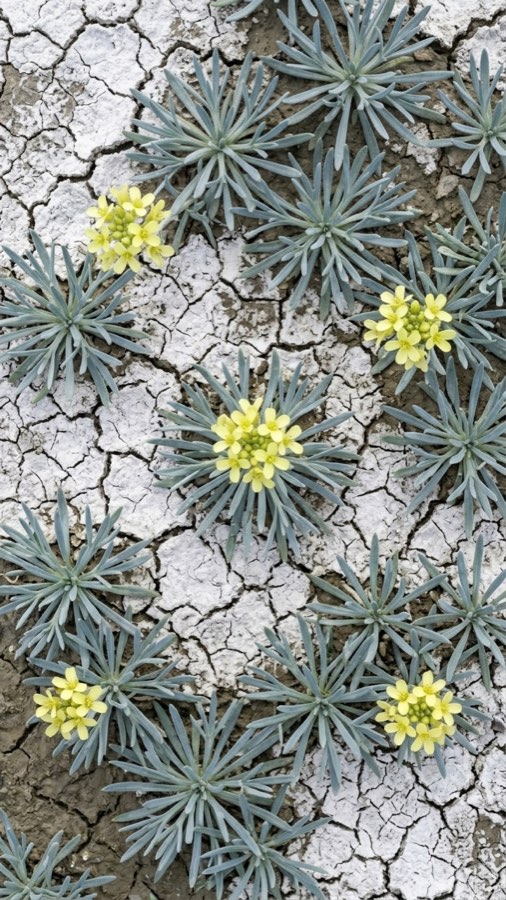 PLATE IV
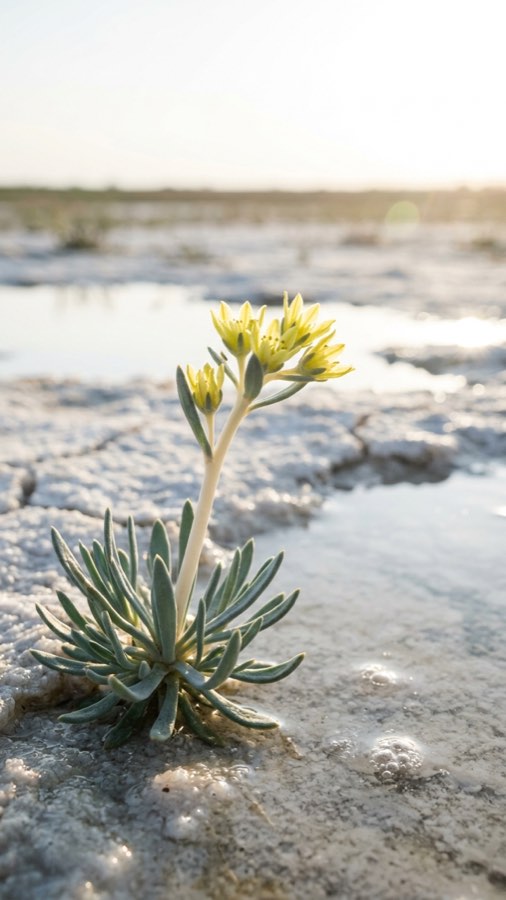 PLATE V
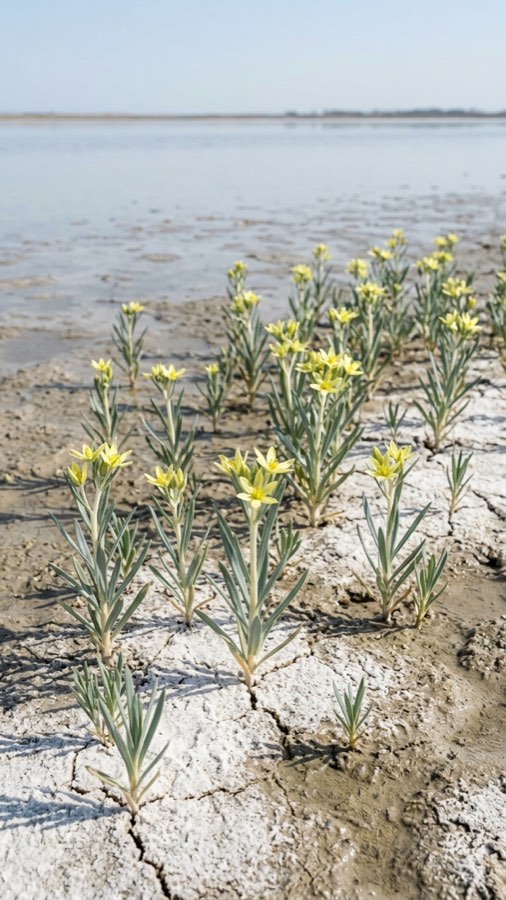 PLATE VI
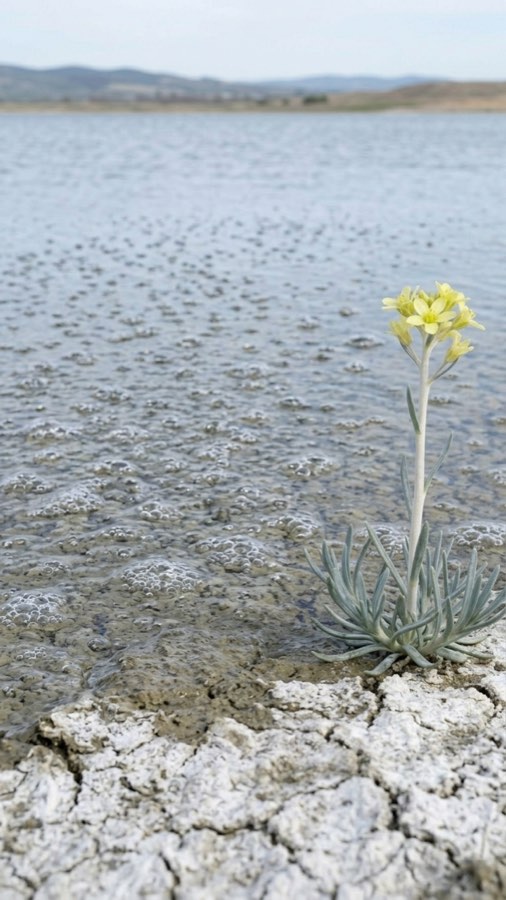 PLATE VIIPLATE VIII
Only in certain years does it appear on the shore.
In years when no bubbles rise, it does not appear above ground.
Seasonal soda lakes of the Pannonian Plain, Hungary
When the strongly alkaline water withdraws, a white salt crust spreads along the shore.
The Soda-breath Herb appears only in that split, damp mud.
It takes the fine bubbles rising from the lakebed into its roots, balancing its oxygen below ground.
Seedlings appeared only where the shore crust had split thinly and the mud gave a faint sound underfoot. The bubbles seem less a substance taken up by the roots than a sign that the reduced mud has briefly loosened. In years when the black, sulphidic layer lies shallow, the resting buds remain still; only when seepage returns beneath the white film does the glaucous foliage reach the surface.
The flowers scarcely opened on windy days, turning upward mainly on clear, still mornings. Their pale lemon colour is inconspicuous at a distance, yet small low-flying dipterans were seen resting on them for minutes at a time. Even plants with few visits set fruit, probably because the withering anthers touch the stigma; self-compatibility appears to buffer the colony through years of absence.
Even within the same bay the plants emerge as spots rather than lines. Beneath old stems, shallow mud held hard minute seeds mixed with short resting buds, a structure suited to waiting under the salt crust. In low-bubble years the plant has not moved or died; it has simply omitted its above-ground phase. The recorded colony is only a small visible fraction of the buried seed bank.