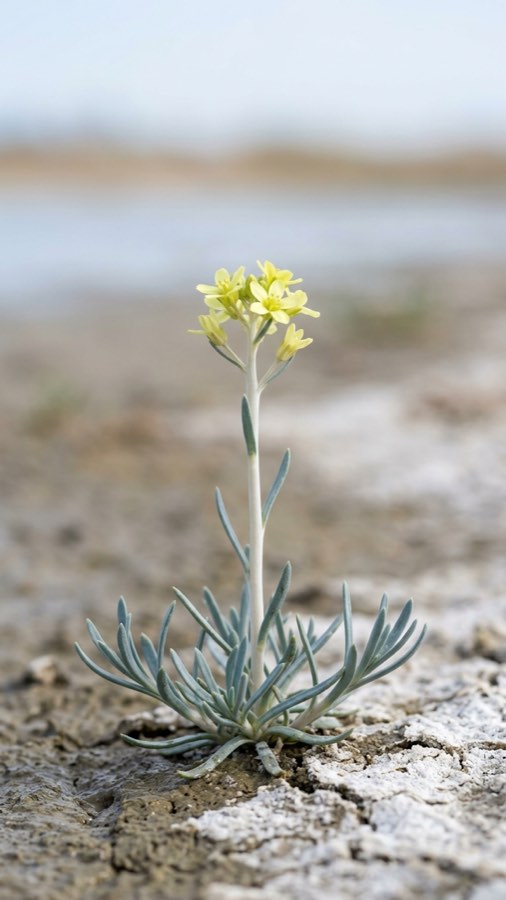
There is a herb for which the breaking of the land is the condition of life.
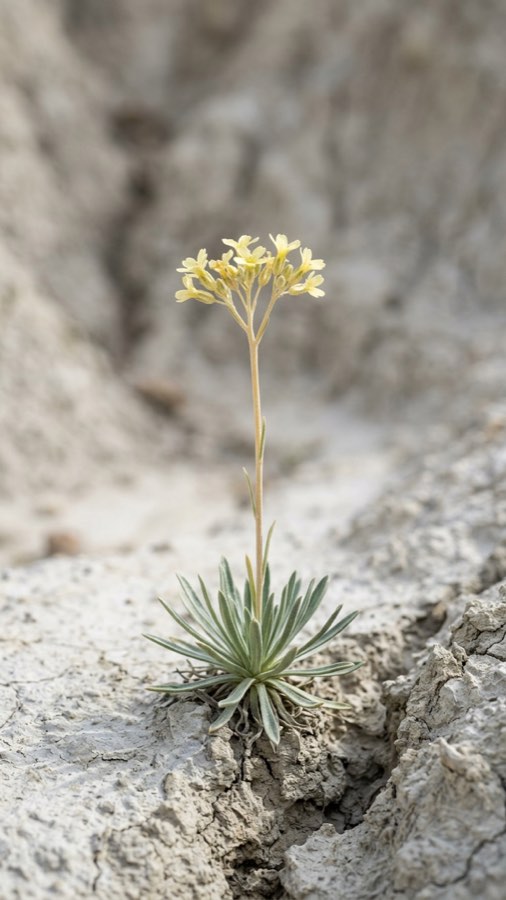
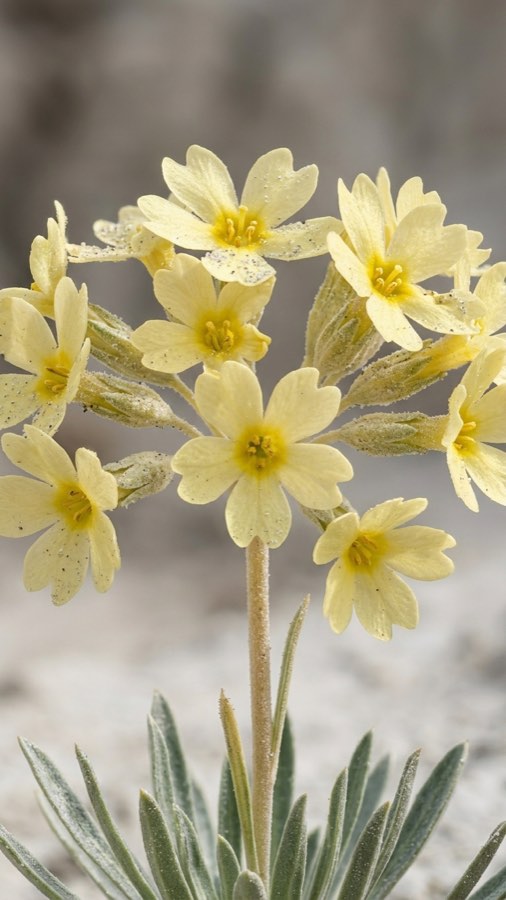
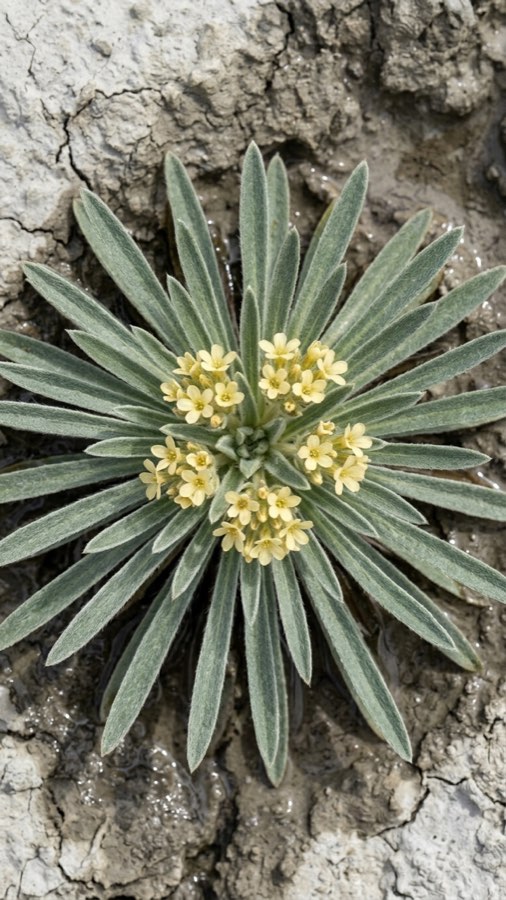
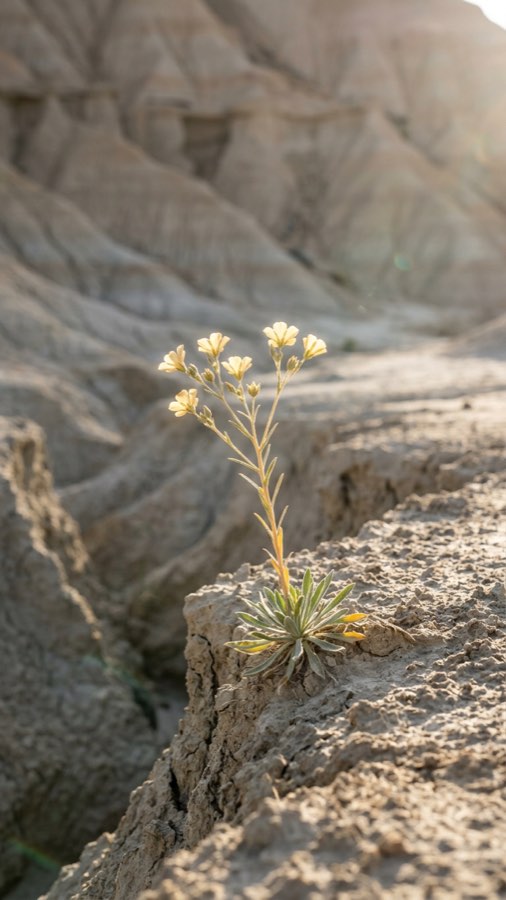
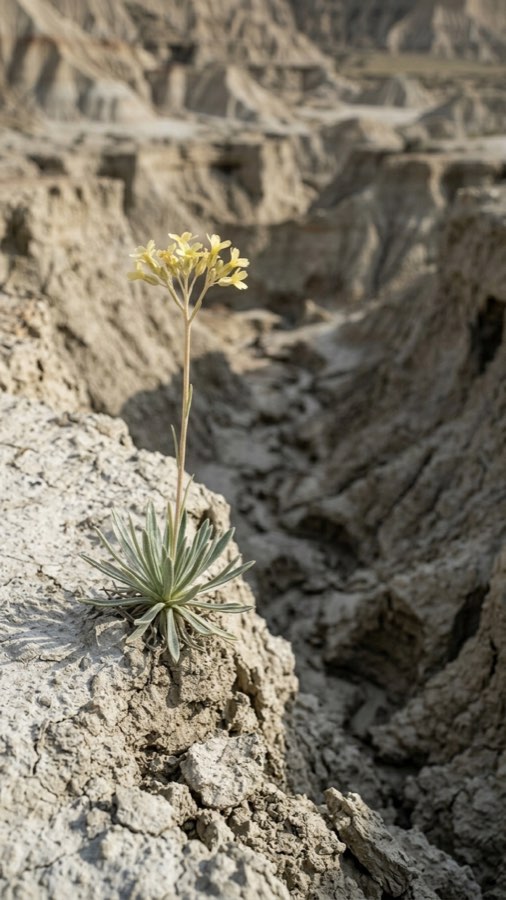
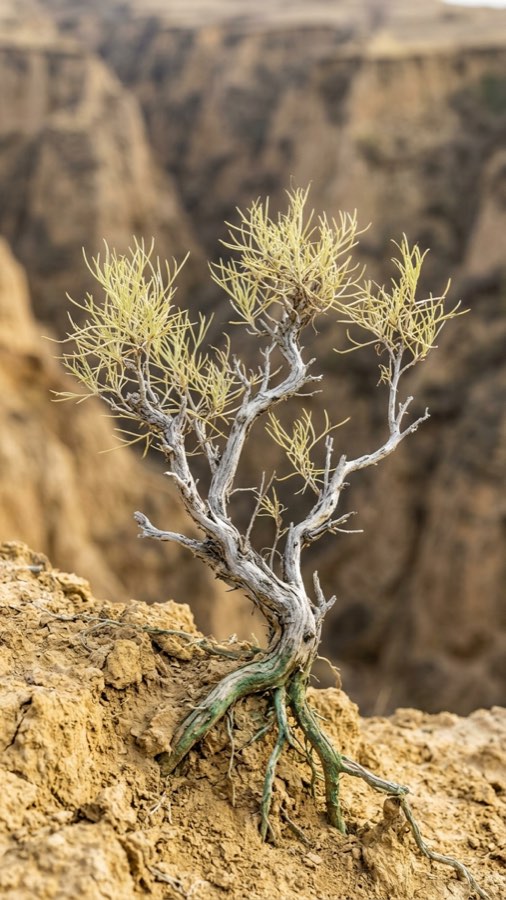
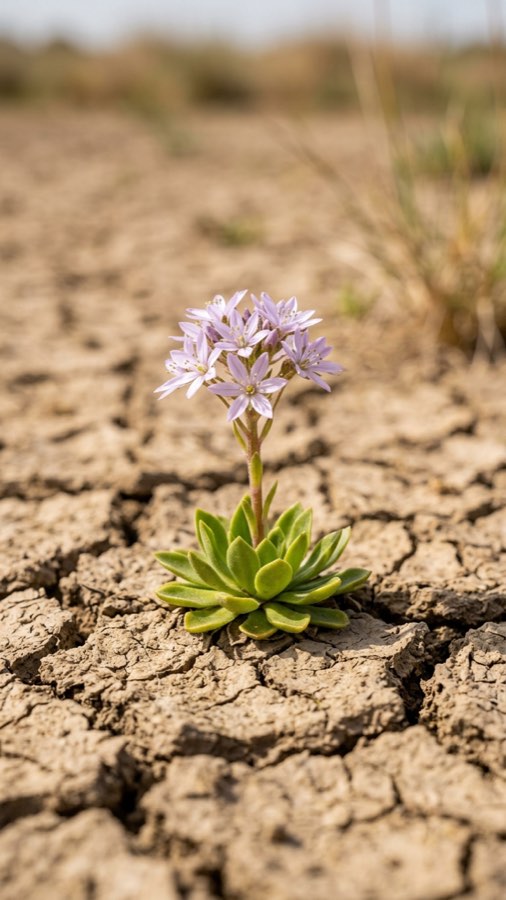
The Crumbling-edge Herb is a small plant some 10 cm tall. It spreads slender grey-green leaves low against the ground, and on fine pale-ochre stems bears small straw-coloured five-petalled flowers. Each time rain carves the slope, it severs the tips of its own roots and lets them wash downhill, rooting itself anew in the freshly cut earth. On stable slopes where erosion has ceased, its spread ceases too: it can carry its generations only across land that keeps collapsing. The breaking of the ground is the very condition of its life. Where nothing crumbles, it quietly disappears within a few years.
PLATE I
PLATE II
PLATE III
PLATE IV
PLATE V
PLATE VI
PLATE VII
PLATE VIII
There is a herb for which the breaking of the land is the condition of life.
When a slope stops crumbling, this herb too quietly fades away.
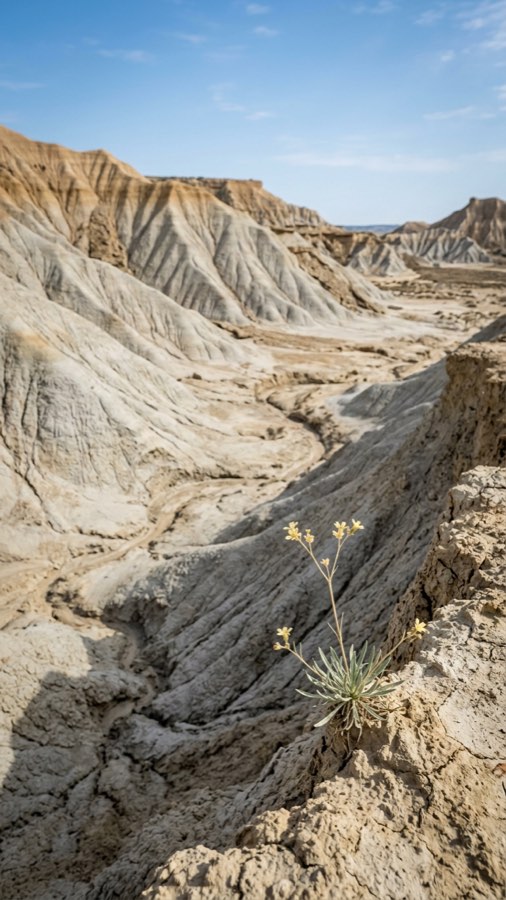
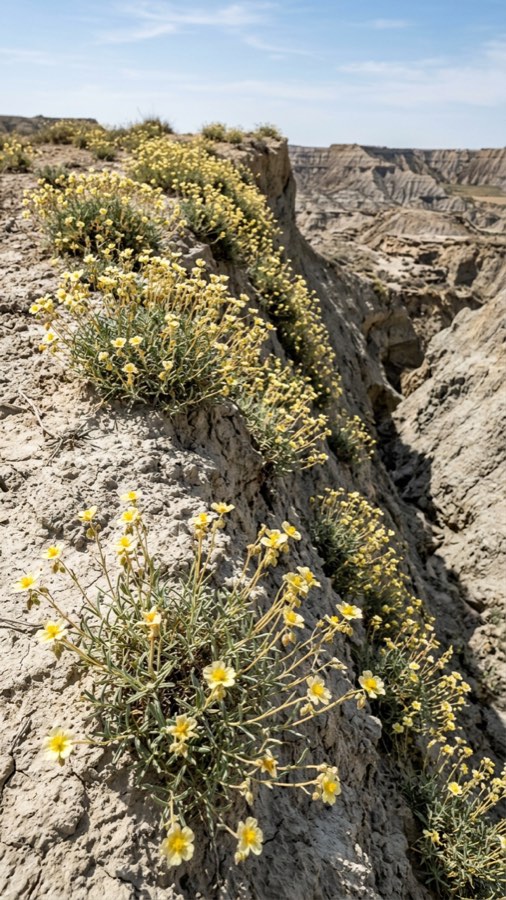
Marl badlands of Bardenas Reales, northern Spain
Each rain carves the grey-white slopes, cutting the gullies deeper.
The Crumbling-edge Herb appears only on that freshly stripped, bare marl.
It severs its own root-tips, and sets them down again in the new soil below.
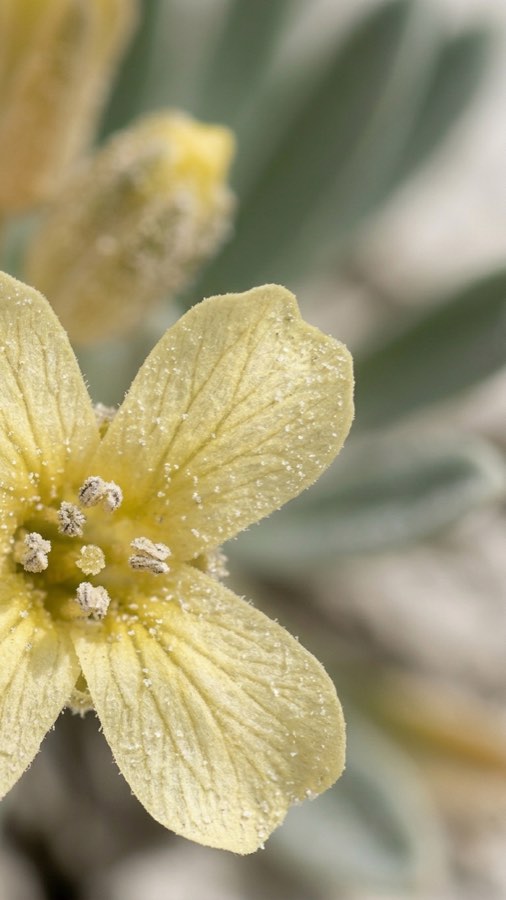
On the morning after rain, only the plants along the gully lip lift their short flowering stems. Within two or three days the straw-colored flowers fade toward the color of marl and close with the calyx as they dry. Small dipterans were seen visiting them, yet fruit also sets on poorly visited plants, suggesting self-compatibility. Flowering is timed to the renewal of the rills, using the brief moisture for seed formation.
The material washed free appears not to be a root tip itself, but a short rhizome fragment bearing a dormant bud. Carried tens of centimeters to several meters downslope, it inserts a pale hypocotyl-like node while the marl is still loose. Most recruitment seems vegetative by this means, while minute seeds ride dry valley winds and occasionally return to bare ground upslope.
Outside its flowering period, the plant is reduced to a low gray-green rosette, easily lost among flakes of dry marl. In a specimen, the petals soon fall, and the rhizome fragments are apt to crumble away during collection. Older field books may well have dismissed it as a small brassicaceous or caryophyllaceous herb. On stabilized slopes it disappears within a few years, making later confirmation difficult.