Specimen · N°046 · Soil · ▶ Film
Radicofolia loessicaBared-root Herb
Which is root, and which is leaf — no one can tell.
FOUND 37.0°N 110.0°E · Eroded ravines of the Loess Plateau, China · ✝ EX · Last seen 1971
Which is root, and which is leaf — no one can tell.
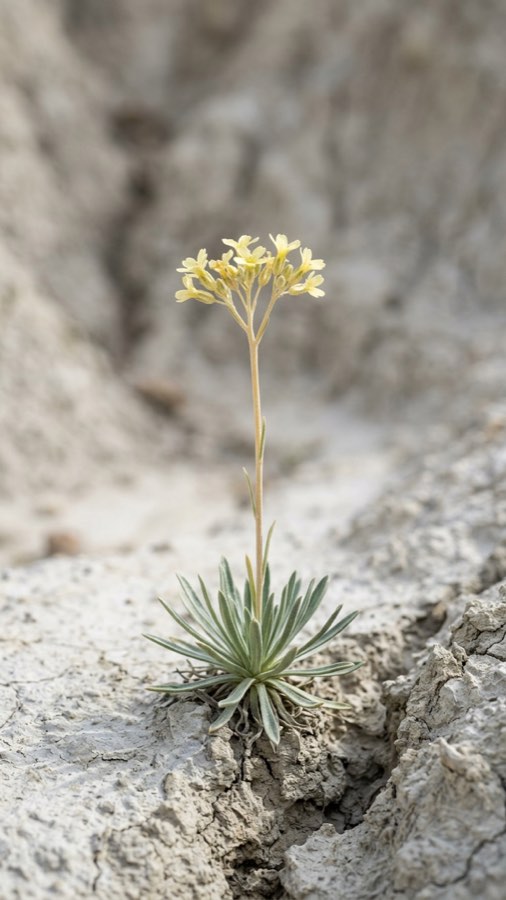
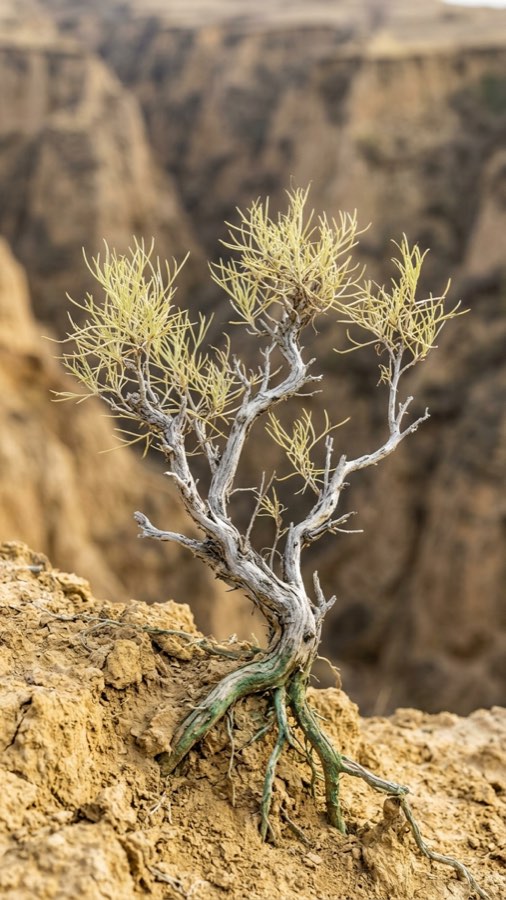
The Bared-root Herb is a slope plant some 20 cm tall. It bears sparse, very fine pale yellow-green leaves on grey-white gnarled stems that creep along the ground. Its distinction lies in the roots: when the loess collapses and a buried root meets the air, the exposed surface alone turns green, taking on the work of a leaf and beginning to gather light. When rain reburies the fallen soil, the greened root quietly fades back to white. In this plant the boundary between leaf and root is not fixed; each time the land changes shape, the organs trade their roles. Which is leaf and which is root looks different at every meeting.
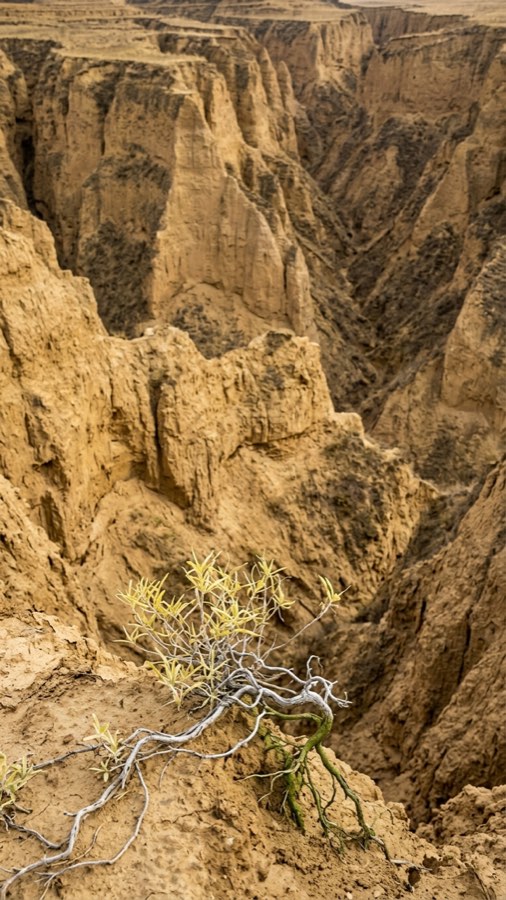 PLATE I
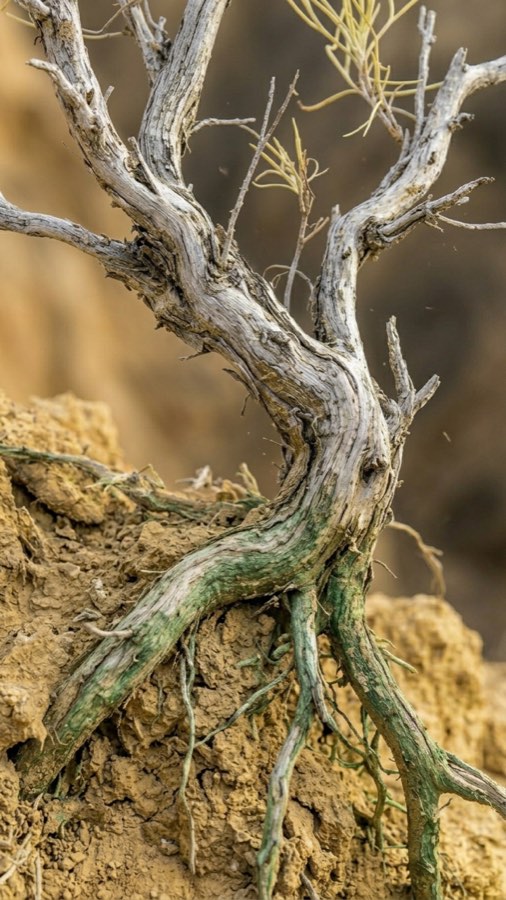 PLATE II
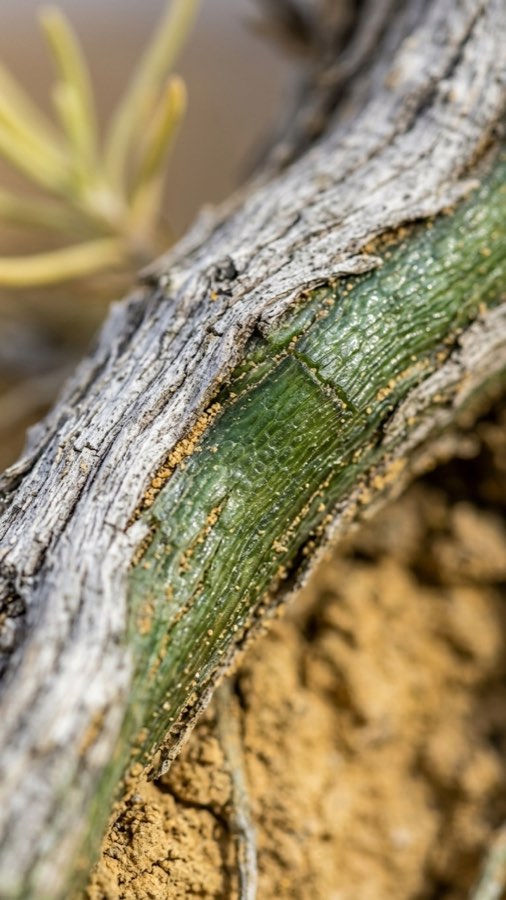 PLATE III
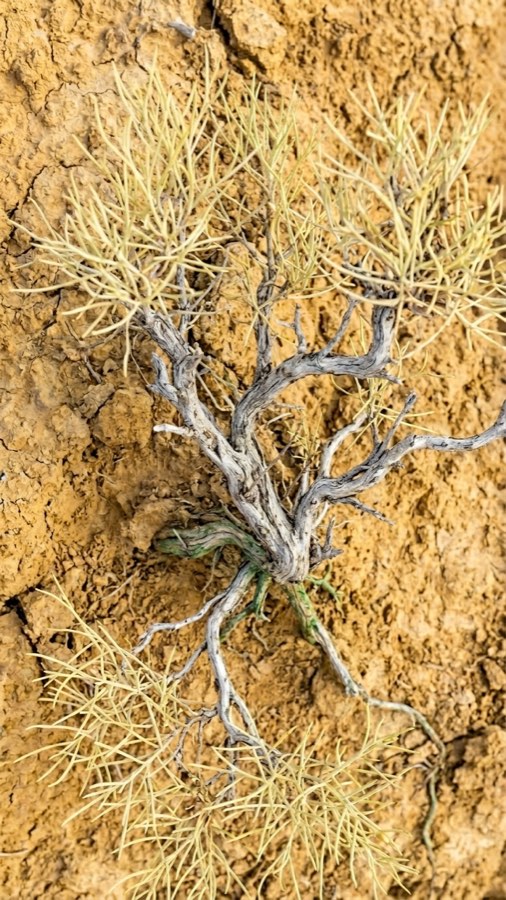 PLATE IV
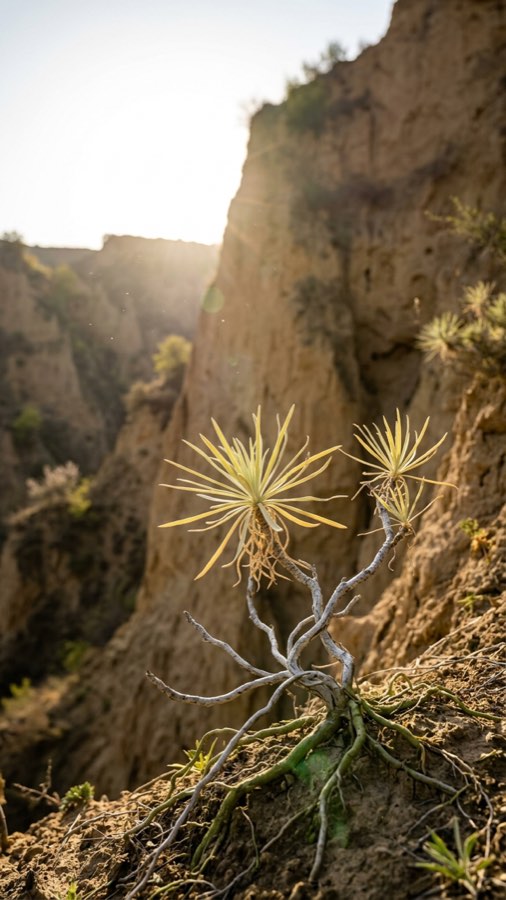 PLATE V
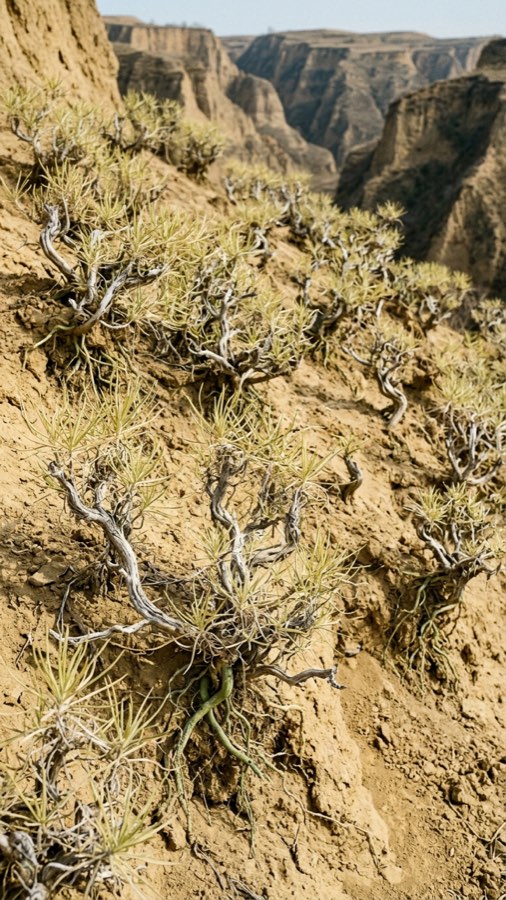 PLATE VI
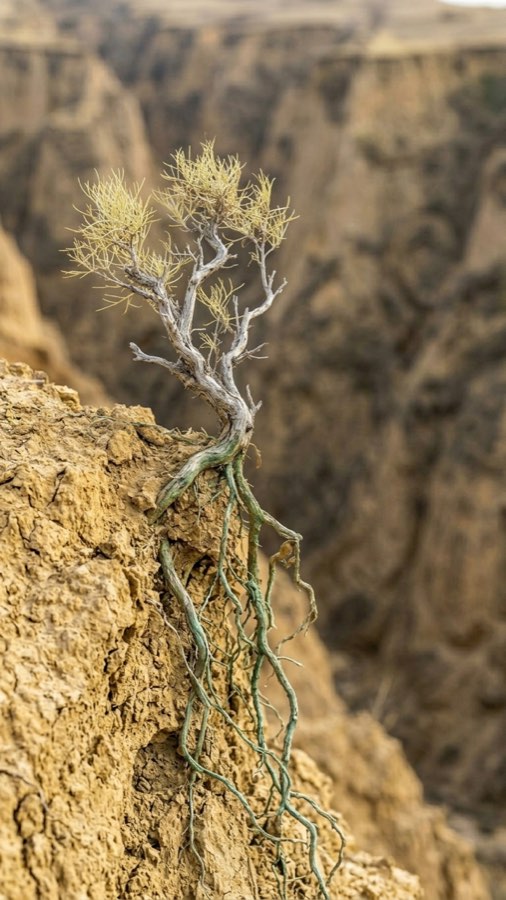 PLATE VIIPLATE VIII
Which is root, and which is leaf — no one can tell.
When the cliff crumbles and roots in the earth meet the air,
the surface of those roots alone turns slowly green.
Eroded ravines of the Loess Plateau, China
Only on the bared yellow-brown slopes does the Bared-root Herb appear.
The greened roots begin to gather light, just as leaves do.
Two or three days after a collapse, I observed pale brown spikes, shorter than the leaves, rising from the nodes of the gray-white creeping stems. The perianth scarcely opens; only during dry afternoons do the anthers split, giving powdery pollen to the valley wind moving over the loess. This is not a form that waits for visiting insects. Radicofolia loessica appears to complete its flowering quietly during the few days when bare ground leaves it exposed to wind.
The fruit is inconspicuous. When dry, it breaks apart beside the nodes and releases minute seeds almost indistinguishable from grains of loess. Their rounded seed coats are finely pitted, allowing them to adhere to damp cliff faces and then sink into a film of mud with the next rain. Germination does not proceed while they remain buried; only grains brought back to light and air by a fresh collapse begin to move. Their persistence on the slope seems to depend not on lightness, but on behaving like the soil itself.
The green of the exposed root does not last. When struck by light, cortical cells rapidly organize chloroplasts, but the surface carries a thin corky layer and a waxy film that closes during drying, allowing the plant to use only the brief moisture after rain. Once collected and pressed, the root turns white again within days. It then resembles either a poor-leaved creeping herb or an old root caught in a crumbling bank. What escaped the record was precisely the character that defined it.