Specimen · N°072 · Mist · ▶ Film
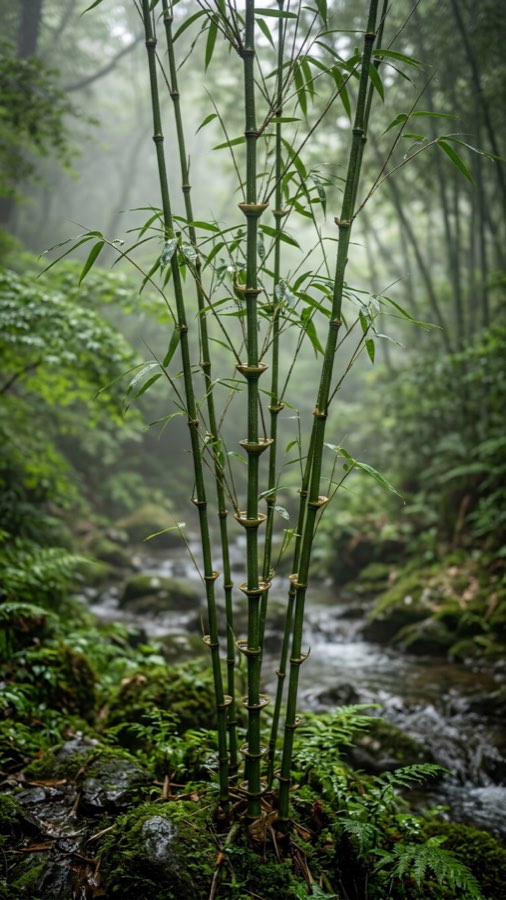
Clausostachys tympanicaChime-Node Bamboo
叩けば、もう戻らない年の音だけが鳴ります。
FOUND 30.4°N 130.6°E · 日本南西部、Mistのたちこめる照leaf樹林の谷 · ✝ EX · Last seen 1973
叩けば、もう戻らない年の音だけが鳴ります。
Chime-Node Bambooは、湿った谷の斜面に株立ちで直立する、中空の稈をもつ竹状のplant。稈は節でいくつもの部屋に仕切られ、節ごとの固い隔壁が内部の空気を密封する。ふつうの竹と同じく稈の中は空洞だが、この竹は年に一節ずつ伸び、そのたびに新しい隔壁が閉じて、その一年の空気を部屋の中に閉じ込める。だから古い株ほど、下の節には何年も前の空気が眠っている。節の外側にはぐるりと浅いくぼみがあり、Rainが降ると段々の盃のように上から順にWaterを溜めていく。乾いた稈を叩くと、閉じた空気の柱が部屋の長さぶんだけ響き、長い部屋は低く、短い部屋は高く、節ごとに音の高さが変わる。パンフルートやマリンバが管の長さで音を決めるのと同じ理屈で、一本の稈が段の数だけの音階を、過ぎた歳月ぶんだけ刻んでいる。
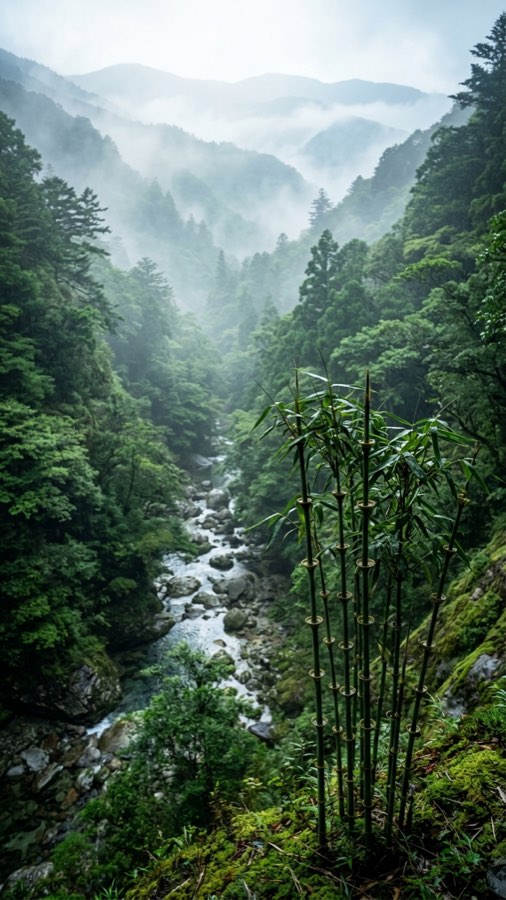 PLATE I
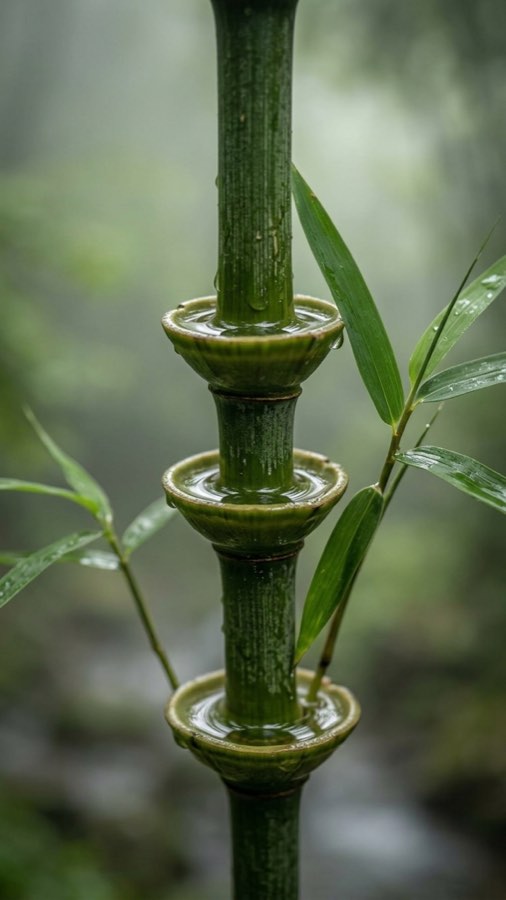 PLATE II
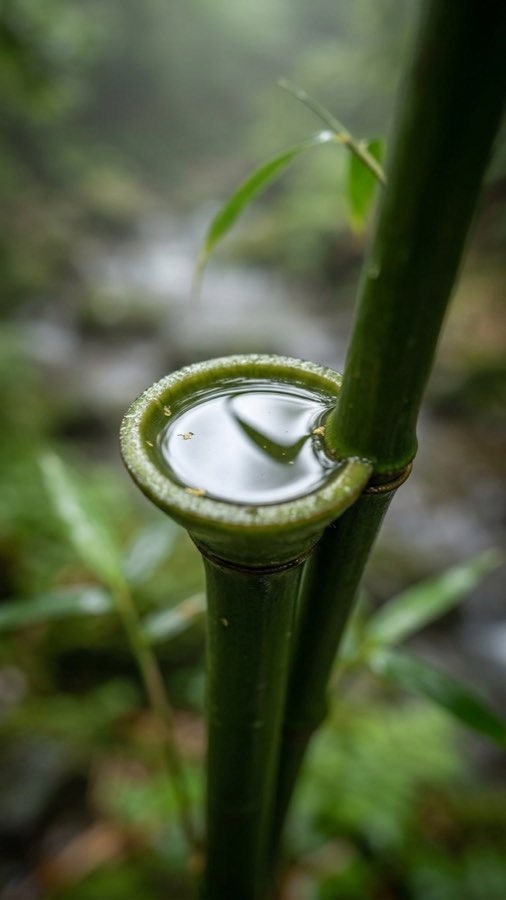 PLATE III
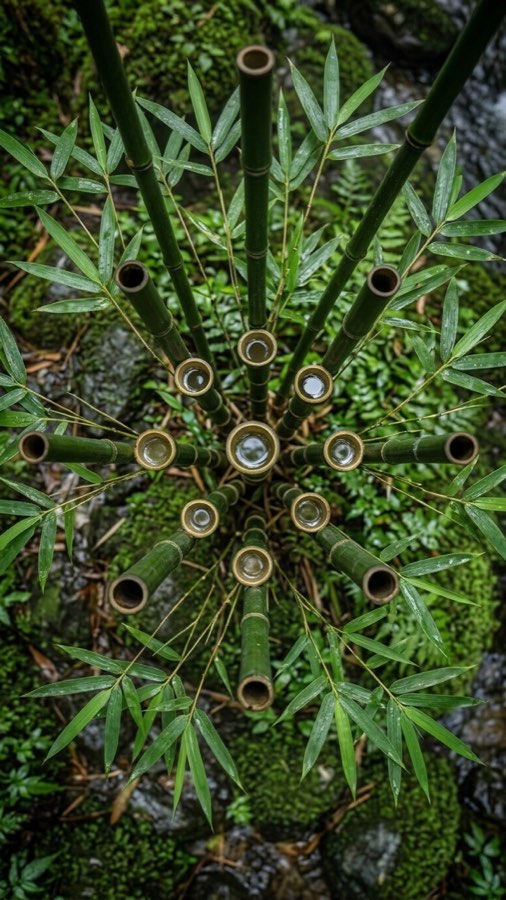 PLATE IV
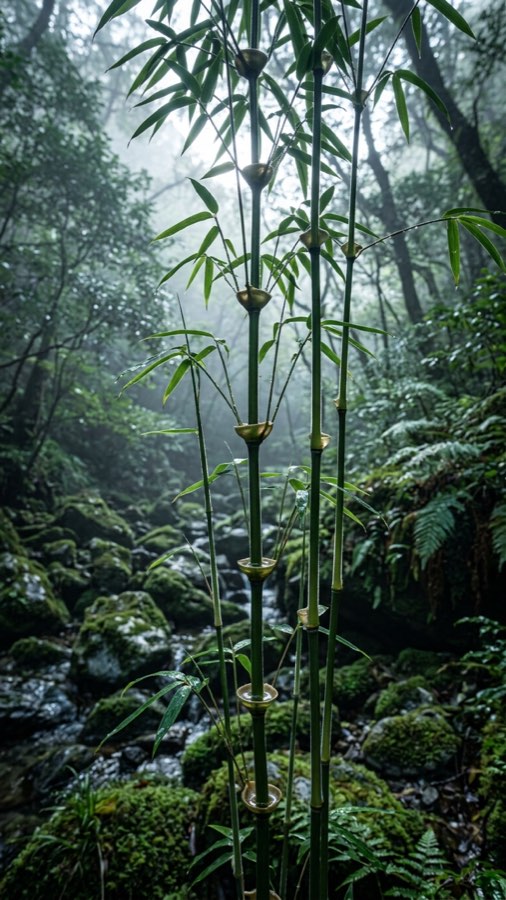 PLATE V
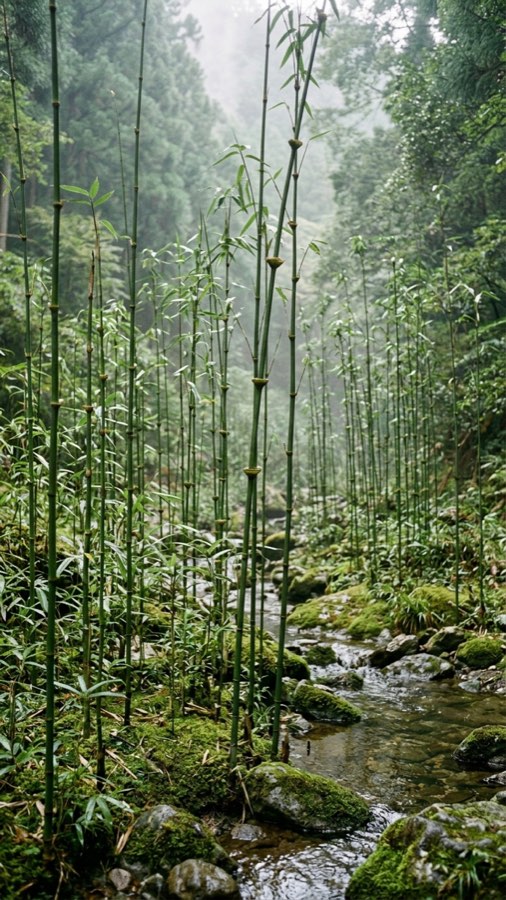 PLATE VI
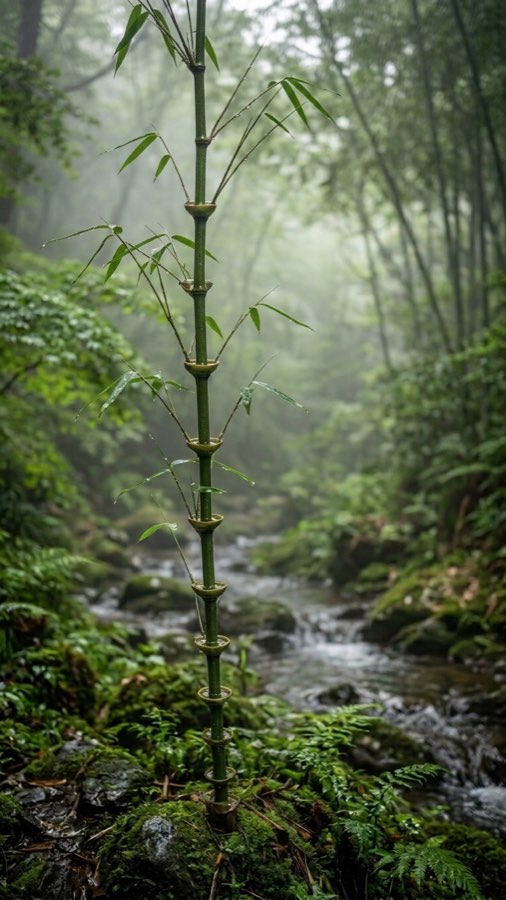 PLATE VIIPLATE VIII
叩けば、もう戻らない年の音だけが鳴ります。
節ごとの部屋に、その一年の空気がまるごと封じ込められているからです。
日本南西部、Mistのたちこめる谷の竹林。
この竹は年に一節ずつ伸び、そのたびに新しい隔壁が閉じて、一年分の空気を稈の中に閉じ込めます。
節の外側の浅いくぼみにはRainが溜まり、上から順に段々の盃となってWaterをたたえます。
乾いた稈を叩けば、閉じた空気の柱が部屋の長さぶんだけ響き、長い節は低く、短い節は高く鳴ります。
On cold mornings about ten days after thaw, the flowers remained only half open, with anthers held close enough to touch the stigma. The wind was hard, yet little pollen seemed to travel; these did not look like flowers waiting for visitors. The small, self-compatible blooms likely set seed during brief clear intervals. When ripe, rain strikes the capsules and drops the seed at the stem base, where it is drawn into basalt cracks. The colony appears not as a patch, but as a narrow ribbon along the seep line.
On the dry slope, one finds neither leaf nor flower, only small white granular marks on the lips of cracks. Such marks were probably entered in notebooks as calcareous deposit or the first pale stain of a lichen. Flowering is confined to the weeks just after snowmelt, when mist, sleet, and wind make collecting unlikely. By the time most botanists could reach the slope, the shoots had withdrawn, leaving only the practical knowledge of herders able to read the trace.
The white mark is not left to signal water. As the seep warms and moisture in the crack becomes intermittent, the absorbing root tip parts at a thin abscission layer, leaving only its base on the stone. In warming basalt fissures, a retained root would be exposed to decay fungi and repeated freeze-thaw injury. The abandoned tip dries in place, and only as a consequence does it trace the following year’s cold-water course in white.