Specimen · N°045 · Forest · ▶ Film
Umbravena teraiensisCanopy-return Herb
In ground the fire has crossed, it somehow will not sprout.
FOUND 27.0°N 84.0°E · Sal forest of the Terai, southern Nepal · ✝ EX · Last seen 2023
In ground the fire has crossed, it somehow will not sprout.
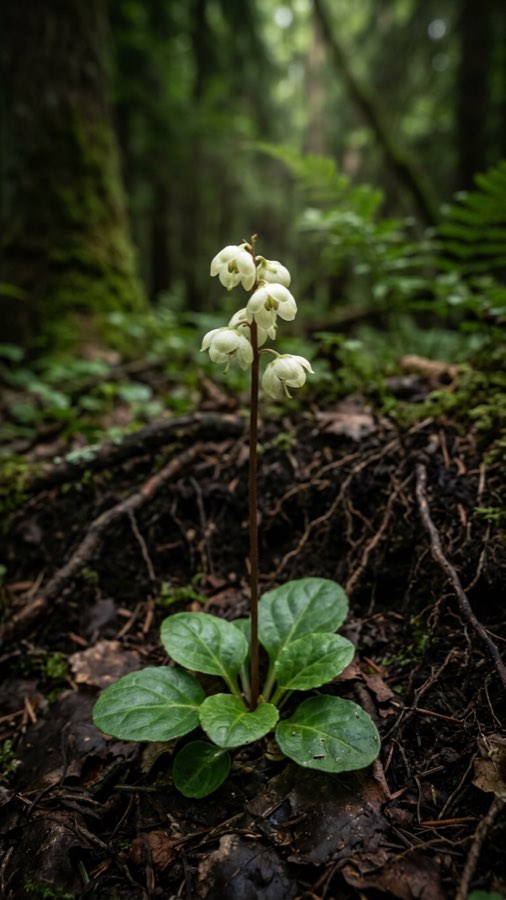
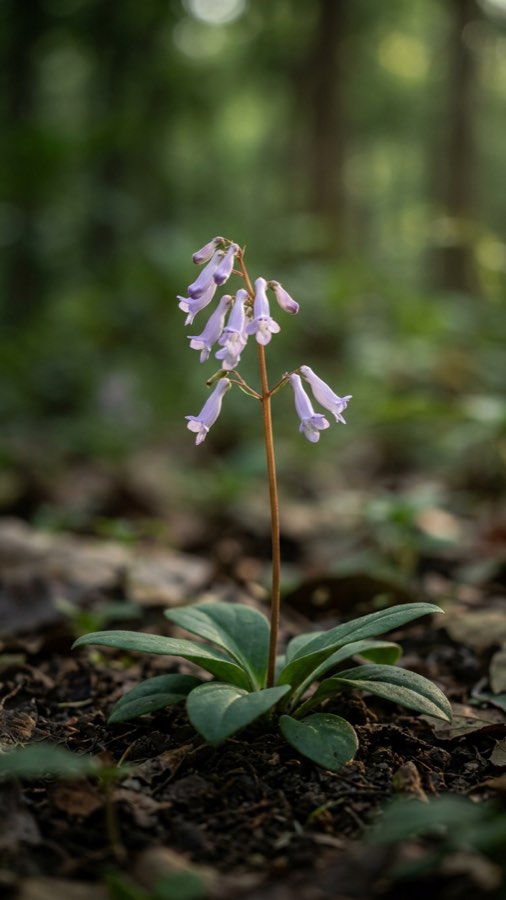
The Canopy-return Herb is a forest-floor plant some 20 cm tall. It spreads deep-green, rather thick leaves low to the ground, and on slender copper stems bears small pale-wisteria tubular flowers, gently nodding. Where most fire-following plants germinate together in the strong light of a burn, this herb does the reverse: it shuns the bright scar. Only when the burned sal forest has slowly recovered, the canopy has closed again, and the floor has returned to dim shade stippled with swaying flecks of sunlight does it first germinate and begin to grow. It blooms quietly, as the sign of a forest that has finished changing its generation and regained its wavering light.
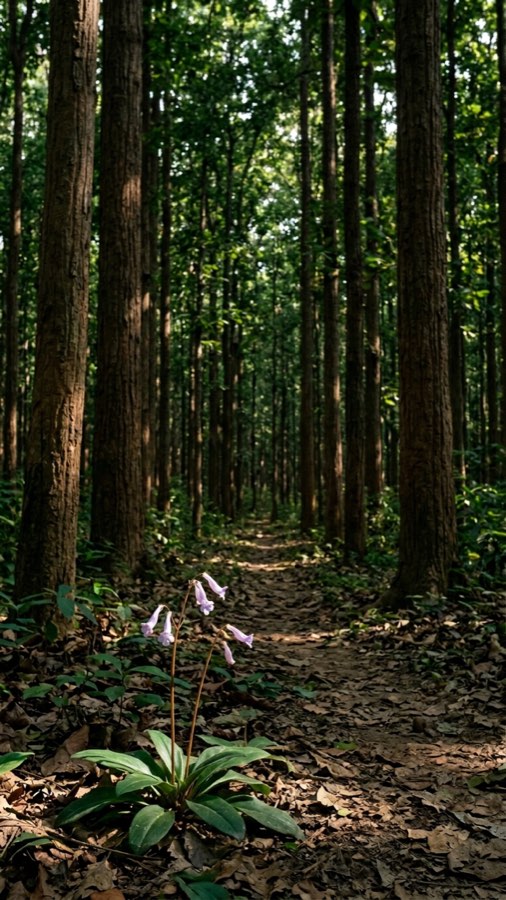 PLATE I
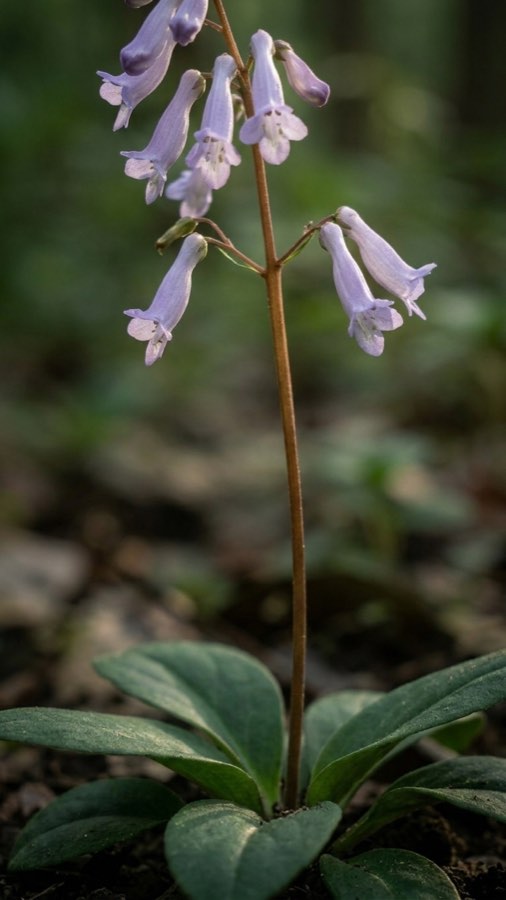 PLATE II
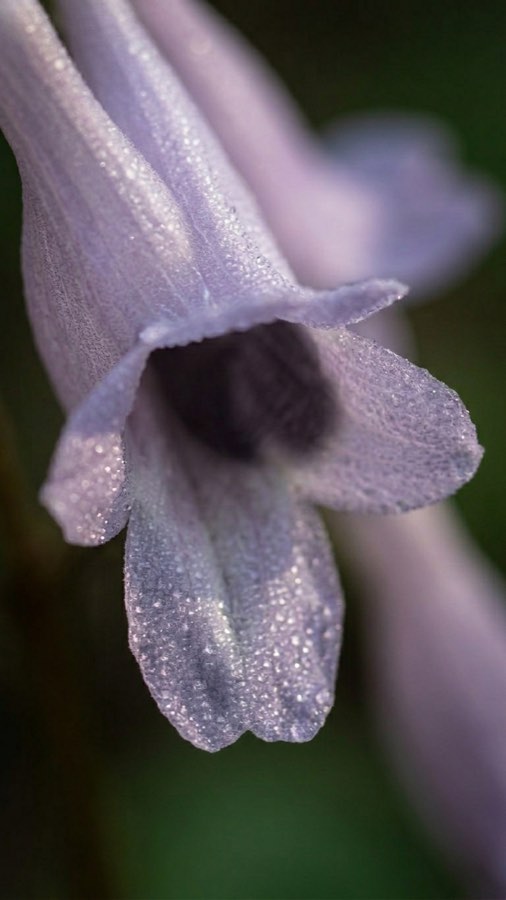 PLATE III
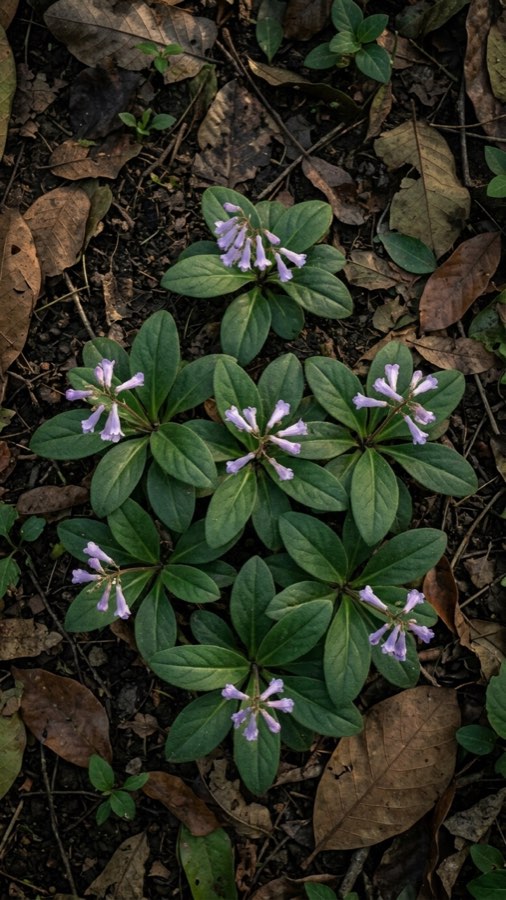 PLATE IV
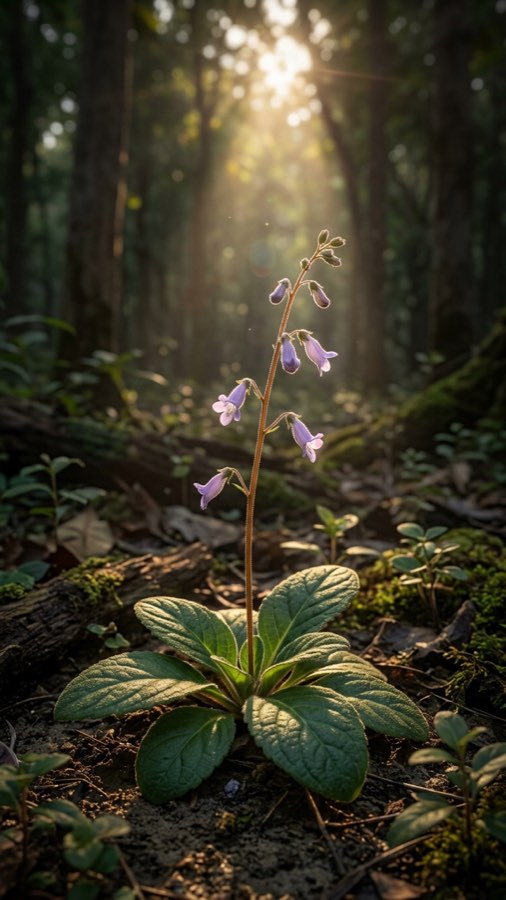 PLATE V
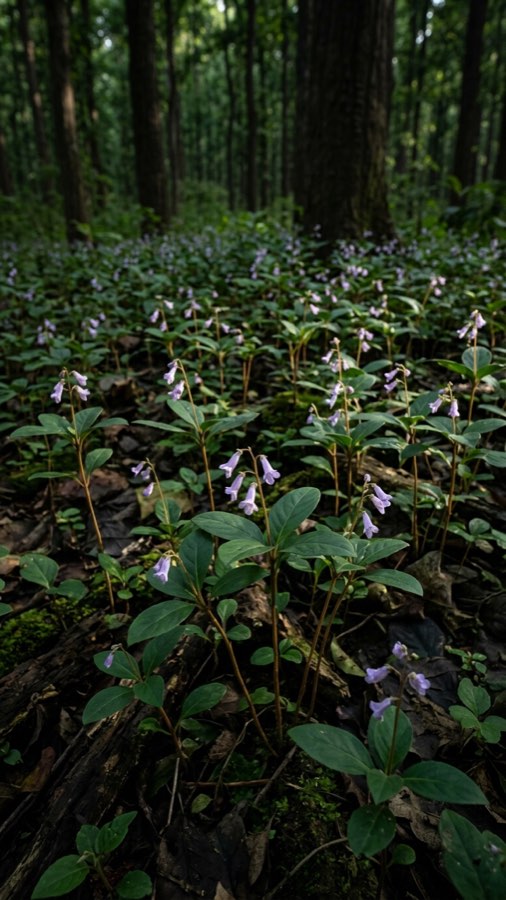 PLATE VI
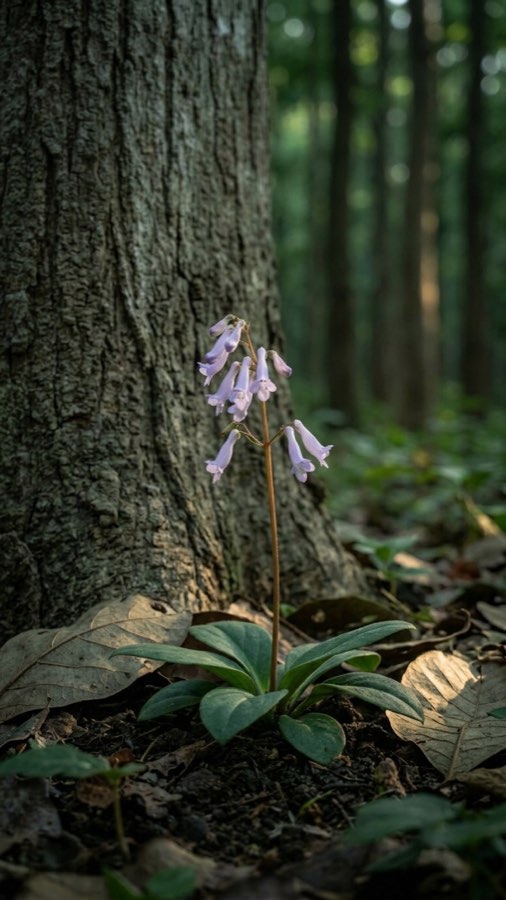 PLATE VIIPLATE VIII
In ground the fire has crossed, it somehow will not sprout.
It waits, still, for the forest to close again.
The sal forests of the Terai, southern Nepal.
Most plants sprout to the brightness of a burn; this herb does the opposite.
When the recovered canopy closes and flecked shade sways on the dim floor once more,
only then does it germinate, nodding its pale wisteria flowers.
The plots where I found this species were not recent floodplain, but sal forest on older alluvial terraces with sand and gravel in the soil. After fire, the ash is leached out by two rains and the exposed ground dries quickly. Only when fallen sal leaves again form a thin acidic humus, leaving a dark brown layer between the stones when brushed aside, do seedlings appear. It seems less a plant waiting for moisture than one waiting for ash to leave and humus to return.
Umbravena does not carpet the forest floor; it forms small patches of three to a dozen stems under fallen wood or at the bases of young sal trees. Where one had been lifted, a short rhizome ran sideways and set next year’s buds only a few nodes away. The flowers are nearly scentless by day, but at dusk the tube mouth opens slightly and gives a faint sweet odor. No visitor was confirmed, yet the form suits small crepuscular moths, probably requiring contact too brief to be caught on film.
Its absence from records is hard to explain by rarity alone. Flowering seems confined to the few years after the canopy closes, and the season ends within roughly ten days before the monsoon. In pressed specimens the pale violet color disappears, the tube shrivels, and the plant is easily filed away as a common sal-forest seedling or an acanthaceous herb. Collectors searching burned ground arrive too early; those walking mature forest arrive too late.