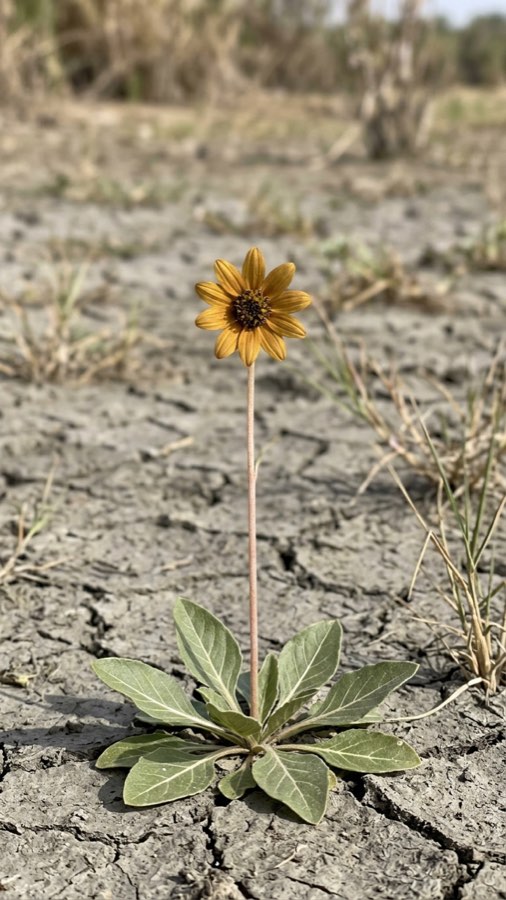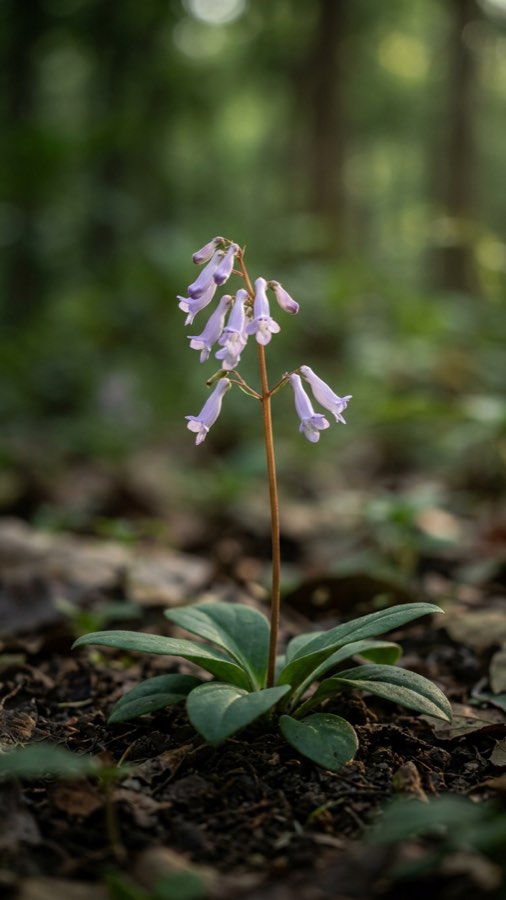
Specimen · N°044 · Desert · ▶ Film
Gypsophyma reficiensHill-reweaver
It never moves — yet below ground, its shape is never the same.
FOUND 33.5°N 53.0°E · Gypsum badlands of the central Iranian Plateau · ✝ EX · Last seen 2009
It never moves — yet below ground, its shape is never the same.
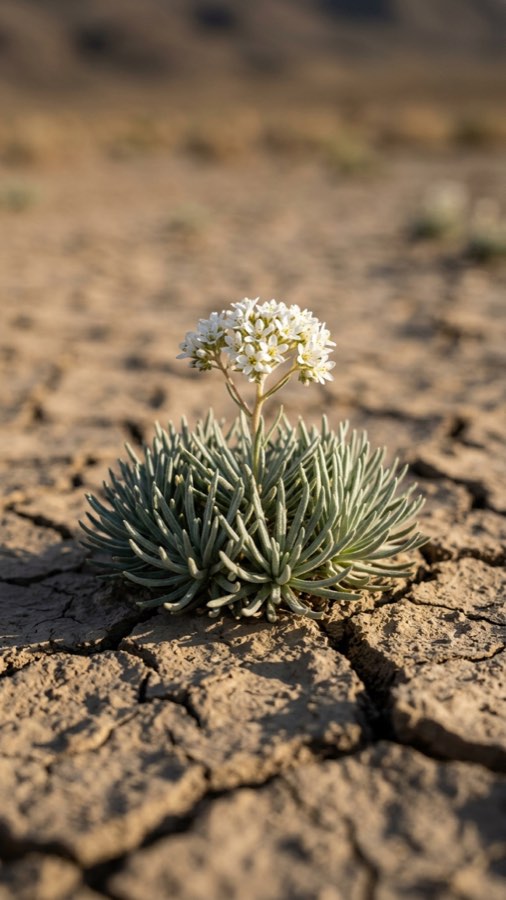
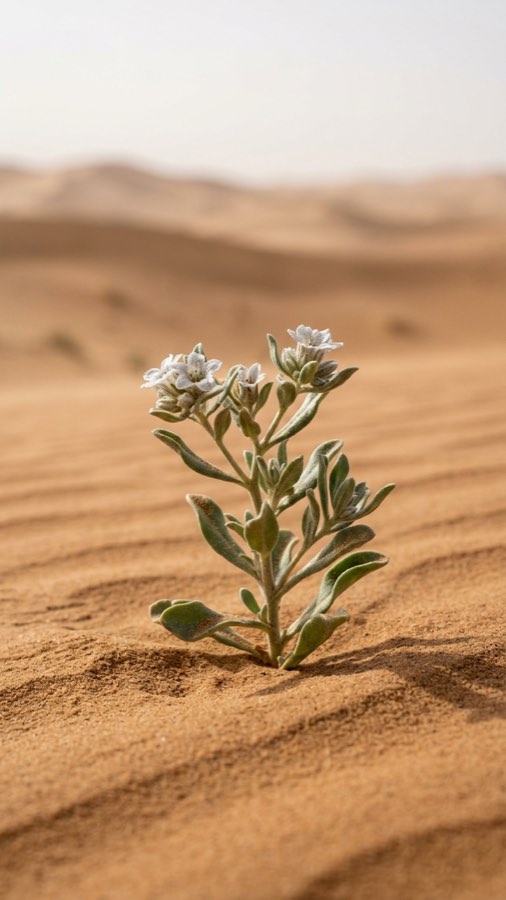
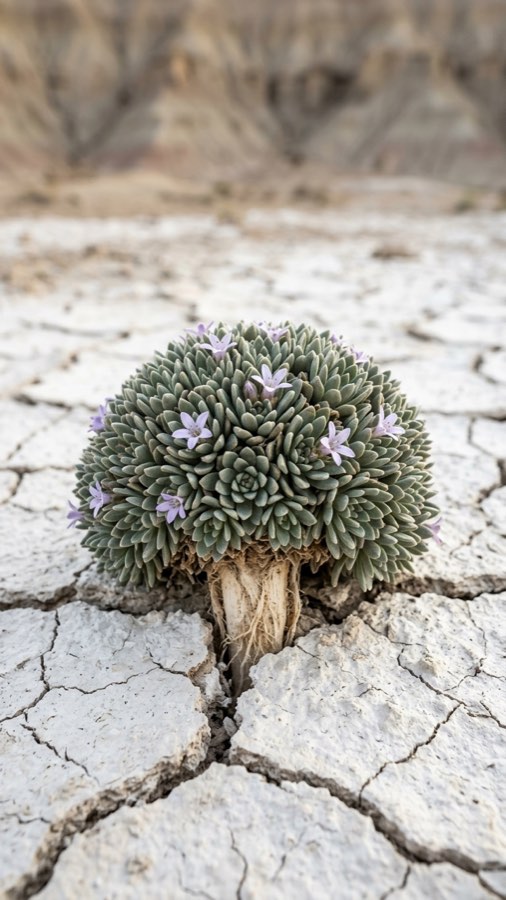
The Hill-reweaver is a low cushion plant some 10 cm tall. It packs fleshy grey-green scale-leaves into a dense half-dome, and on short flowering stems bears clusters of small pale-wisteria star-shaped flowers. It roots in the white gypsum ground — and each time rainwater slowly dissolves the gypsum below and a hollow forms, it extends stout pale roots before the cavity can fall, weaving its framework anew. The plant’s place on the surface does not change for years, yet with every rain the shape of its roots below becomes something else. After rain, where the dissolving gypsum has drawn back, part of the thick white root-crown can sometimes be seen laid bare.
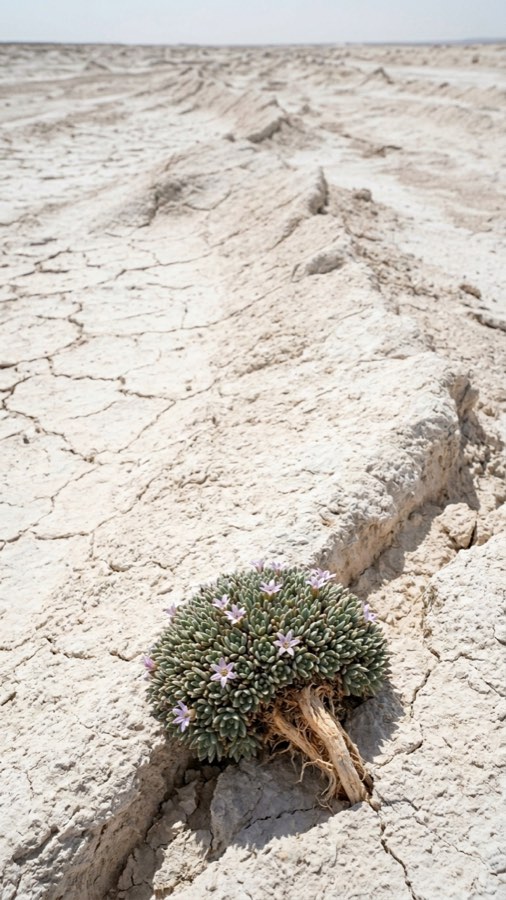 PLATE I
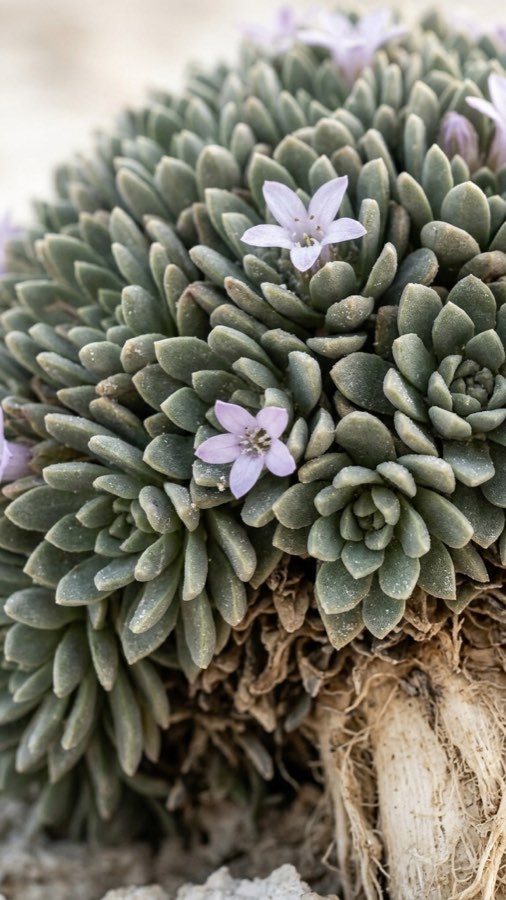 PLATE II
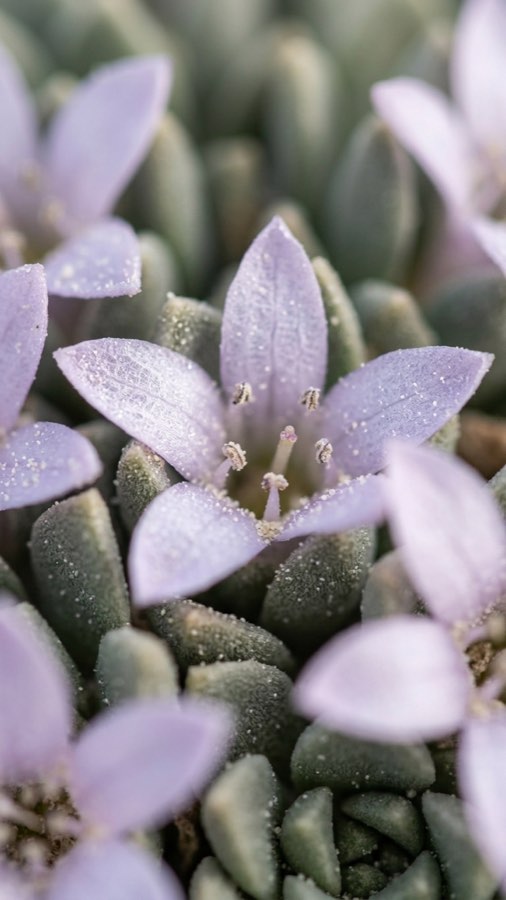 PLATE III
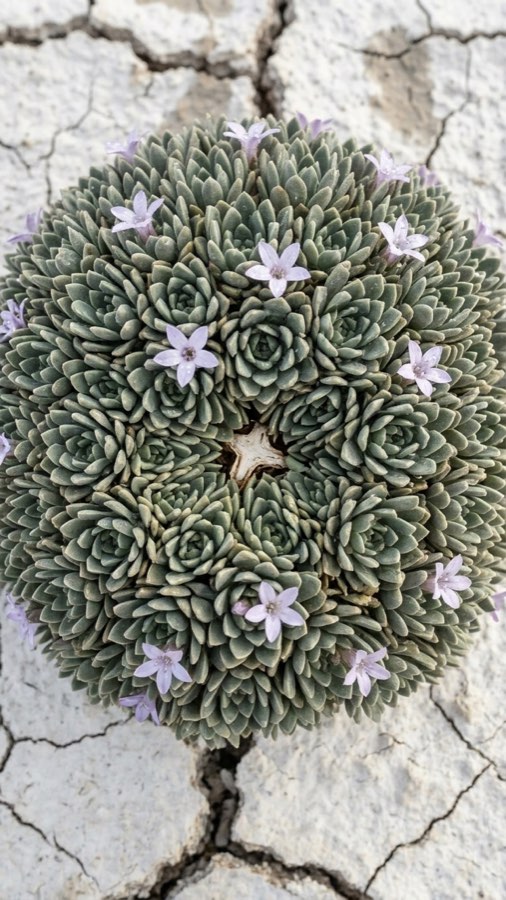 PLATE IV
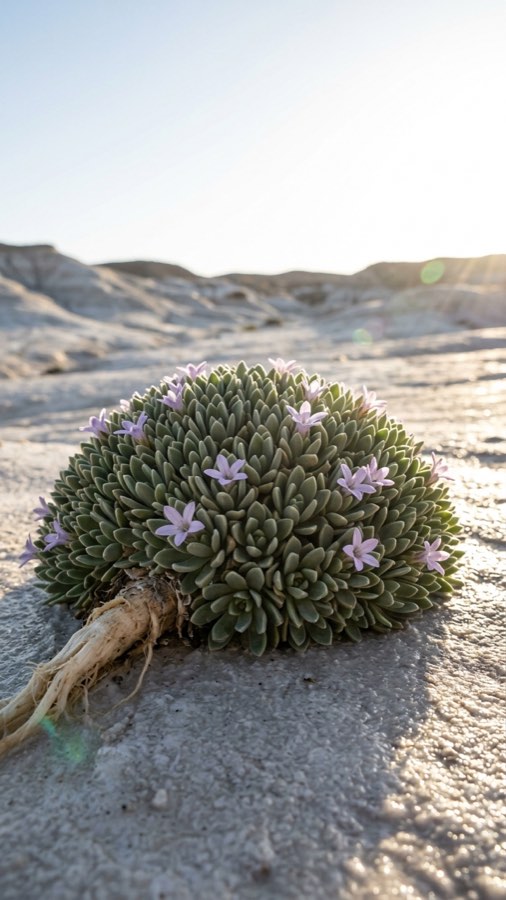 PLATE V
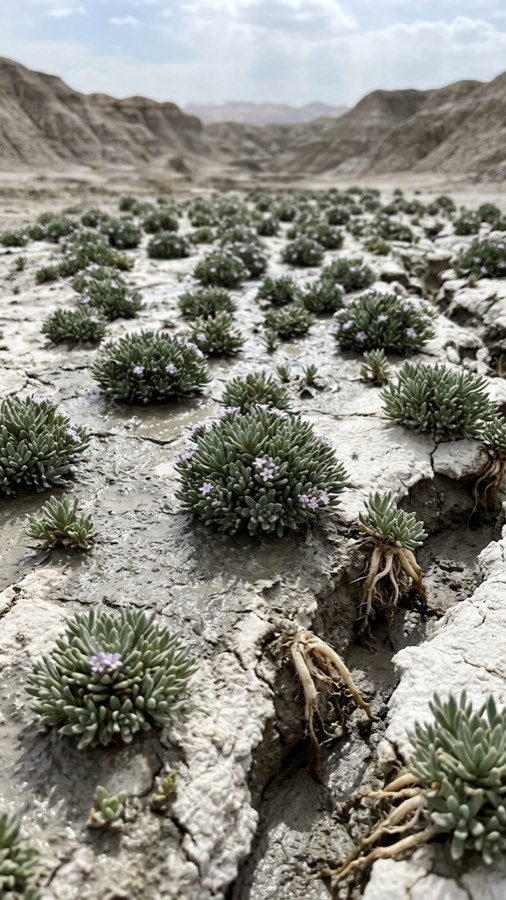 PLATE VI
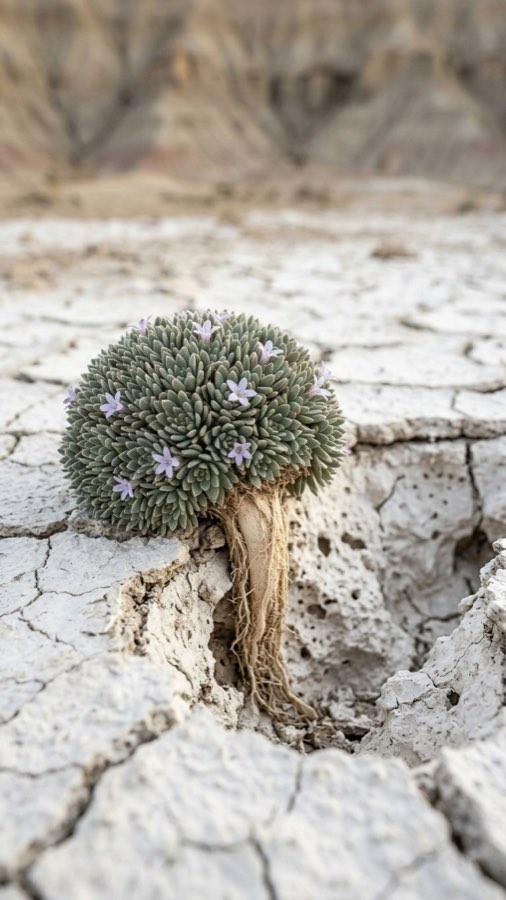 PLATE VIIPLATE VIII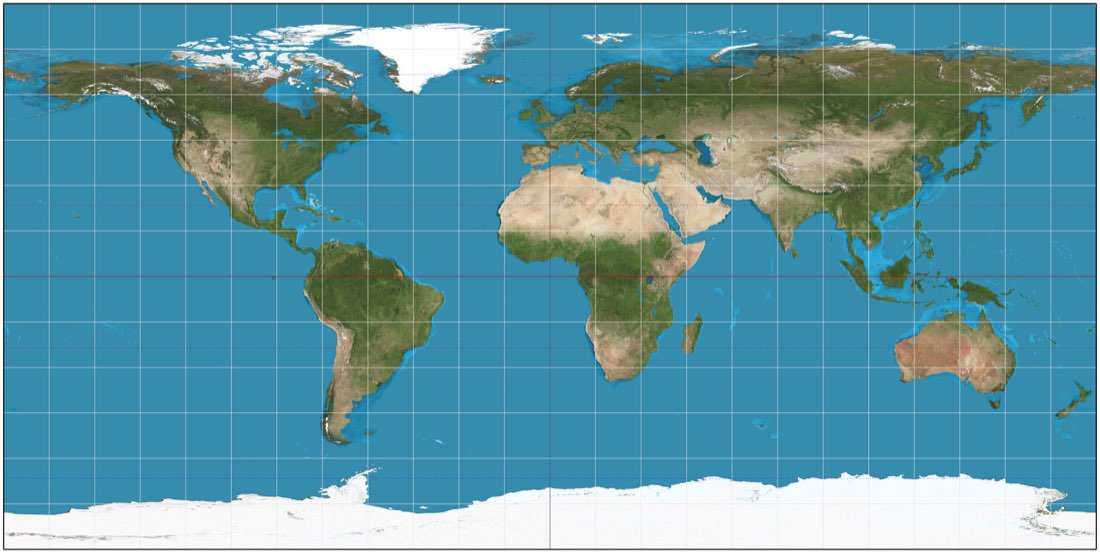
It never moves — yet below ground, its shape is never the same.
Above ground, the plant does not move from its place for years.
The white gypsum hills of the central Iranian Plateau.
Rainwater slowly dissolves the gypsum underground, and hollows form.
Before a hollow can fall, the Hill-reweaver extends its stout roots anew.
And so, with every rain, it weaves its underground frame again.
Within three days of the first rain, the pale violet flowers begin opening on the leeward side of the gypsum hills. Small solitary bees sometimes visit in daylight, but the pollen dries into a fine dust and appears able to reach stigmas on the low wind between cushions. When the capsules split, they do not cast seed far. The gypsum-coated, heavy seeds drop into narrow cracks beside the parent plant, which may explain why colonies follow the white ridges in broken lines.
The peculiarity of this plant is almost entirely lost if only the visible shoots are collected. Its white root caps appear for only a few days after hard rain, when the gypsum margin has dissolved and retreated. Once dry, they are buried under powder of the same color; if excavated, the fragile gypsum framework collapses with them. In a pressed specimen it remains merely a small gray-green cushion, easily filed among known gypsophile plants.
The sheep tracks avoid the shoulders of the white hills and keep to dark gravel bands leading toward old wells. My guide would not cross the gypsum slopes after rain, saying that if the exposed roots were stepped on, the hillside would split the following winter. This seems less a taboo than a rule learned from unstable margins. Because the cushions remain in the same positions for years, herders may have used them as small markers of a hill’s firmness.