Specimen · N°047 · Mineral · ▶ Film
Serpentivora insularisSerpentine Reader
Moved to the very next rock, it grows no more.
FOUND 20.4°N 75.0°W · Serpentine shrubland near Moa, eastern Cuba · ✝ EX · Last seen 1985
Moved to the very next rock, it grows no more.
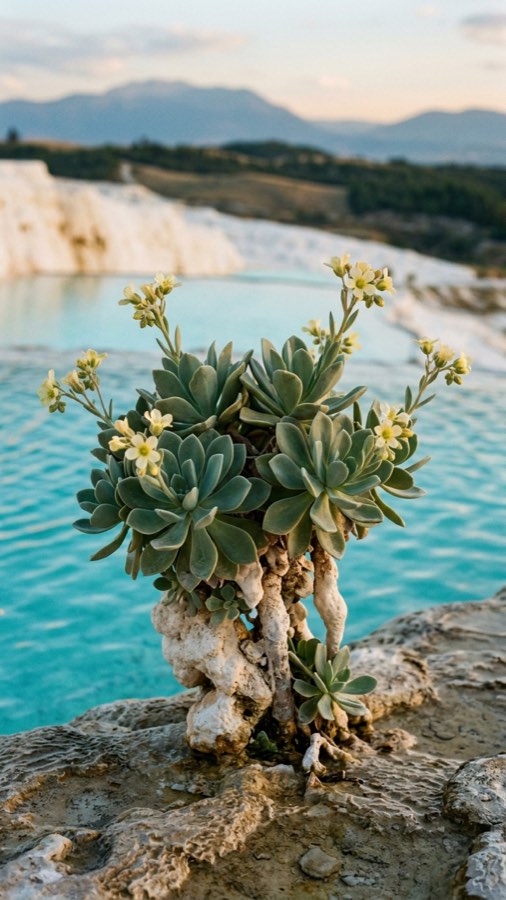
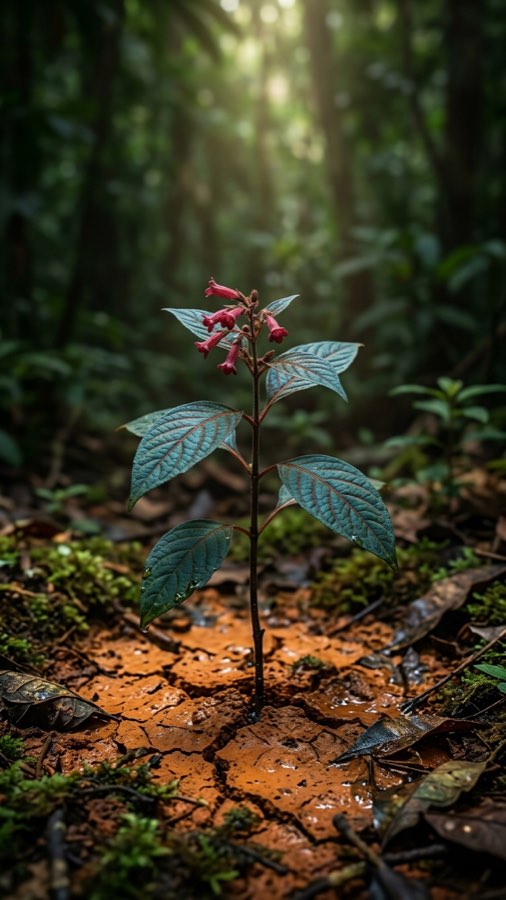
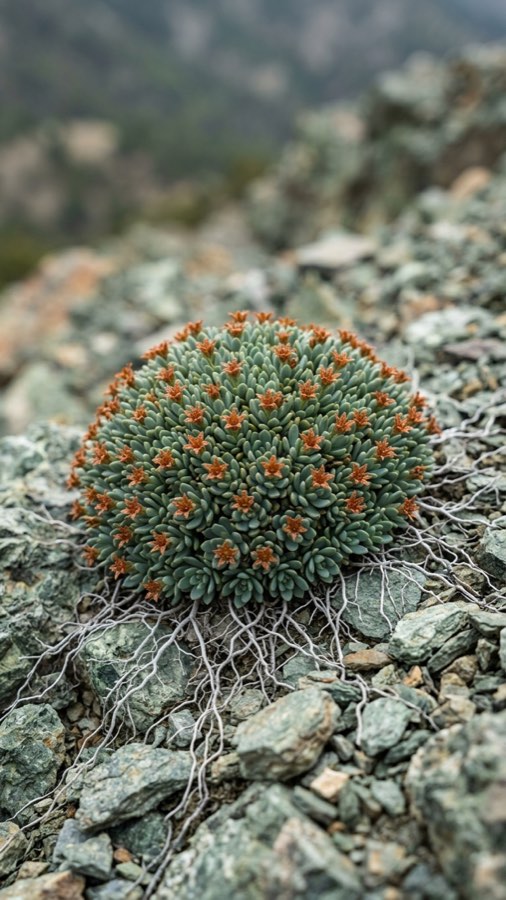
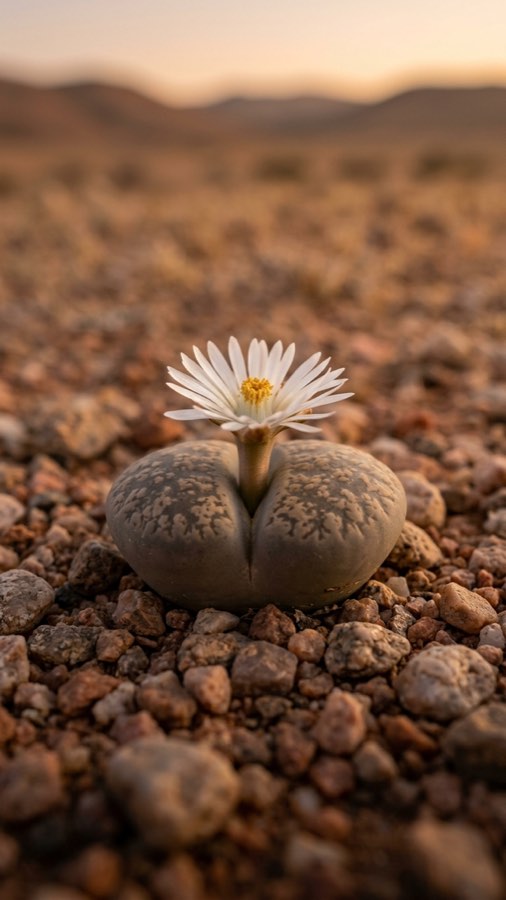
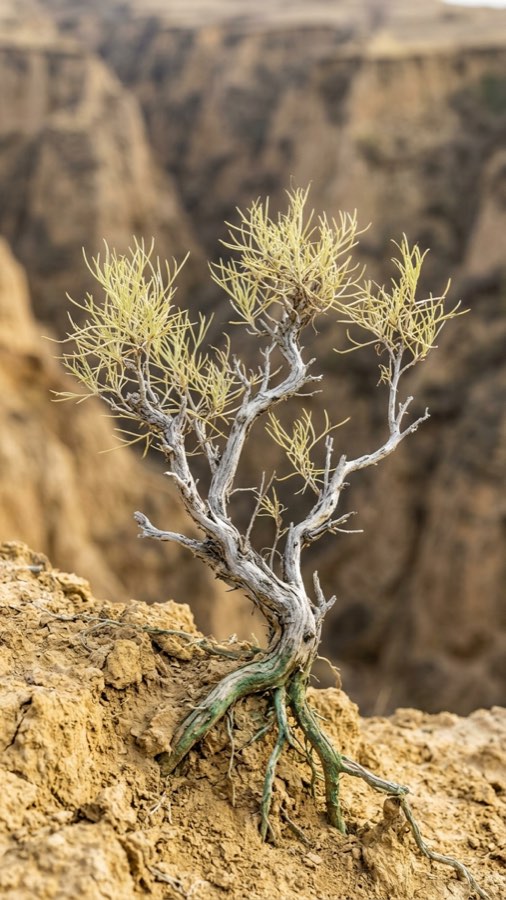
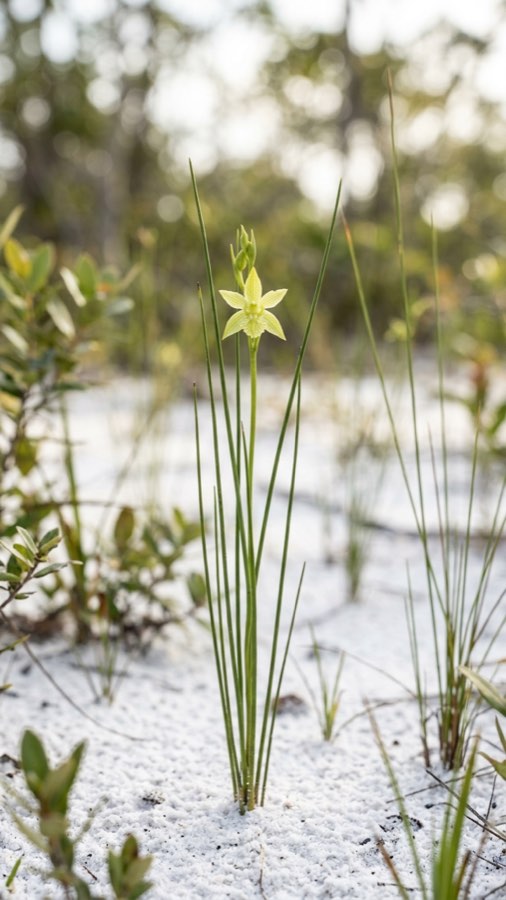
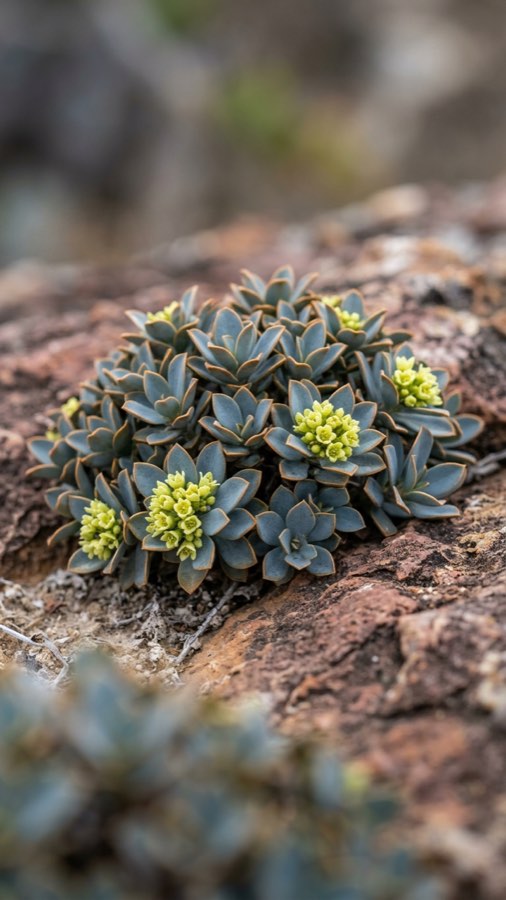
The Serpentine Reader is a cushion-forming dwarf shrub some 20 cm tall. It layers small blue-grey leathery leaves densely, their margins stained copper, and at the tips of short branches sets waxy pale yellow-green flowers packed tight. It roots on outcrops of red-brown weathered serpentine, reading with its roots the ratio of nickel to magnesium that differs from rock to rock, and calling to itself a different community of root microbes on each. Moved to a neighbouring outcrop a few metres away, it will not take. So its colonies break at the seams of the rock, scattered like small islands: common enough across the whole forest, yet each outcrop’s colony belongs to that rock alone.
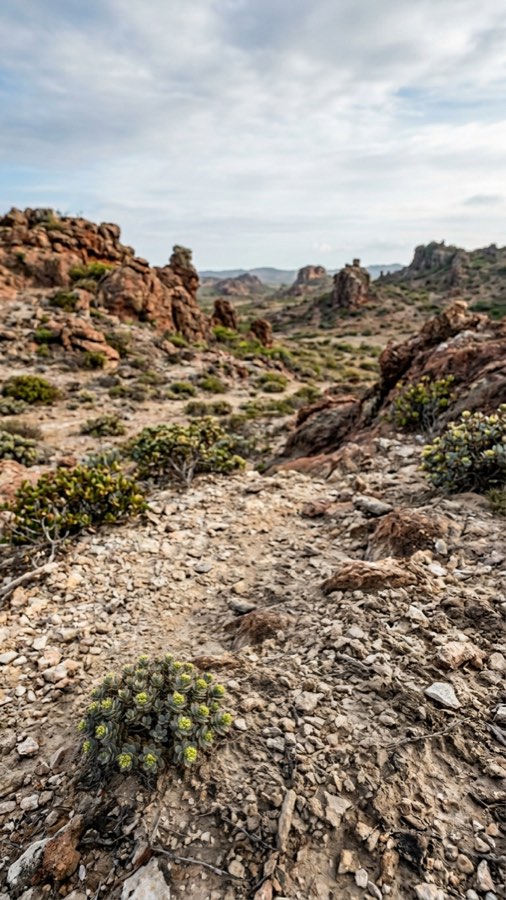 PLATE I
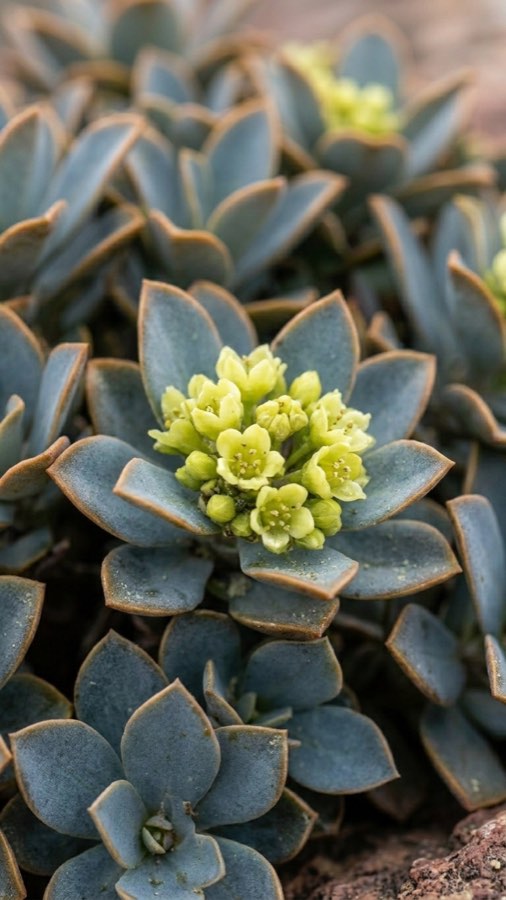 PLATE II
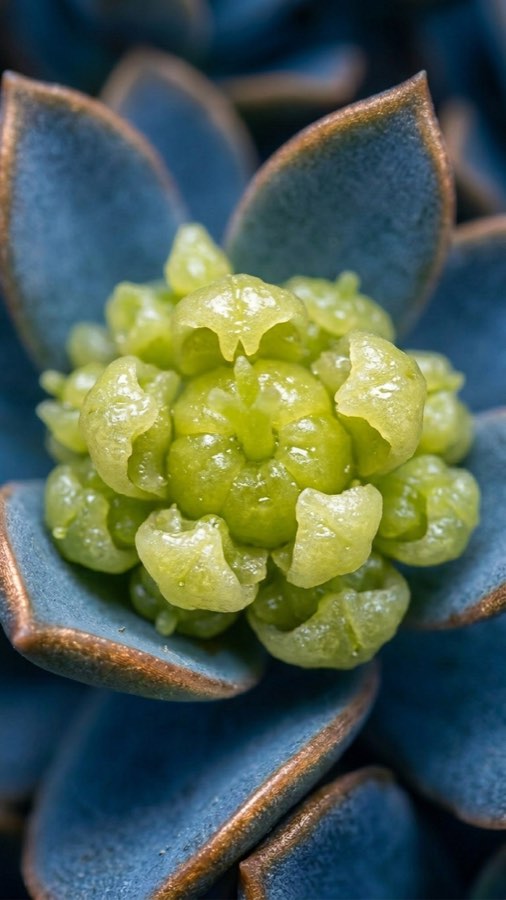 PLATE III
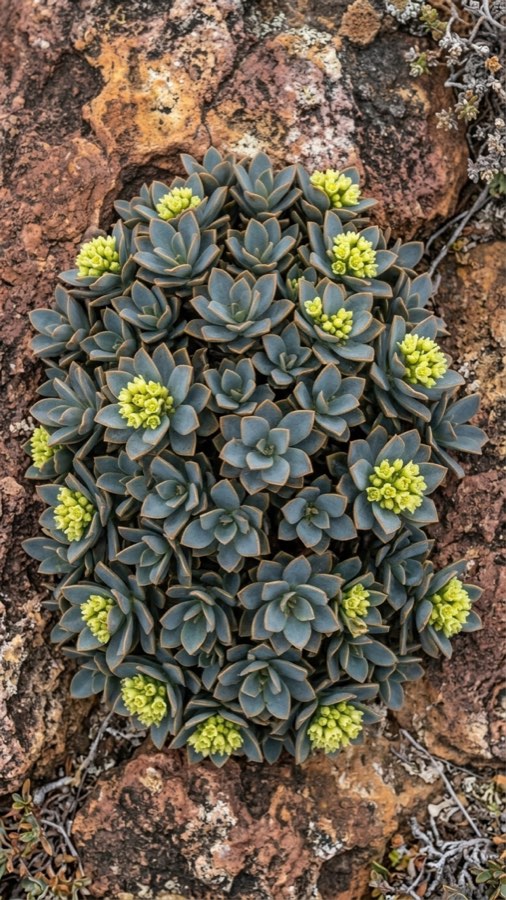 PLATE IV
 PLATE V
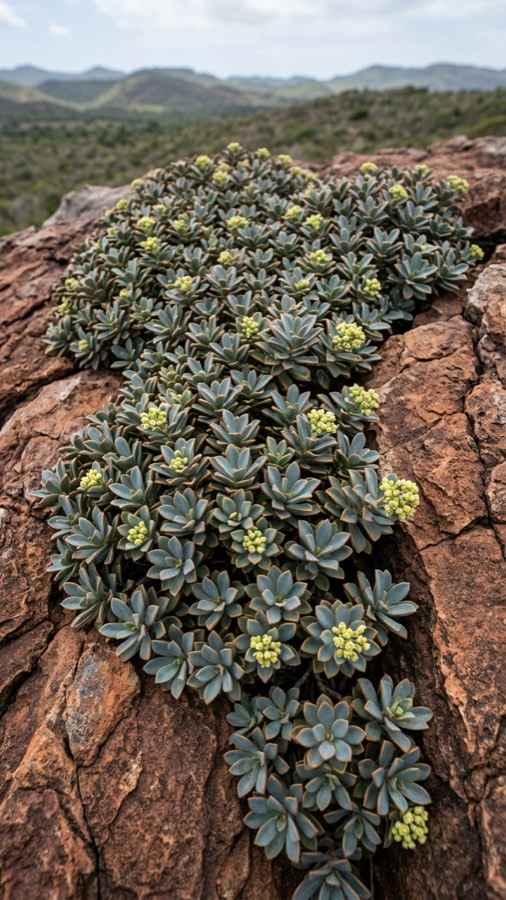 PLATE VI
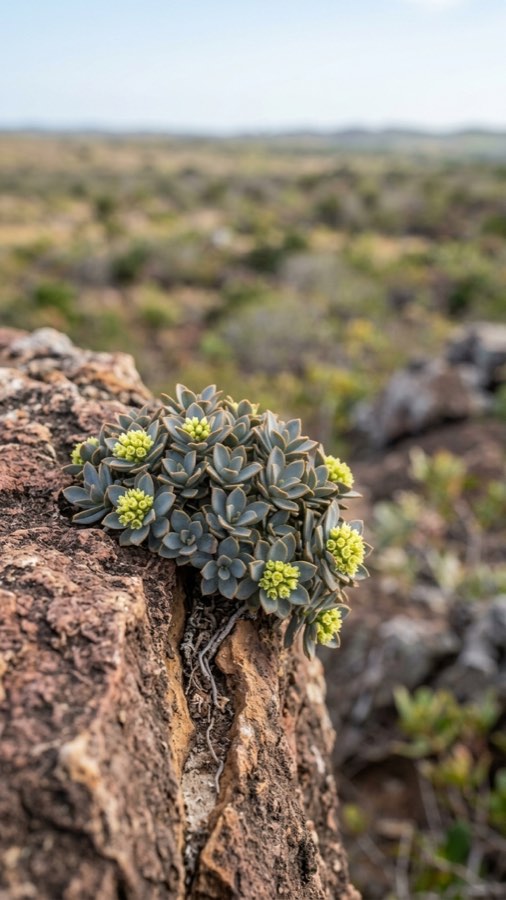 PLATE VIIPLATE VIII
Moved to the very next rock, it grows no more.
The same forest, rocks of the same face — and yet.
The serpentine shrublands near Moa, eastern Cuba.
The Serpentine Reader grows only on the thin, metal-heavy soil of the outcrops.
It layers its blue-grey leaves close; their margins stain to copper.
With its roots, this thicket is reading each rock’s own ratio of metals.
Only after the light rains of late March do the pale yellow-green tips open at once. Within five days the perianths shrink like wax flakes, and the plant becomes nearly indistinguishable from related serpentine shrubs among its blue-gray leaves. Old labels often say only “dry dwarf shrub”; in a pressed specimen without roots, the plant’s essential character disappears.
Fruit set is abundant, but few seeds travel far. When dry, the ripe capsules split and drop fine black seeds into cracks on the same outcrop. After hard showers, they wash only a few dozen centimeters over the red-brown rock and gather in hollows where microbial films remain. Germination appears easy; on unsuitable stone, however, the root tip browns and stops before the first leaves unfold.
Near Moa, some call the shrub mata que lee la piedra, the bush that reads the stone, and look for it before extending a field. The line where its cushions stop abruptly marks not only thin soil but places where crop roots weaken as if burned. To miners it was an inconspicuous shrub; to those laying fields and paths, it was a practical sign by which serpentine ground could be read.