Specimen · N°048 · Sand · ▶ Film
Aphyllanthe essequibensisLeafless Greenbrush
A plant that seems to grow the faster, the fewer leaves it keeps.
FOUND 4.0°N 58.6°W · White-sand forest of the Essequibo region, Guyana · ✝ EX · Last seen 1991
A plant that seems to grow the faster, the fewer leaves it keeps.
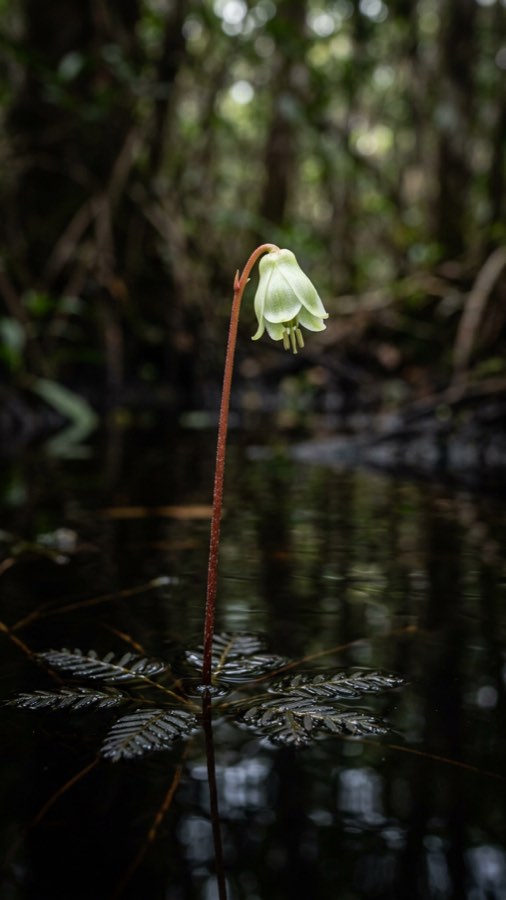
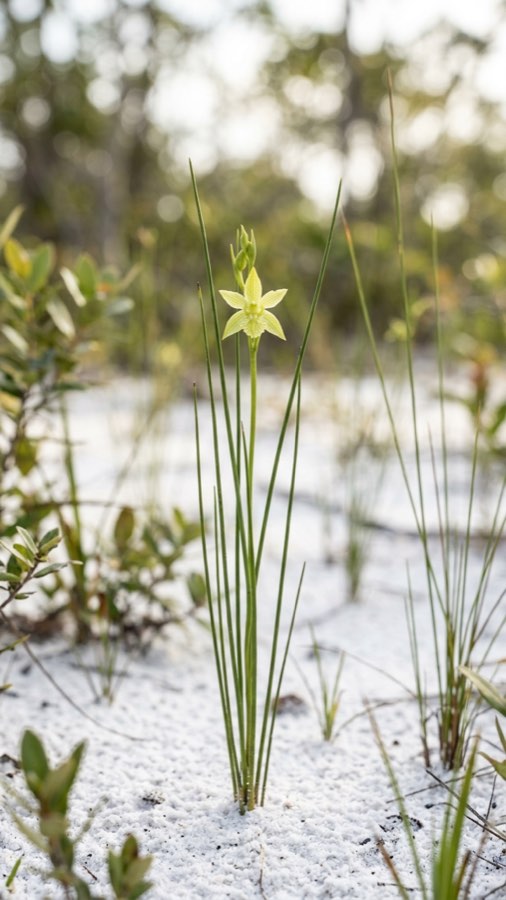
The Leafless Greenbrush is a slender plant some 20 cm tall. A few fine green stems rise straight, carrying almost no leaves, and each bears at its tip a single small pale yellow-green star-shaped flower. On the barren white sand, the wider a plant spreads its leaves, the more their upkeep drains it and the slower it grows. So the Leafless Greenbrush packs the work of photosynthesis into a scattering of cells along the stem, gaining its carbon in a nearly leafless form. Neighbouring plants carry fewer stems still — and on this white sand the reversal holds: the fewer the leaves, the faster the growth.
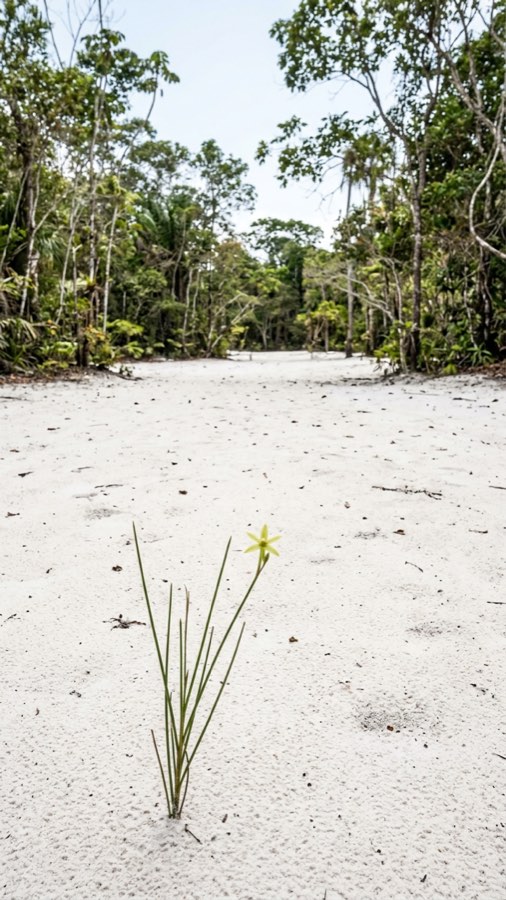 PLATE I
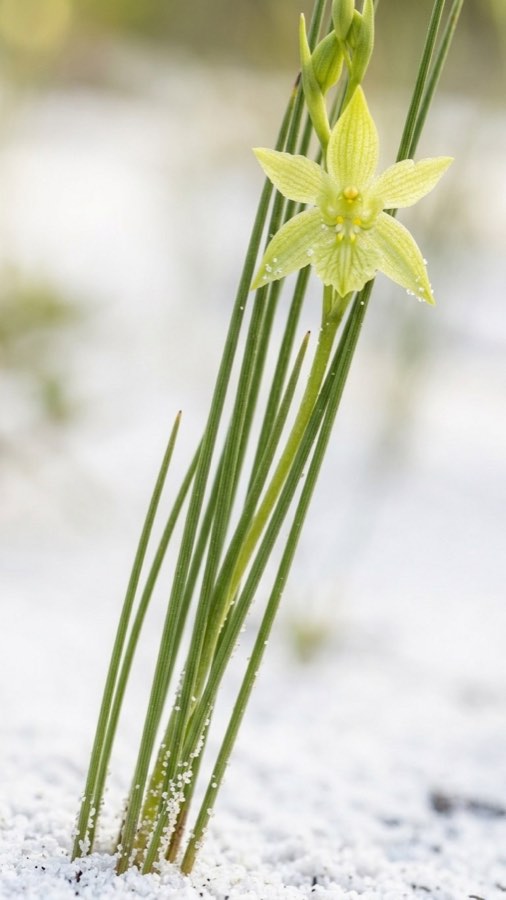 PLATE II
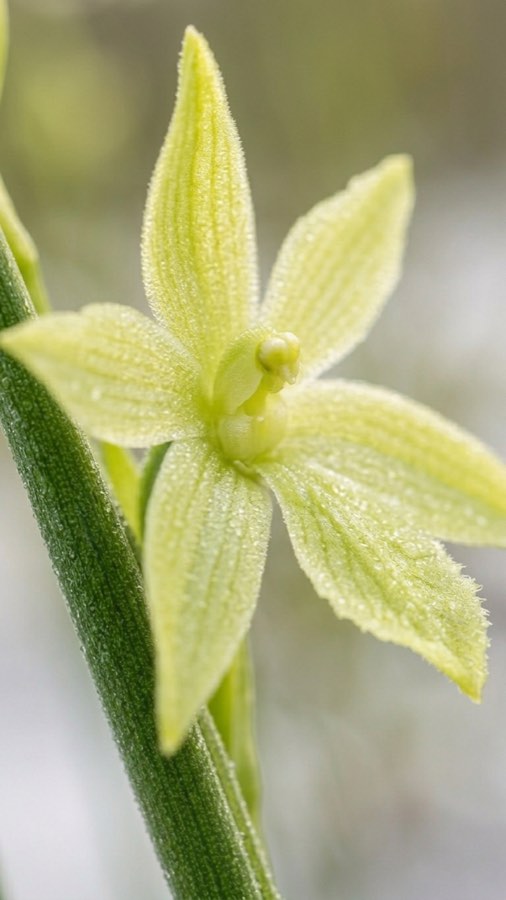 PLATE III
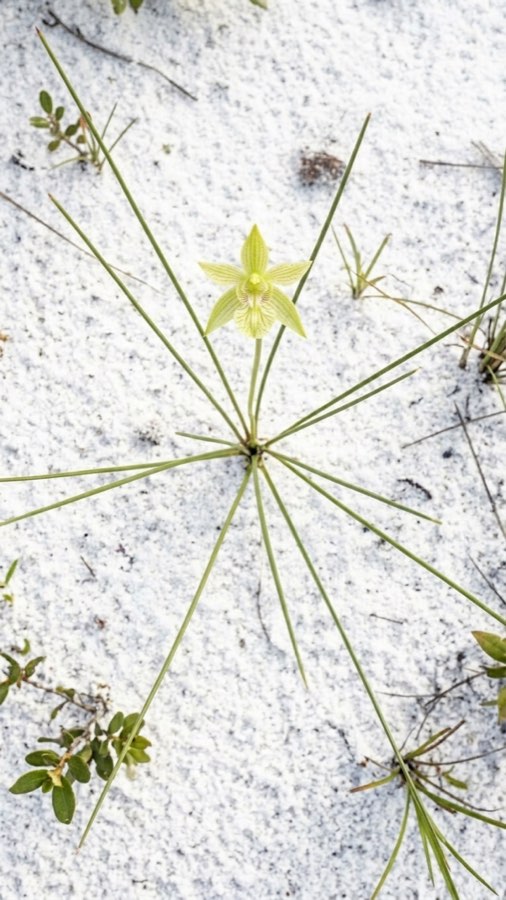 PLATE IV
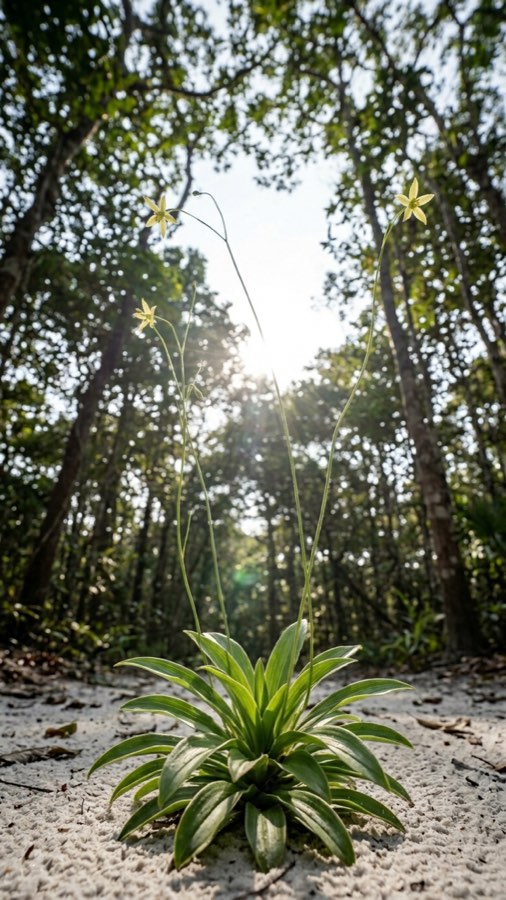 PLATE V
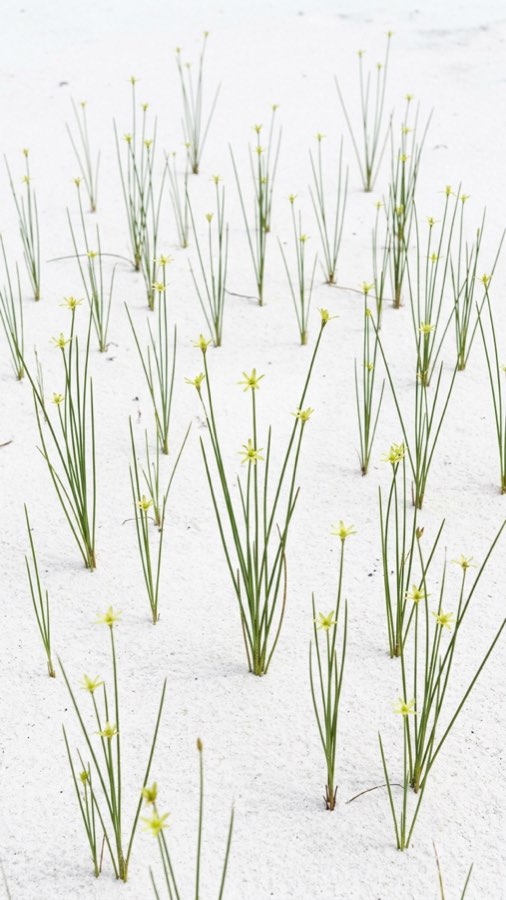 PLATE VI
 PLATE VIIPLATE VIII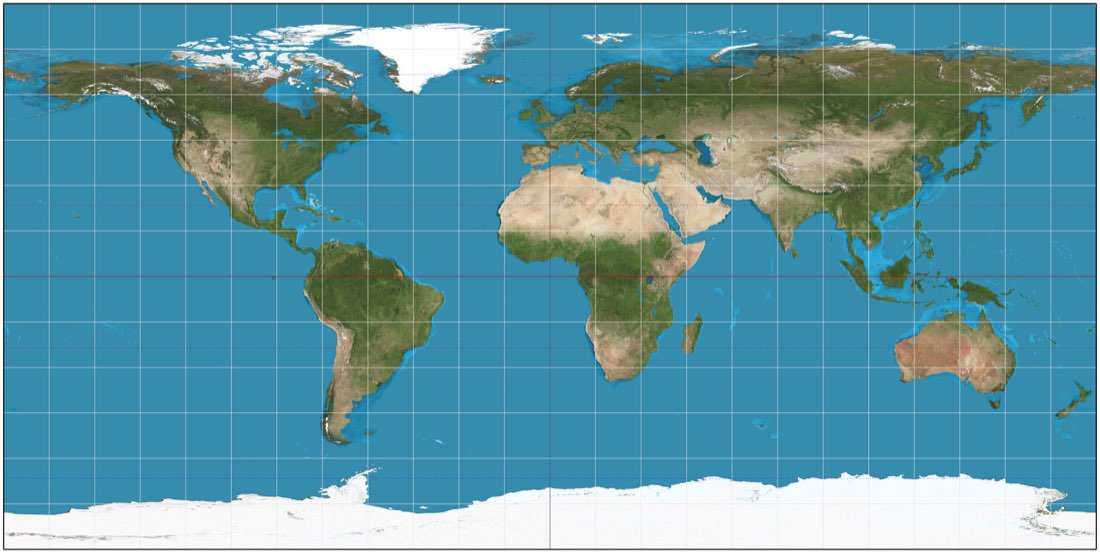
A plant that seems to grow the faster, the fewer leaves it keeps.
It ought, by rights, to be the other way round.
White-sand forest of the Essequibo region, Guyana
Pure white sand, drained of nearly all its nutriment.
The Leafless Greenbrush carries almost no leaves at all.
It packs the work of photosynthesis into a few scattered cells of its slender stems.
Within about three days after the first hard rains, the stems rise on the shallow moisture held in the white sand, and the flower closes after only two or three nights. In the dry season only pale, hardened stems remain, difficult to separate from fragments on the sand surface. Any old specimen filed among dwarf sedges was likely collected in this spent condition, after the flower had already gone.
The pale yellow-green star-shaped flower is not a showy lure; it loosens its anthers only toward evening and gives off a faint scent. Minute nocturnal moths visit, but fruit also sets in poor visitation years, suggesting that self-pollination inside the wind-shaken flower is primary. The ripe fruit does not split. It is struck loose by rain and rolls only a few dozen centimeters, producing tight colonies in which neighboring plants become thinner and carry fewer stems.
Where Aphyllanthe grows, the litter layer is thin, and a probing root or digging stick finds little dark humus beneath it. The saying that even birds do not nest there is less a superstition than a rule of experience: such open ground offers few fruits and insects. White sand marked by these green pens would have been read as land where swidden crops fail quickly and fruit trees drop their leaves in the dry season.