Specimen · N°068 · 砂 · ▶ Film
Sphragidocarpus nocturnusSealed Gourd Tree
この果実は、一年に一Nightしか落ちません。
FOUND 11.1°N 19.4°E · アフリカ中央部の季節河畔林 · ✝ EX · Last seen 1991
この果実は、一年に一Nightしか落ちません。
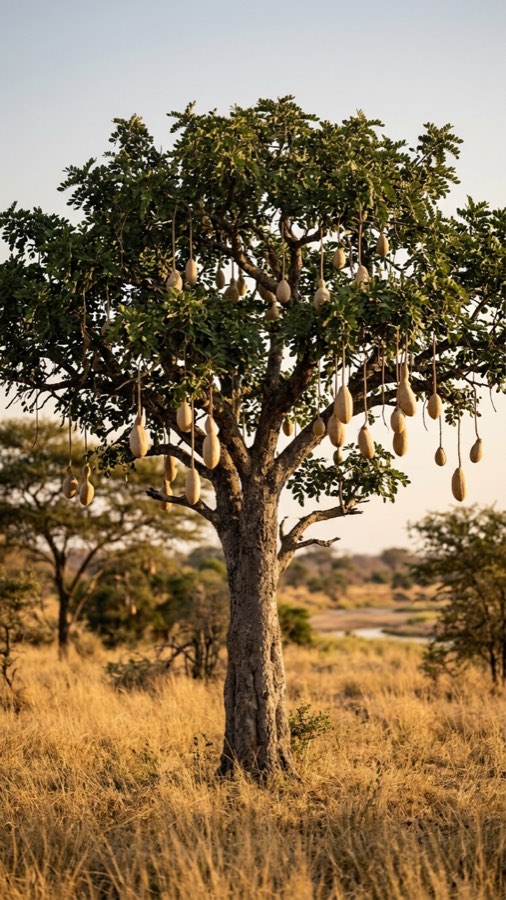
Sealed Gourd Treeは、アフリカの季節河畔林に立つ高さ十メートルほどの大木。ash色のざらついた樹皮と羽状のleafを広げ、枝からは長く細い木質の柄で、淡い褐色をした瓢型の巨大な果実をいくつも吊り下げる。果実は硬い木質の殻を持ち、乾季のあいだにゆっくりと熟して乾いていく。乾ききると枝との継ぎ目に離層ができ、殻はわずかな衝撃で縫い目に沿って割れるようになる。そして乾季の終わり、乾いたNightWindがひと晩だけ強く吹く晩に、熟した瓢はいっせいに枝を離れて地に落ち、殻を割る。割れた殻の中では、種が繊維の小部屋に幾段にも整然と並び、まるで封じられた記録のようだ。だが、それが本当にその一Nightだけに起きるのか、落ちる瞬間を見届けた者はまだいない。
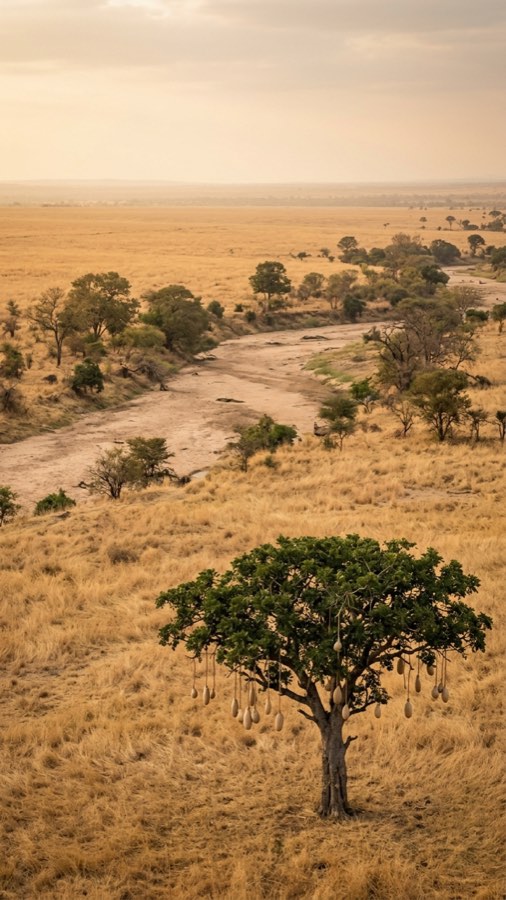 PLATE I
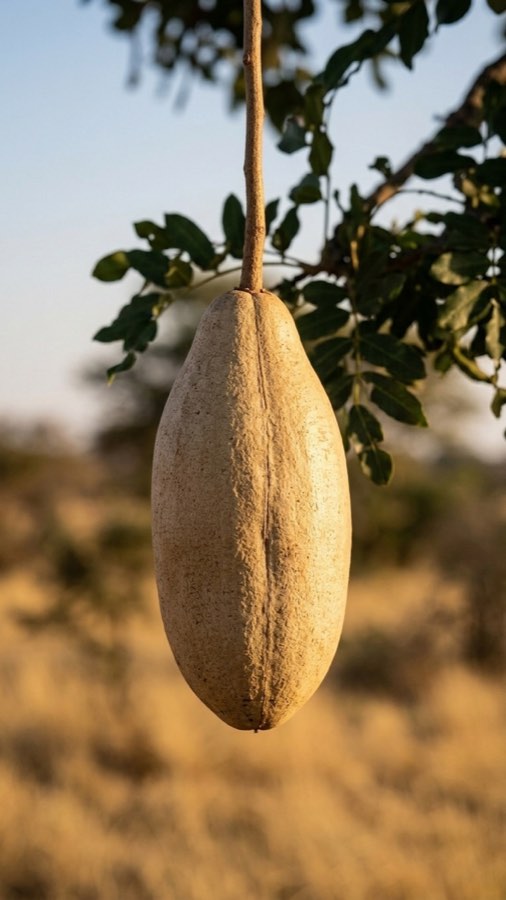 PLATE II
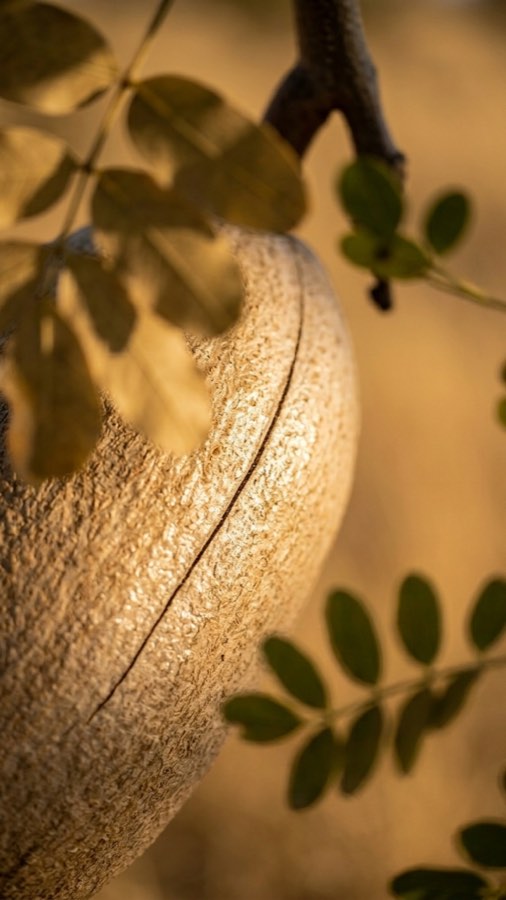 PLATE III
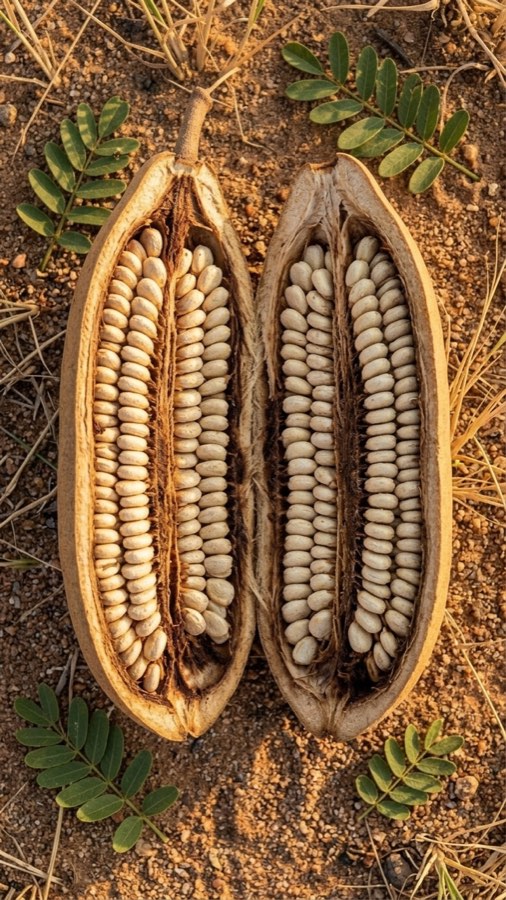 PLATE IV
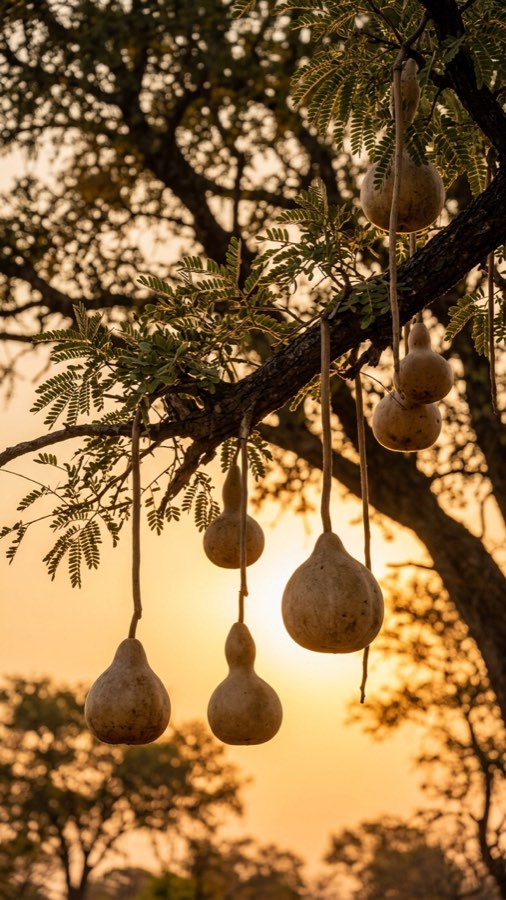 PLATE V
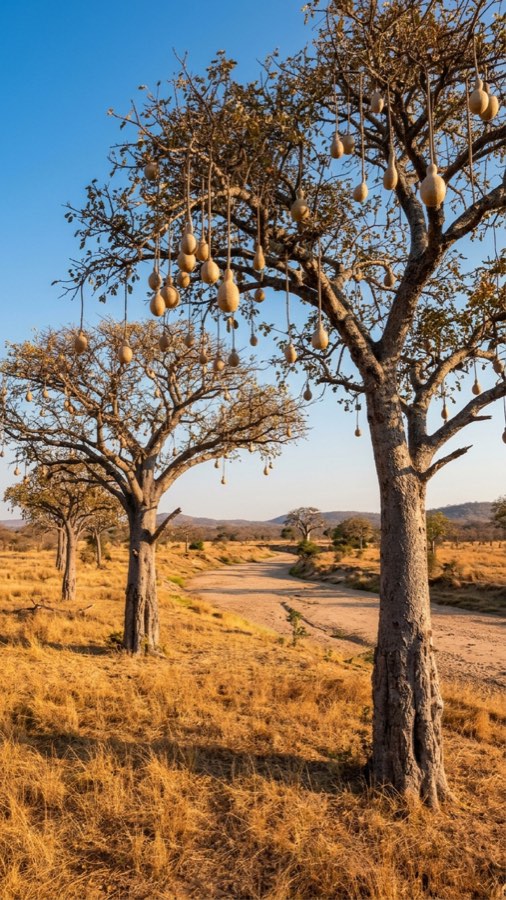 PLATE VI
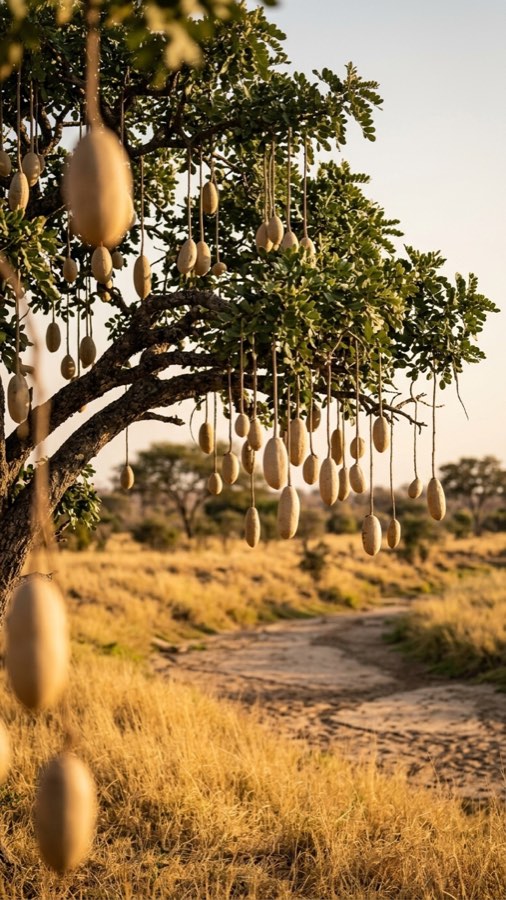 PLATE VIIPLATE VIII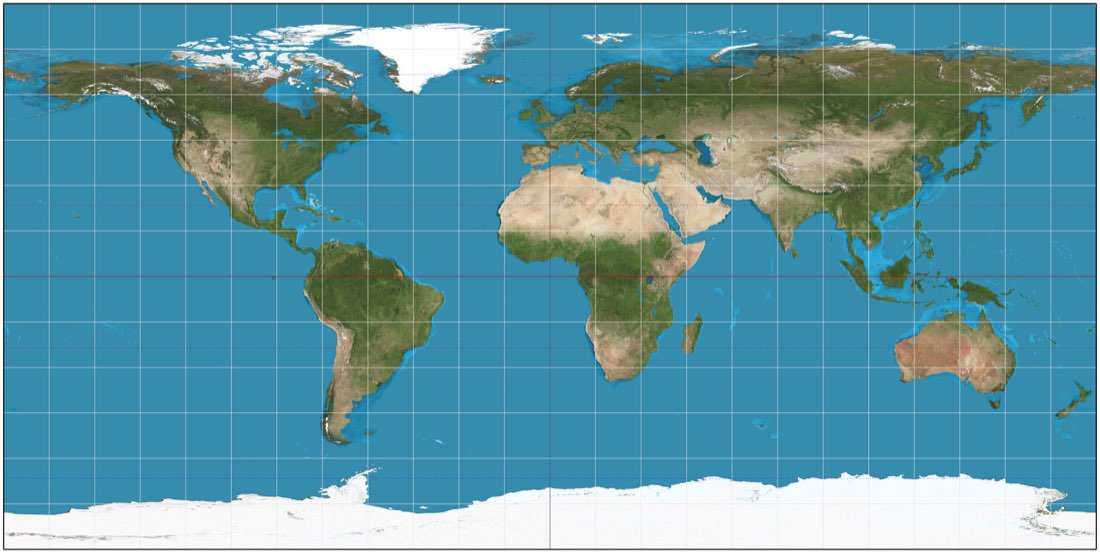
この果実は、一年に一Nightしか落ちません。
熟して乾ききった重い瓢が、枝との継ぎ目をゆるめ、落ちるNightを待っているからです。
アフリカの季節河畔林、乾季の終わり。
木は枝から、瓢型の巨大な果実をいくつも吊り下げています。
硬い木質の殻の中で、種は幾段にもきちんと並んでいます。まるで封じられた記録のように。
乾いたNightWindがひと晩だけ強く吹くと、熟した瓢はいっせいに枝を離れます。
The roots appear green only for a few days after a fall of the loess wall. Once the exposed face dries, the surface fades back to grey-white, and the plant is easily taken for a young Artemisia or a grass seedling. By the time a collector can safely approach, the slope has cracked and the diagnostic condition is gone. Its absence from records seems due less to rarity than to the brevity of its visible phase.
I have not seen an open flower. Small cleistogamous flowers, no larger than grains of rice, appear to form in the leaf axils and swell only after rain. In dry years they wither unopened; in wetter intervals they drop heavy seeds. These seeds have neither pappus nor wing, and seem shaped to roll into cracks on the collapsed face rather than travel far by wind. This agrees with the plant’s narrow, linear colonies inside the gorge.
When villagers speak of a slope where Turncoat Root has risen, they do not seem to mean land that will never fail again, but a face with some reprieve before the next major collapse. For exposed roots to remain green, the fresh loess must have settled into a thin crust, with rain-cut fissures still open beneath it. Under such conditions, an edge plot or seedbed may be usable for several years. The saying is not a promise, but a practical sign for when to wait and when to plant.