Specimen · N°067 · Ice · ▶ Film
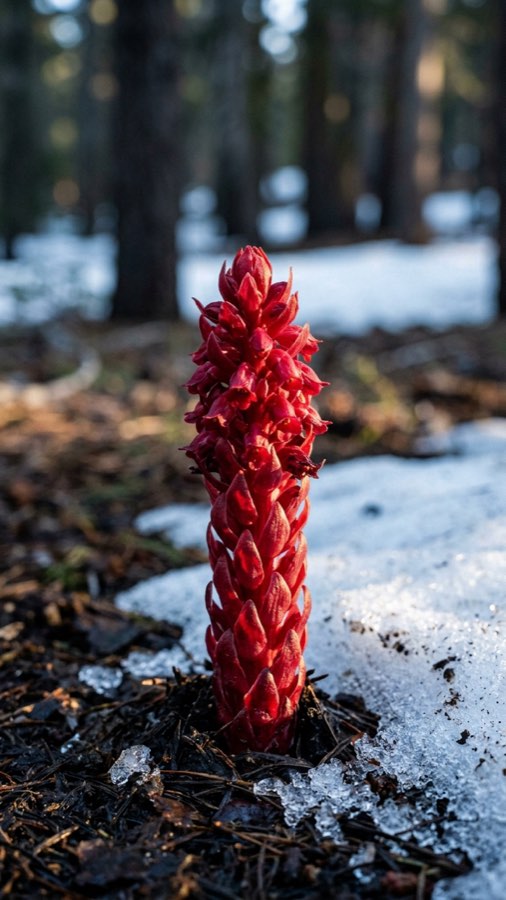
Nivicrista cruentaSnowmelt Bloodspike
緑をひとつも持たないplantが、雪解けのmarginに、赤い穂だけを立てます。
FOUND 37.8°N 119.6°W · シエラネバダ山脈、標高約2000mの針leaf樹林 · ✝ EX · Last seen 1977
緑をひとつも持たないplantが、雪解けのmarginに、赤い穂だけを立てます。
Snowmelt Bloodspikeは、緑をまったく持たないplantだ。leaf緑素を欠くため自分ではlight合成をせず、地中に張った菌の糸から養分を横取りして育つ、菌従属栄養の一種である。栄養をlightに頼らないので、ほかのplantがまだ芽吹けない冷えた地面でも立ち上がることができる。春、積もった雪が斜面から少しずつ退いていくと、温まりはじめた地面のmarginに、bloodのように赤い肉厚の穂だけが土を持ち上げて現れる。緑のleafは一枚もなく、赤い鱗片状の苞に覆われた穂の全体が同じ深紅に染まる。この赤はleaf緑素の代わりの色素によるもので、冷えた地表でもよく目立つ。雪を突き破って出るのではない。雪が退いて地面が現れた、その"雪解けのmargin"にだけ姿を見せる。flowerが終われば穂は褐色に枯れ落ち、また地中の菌との関係だけが土の下に残る。
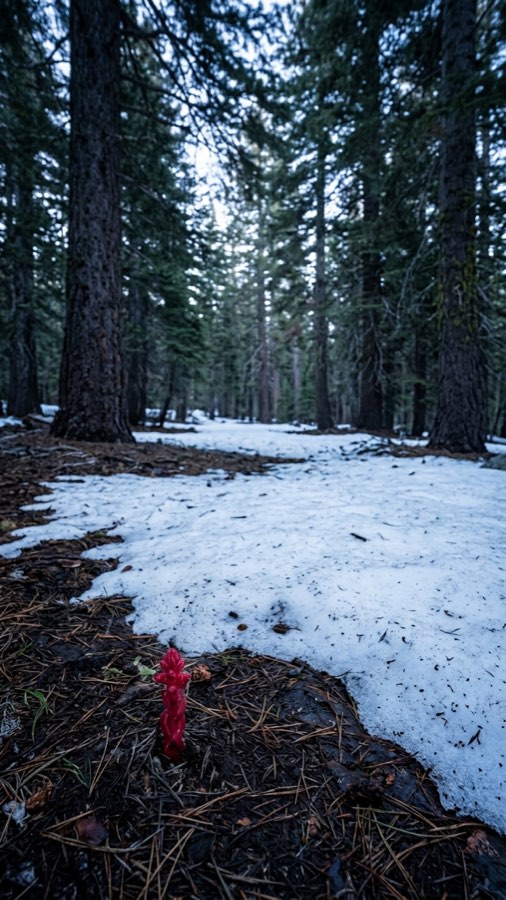 PLATE I
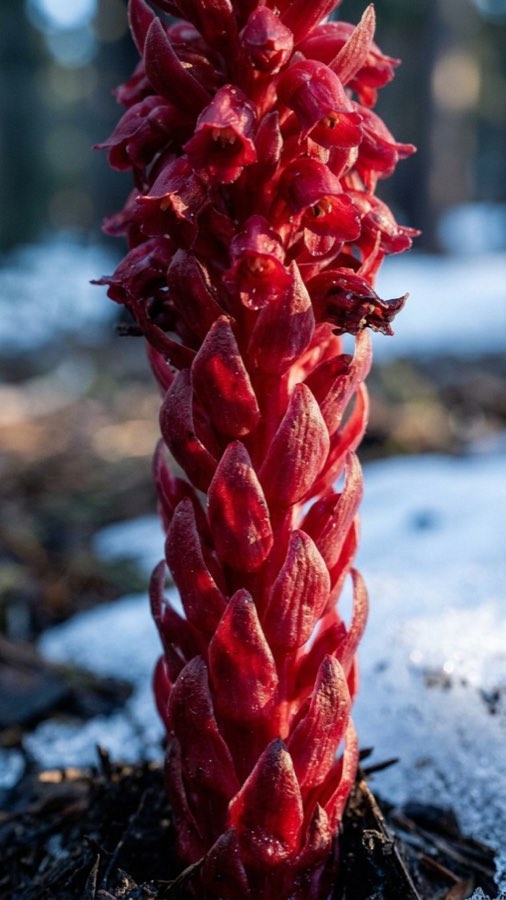 PLATE II
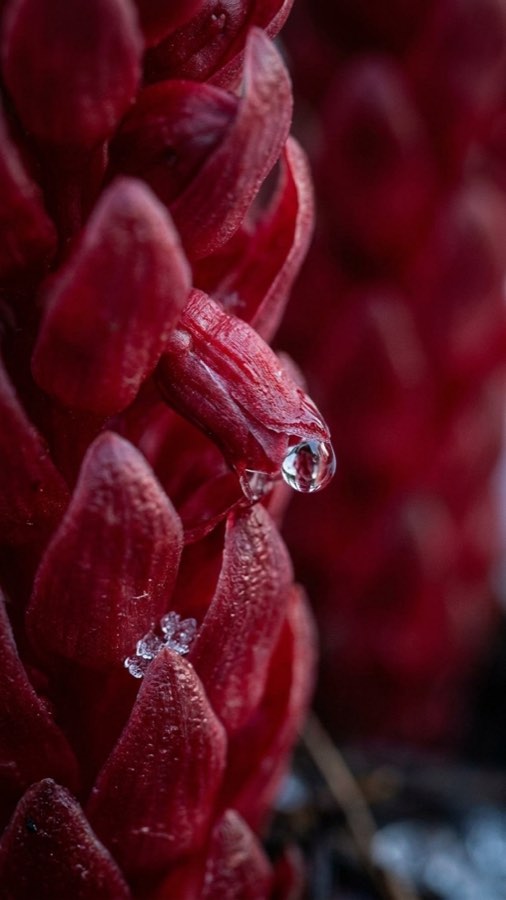 PLATE III
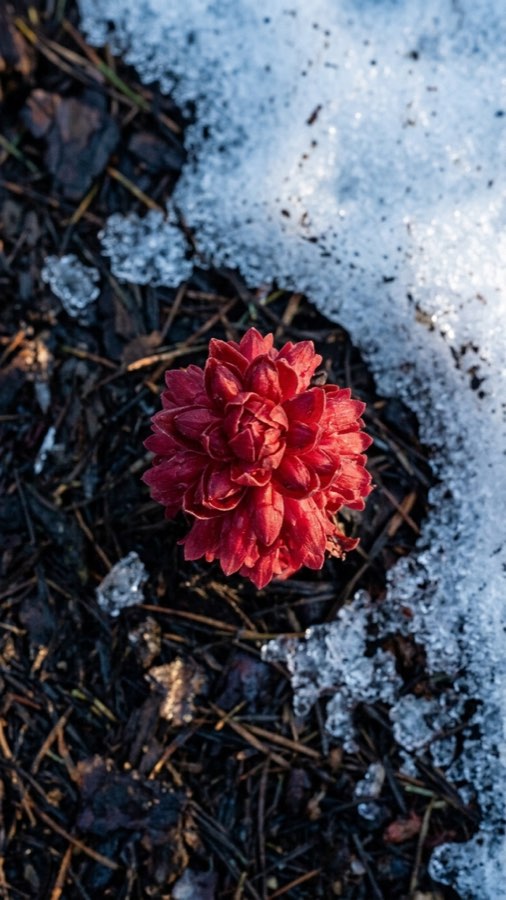 PLATE IV
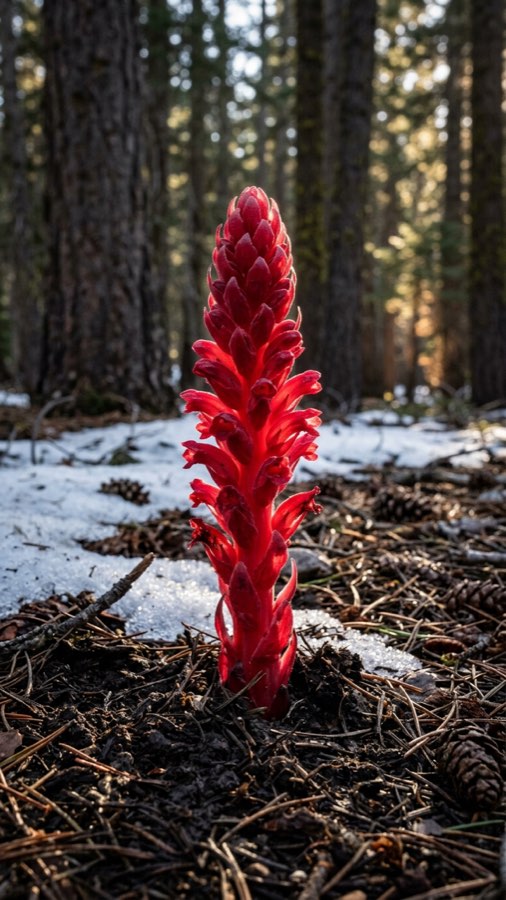 PLATE V
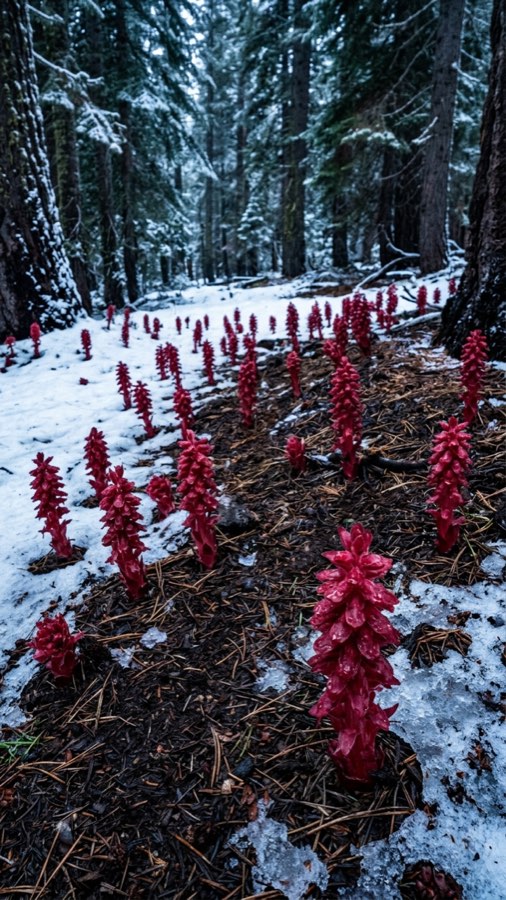 PLATE VI
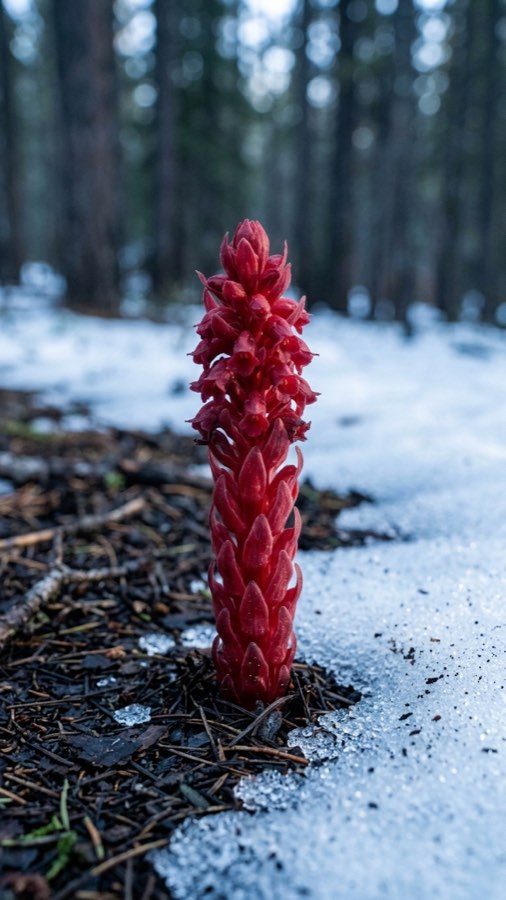 PLATE VIIPLATE VIII
緑をひとつも持たないplantが、雪解けのmarginに、赤い穂だけを立てます。
lightでは生きません。地中の菌から、養分を奪って育ちます。
シエラネバダの針leaf樹林、標高およそ二千メートル。
雪が斜面から退くと、温まった地面のmarginに、bloodのような赤が現れます。
leafは一枚もなく、穂のすべてが同じ深紅に染まっています。
雪を突き破るのではありません。雪が去った跡にだけ、静かに立ちます。
In the small plots where Returning-Shade Herb was found, old alluvial clay lay close beneath the surface and stayed cool to the fingers after rain. No seedlings appeared in the pale ash soil soon after burning. They emerged only years later, where soluble ash had leached away and Sal leaf litter had rebuilt a thin humic layer. The plant seems to wait less for the absence of fire than for the return of a damp, dark skin of soil.
The pendant bell is not built to be conspicuous at a distance. Under weak morning flecks of light, the inner mouth showed traces of brief visits by minute flies and thrips, while the anthers split low inside the tube. Fruit still forms in years with few visitors, suggesting a final reliance on self-pollination. The seeds are fine; after fire the plant persists not as a visible underground shoot, but as a soil seed bank.
The reason this herb slipped from records lies less in its strangeness than in the circumstances of collecting. It flowers for only a few days to a week under muddy, closed canopy during the monsoon, and is absent from the bright burn sites most surveys enter. Once browned and collapsed, it resembles the remains of a saprophytic herb or a small pyrolaceous plant, and pressing destroys the translucent texture of the flower. In a herbarium cabinet, it was a plant poorly equipped to keep its name.