Specimen · N°013 · Ice · ▶ Film
Glacianthus groenlandicusGlacier Bloom
On bare glacier ice, with no soil, a flower blooms.
FOUND 72.0°N 40.0°W · Glacier surface of Greenland · ✝ EX · Last seen 2003
On bare glacier ice, with no soil, a flower blooms.
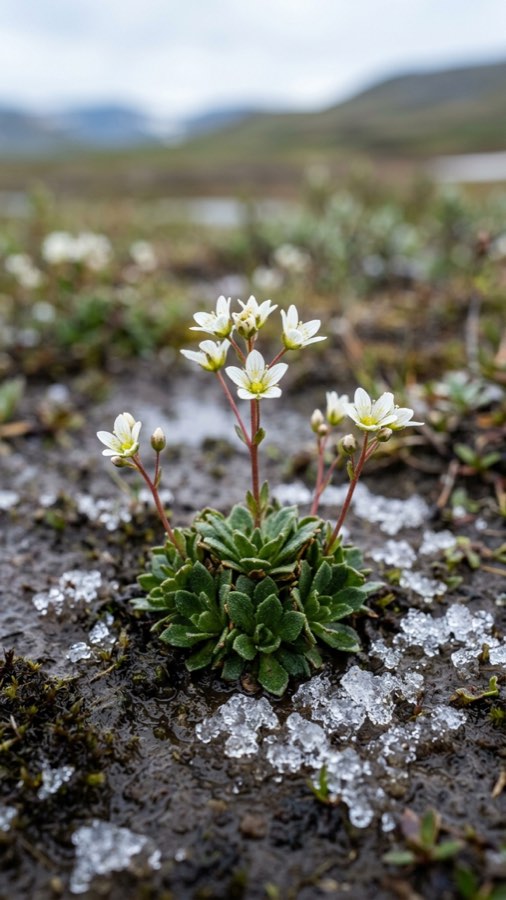
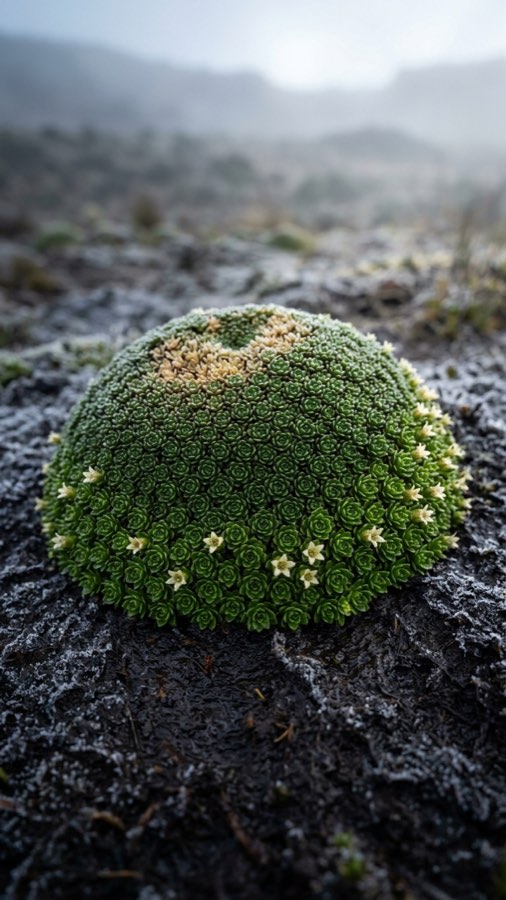
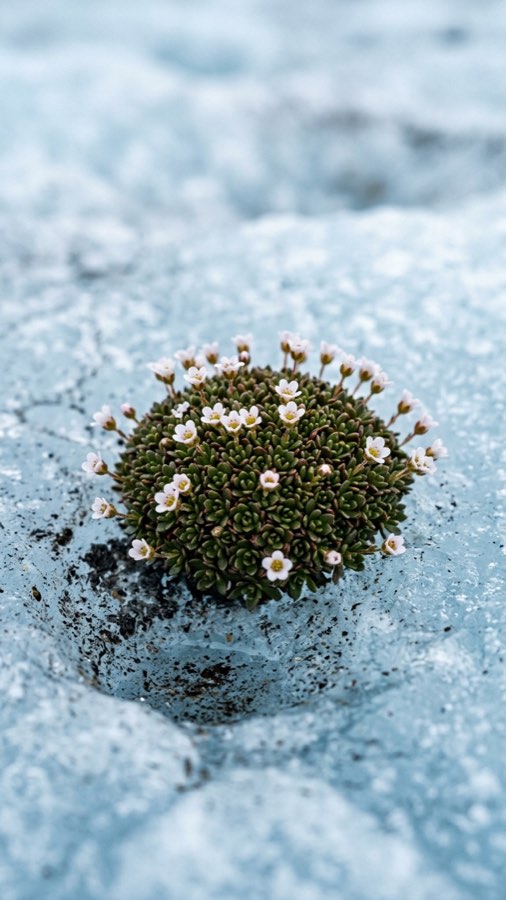
A tiny cushion about 4–8 cm tall, its small dark-green leaves densely overlapping. The flowers are small and peach-white. With no soil, it roots using only the dark dust within the ice and its meltwater.
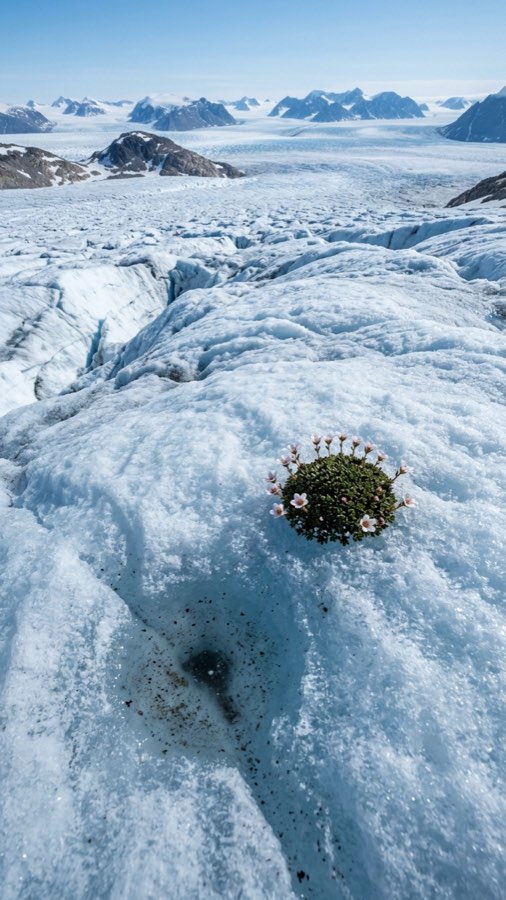 PLATE I
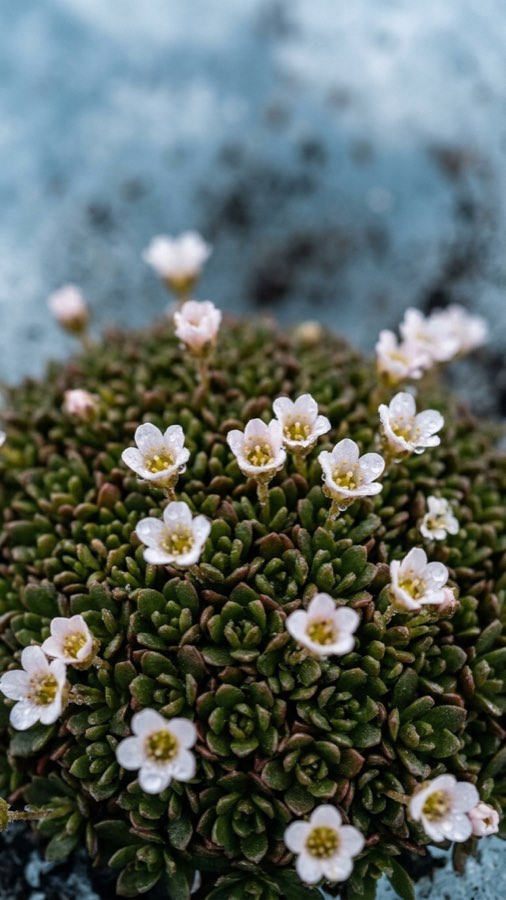 PLATE II
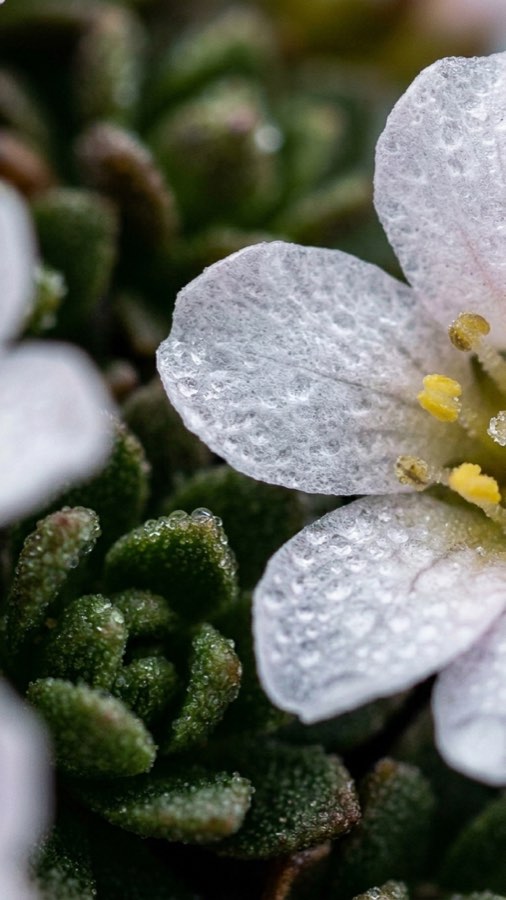 PLATE III
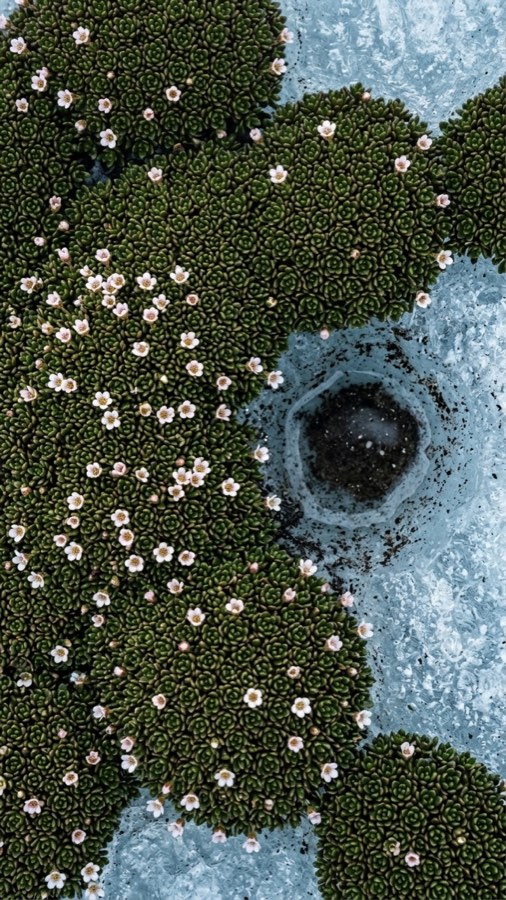 PLATE IV
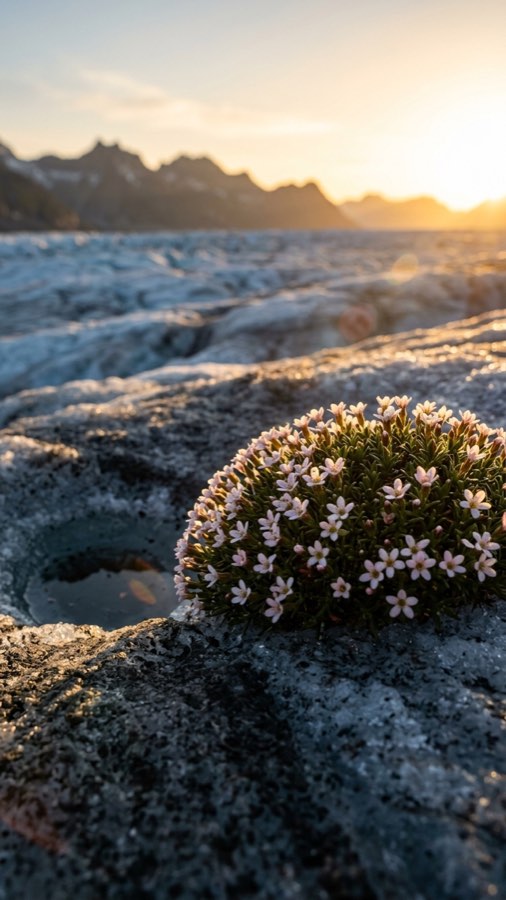 PLATE V
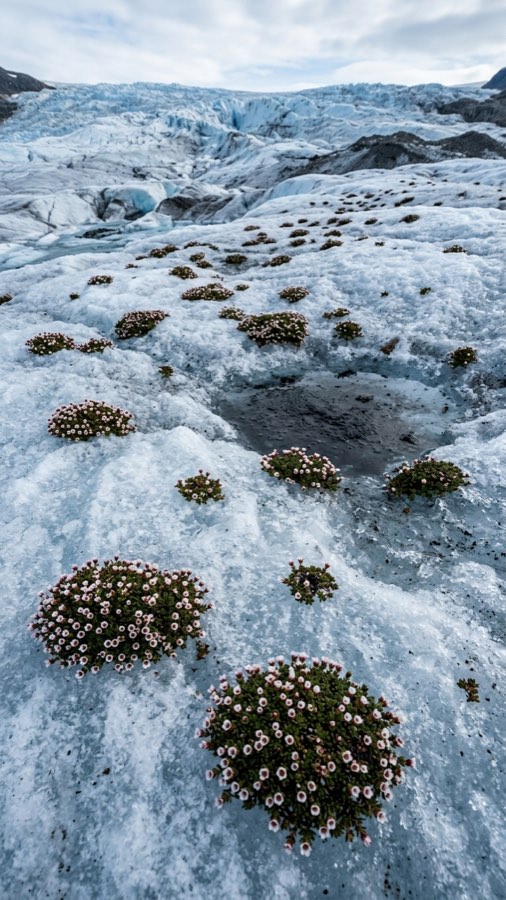 PLATE VI
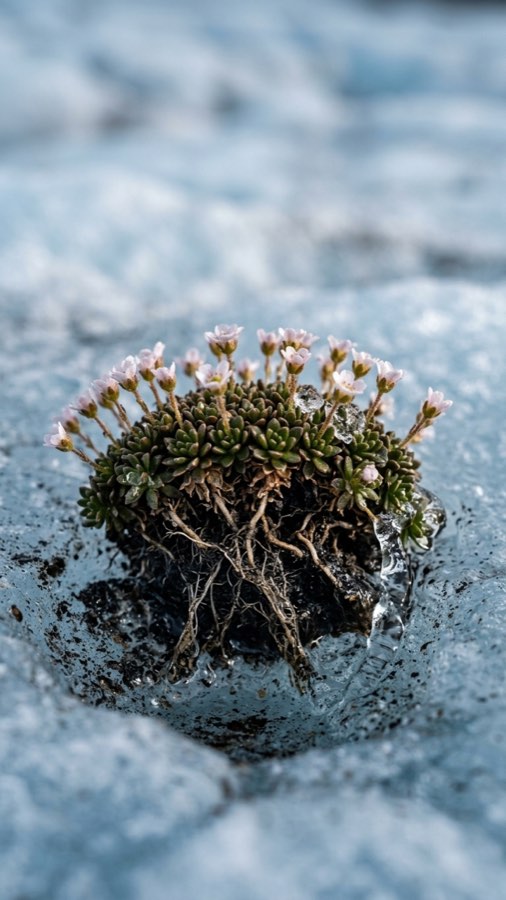 PLATE VIIPLATE VIII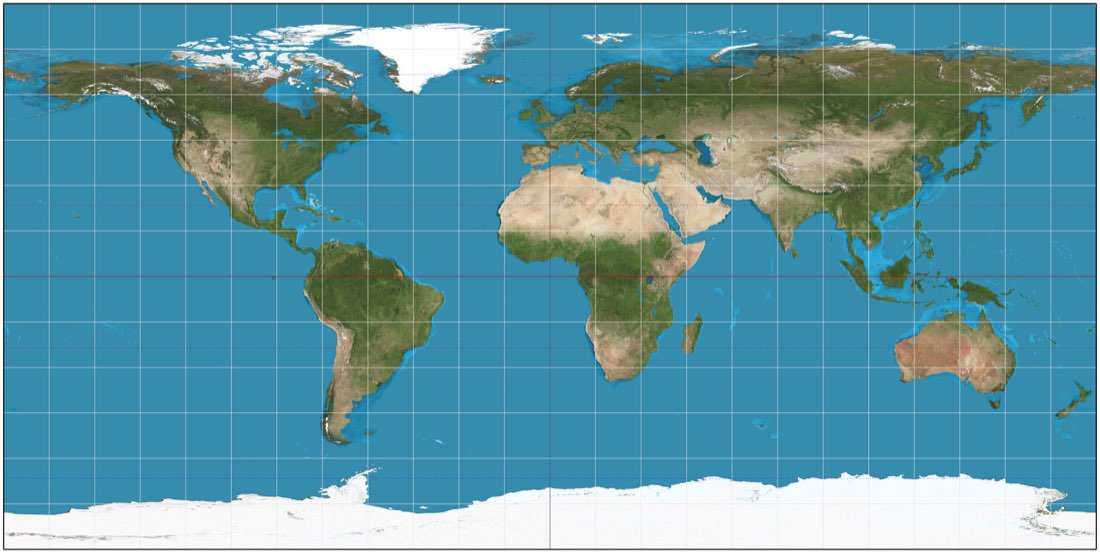
On bare glacier ice, with no soil, a flower blooms.
Its roots grip only the dark dust gathered in the ice.
The blue-glowing glacier surface of Greenland.
For a few weeks in summer, in small holes melted in the ice, the Glacier Bloom appears.
Small dark-green leaves overlap densely into a cushion.
Upon it, a small peach-white flower opens.
What has been called the root of Glacianthus is not a true root, but a rhizoid-like bundle of fibers that grips dark mineral grains. The fibers spread thinly along the boundary between cryoconite dust, algal film, and refrozen meltwater, acting less as a feeder root than as an anchor against washout. This may explain why colonies persist in shallow, turbid holes rather than in deep, clear ones.
Even in daylight the flowers remain half closed, appearing more like loosened buds than open blossoms. The anthers touch the stigma, suggesting that self-pollination is primary. Wind movement inside the holes is slight, though small dipterans occasionally arriving from the ice margin were seen landing on the meltwater and disturbing the corolla. When dry, the seeds become black dust-like grains, apparently dormant in the ice until the following summer.
From a distance, colonies do not resemble a flowering patch, but an old algal mat or manganiferous stain. The pale pink flowers are only a few millimeters wide and lie low against the rim of dark holes, where aerial imagery loses them in surface glare. Collected specimens collapsed within minutes and dried into black-green flakes. It is likely that some glaciological notes recorded them only as dirty melt holes.