Specimen · N°012 · Ice · ▶ Film
Crystallanthus altaicusIce-clad Bell
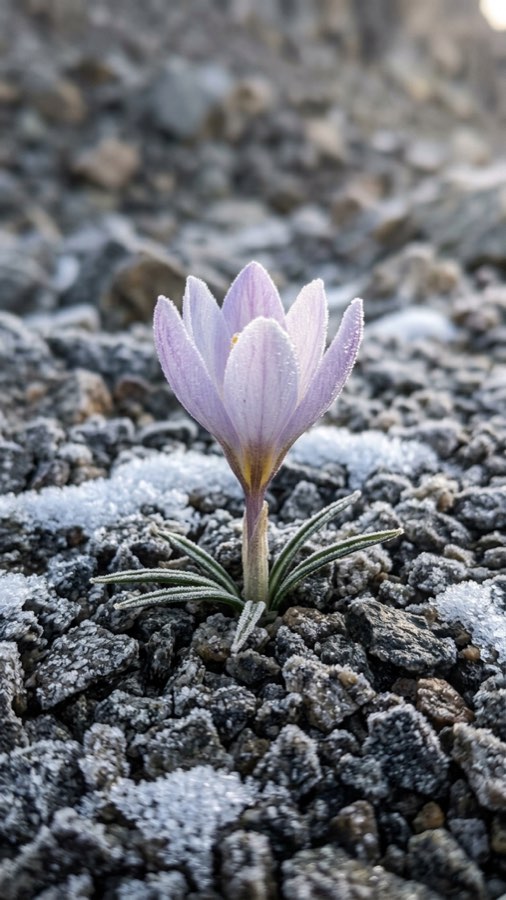
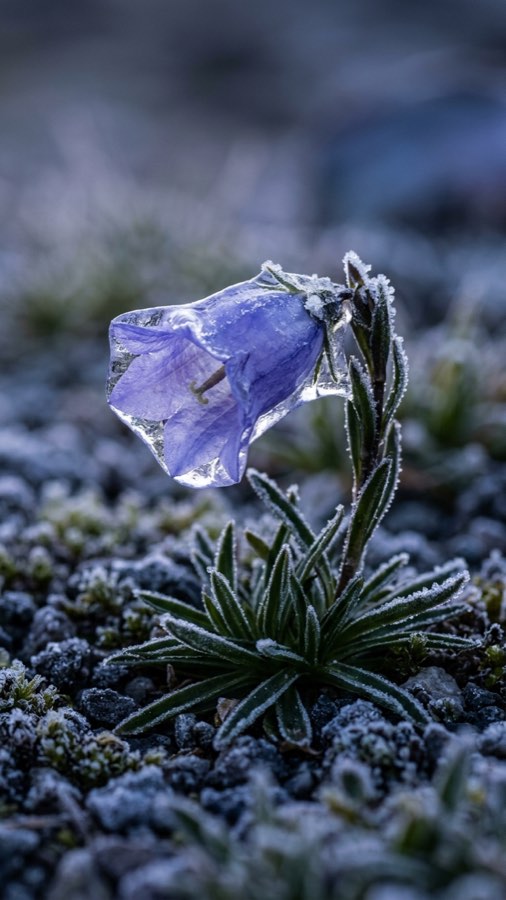
At dawn, the flower is sealed in glass-like ice.
FOUND 49.5°N 87.5°E · Highland steppe of the Altai Mountains, Siberia · ✝ EX · Last seen 1989
At dawn, the flower is sealed in glass-like ice.
A small perennial about 7–12 cm tall, its slender dark-green leaves clad in frost. Each plant bears a single violet-blue bell-shaped flower; the night's cold wraps the whole bloom in a thin clear shell of ice, which melts within hours in the morning sun.
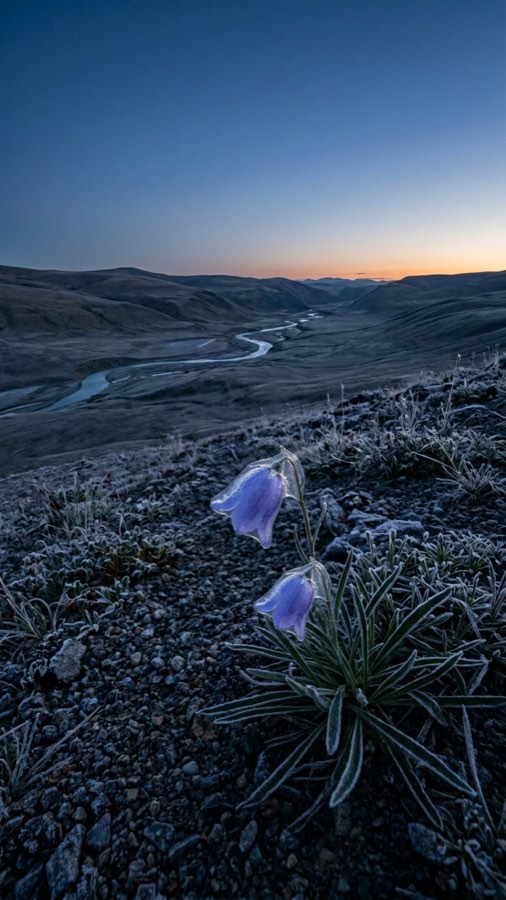 PLATE I
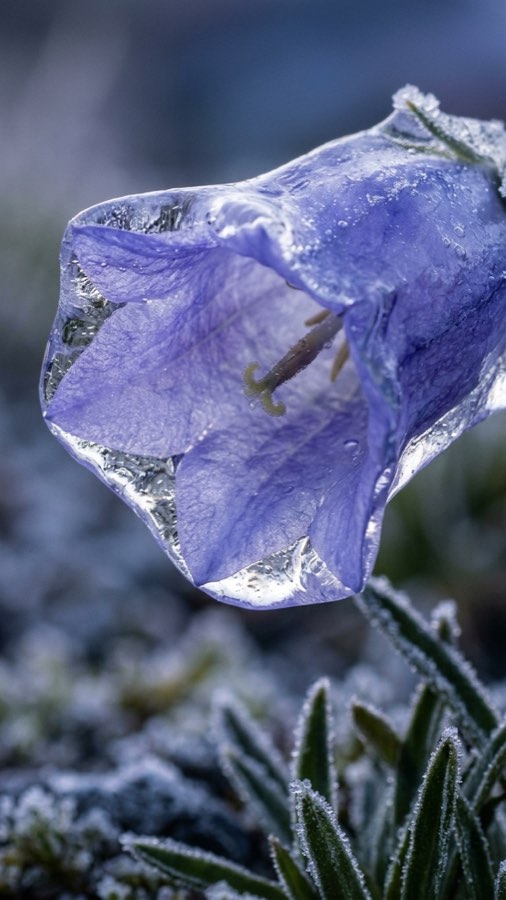 PLATE II
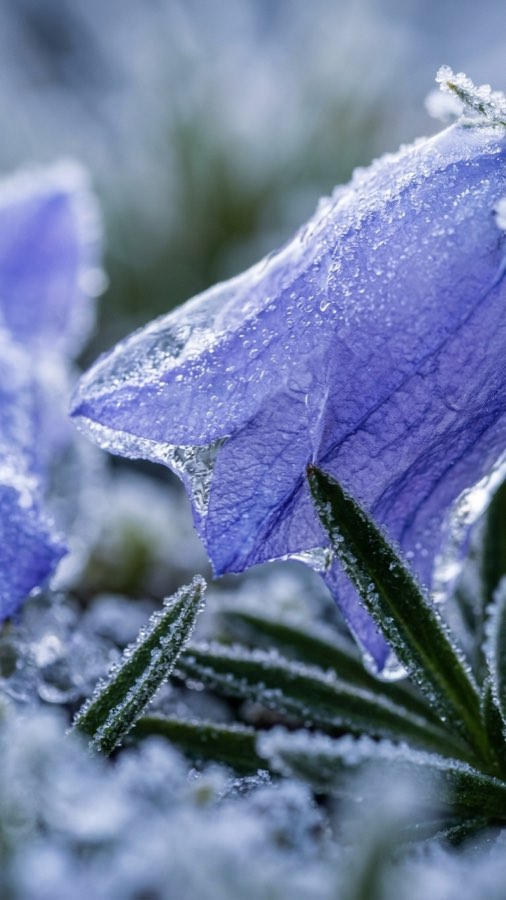 PLATE III
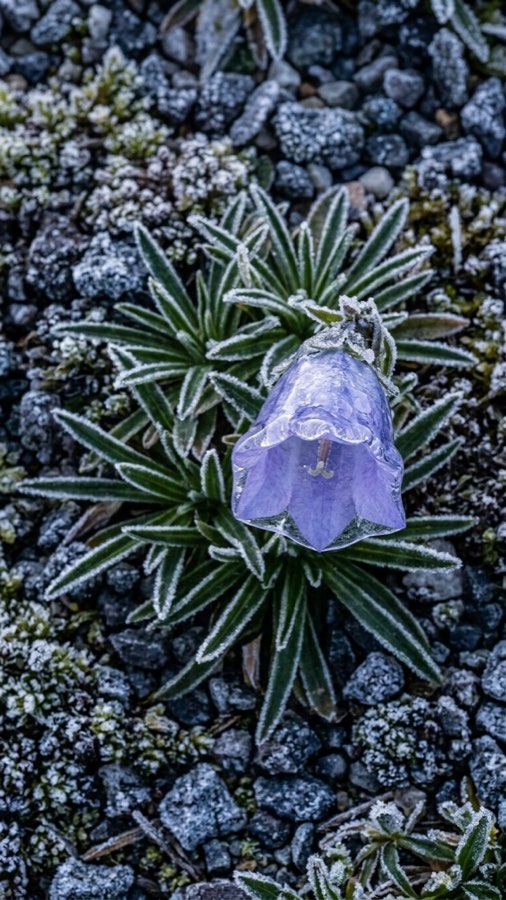 PLATE IV
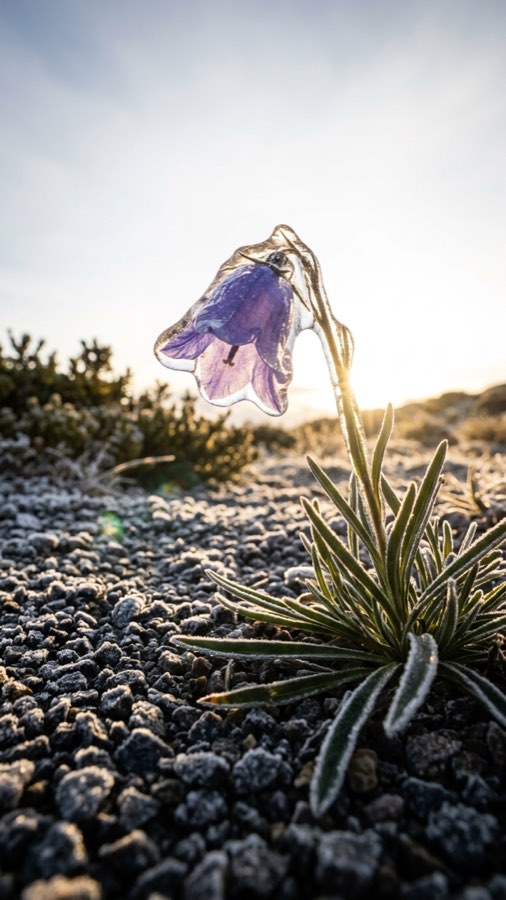 PLATE V
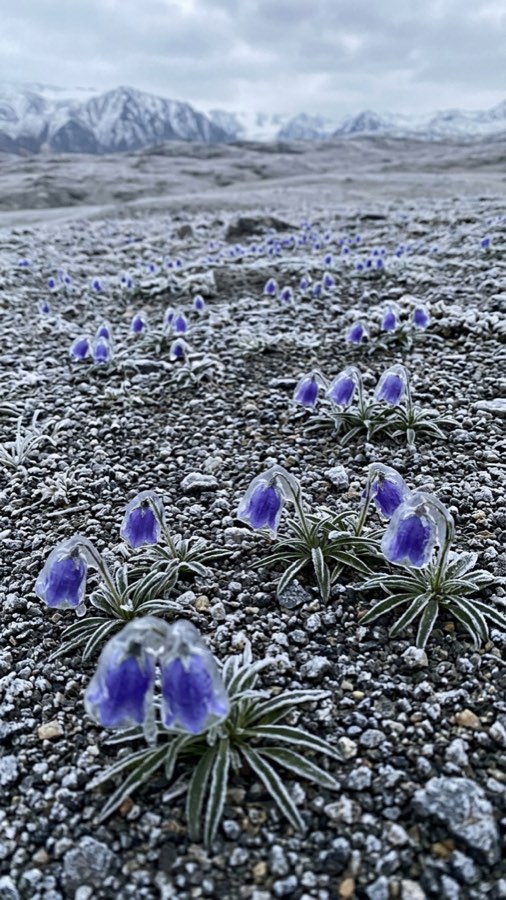 PLATE VI
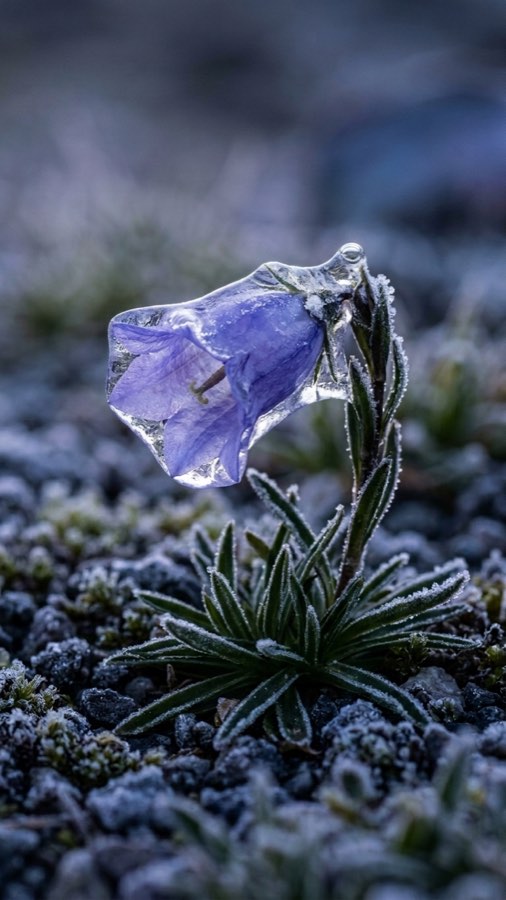 PLATE VIIPLATE VIII
At dawn, the flower is sealed in glass-like ice.
It melts only in the few hours after the morning sun.
The highland steppe of the Altai, Siberia.
At a dawn frozen by radiative cooling, the Ice-clad Bell appears.
Its slender dark-green leaves are wholly clad in frost.
At their centre, a single violet-blue bell-shaped flower has opened.
When a bell-shaped flower was opened inside its ice sheath, the anthers were bent close against the pistil, and the damp pollen had fallen directly onto the stigma. This is not a flower built to wait for insects in the late-autumn steppe. Its buds appear to be formed the previous summer, opening briefly only after freezing nights and completing self-pollination before thaw. The ice is not ornament, but a small greenhouse against the wind.
Fruiting plants are inconspicuous, leaving a narrow capsule at the base of brown sepals after the ice has gone. The seeds are light but have no plume, suited less for flight than for falling into gravel gaps. Frost heave lifts them a few centimeters through winter, and spring meltwater carries them beneath dark stones. Even where the plant appears in colonies, the pattern seems not clonal spread, but seedlings established along the same freezing line.
Its sites are biased toward slopes rich in black gravel derived from basaltic or metamorphic rock. Stones warmed by day cool rapidly at night, dropping only the air around the corolla to the frost point, while the coarse drainage prevents root rot. The ice sheath disappears within hours of sunrise, and the remaining plant is easily filed among small gentian or bellflower-like herbs. With flowering years irregular, an afternoon collector would have pressed only an unremarkable alpine herb.