Specimen · N°009 · Night · ▶ Film
Spiranthella nocturnaNight Spiral
It opens only at night and coils into a spiral by morning.
FOUND 18.7°S 44.8°E · The Tsingy limestone karst of Madagascar · ✝ EX · Last seen 2013
It opens only at night and coils into a spiral by morning.
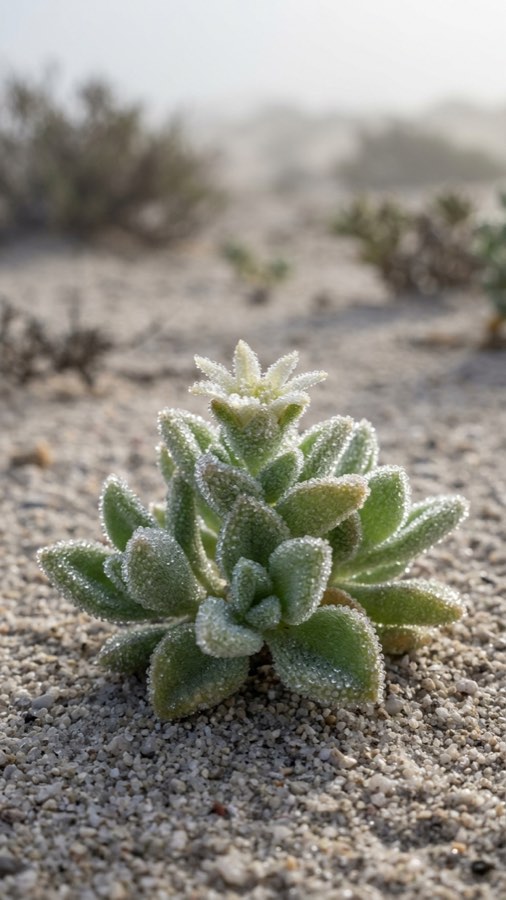
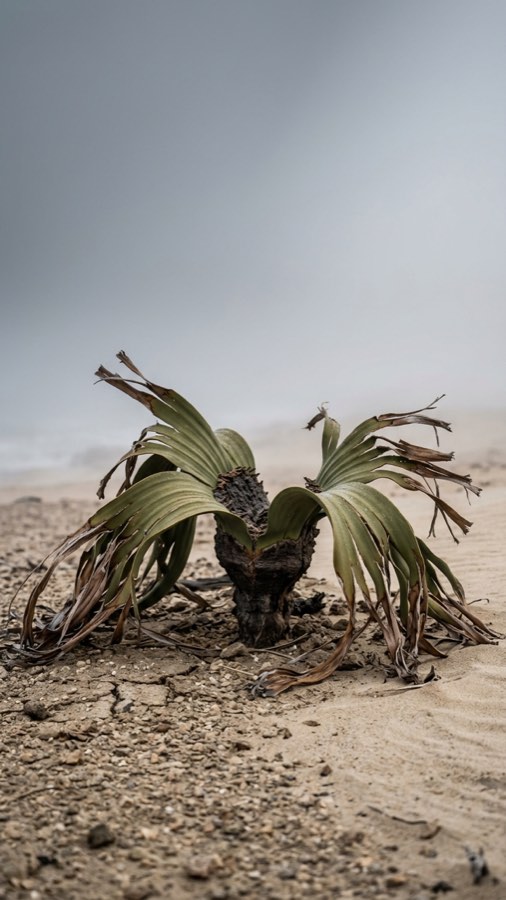
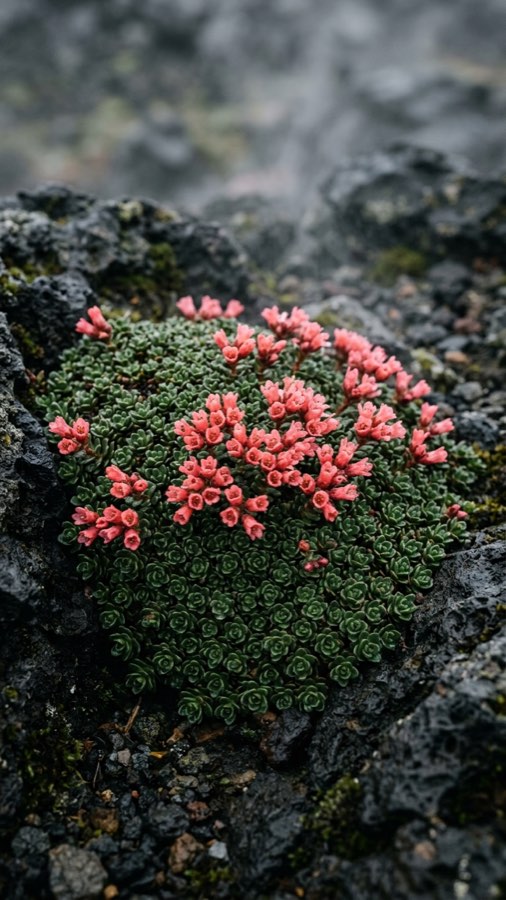
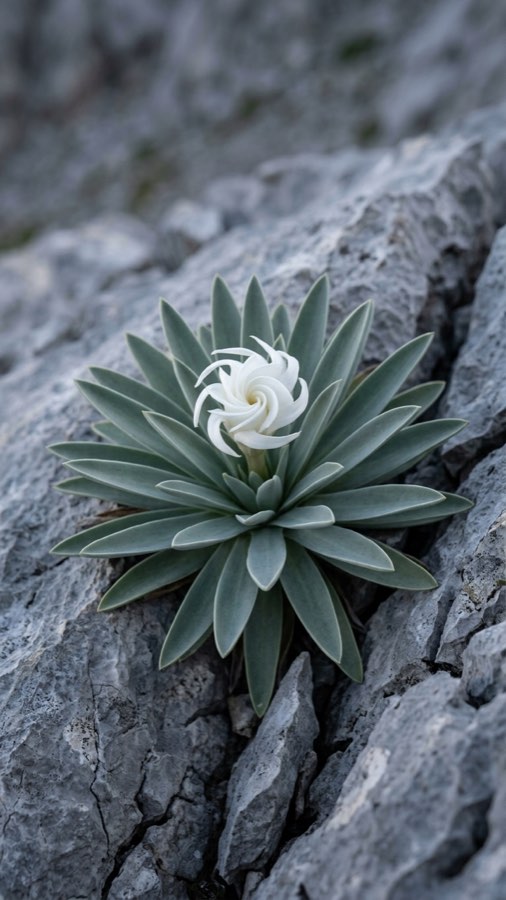
A succulent perennial about 12–18 cm tall. Thick grey-green sword-shaped leaves form a radial rosette. The white flowers open only at night; at dawn the petals coil back into a spiral and shrink like a small shell.
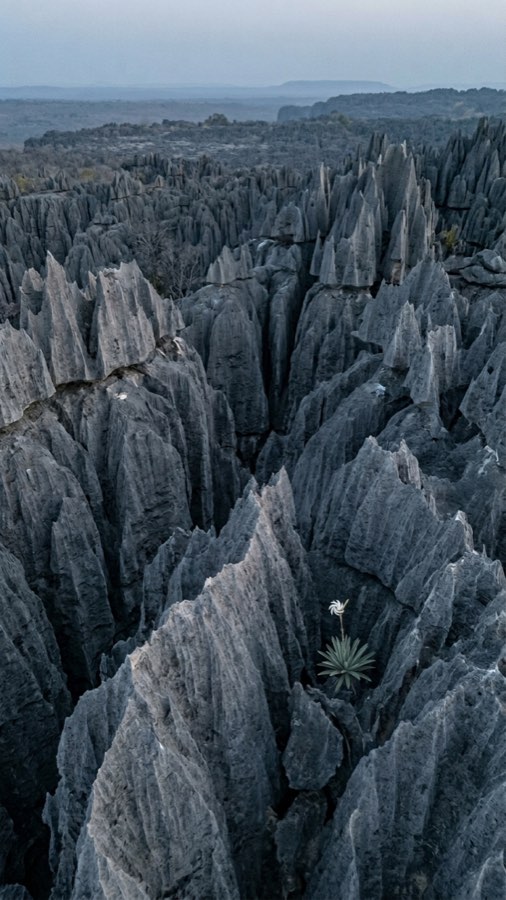 PLATE I
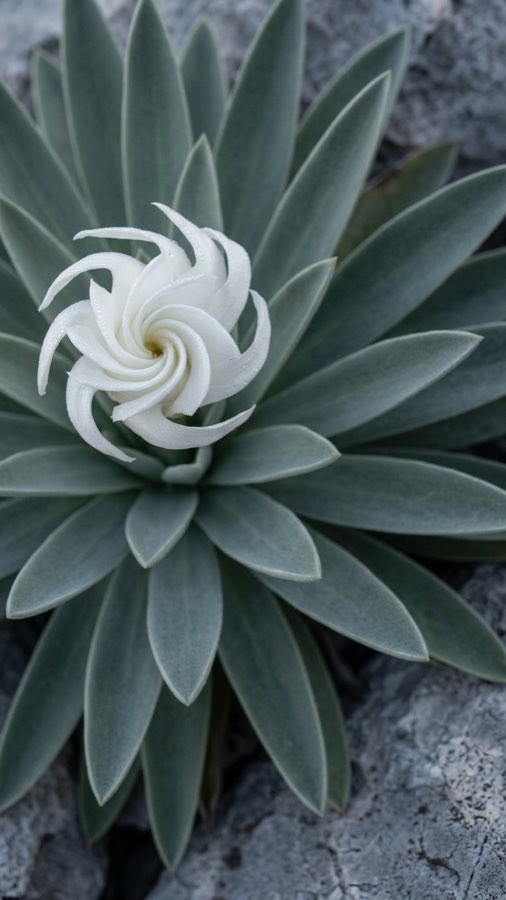 PLATE II
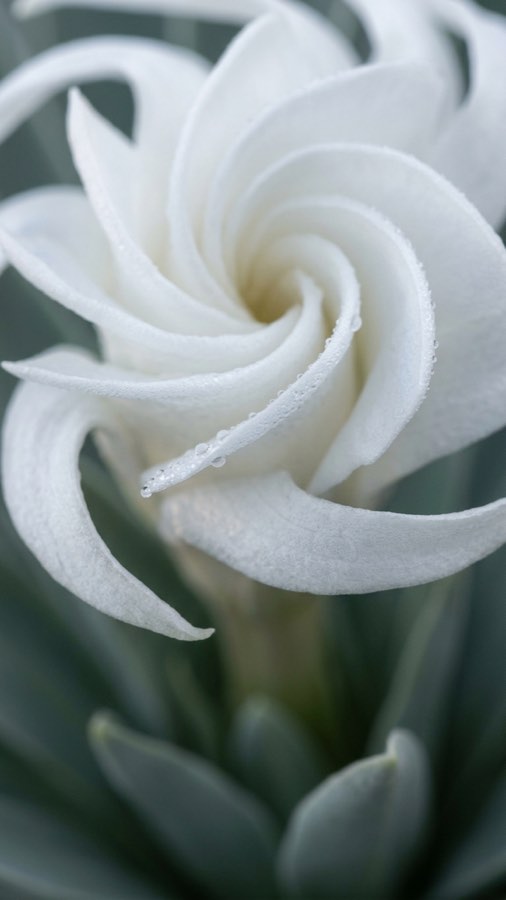 PLATE III
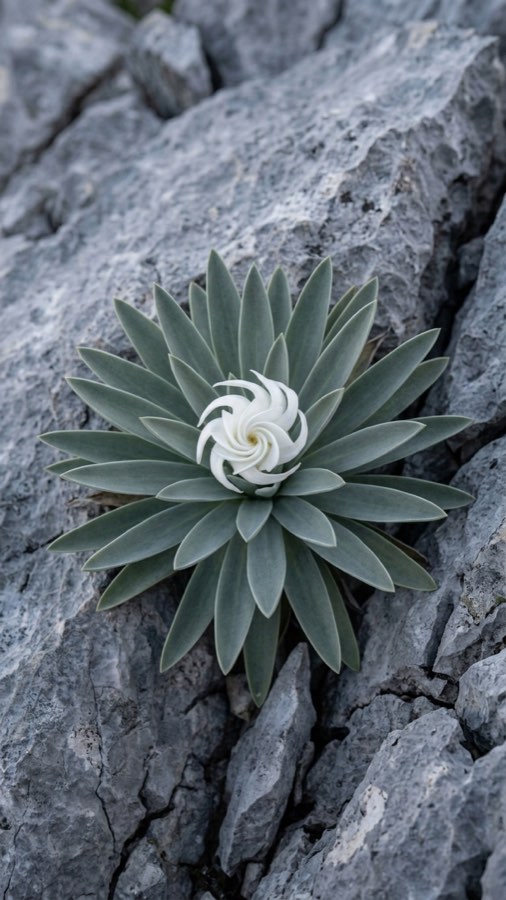 PLATE IV
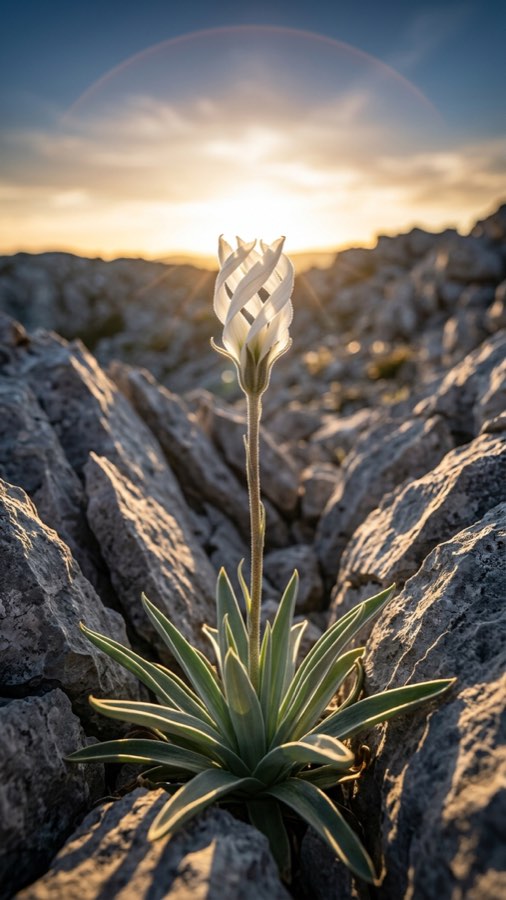 PLATE V
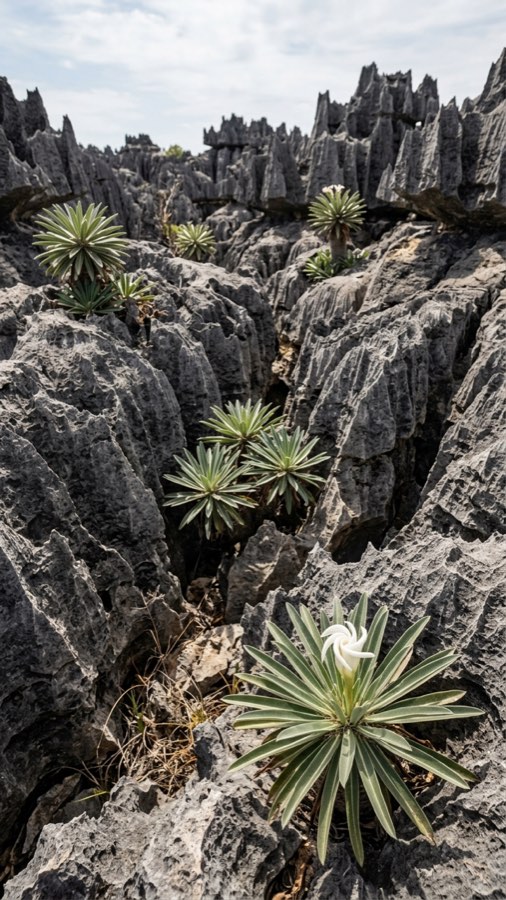 PLATE VI
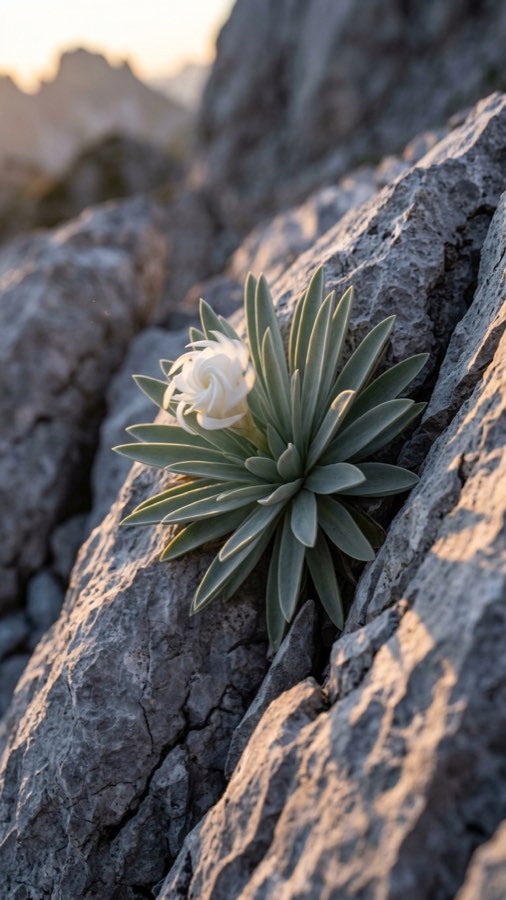 PLATE VIIPLATE VIII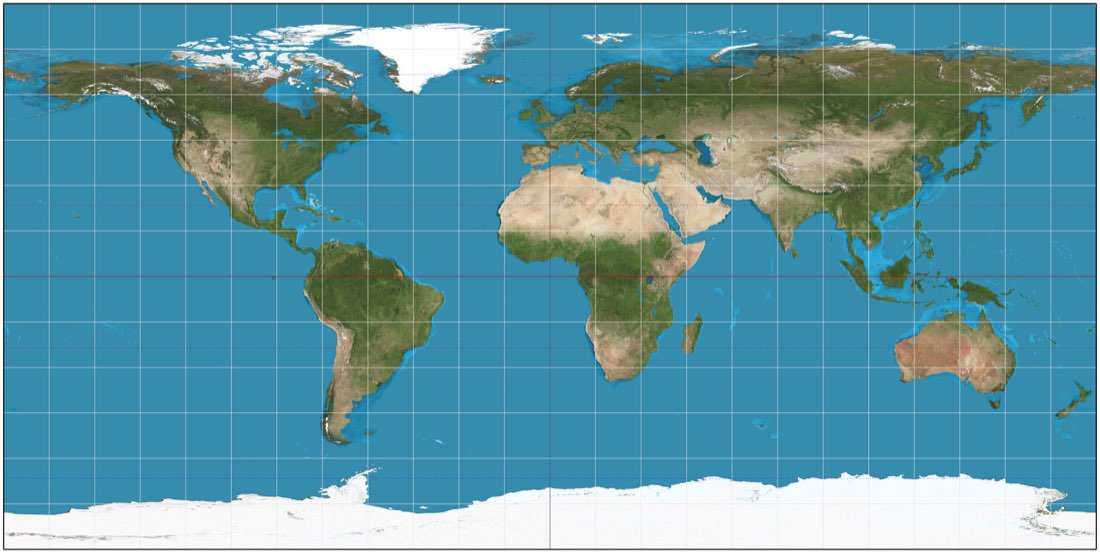
It opens only at night and coils into a spiral by morning.
It can be seen for only a few hours of the night.
The razor-like limestone plateau of Madagascar.
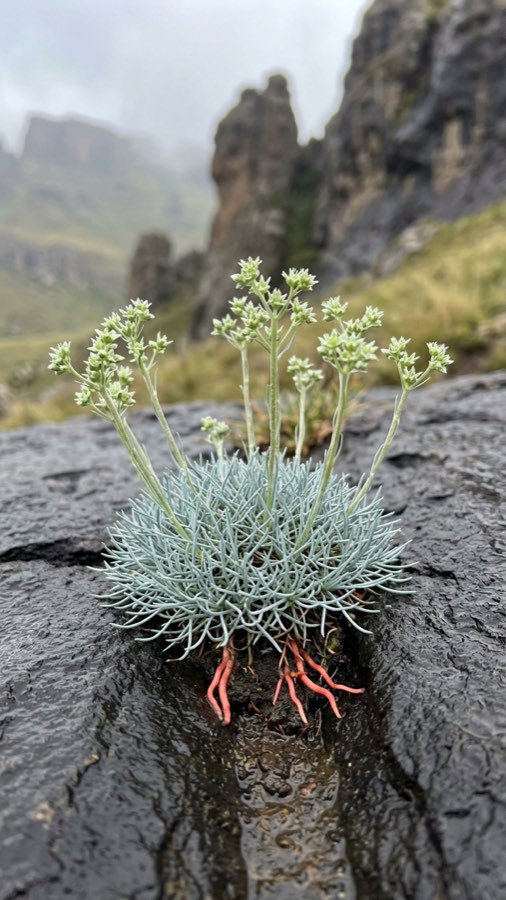
In the gaps of sharp grey rock, the Night Spiral takes root.
Thick grey-green sword-like leaves form a radial rosette.
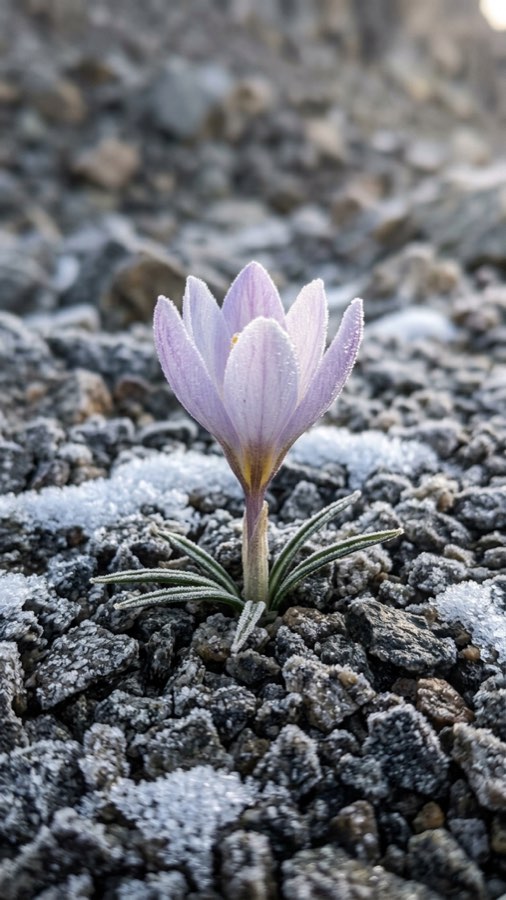
In time, a white flower opens quietly at its centre.
About two hours after sunset, fine scales remain scattered in the throat of the open white flowers. No insects were shown in the footage, yet by morning many stigmas carry a pale brown dusting on only one side. The visitor was likely a small, short-tongued noctuid moth. Rather than producing much nectar, the flower seems to rely on scent and a low position along limestone fissures.
At the beginning of the rains, only the base of the spiral-closed flower swells briefly, becoming a dry capsule within about ten days. The seeds are not light enough for wind dispersal; raindrops knock them into the grooves below. This explains the irregular spacing of the stands. They do not crowd the parent plant, but appear at intervals of several tens of centimeters along narrow runnels in the limestone.
At dawn the petals coil sooner and more tightly on mornings with a dry wind. This is best understood as a movement that protects pollen and stigma from ultraviolet light and dehydration. People grazing livestock or gathering honey around the tsingy remembered this tightness when deciding movements before the rains. It was not divination, but an empirical rule drawn from years of repeated dry mornings.