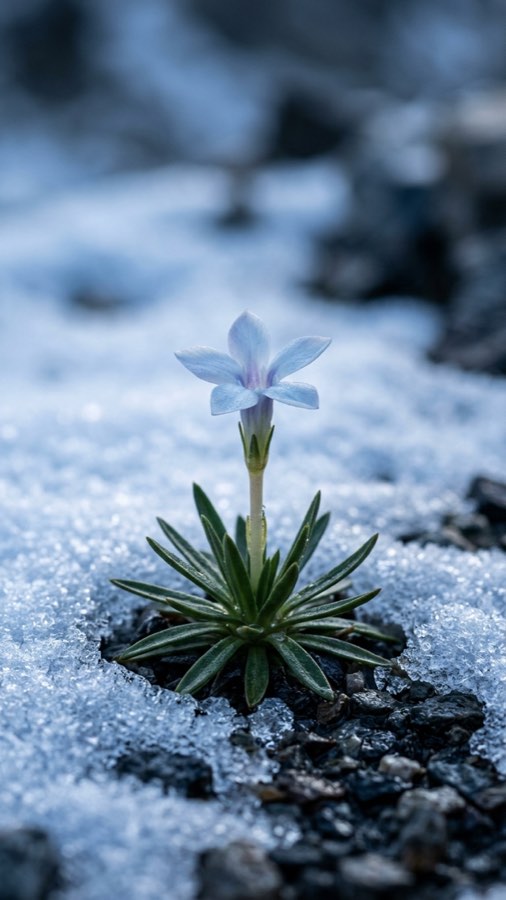
Specimen · N°051 · Water · ▶ Film
Praesagia eyrensisForerunner Herb
It sprouts long before the water comes.
FOUND 28.3°S 137.3°E · Dry salt claypans of the Kati Thanda-Lake Eyre basin, southern Australia · ✝ EX · Last seen 1967
It sprouts long before the water comes.
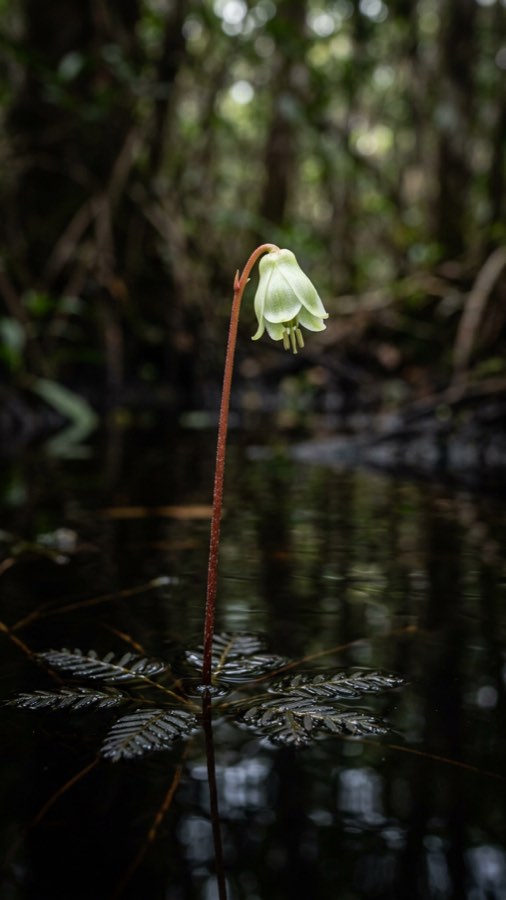
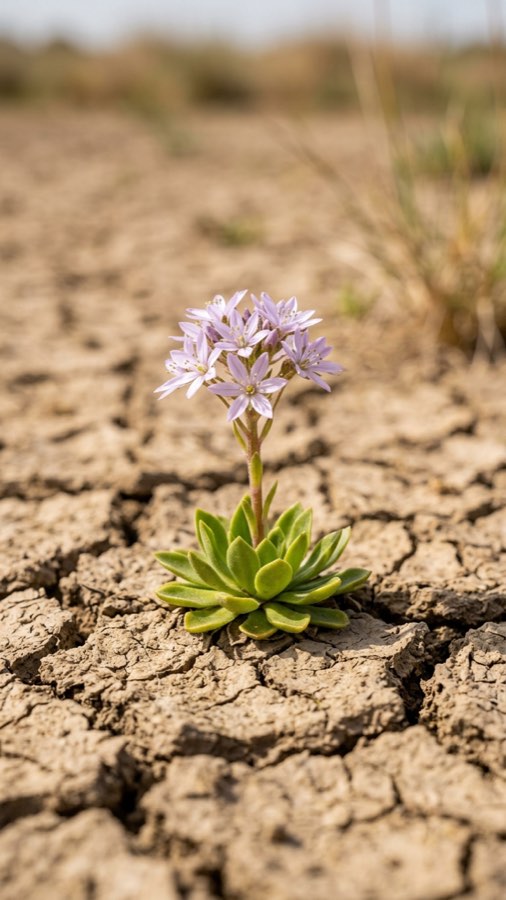
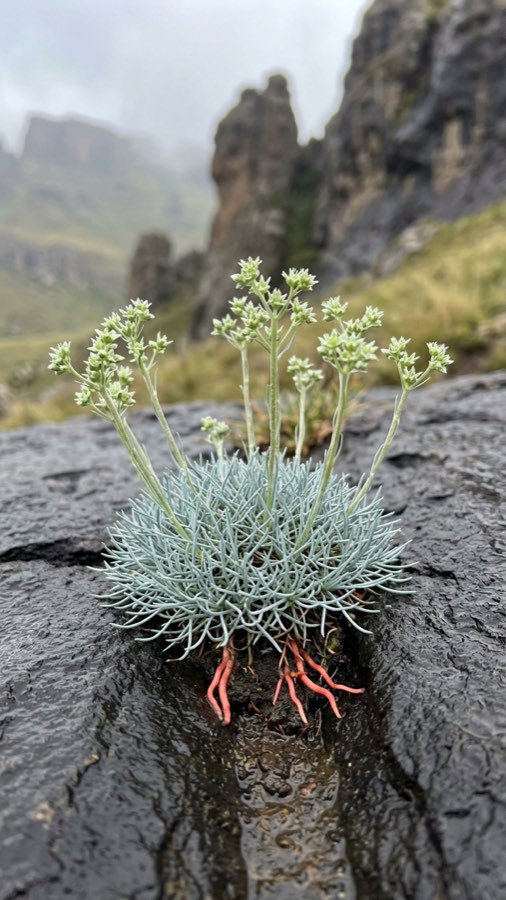
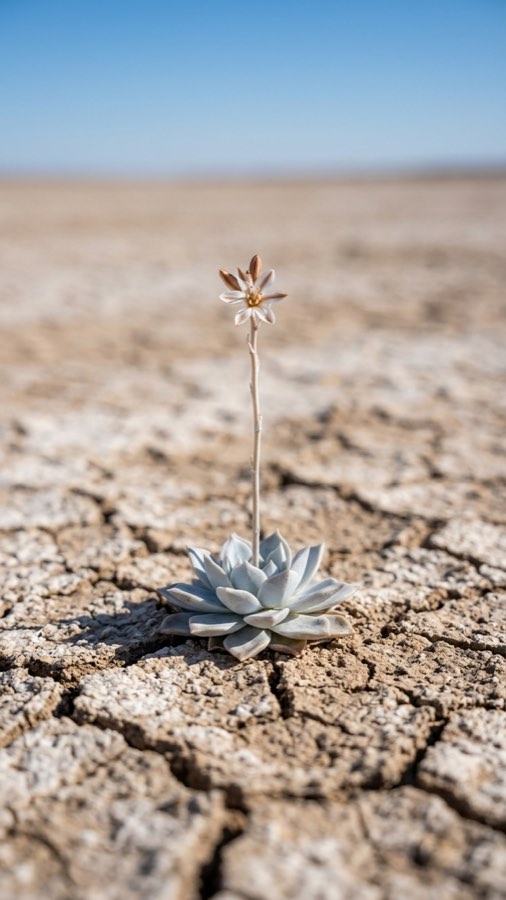
The Forerunner Herb is a small succulent some 10 cm tall. It spreads pale silver-blue, faintly translucent leaves in a flat rosette, and on a slender pale stem bears a single small white star-shaped flower touched with copper. When rain that fell hundreds of kilometres upstream draws near through the underground gravels, it germinates long before any water reaches the surface, guided only by the isotopic signature of the mingling groundwater. And so, on claypan still hard and cracked, this herb suddenly stands. The surface flood arrives weeks later. The soil is still dry — yet its appearance always runs ahead of the water.
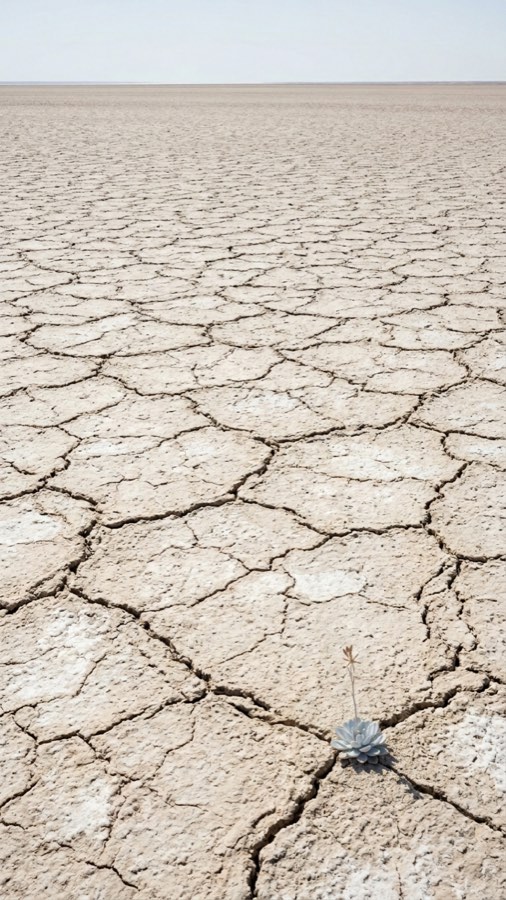 PLATE I
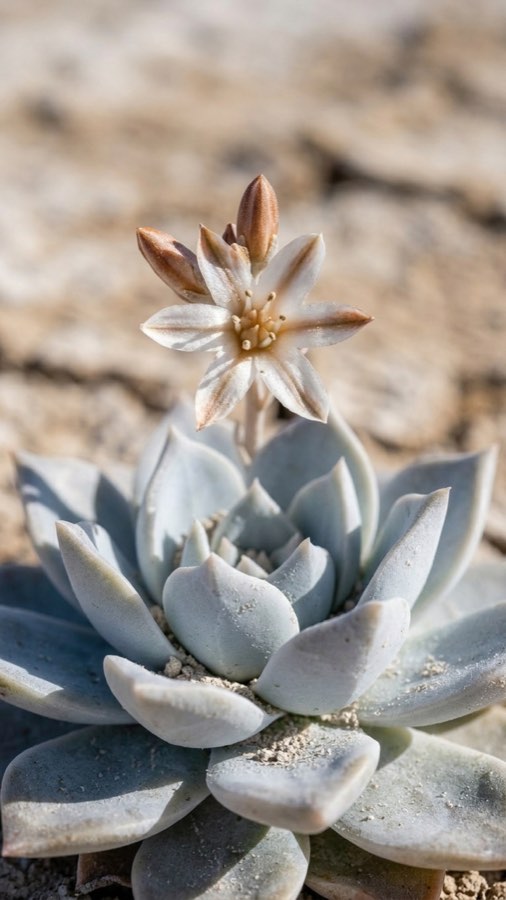 PLATE II
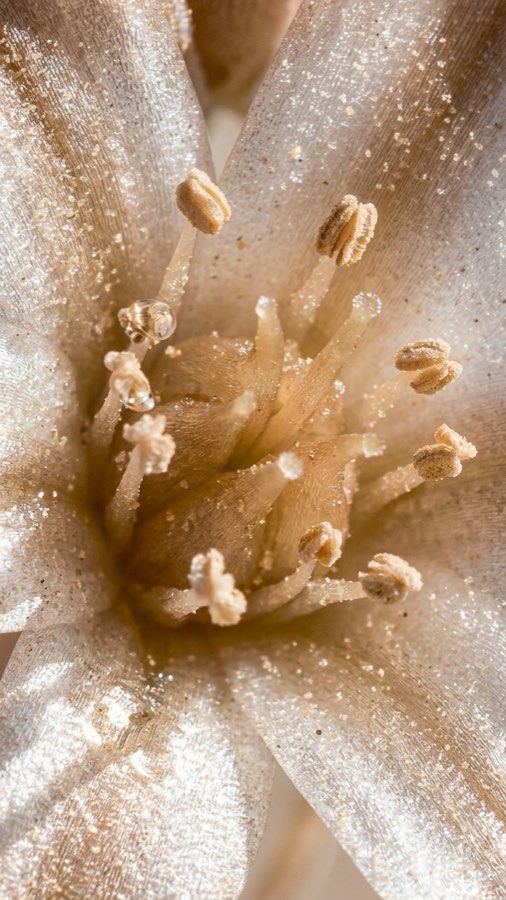 PLATE III
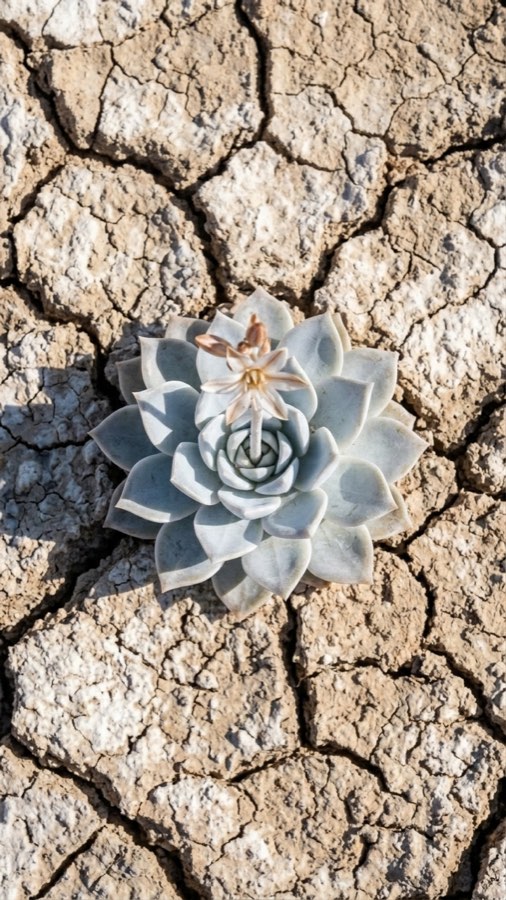 PLATE IV
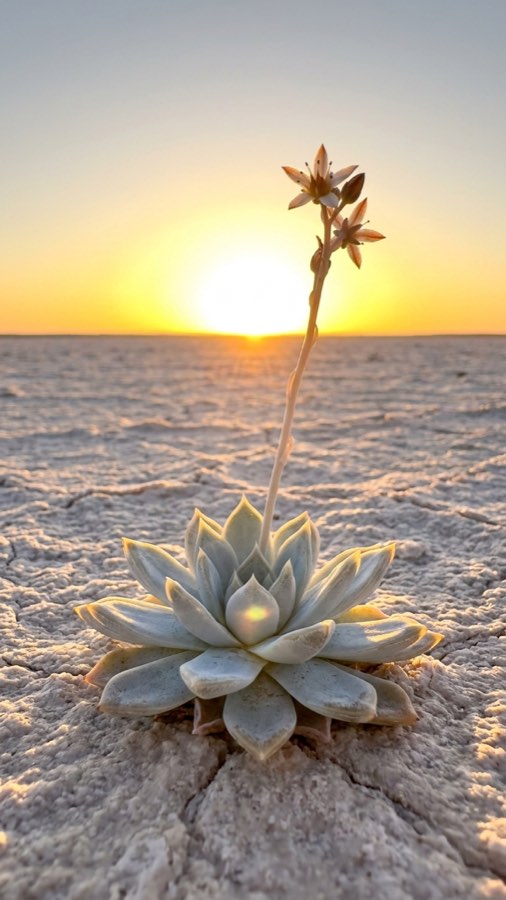 PLATE V
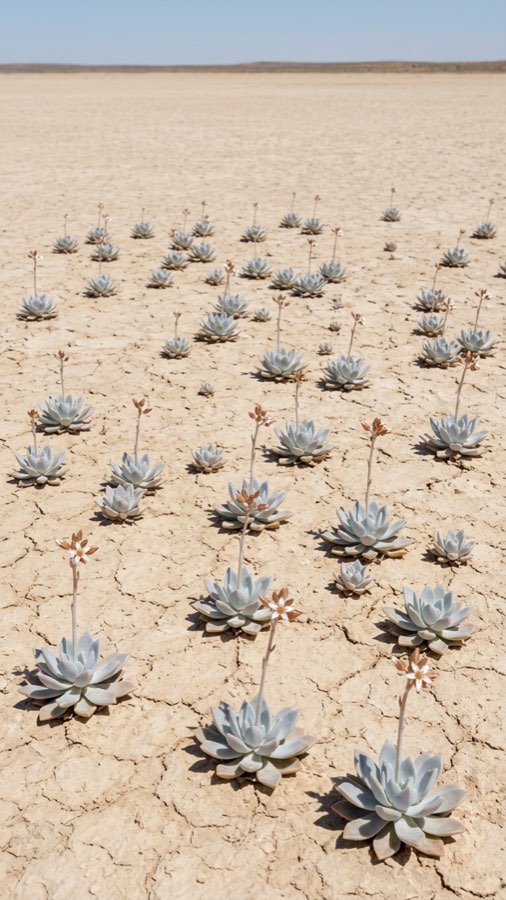 PLATE VI
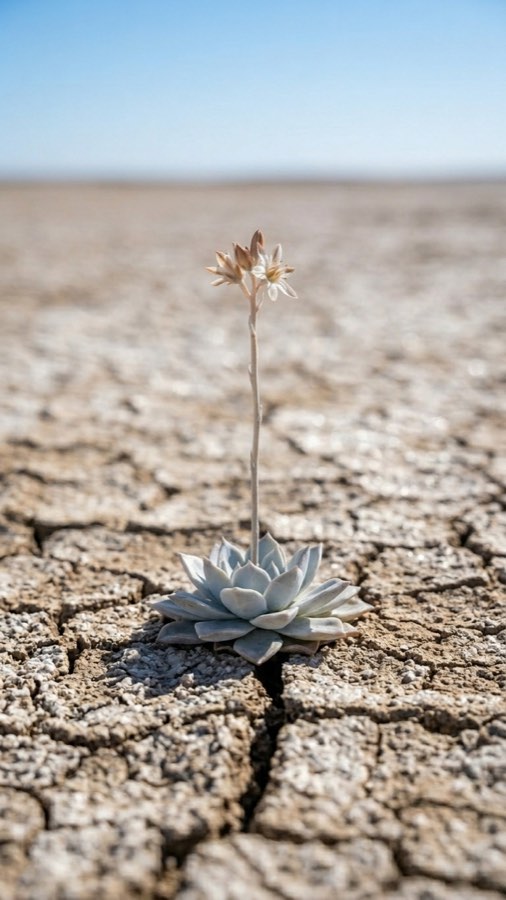 PLATE VIIPLATE VIII
It sprouts long before the water comes.
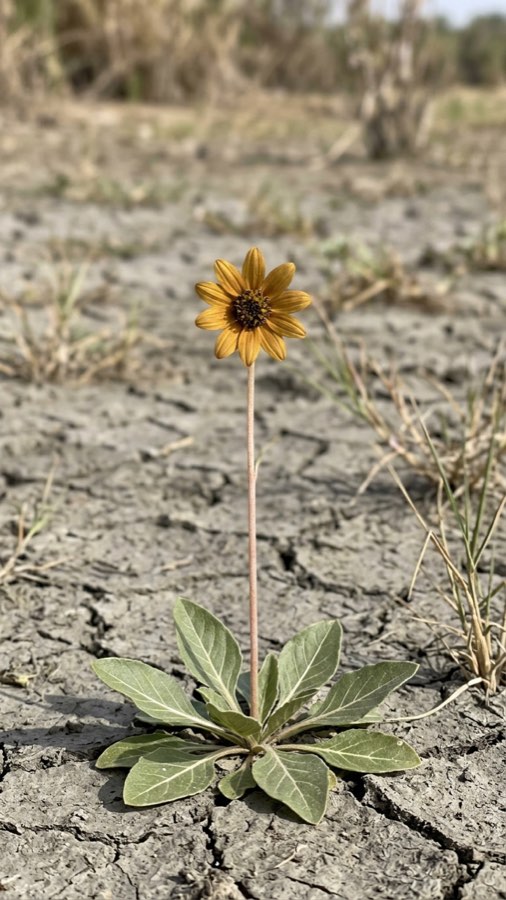
The surface — still hard, still dry.
Southern Australia, the basin of Lake Eyre.
When water from hundreds of kilometres upstream draws near through the buried gravels,
the Forerunner Herb germinates, guided only by the faint difference in the groundwater.
It spreads silver-blue leaves flat, and opens one white star-shaped flower touched with copper.
When flowering plants are lifted, the filaments are short and the anthers bend inward, clasping the stigma. The perianth opens slightly only on windy afternoons, but the flower is not built to wait for visitors. It appears mainly self-fertile, with small flies moving through salt cracks or windblown dust only rarely carrying pollen between plants. Its haste on a dry lake floor is best read as a way to set seed in the few days before floodwater arrives.
After fruiting, the capsule splits as soon as it wets, releasing fine seed as a thin dusting over the mud surface. The seeds seem less adapted for long transport than for adhering to saline mud as lakewater withdraws. Once dry, their coats become sealed within the salt crust and remain dormant until the next change in groundwater isotope balance. The banded colonies probably trace former waterlines and the uneven drying of the mud.
From germination to seed set may take less than a week in rapid years. By the time surface water arrives, the plants are submerged in muddy water and no longer preserve as useful specimens. Collected dry, the silver-blue tissue fades and resembles young shoots of known chenopod saltbushes. Older travellers seem to have regarded it less as a specimen than as a sign for judging when to cross the lake margin or whether to move stock onto the low ground.