Specimen · N°040 · Wetland · ▶ Film
Metallophila reciprocaVessel-return Herb
Ordinarily, it hoards metal in its leaves.
FOUND 30.7°N 88.0°W · Wet pine savanna and acidic pitcher-plant bogs of coastal Alabama, USA · ✝ EX · Last seen 2019
Ordinarily, it hoards metal in its leaves.
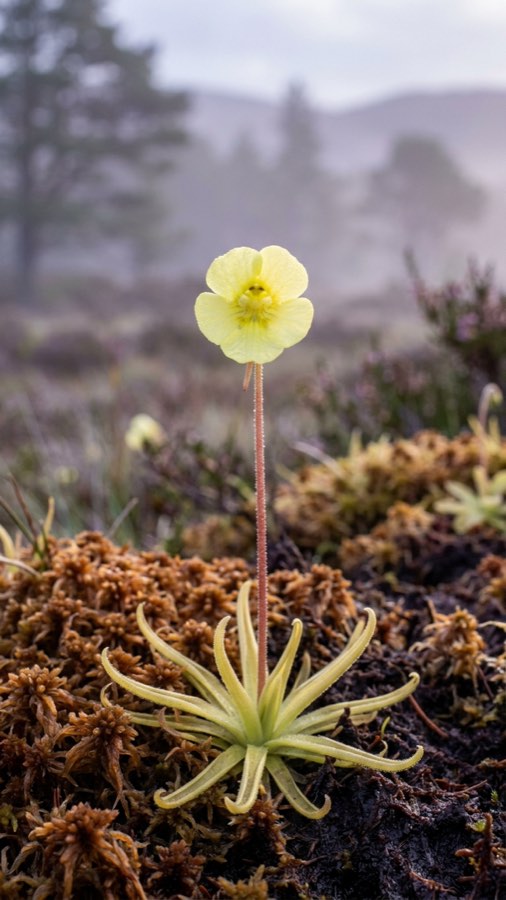
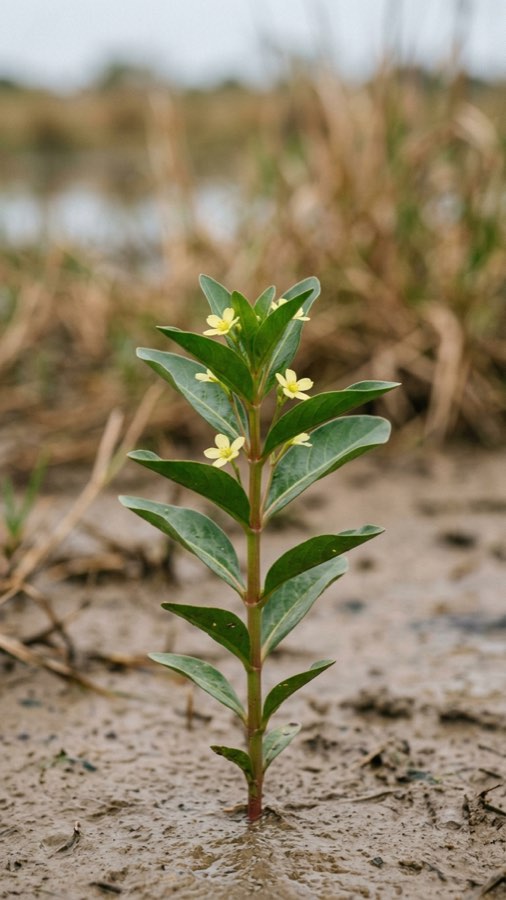
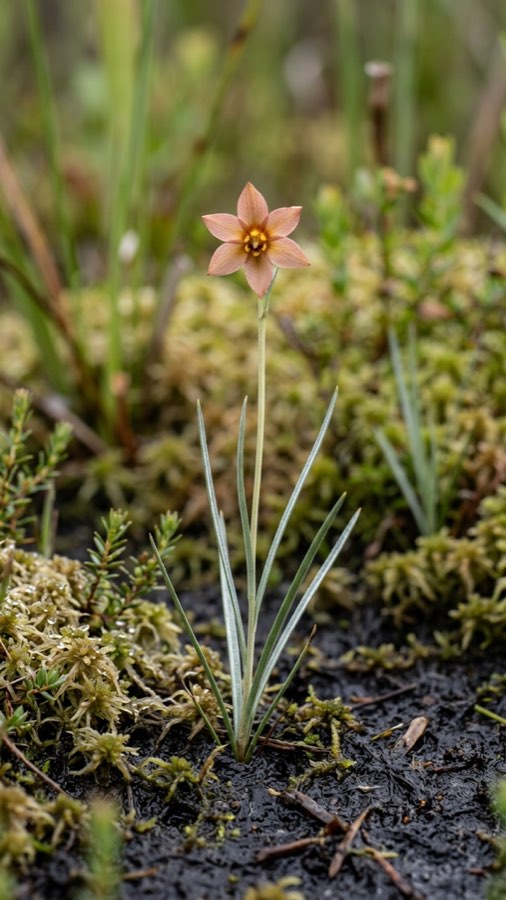
The Vessel-return Herb is a wetland plant some 25 cm tall. It spreads fine grass-like grey-green leaves low to the ground, each faintly lustred with silver. On a slender pale-green stem it bears a single upturned star-shaped flower of coppery rose, its centre a deep amber. Ordinarily this plant draws aluminium up from the acid bog soil and stores it in its leaves, armouring them with metal. But for a short spell just before flowering it sends the stored metal back from leaf to root, keeping the flower’s vessel clear of it. In that moment the chemistry of its leaves changes as if it were another species altogether; why it reverses its store, no one yet knows.
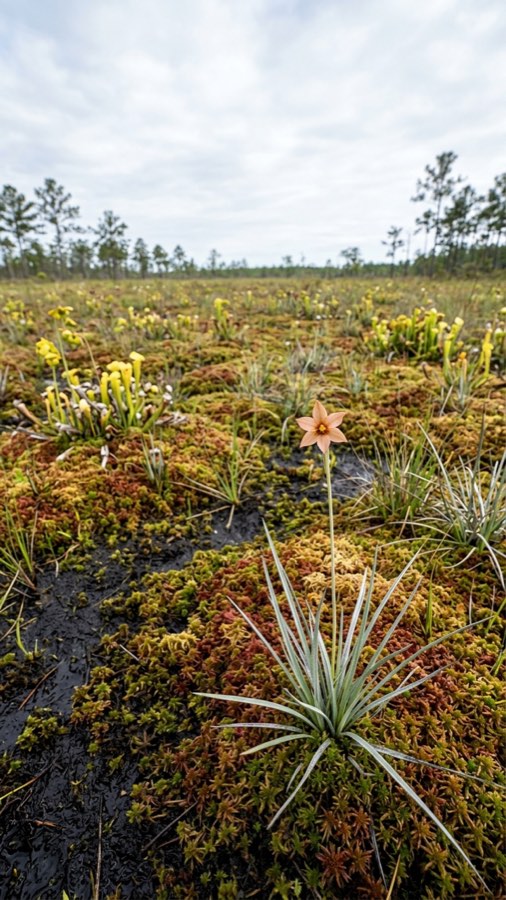 PLATE I
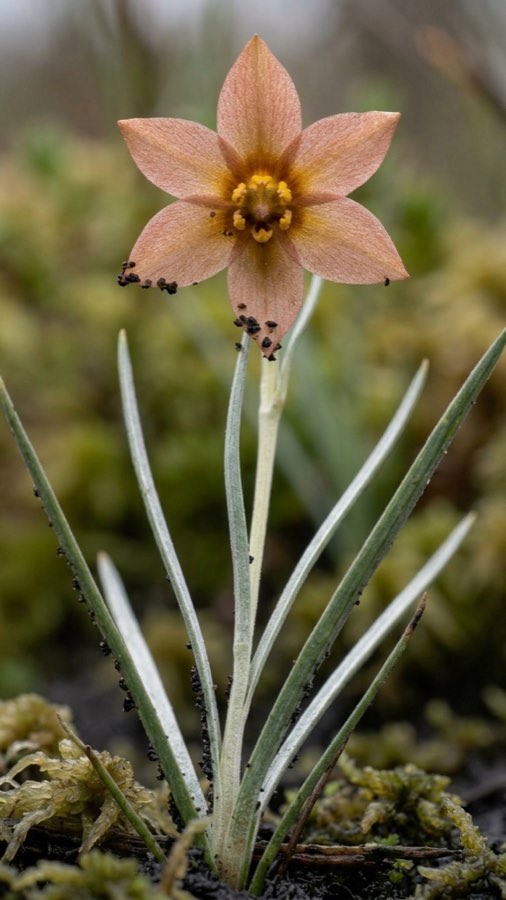 PLATE II
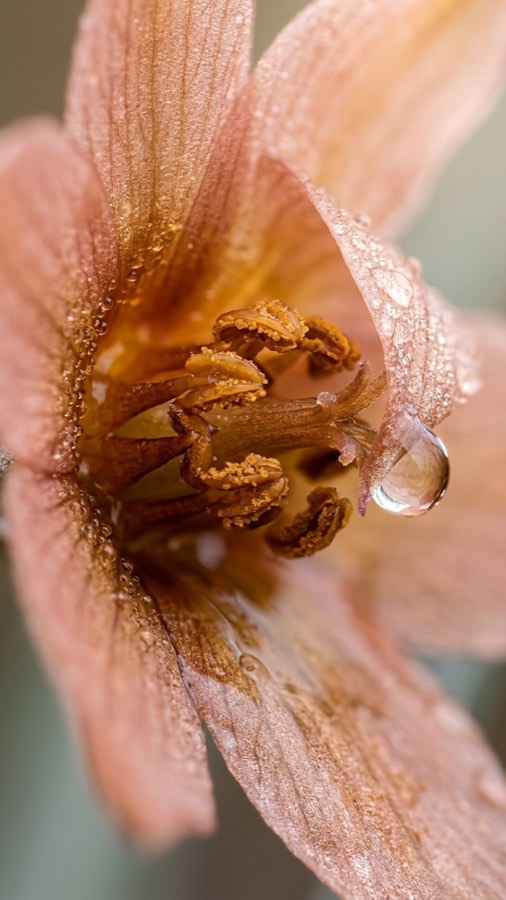 PLATE III
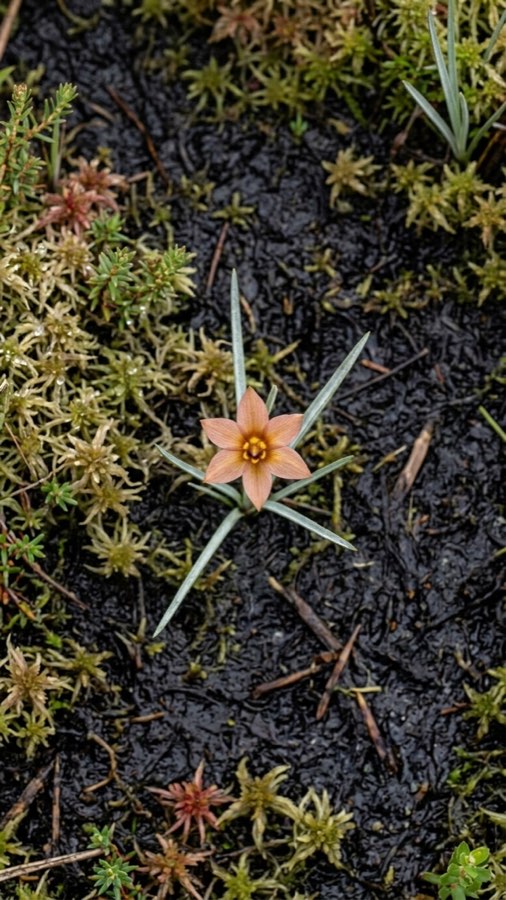 PLATE IV
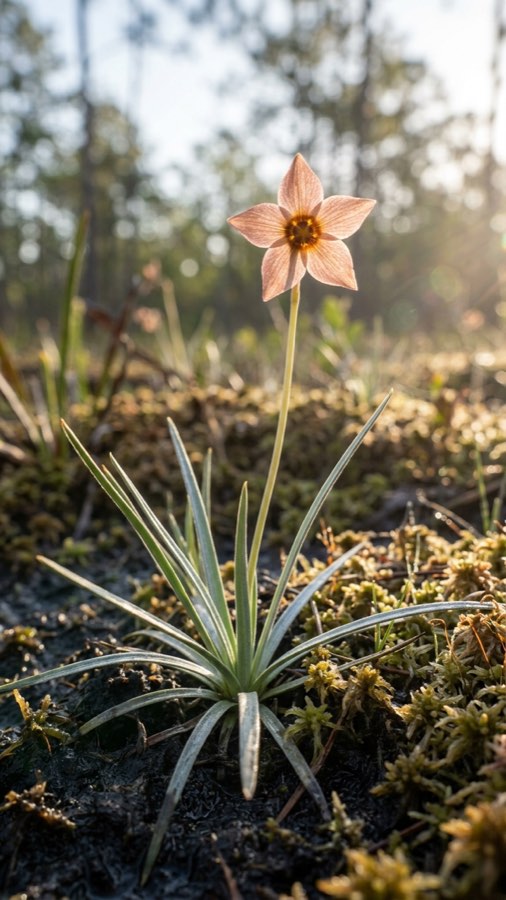 PLATE V
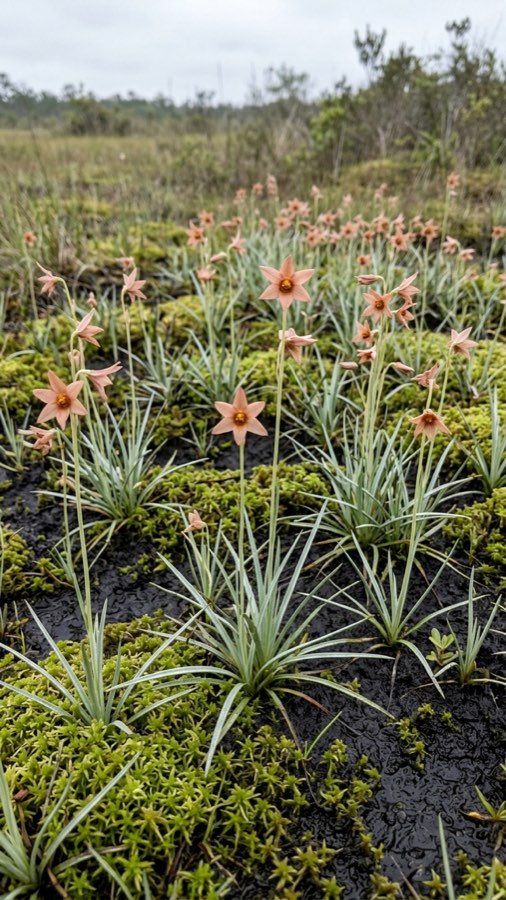 PLATE VI
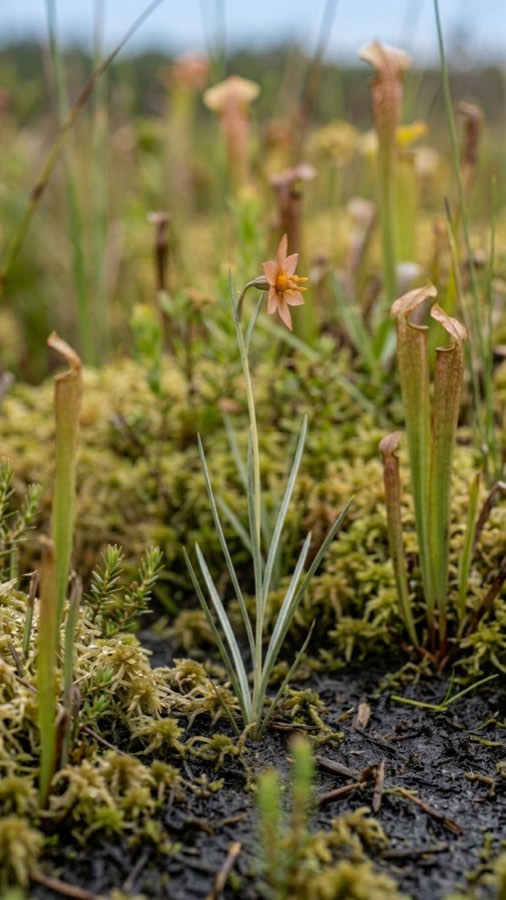 PLATE VIIPLATE VIII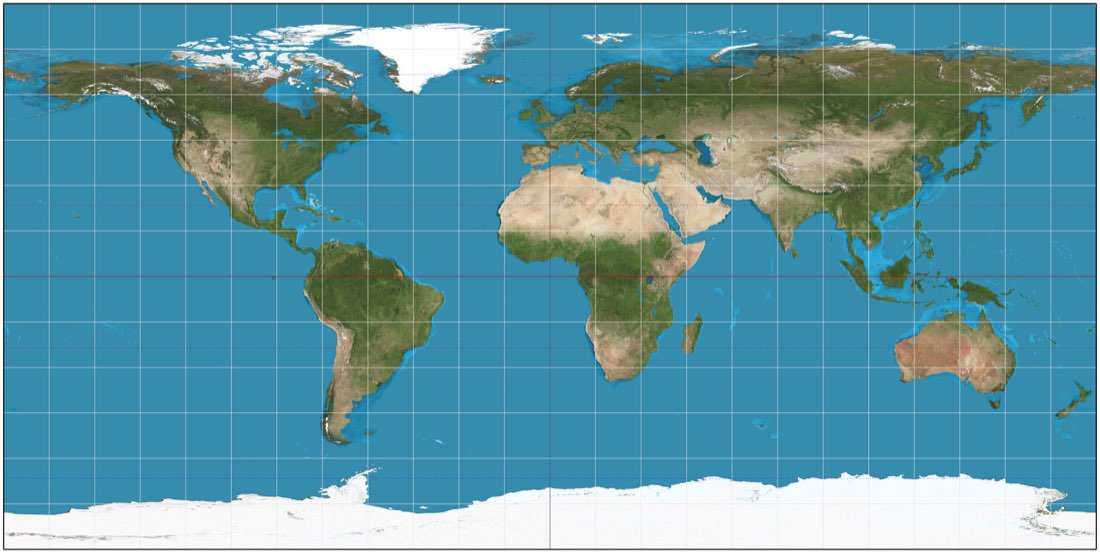
Ordinarily, it hoards metal in its leaves.
Yet just before the flower opens, it sends it all back to the roots.
The acid bogs of the coastal plain of Alabama.
The Vessel-return Herb roots only in the black peat where pitcher plants grow.
Its fine grey-green leaves carry a silver, metallic sheen.
It stores the aluminium it draws up in its leaves, and lives behind that armour.
Outside bloom, Metallophila reciproca lies low on the peat with gray-green blades, disappearing among sedges and young wiregrass. It flowers only for a few damp, overcast days in the second spring after a burn. A leaf taken earlier reads as an aluminum-rich bog herb; one taken before anthesis seems chemically unlike it. This may explain the silence of old herbarium sheets.
On flowering mornings, small bees and marsh flies make brief visits to the amber center. Nectar is scant; they come chiefly for pollen and leave quickly, while the stigma begins to dry by afternoon. The seeds are light but do not travel far. Germination appears confined to winter openings in sphagnum made by fire, where black peat holds a thin wash of ash.
In old haying grounds of the coastal plain it was remembered as returning cup grass, or empty-cup grass. People walking turpentine tracks and burned savannas noticed that the silver cast of the leaves dulled before bloom. The saying that it flowers after emptying its cup sounds figurative, yet it matches with odd precision the brief withdrawal of metal from leaf to root.